
2026 MLS Previews: Colorado, San Jose, Real Salt Lake
/Our 2026 MLS Season Previews have started and today we hit the Rapids, the Quakes, and RSL. If you want to support this coverage of the league, you can head to our Patreon. For $5 a month you can get access to a lot of the data visualization tools we use to make these previews.
Similarly, our friend and longtime ASA supporter Matt Doyle has started a new venture at the Tactics Free Zone, you can sign up here, and we’d encourage you to do so. Take care.
Looking for Fans’ Sealy of Approval
State of the Club
The Colorado Rapids find themselves in a strange place. Two-year former head coach Chris Armas is on the way to NWSL side Kansas City Current after reportedly turning down a new contract offer from the Rapids. His first season in 2024 started great and the Rapids reached 50 points and the 7th playoff seed in the West, but ended the year with the thud. Colorado lost seven of their last nine games after clinching a 3rd place finish in Leagues Cup as they were outscored 24 goals to nine. The team had four wins and four draws by the end of the following April, but 2025 was not so charmed for the Rapids, as the club slid to 41 points and 11th place by the end of Decision Day. RSL in 9th place also had 41 points, so the club is not in some glaring emergency, but missing out on the postseason to their biggest rival remains a major disappointment to fans. Any single dropped point in 2025 ended up being the difference between success and failure by the letter of my expectations in 2025’s preview. New coach Matt Wells (previously an assistant coach at Tottenham Hotspur) is in his first job as the gaffer, and needs to create cohesion between some young players that have been out of rhythm for the past season and a half.
State of the Roster
Goalkeepers
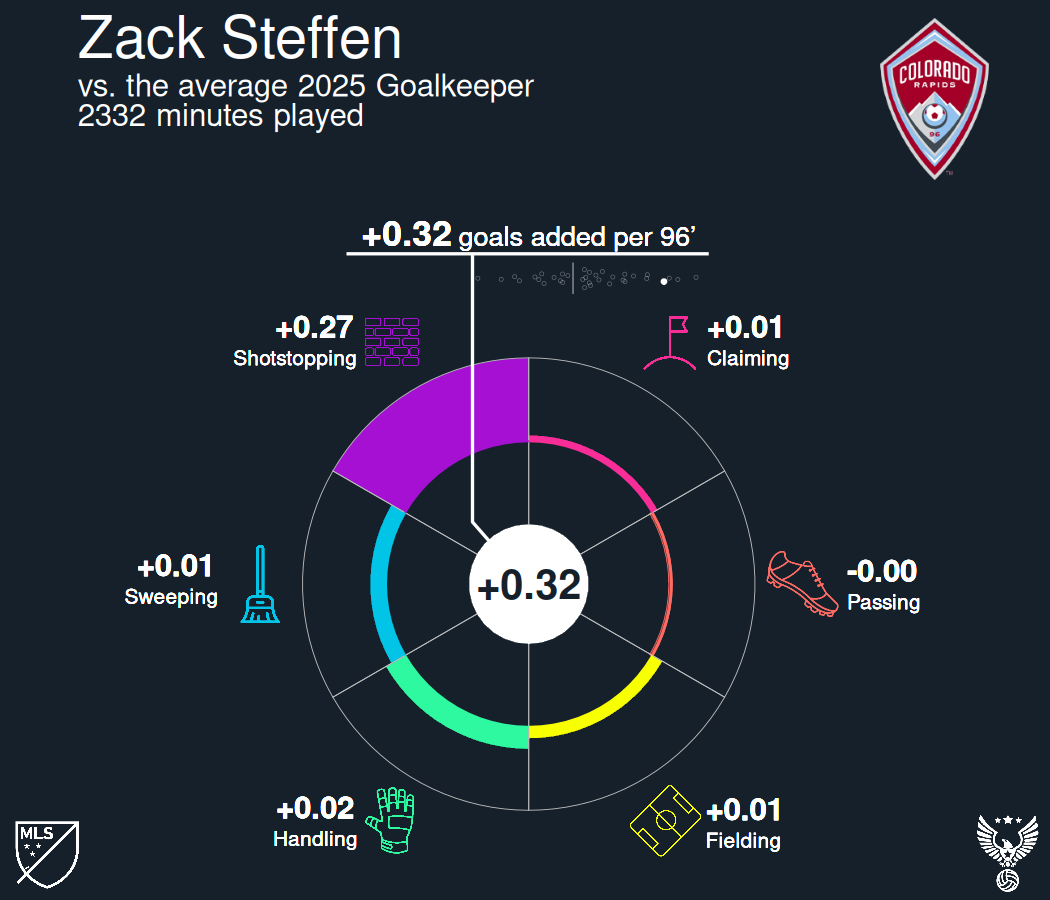
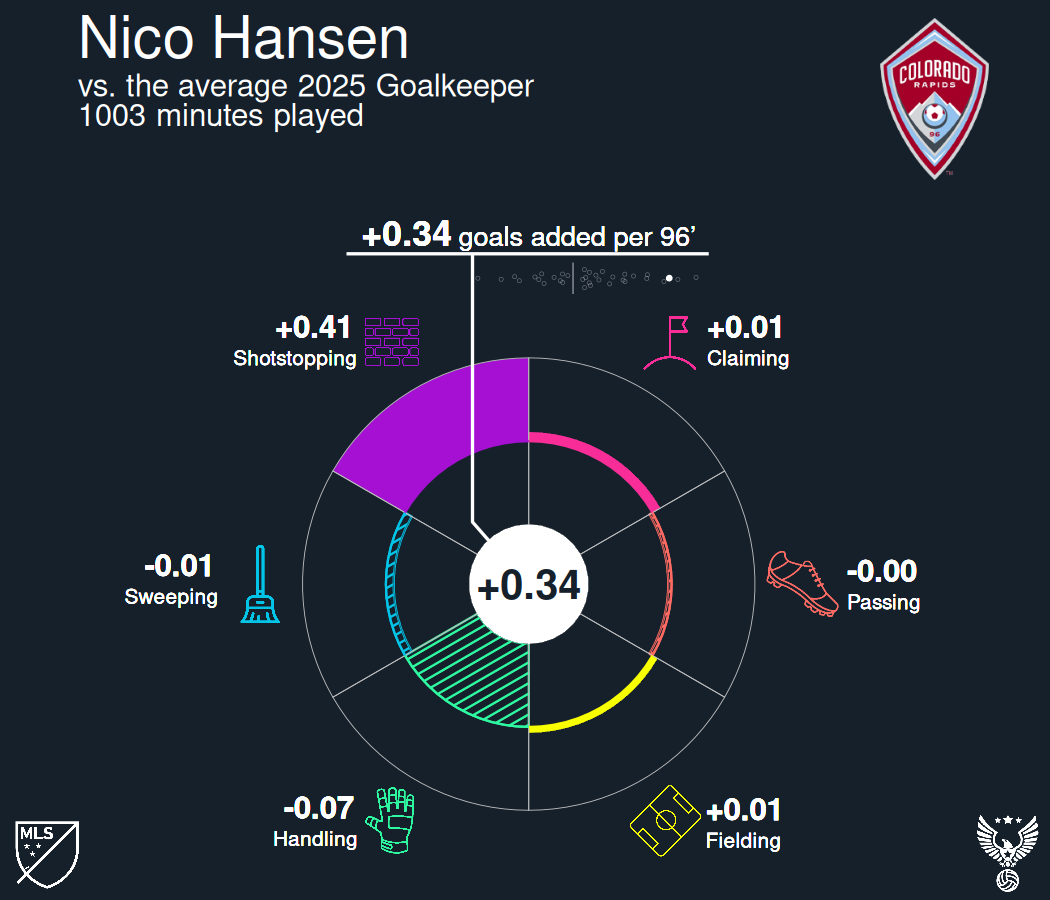
Zack Steffen arrived on a free transfer from Manchester City in 2024 and proceeded to have one of the worst seasons of any MLS keeper that year, allowing -0.31 goals added per game compared to the average keeper. He then turned it around in 2025 and had one of the best seasons in the league, preventing +0.32 goals added per game, and helping keep the team in the playoff hunt long after they really deserved it. Backup keeper Nico Hansen also filled in a thousand first-team minutes in 2025 and put up terrific numbers (+0.41 shotstopping g+ p96), though his underlying numbers for Rapids 2 were much less impressive (-0.17 shotstopping g+ p96). It was good enough to earn him a new contract that contains team options through the 29-30 season. It’s hard to imagine Hansen’s salary will be anywhere near Steffen’s $1 million in 2025, so I expect Steffen’s 2027 option will be declined (if he is not moved at a cut-rate price in the next two windows, or bought out).

Defenders
Danish viking Andreas Maxsø is the club’s most notable departure in the offseason after playing 10,000 minutes for the Rapids since 2023. However, his underlying numbers were spotty, and it’s undeniable that team defense was a fatal flaw during his entire tenure. Matt Doyle’s 2025 postmortem made me understand something I had missed: the only true period of Rapids success since 2021 was Moïse Bombito’s glorious few months in 2024. Without one of the fastest players I’ve literally ever seen to cover for mistakes, the Rapids have constantly leaked scoring opportunities, and especially up the middle in humiliating fashion, ranking as one of the worst teams in 2025 by xG allowed.
Three centerbacks have arrived in the last year that will look to own this now vacant role leading the defense:
While four options at fullback remain with experience at the club:
Frankly, no defender had an individually good 2025, and Armas was constantly shuffling lineups around like his first name was Jurgen. And if the team needs help anywhere on the roster, it’s on the backline. Figuring out exactly who the consistent backline starters are and helping them succeed are Wells’ most important tasks over the next few months.
Midfielders
The club has signed 22-year-old Nigerian defensive midfielder Hamzat Ojediran from Lens in Ligue 1 for a reported $3 million transfer fee. I’ve only watched a highlight reel and checked his per-match Fotmob stats, but I’m encouraged here. Rapids midfielders have lacked a certain grit since the old days, and fans have wanted this addressed for a while.
As Ojediran slots into the central midfield, two long-time homegrowns are on the way out. Cole Bassett is joining Portland for a minimum $2.65 million cash trade (up to $3.7 million reportedly), while Oliver Larraz is leaving for Vancouver as a free agent. Keeping even one of these players would have meant a true log jam at midfield, but both departures mark a major change for the Rapids as they were two of Armas’s favorite players in 2025:
While the midfield often suffered from a lack of spark, Paxten Aaronson added major offensive value with his initial minutes in Colorado. But while the departed Djordje Mihailovic’s g+ value came almost entirely from his pin-point passing, Aaronson’s came from receiving, shooting, and dribbling. Having a proper preseason will help him and his teammates adjust to each other, and I’m excited to see what his production can be in 2026. This could also finally be Connor Ronan’s big year. He flies under the radar as one of the league’s best passers (0.07 passing g+ p96 in 2024 and 2025), and is probably best suited as an 8 despite mostly playing withdrawn for three seasons. Pairing with two young defensive midfielders in Atencio and Ojediran, Ronan’s passing will be key for connecting to the next attacking line and progressing into the final third.
Forwards
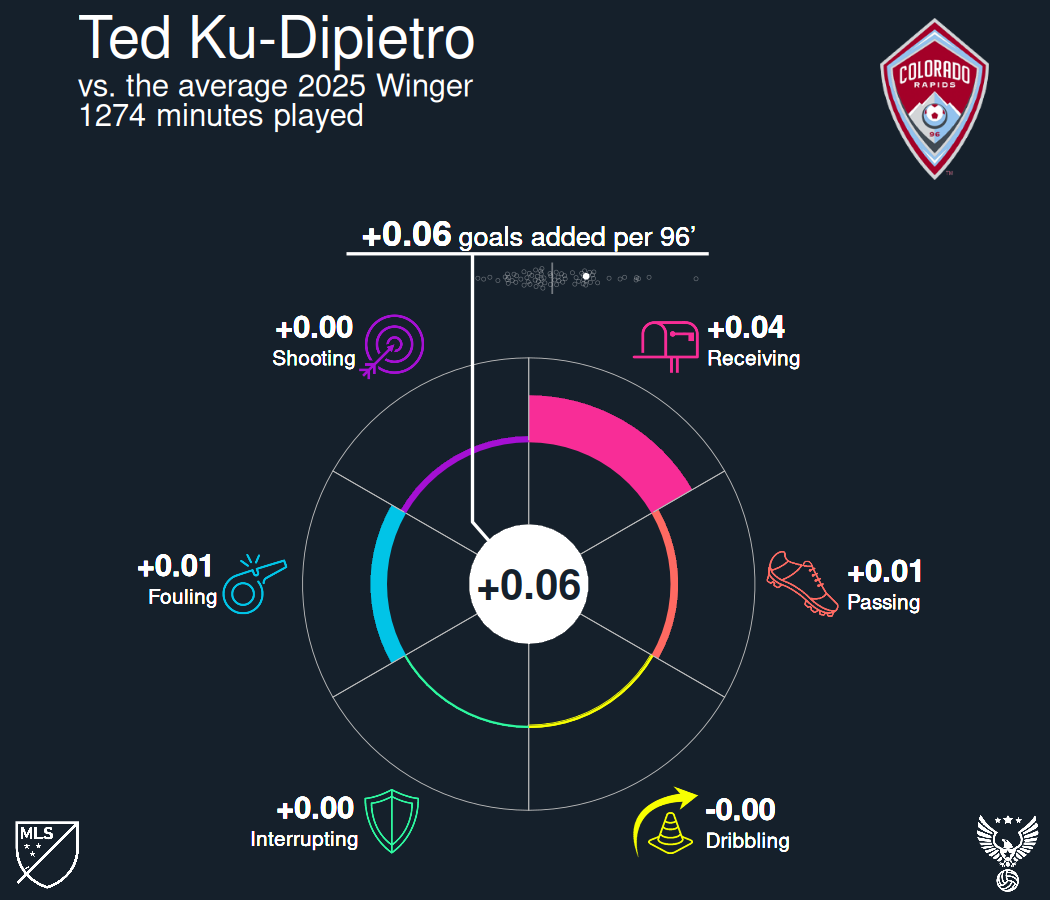
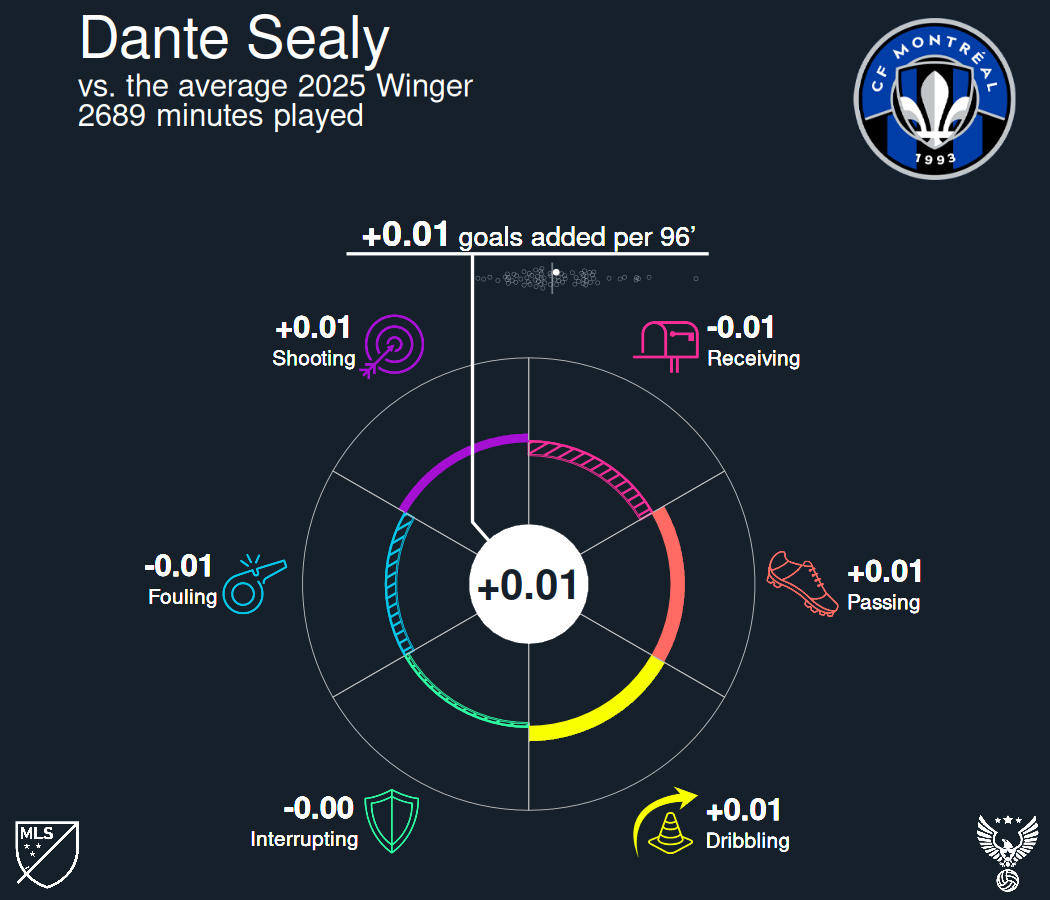
The other significant addition the Rapids have made this winter is trading away at least $1.9 million GAM over the next two years to CF Montréal for Dante Sealy. Sealy made a big step forward in his career in Montréal in 2025, putting up nine goals, one assist, and average underlying per match stats across the board as a 22-year-old in his first season as a starter. Average production for a team as trash as Montreal is fairly impressive. He and 23-year-old Ted Ku-Dipietro, who did not play nearly as many minutes in 2025 but also had solid underlying numbers, are likely to get the bulk of starting time on the wings, with a small army of attacking prospects looking to earn substitute and rotation appearances.
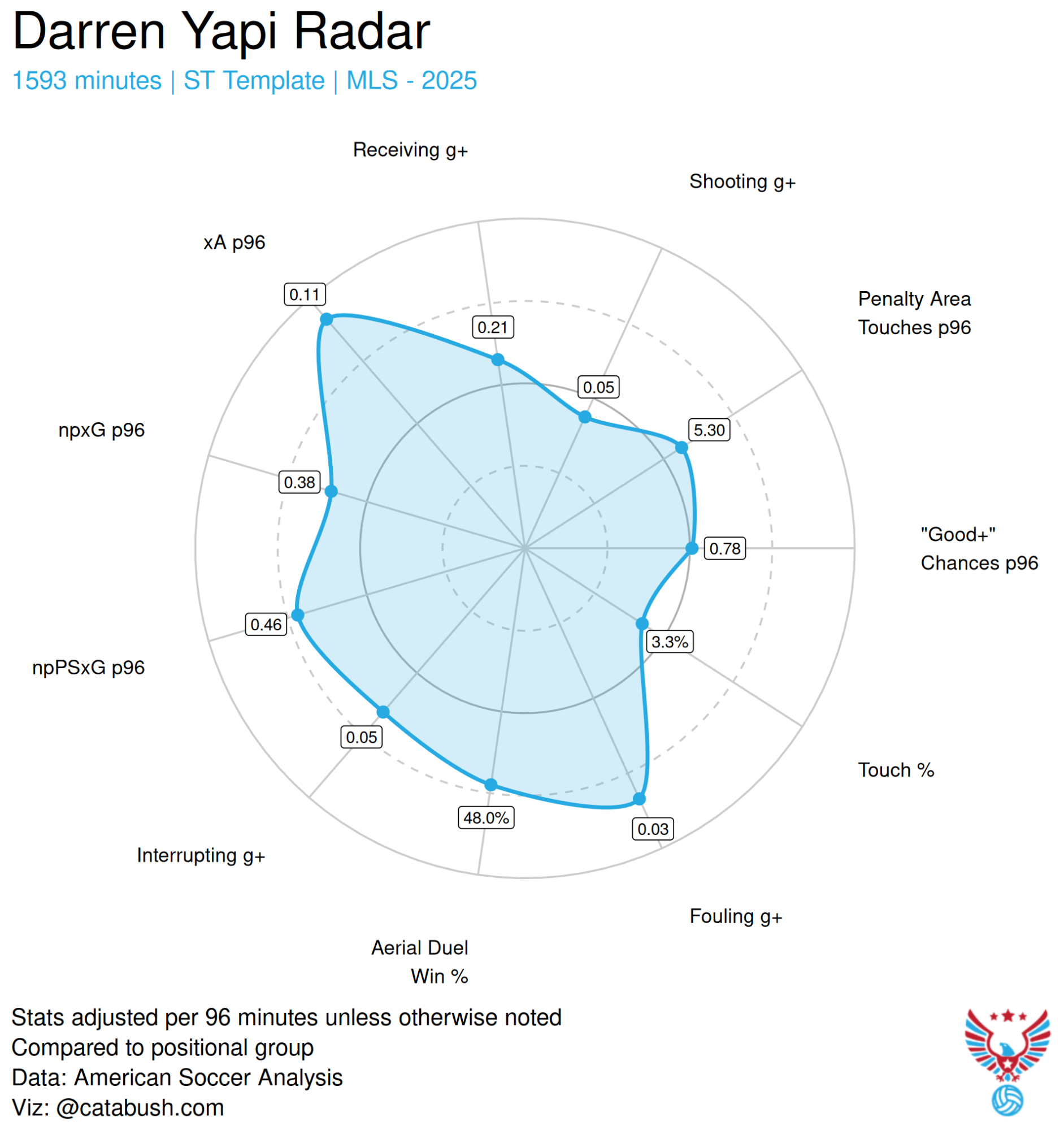
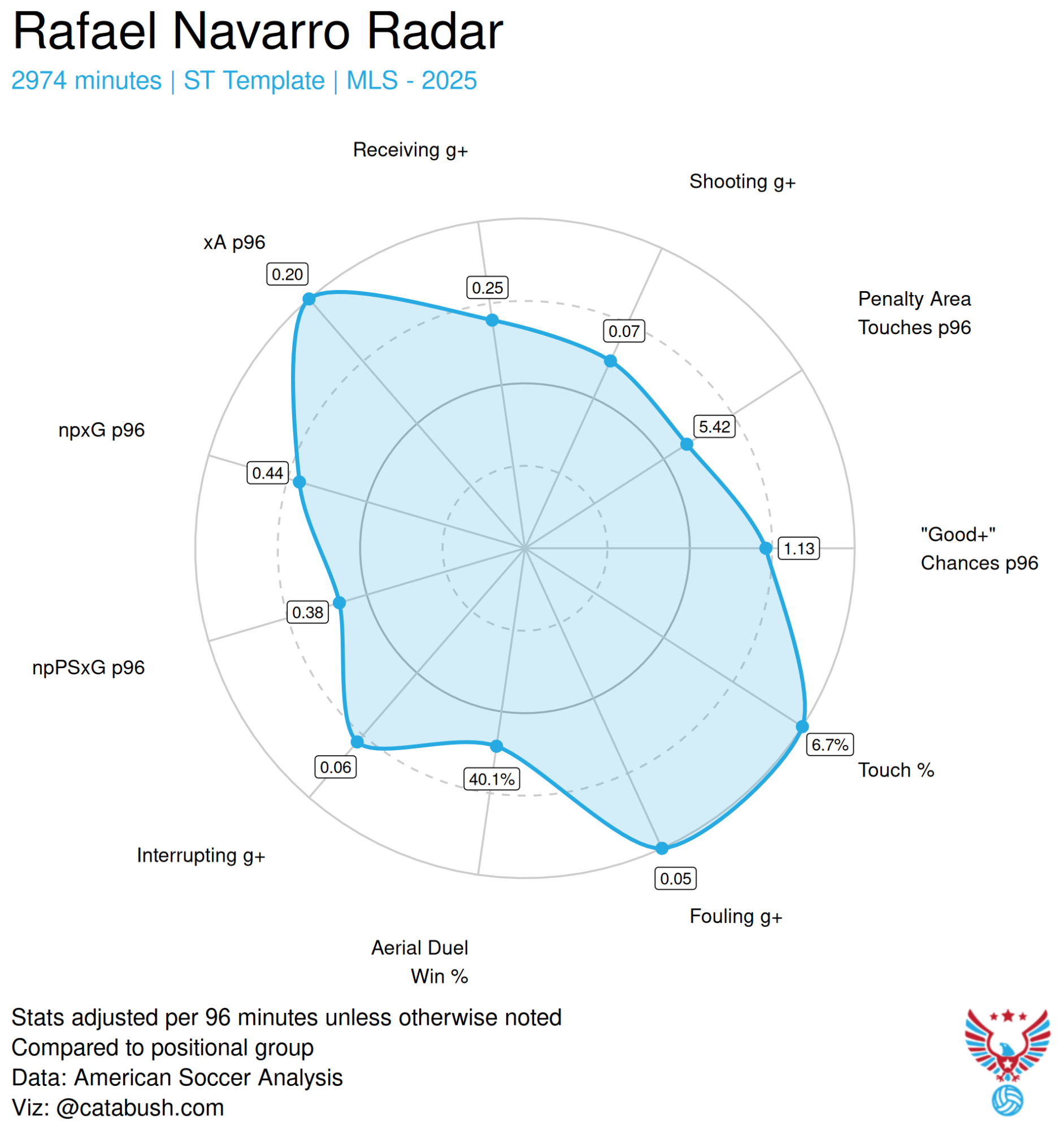
Finally, the Rapids have two of the best young strikers in MLS. Since he first arrived on loan from Palmeiras in July 2023, Rafael Navarro has scored a goal every 2.5 appearances, among the best rates in club history alongside John Spencer and Conor Casey. He is a dominating physical presence, consistently gets in dangerous positions to take shots or earn set pieces, and remains a pressing workhorse. The Rapids have a player option on Navarro’s contract through 2028, so the FO doesn’t need to rush to sell him, and will be looking for the right price. 21-year-old homegrown Darren Yapi is poised to pick up Navarro’s mantle when someone does offer that price. His game is still developing, but he has shown consistent growth year over year. He is an ideal backup that doesn’t represent too big a drop from Rafa’s high standard, and the strikers are perfectly comfortable playing together too.
Outlook for 2026 Season
I’ll be paying close attention to Matt Wells’s tactical decisions over the course of 2026. My best hope for hiring Armas in 2024 was for the Rapids to play a style that Futi calls “press and possess” (for 2025, Futi rated them “bunker and counter”). I have always maintained that the Rapids have a red blood cell count advantage over every team in MLS, and they should use it. They should move the ball around to tire out their opponents at altitude, and they should use pressing to create danger and cause mistakes at every opportunity. Wells used the word “dominate” a couple times in his press conference, which is a very tangible word to use at 5,000 feet above sea level, and I will be looking for evidence.
I must write this every year, but: the Rapids look like a 5-9 seed playoff team to me come November, partially because I don’t see much improvement in their Western Conference rivals as of yet. I hope there are more moves to come in the spring and summer, but Colorado has already moved on from nearly half of their minutes played in 2025, and this could shape into a decent team in a weak conference. But that defence has to come together for it to happen.
Espi-NO-za and AraN(g)O
Your alarm goes off, the sound of local radio playing in your ear prompting you up to face the day. It’s February 2nd… again, so you begrudgingly drag yourself through the same day, hoping that the variations you make in your schedule will lead to a better outcome and you can escape this cycle of monotony. This is life for the Earthquakes in the John Fisher era. Since restarting the franchise in 2008 the Quakes had one inexplicable success in 2012, when they won the Supporters Shield, and have otherwise yoyo’ed between the Wooden Spoon or barely making the playoffs. Coaches have come and gone, General Managers have been cycled through, and players have arrived to much fanfare, only to shuffle out the door with no change in outcomes.
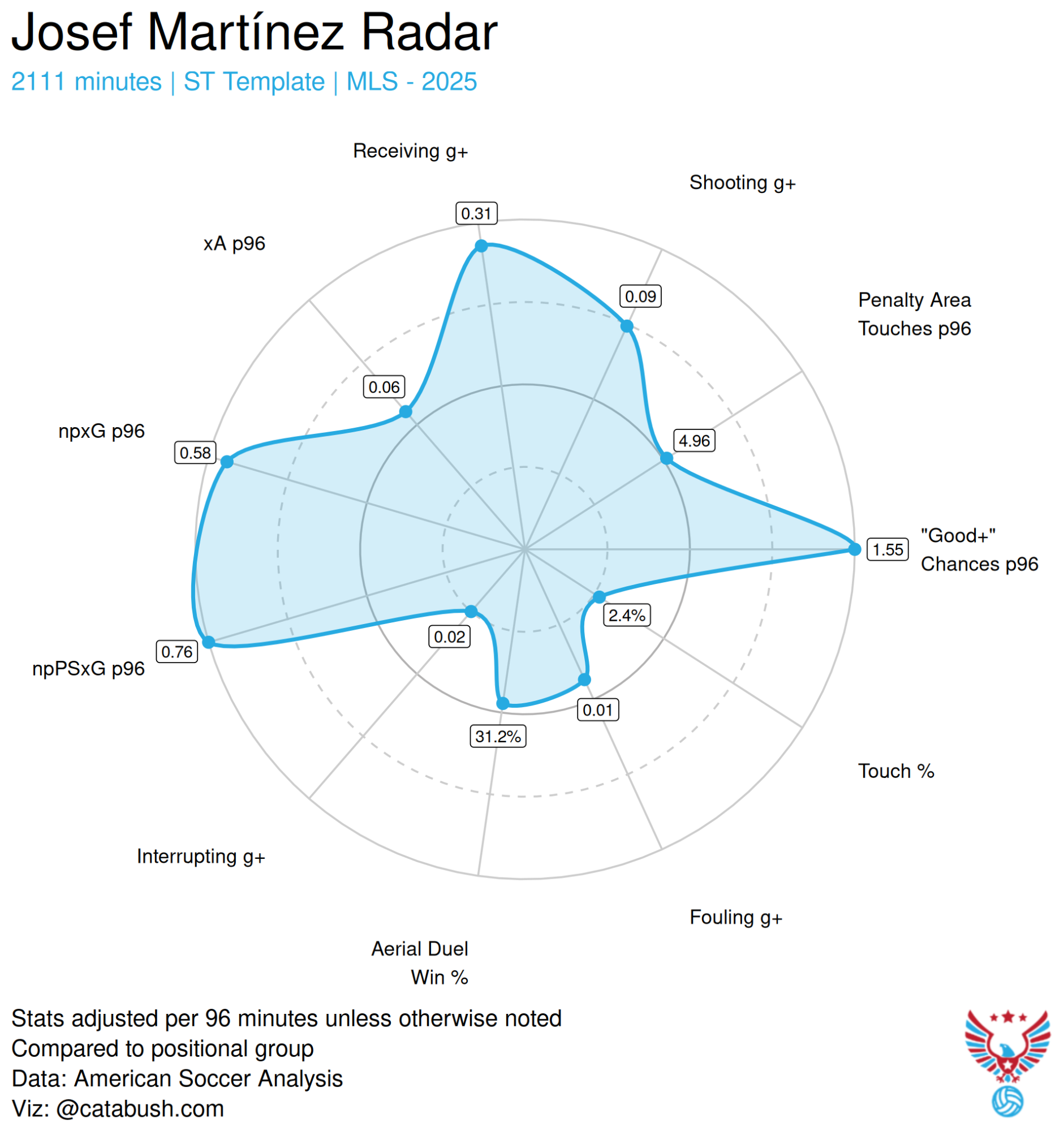
The 2025 season saw the Quakes finish closer to the upper bound of these vacillating results, just missing the playoffs by virtue of Goal Difference. Under the latest Coach/GM Bruce Arena, the team saw departures and acquisitions that significantly changed the team’s lineup, resulting in formations based around a three at the back system. The offense, lead by longtime standout winger Cristian Espinoza, and bolstered by the additions of Josef Martinez and Chicho Arango, were top ten in the league in both goals scored (58) and expected goals scored (64.7). On the other side, the reworking of the defensive shape didn’t lead to nearly the same level of improvement as they were bottom ten in goals allowed (61) and middle of the table in expected goals allowed (54.9).
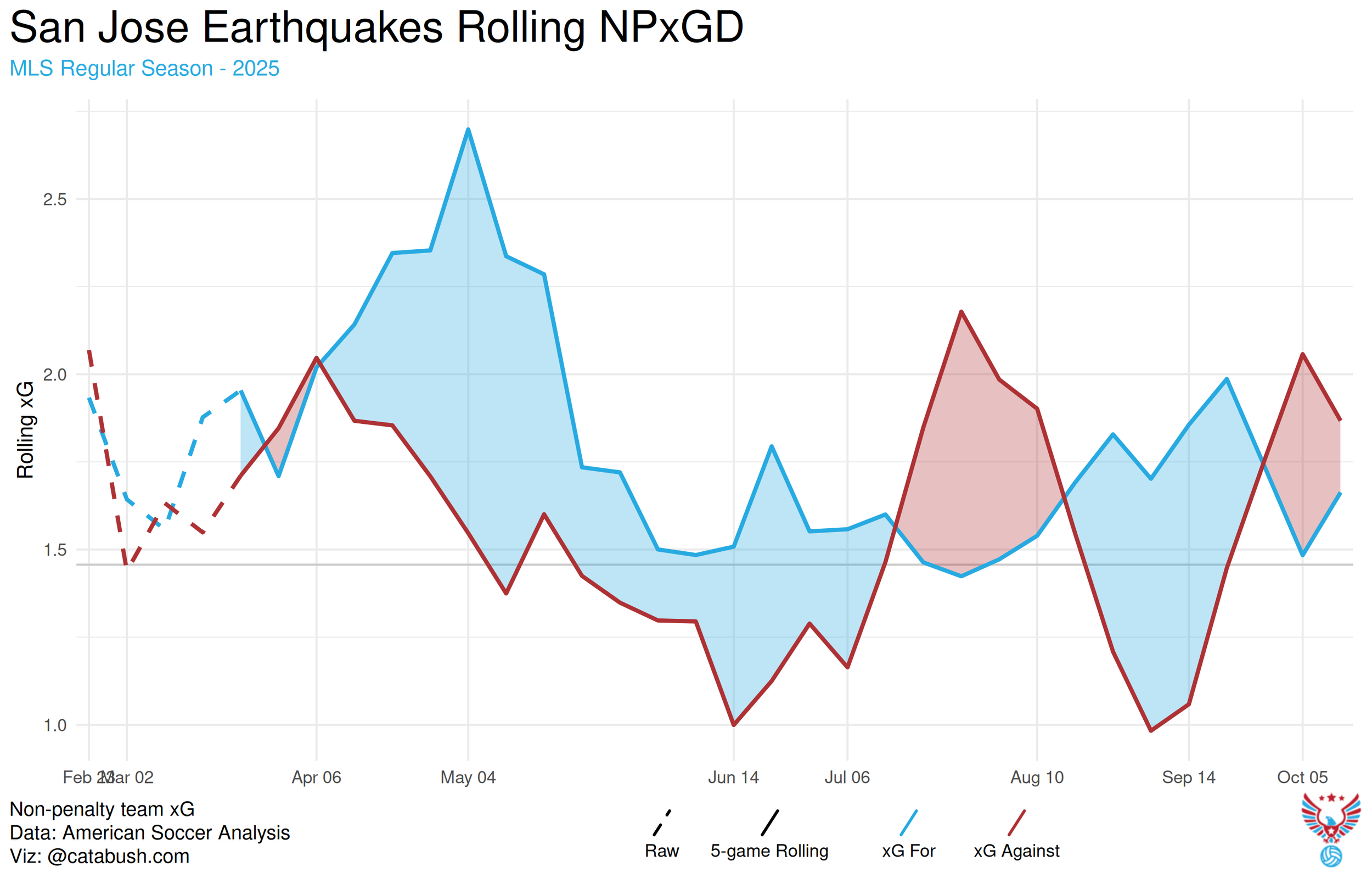
Despite all the positive underlying numbers the Quakes underperformed their expected points by 12, so with a bit of positive regression would have made the playoffs as the 5th seed in the West. To carry that forward into the 2026 season the team has jettisoned nearly 35% of the total minutes from 2025, including leading attackers Martinez (14G 2A), Arango (13G 3A), and Espinoza (4G 8A). With more than 50% of the team’s goals scored heading out the door, the team will be reliant upon the development of remaining players and one key addition.
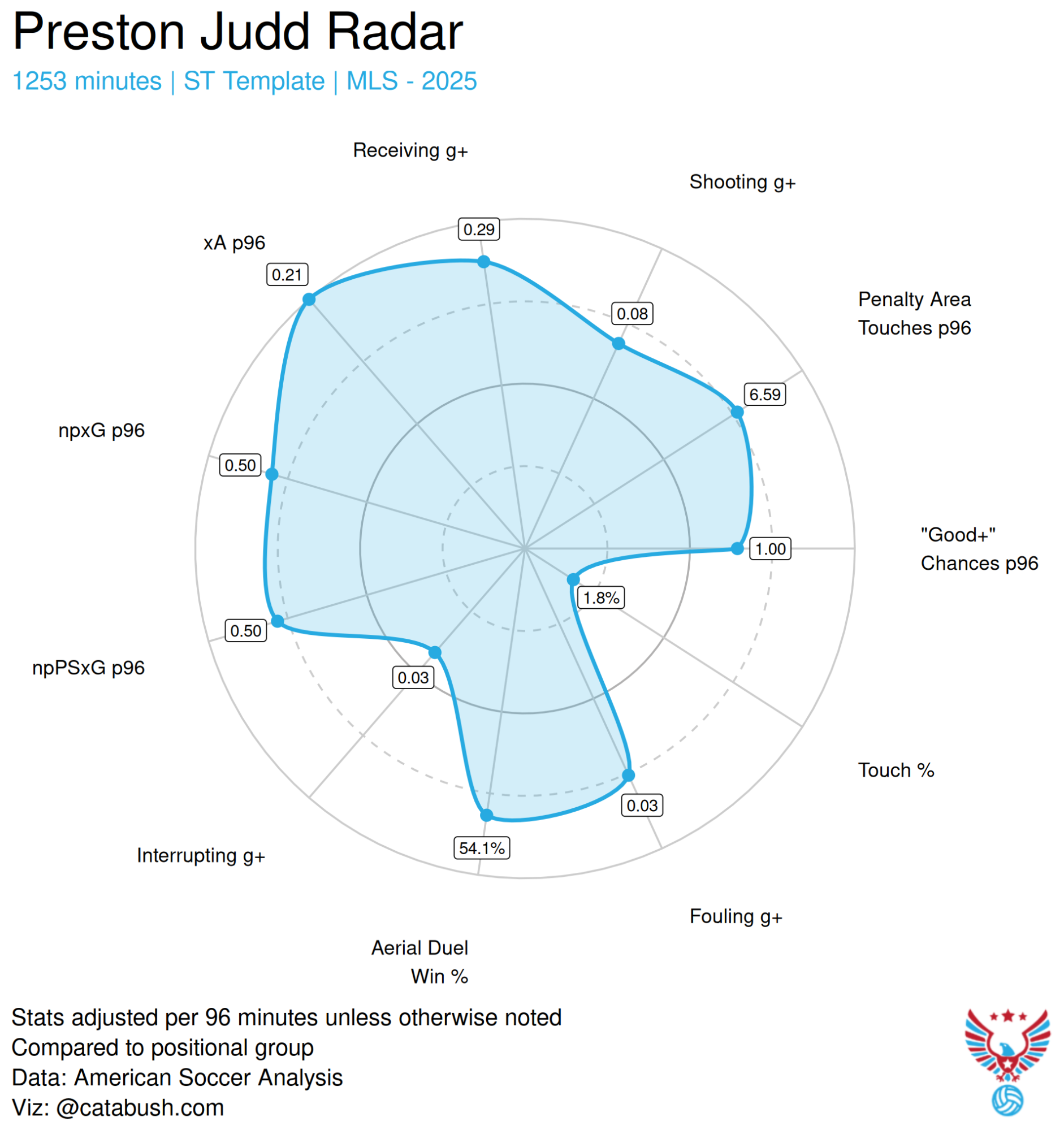
On the development front there are indications that Preston Judd will be able to replace some of the production of Martinez up top. While Judd’s p96 attacking numbers were not as elite as Martinez’s, they were close, and that was paired with superior passing and high level defensive work.
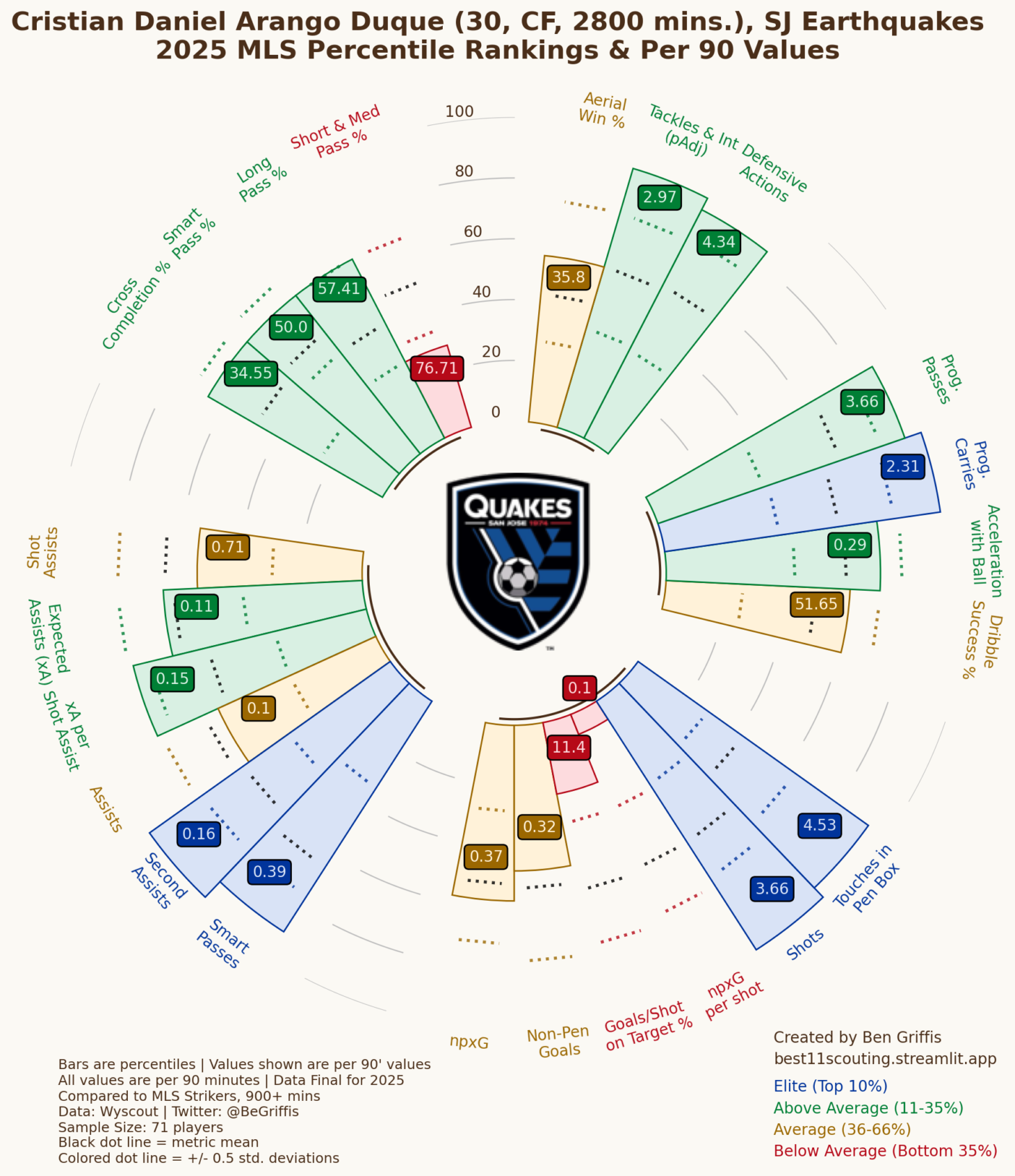
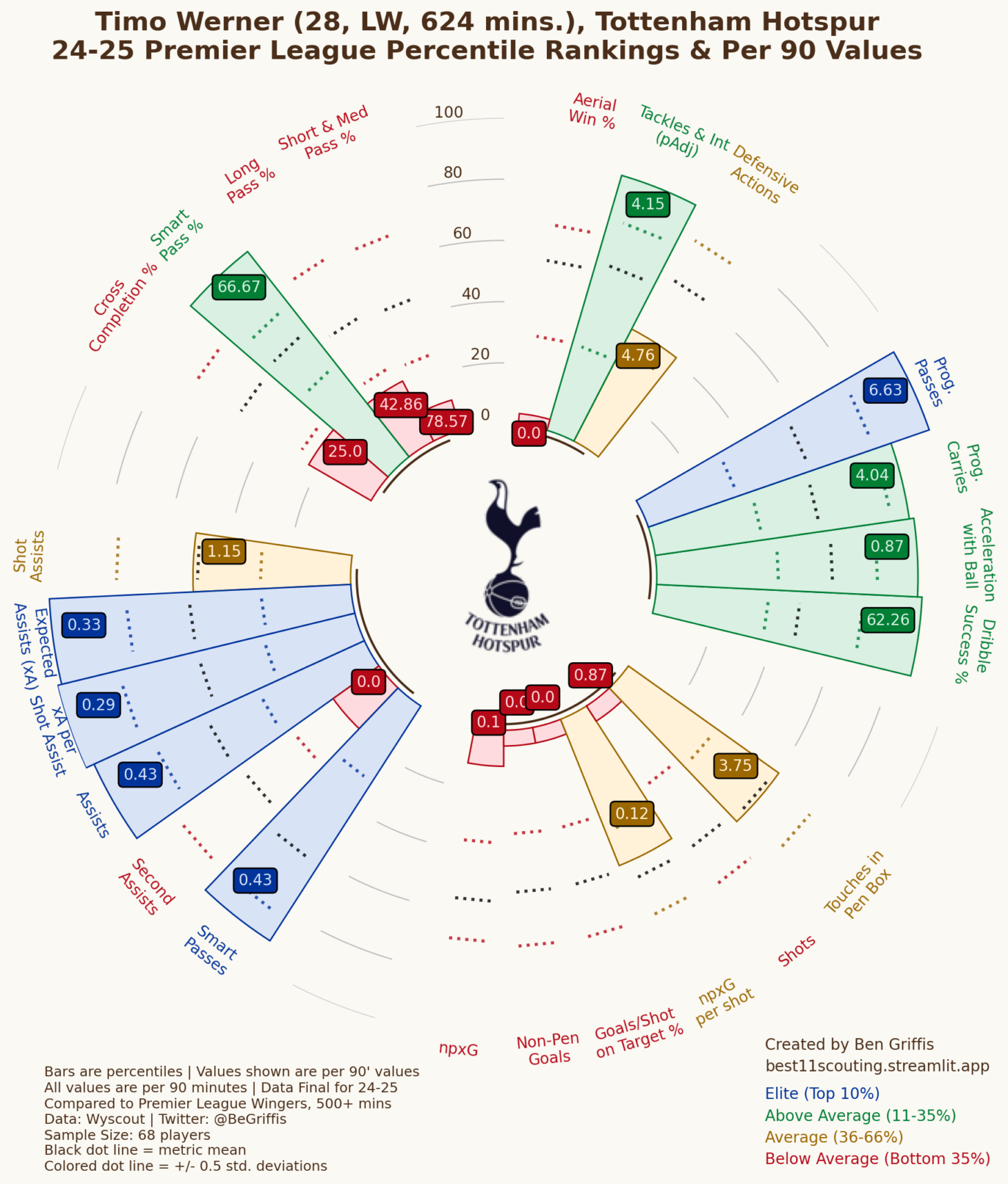
To replace Chicho Arango as the second foward/winger, the Quakes have brought in German National Teamer Timo Werner. While he has barely played during the current Bundesliga season, Werner’s last full season was 24/25 where he featured for Tottenham in the Premier League. Chicho put up elite attacking numbers in 2025, but his production tailed off as the season wore on. In contrast, Werner is a year younger and was putting up comparable metrics in the most difficult league in the world. If he can stay healthy and produce across a full season, Werner should provide a significant upgrade in the attack. Werner has consistently been an excellent creator for others, both as a final third passer and with his pace in behind opening up space for guys between lines. If he can beat the sunburn of a German Tourist, he will mash sluggish centerbacks in July.
The departure of team talisman Cristian Espinoza via free agency (don’t ask), leaves a void in the chance creation side that hasn’t been addressed. While the Quakes used all three Designated Player spots last season, only the one is currently filled by the aforementioned Timo Werner. There should be some expectation of player acquisition to ease the burden of Espinoza’s loss, beyond just hoping that emerging youth will suffice. During the introductory press conference for Timo Werner, Arena said as much when he spoke to a possible one or two more signings.
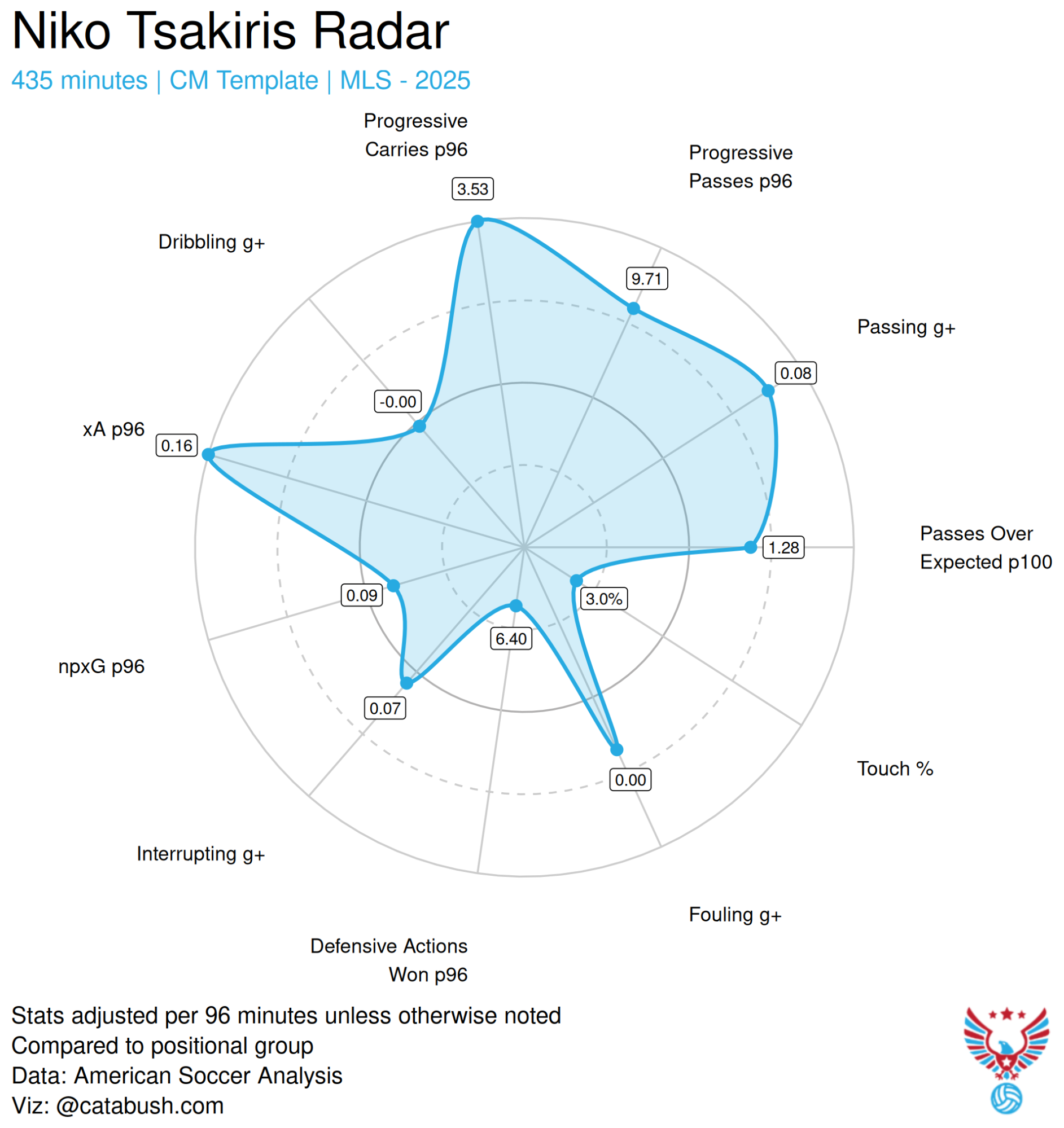
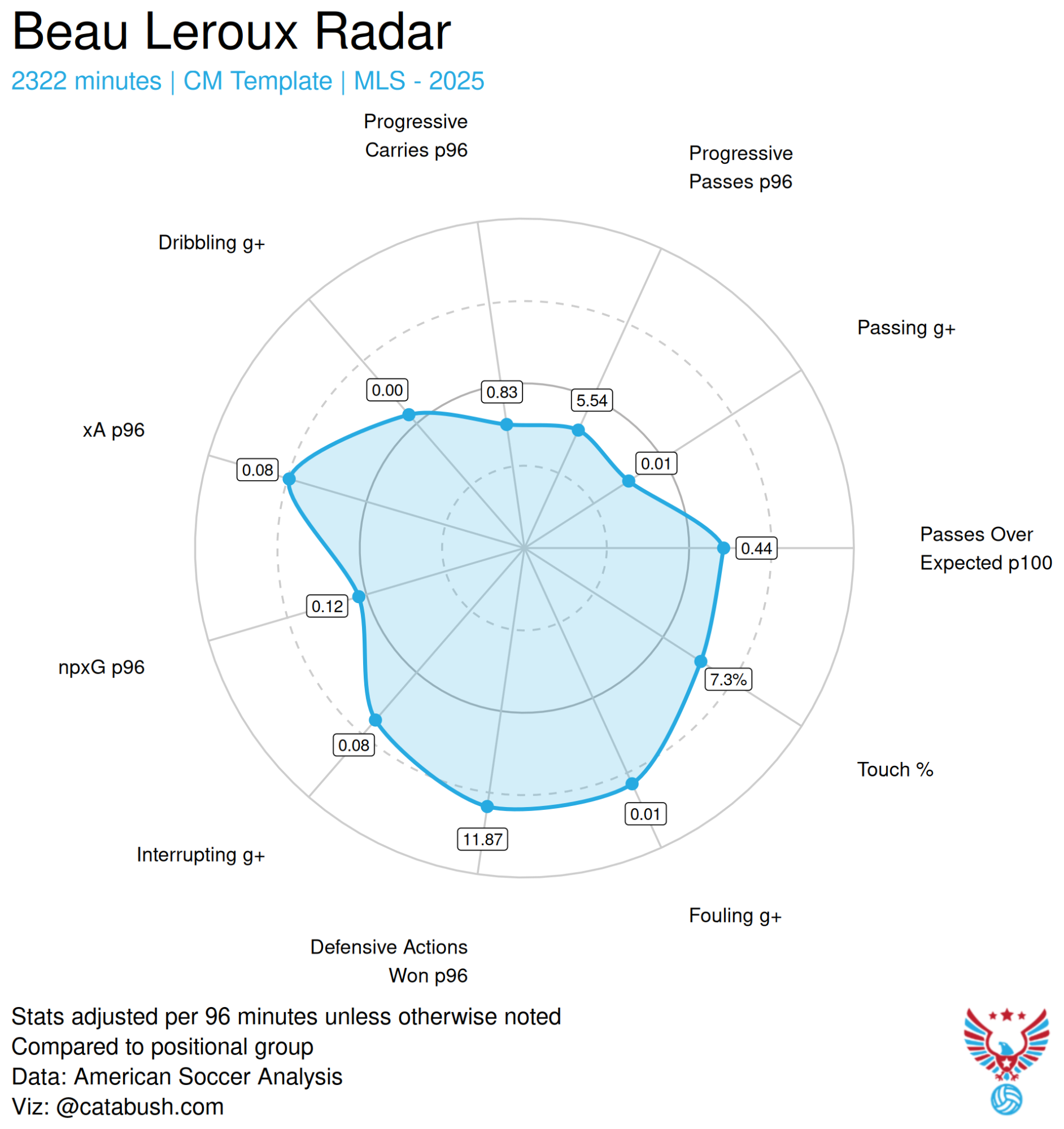
On the youth development front, the biggest changes are coming from central midfield and central defense. The surprise emergence of Beau Leroux as an above average midfielder helps a lot here, as he excelled at front foot defending and combining in the final third. Next to him is Niko Tsakiris, the long awaited youth prospect, who is finally breaking through after playing well at the U20 World Cup. Tsakiris is a superior ball progressor, both on the dribble and with his passing.
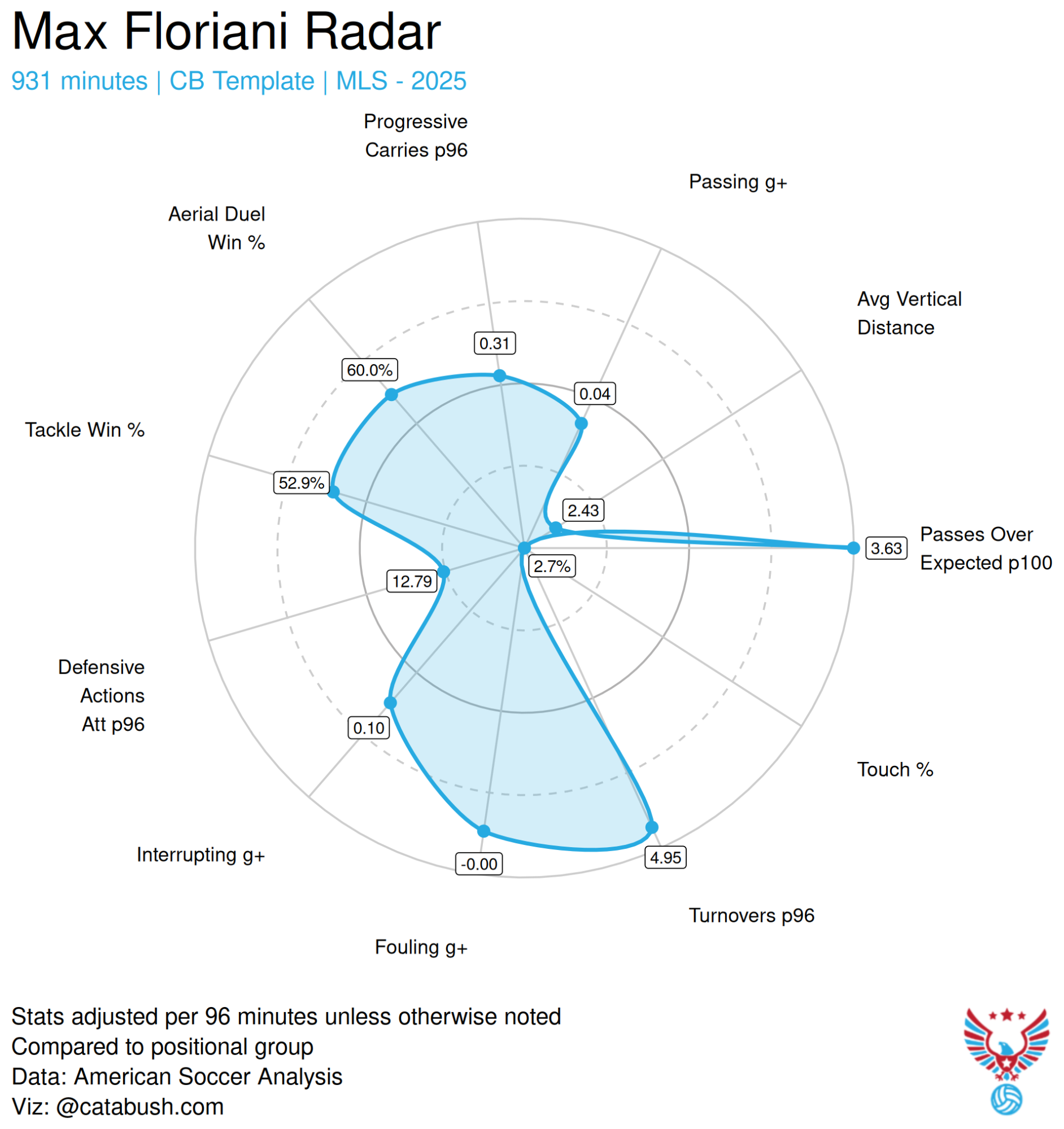
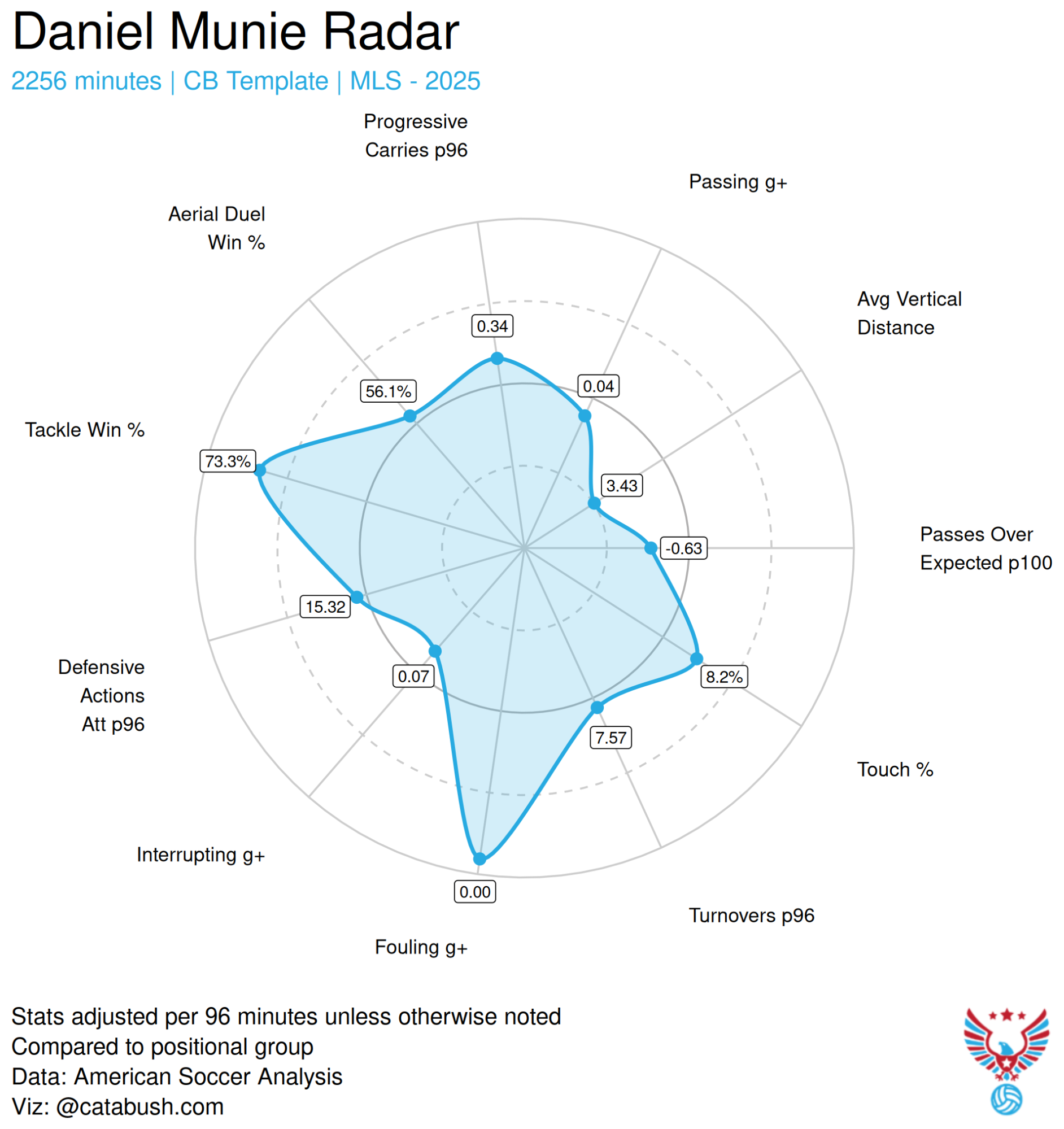
On the defensive side, Daniel Munie finally pushed through into the regular starting XI, and was quickly one of the best centerbacks on the team. The downside is that the most productive CB on the Quakes, Rodrigues, fell out of favor with Arena, saw his minutes dwindle, and has since returned to Brasil. The expectation is that recent draftee Max Floriani, or possibly Reid Roberts, will push forward into the starting XI to pair with Daniel Munie going forward. Floriani and Roberts spent much of the season playing down with the Quakes MLS Next Pro team, The Town, where they marshalled the top defense in the West, with only 36 goals allowed in a 28 match season.
With two CBs leaving the team, Rodrigues and Bruno Wilson, and no other additions, the expectation is that the team will return to a four at the back formation in 2026. There is also a dearth of natural wingers on the team, especially with the best of them, Espinoza, now playing for Nashville. The addition of Werner, who’s best successes have come as a striker in a pair, points more towards a two forward formation, which will allow Werner and Judd to play off each other up top. This opens up the Midfield for both Leroux and Tsakiris to play higher up, while last season Defensive Midfielder, Ronaldo Viera, can play underneath them. Overall these personnel changes point to a formation shift into a 4-4-2 diamond, which has been noted by Matt Doyle. The formation has been used previously by Arena to solid effect. Only thing missing from team to best align with a diamond formation is the true creative #10 to play underneath Werner and Judd. But given how that role has fallen out of favour in the global transfer marketplace, the Quakes could recruit someone quite good here without too much trouble, particularly with some open DP slots.
While there have been numerous departures from the Quakes, there is as of yet only one significant addition this offseason. Arena is showing a lot of faith in the youth on the roster to take a step forward. The underlying numbers of last season show that this team performed well enough to finish solidly in the playoff spaces, but can the remaining roster match that outcome? Timo Werner brings a level of elite production that this team hasn’t seen before and maybe Judd can fully replace Martinez’s goals. The changes in defense, the probable formation change, and the improved defensive performance from the players higher up the pitch could see the Quakes fix the goal conceding that sank them in 2025. They’ll hope that 2025 Daniel was a blip in goalkeeping, that his downturn is not a slide brought on by the consistent injuries, and that we might see the 2023 version again. More likely we’ll wake up tomorrow, the alarm clock playing “I Got You Babe”, while the DJ welcomes us to another February 2nd. Time to hit that snooze button.
Rotund Sized Learnings
Look, I'm here to write to the people that are probably not super familiar with this squad and bring them into their plight. I’m not here to get super squirrely and talk on and on about Lukas Magnason or Dylan Kropp, their pair of first round CB picks, and how that relates to the continuous long term rebuild of their backline.
So, if you are looking for deep analysis I have a few other stops for you to go and support:
Matt Montgomery and WASATCH Soccer Sentinel
Mattey Casey and the Royal Riot
Scott Omer Designated Pundits
Back in August, I kind of covered their 2025 season and if you didn’t read it let me save you some time and provide a very short synopsis: it was disappointing. Unequivocally. A team aiming for hosting a playoff game squeaked into a play-in wildcard spot with the narrowest of margins and with the talent floor rising across the Western Conference, the organization are now looking not to be left behind.
Part of last year's issues stem from the team really lacking the ability to close deals, you can probably say some of that was due to yet another ownership change, but the other part was simply key players under performing. The result of which has been some significant roster churn--which is inevitable and not nearly as drastic as say, Toronto or Sporting KC, but none the less the team is swapping roughly 3.5 starters out (Brayan Vera, Braian Ojeda, Diogo Gonçalves and Rwan Cruz) in an effort to retool what they do.
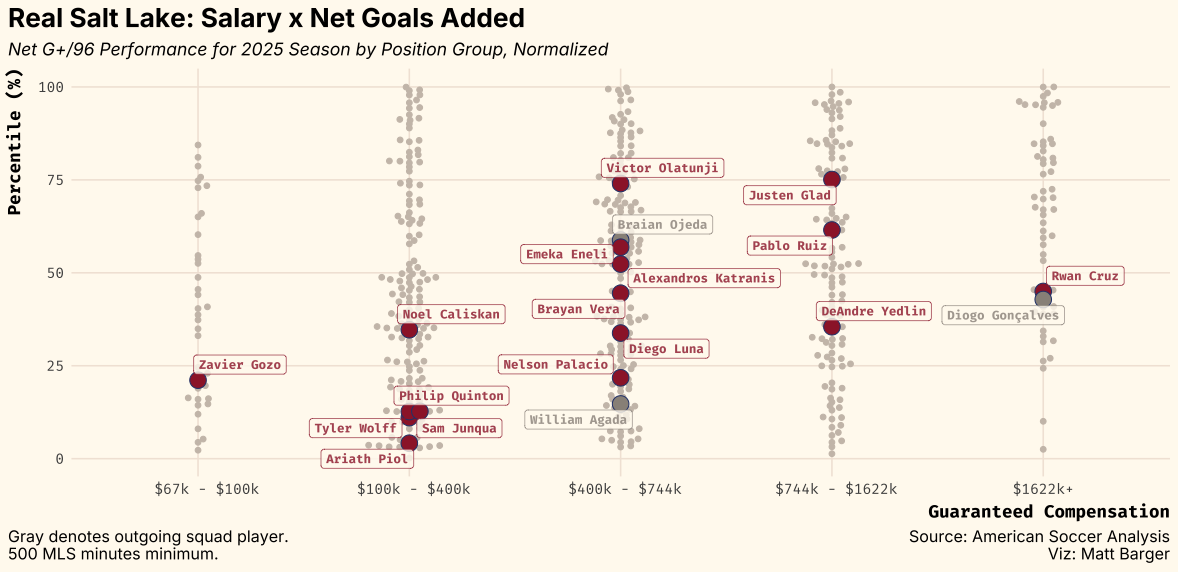
They look to replace them with centerbacks Lukas Engel and Juan Jose Arias, midfielders Stijn Spierings and Morgan Guilavogui, while also upgrading leftback by way of Juan Manuel Sanabria, and they'll have a full season of Victor Olatunji up top.
We’ll get to the incomings in a minute, but both the floor and ceiling of this team will be weighed and measured by its youth movement. RSL will actually roll out one of, if not the youngest roster in MLS this helped in part by off-season deals like the permanent transfer of Kobi Henry (21), the trade for Chance Cowell (17) and the loan deals of both Zach Booth (21) and Juan José Arias. Not to mention the four homegrown signings with ages ranging from 17 to 22. Yes, they added a lot of peak aged veteran talent, but kids are the variance spice we really want when cooking up a roster.
One to Watch
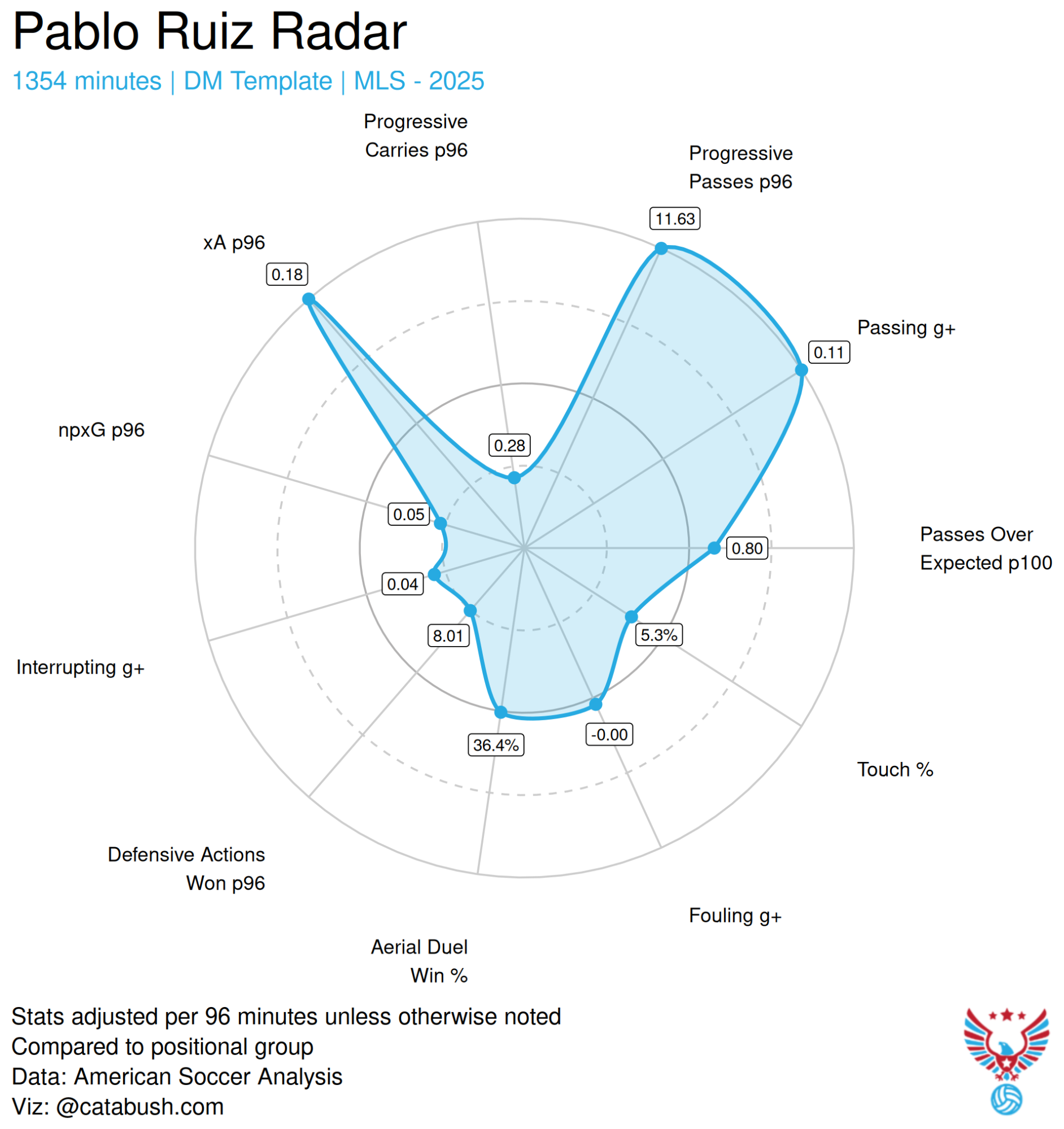
Amidst a potpourri of tactical identities under Pablo Mastroeni, Pablo Ruiz has constantly a difference maker for RSL… when he’s been on the field. Since 2022 Ruiz has played in only about 40% of available minutes and has missed as many as 55 total games due to knee injuries.
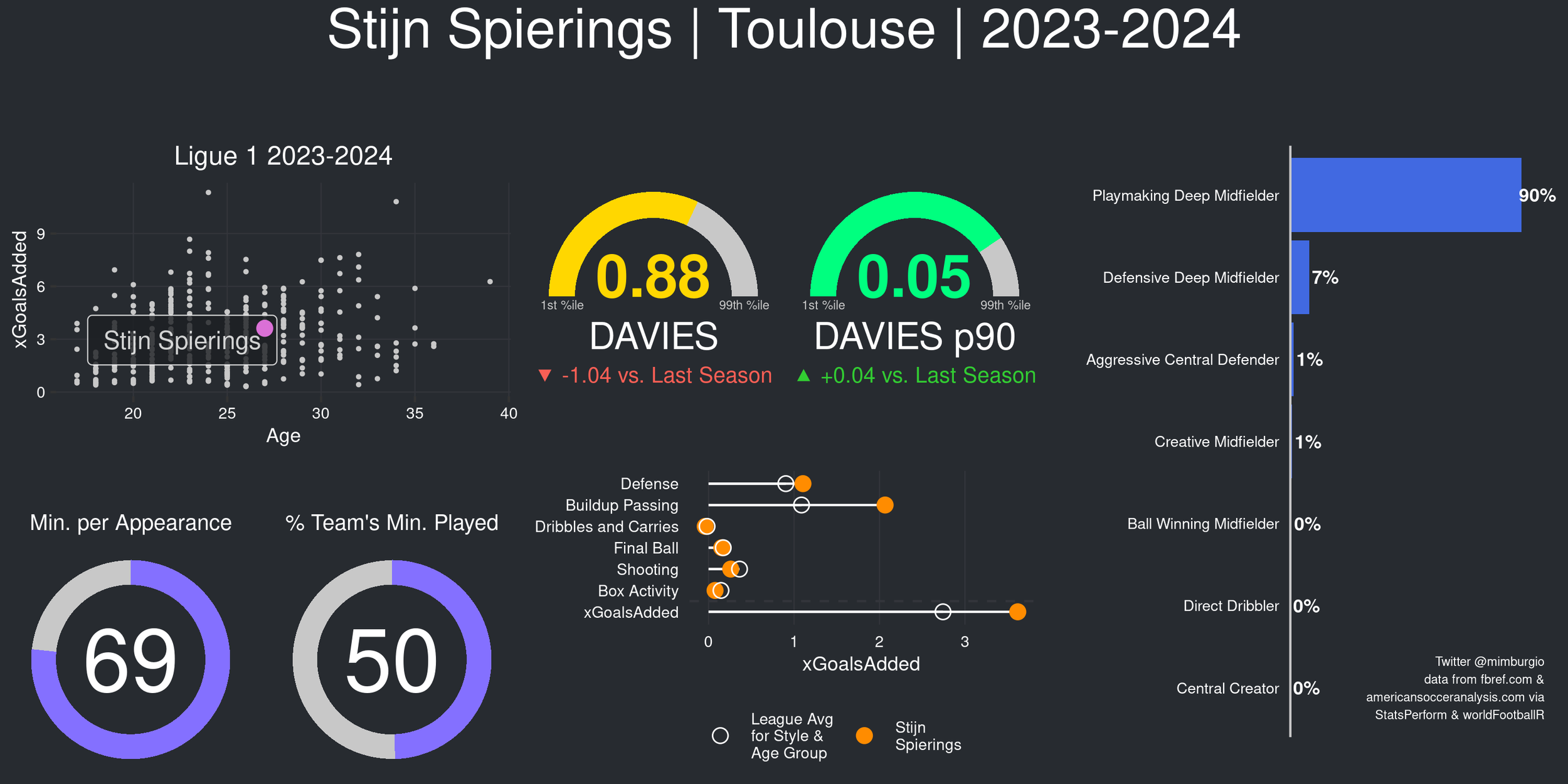
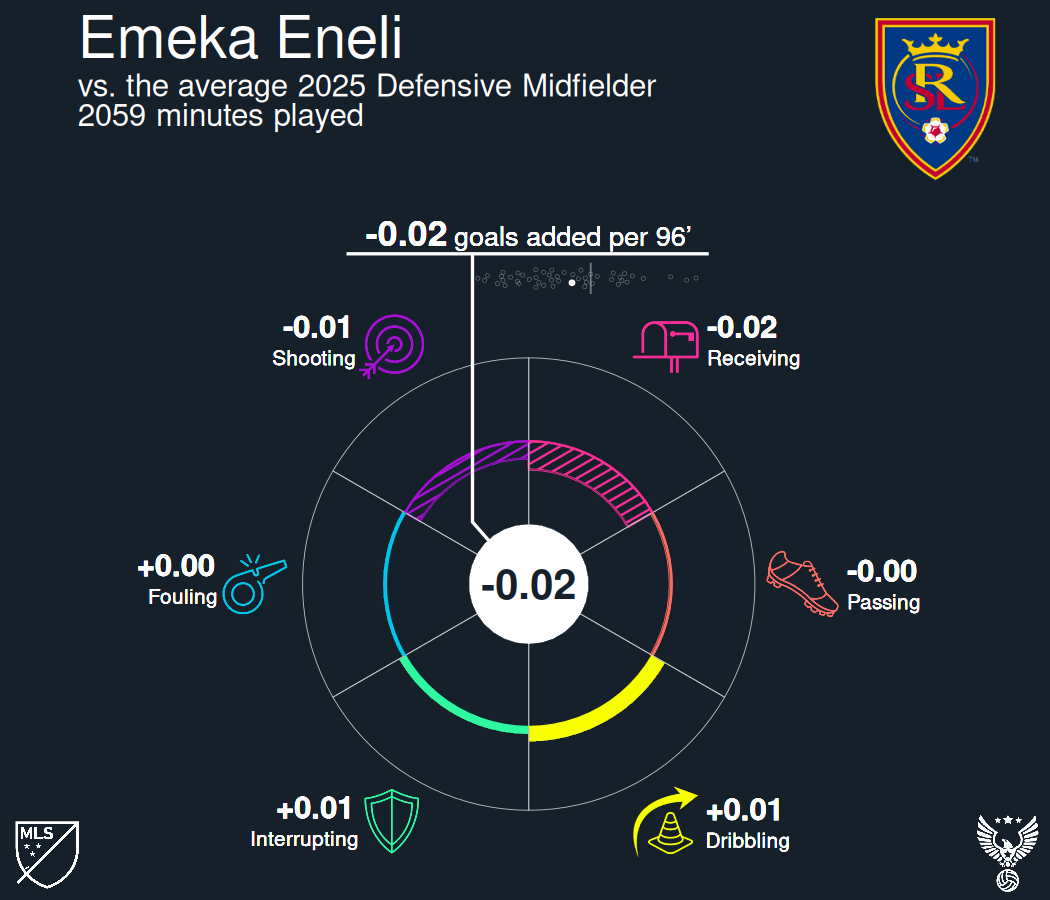
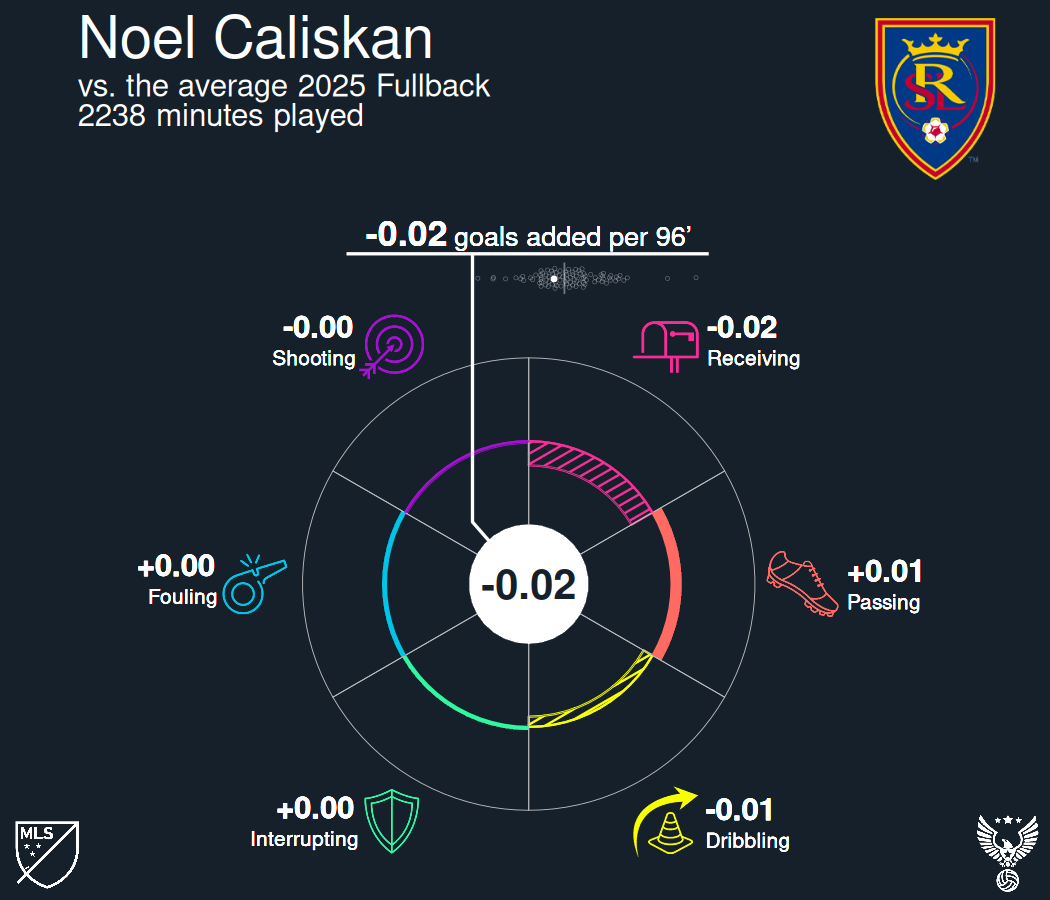
Following the transfer and rumor bread crumbs, the shift to a much more possession focused back three will both help and hinder Ruiz in Utah. The ability to get on the ball with consistent options ahead of him in presumably Guilavogui and Diego Luna, who can receive on the half turn and drive, is a huge plus. Similarly, the likely 3-4-3/3-4-2-1 system RSL are headed towards gives wingbacks the opportunity to stretch teams out, really letting progressive passers shine. On the flip side, defending in a midfield two like that is hard. For a dude with a track record of serious knee injuries, watch out. Luckily for them, they’ve got a pretty cleverly put together room for midfield two’s. Two guys who can super pass in Ruiz and Spierings, two guys who do everything to a decent level and cover ground in Eneli and Caliskan.
What if this all shakes apart
Make no mistake, this is a team who is kind of stuck in a clump of very average rosters among Western Conference and according to some early models, betting markets, and prognostications, they look like the 9th or 10th placed team. Doyle has their over/under at 39.5 points (and all three Soccerwise folks picked the under!) That isn’t to say they are a bad team or that they’ll end up there. Realistically this is a sliding scale and with a designated player spot still in their pocket for the summer transfer window they have a good chance to get better. But I think we need to talk about the incomings, because this team might be better now!
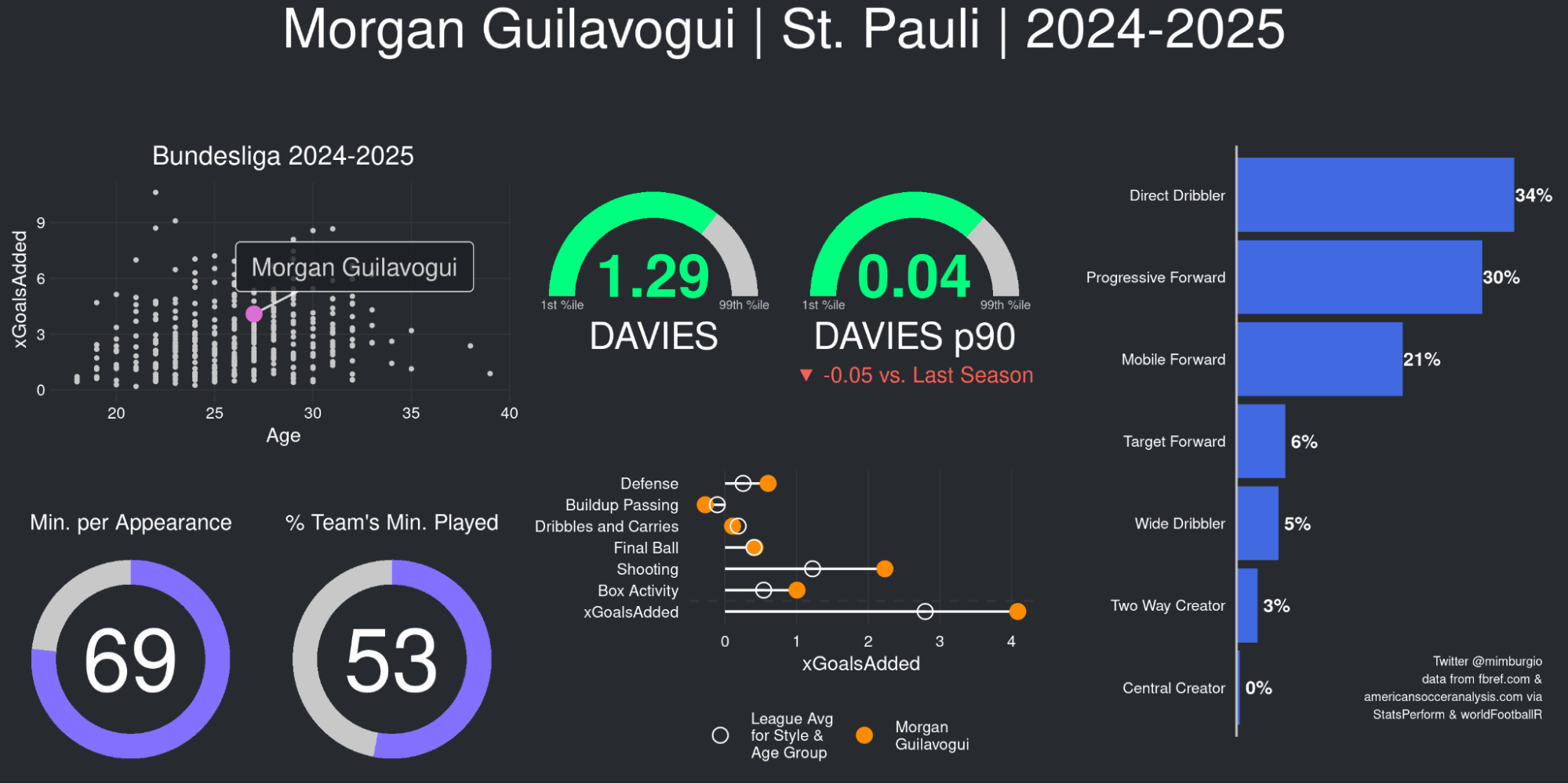
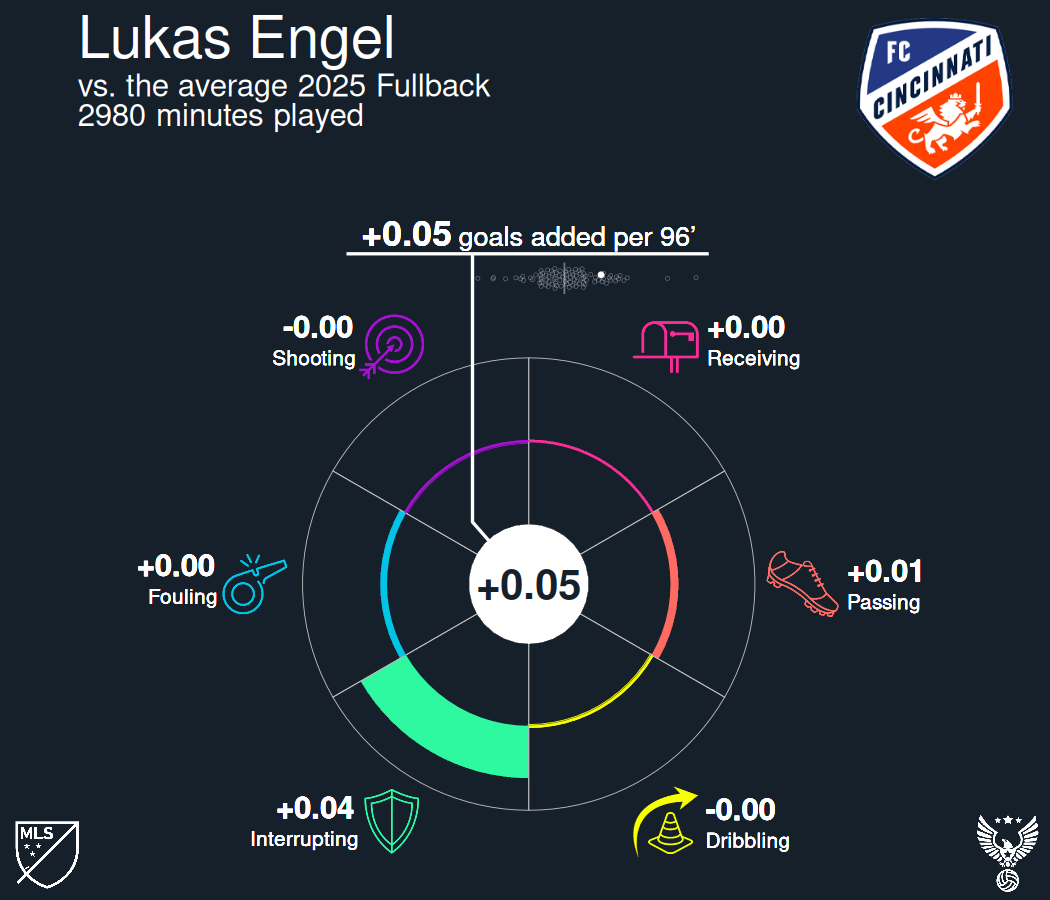
Lukas Engel is a peak aged, good fullback now. I suspect he’ll play outside centerback in the three, similar to how Columbus under Wilfried Nancy took Malte Amundsen from somewhat pedestrian fullback at NYCFC to plus plus passer outside CB in 2023. Stijn Spierings was a broadly league average midfielder in Ligue 1 for Toulouse and Lens two years ago. That’s a very good MLS midfielder. Morgan Guilavogui was very productive in Ligue 2, and reasonably so in the Bundesliga. From a talent translation play, these are not Israeli second division 21 year olds. These are peak aged players from leagues we know translate to MLS. And that’s before we get to Sanabria and Arias, who are well liked by the ball knowers of South and Central America. That’s talent investment.
How do they score goals?
The real question, and the one that defines how far they go this season, is how does this team score goals consistently. Obviously most people are going to talk about emerging USMNT star Diego Luna. A fun watch but one that the numbers are a bit less ambitious about. It’s not that he’s not a good player, it's that he’s just not hit that elite level by most standards we associate through looking at the data. Once upon a time, we wrote about “usage” as a concept for soccer, Luna is great, but has been wildly inefficient with the amount of touches he uses up in a given game.
Comparing his numbers to those peers in the attacking midfielder tier and again on the wingers show that he’s a bit caught between the two positions in terms of what he does of value on the ball in a possession value model.
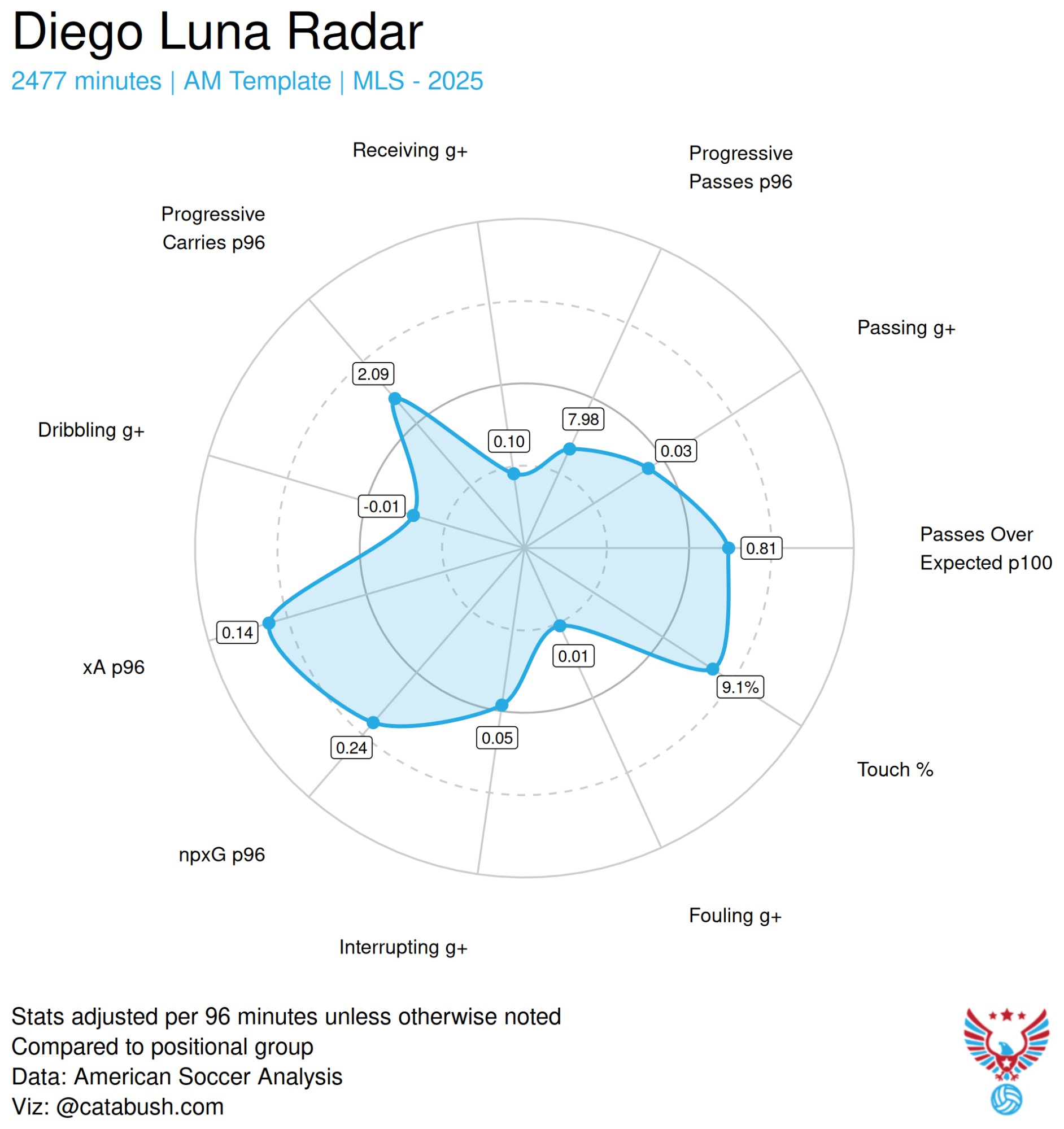
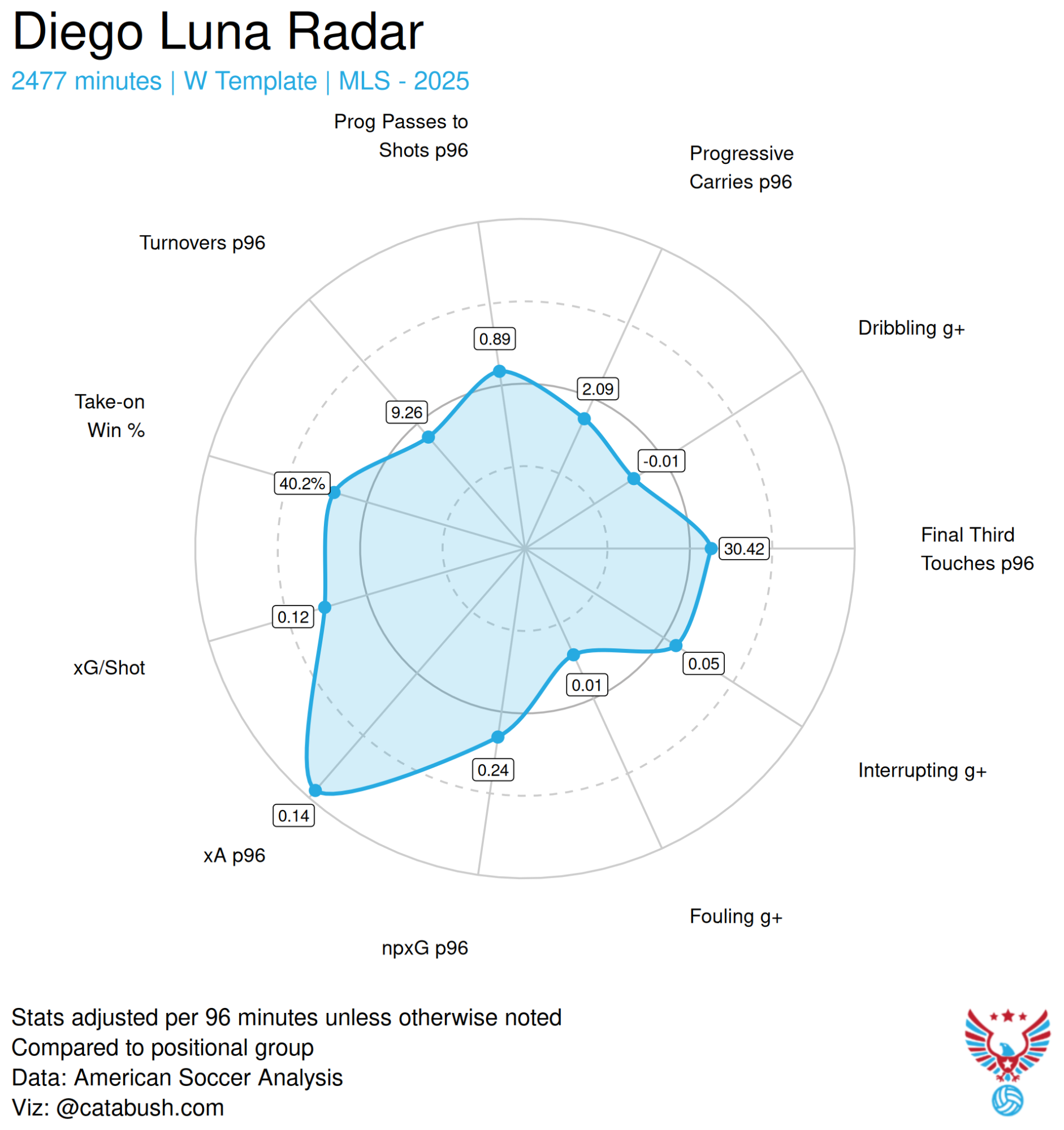
Luna will do a lot for this team and is 100% the face of the franchise at this point. But I think it’s fair to realize that he’s not going to be able to do this alone. He’s going to need some help and the hope is with a full year of Olatunji and newcomer Morgan Guilavogui bringing more than what Diogo Gonçalves brought the last two seasons, they’ll be able to improve upon their 22nd overall expected goals for.
The true secret sauce to the attack might just be in teenager Zavier Gozo who impressed over the course of the season last year, taking over for Dominik Marczuk. If Gozo can avoid a sophomore slump and build upon his second half, it’s realistic that RSL could legitimately have some type of threatening attack. The whispers through the non-alcoholic fermented grape juice vine say Gozo has impressed in preseason at right wingback.
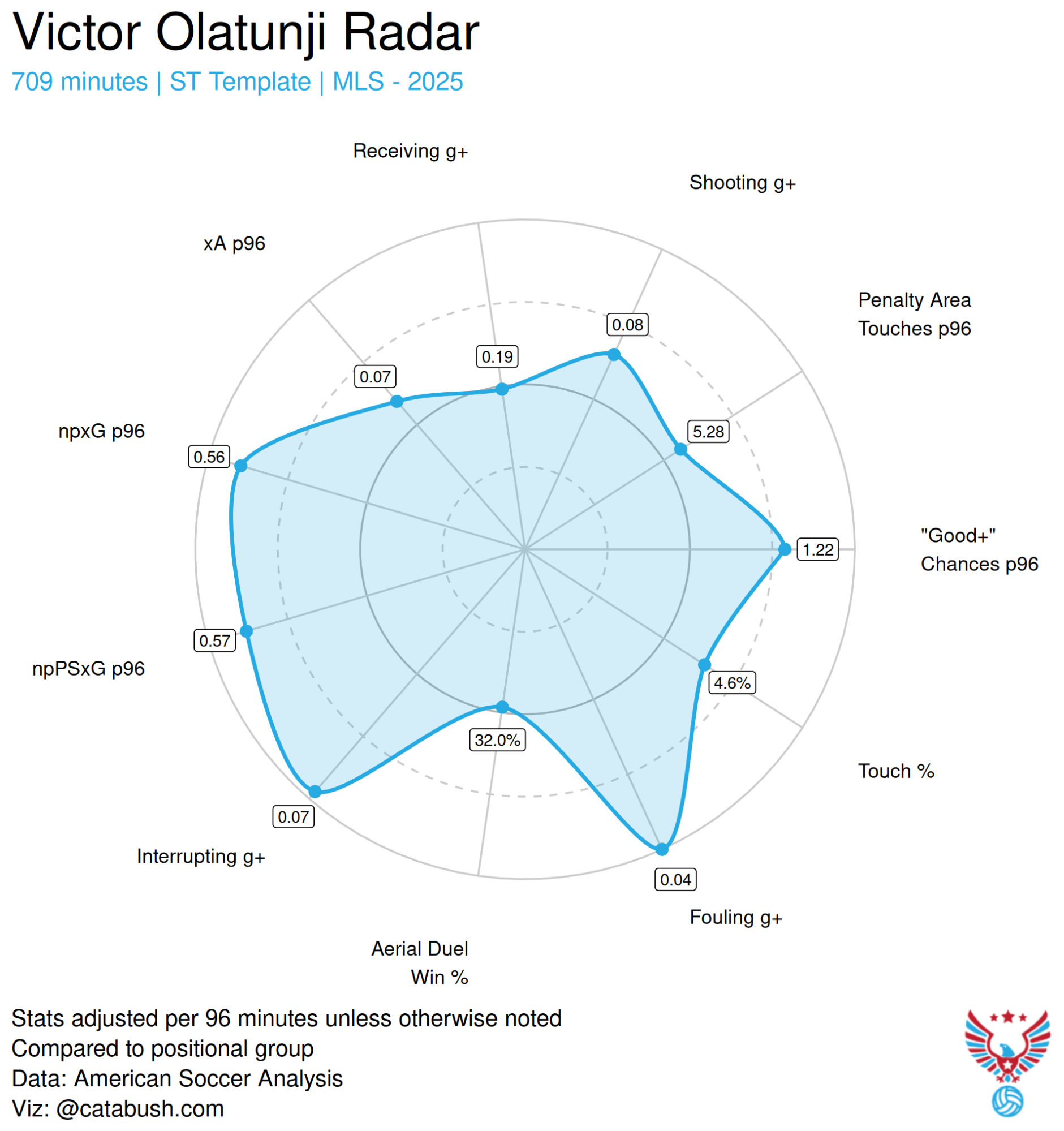
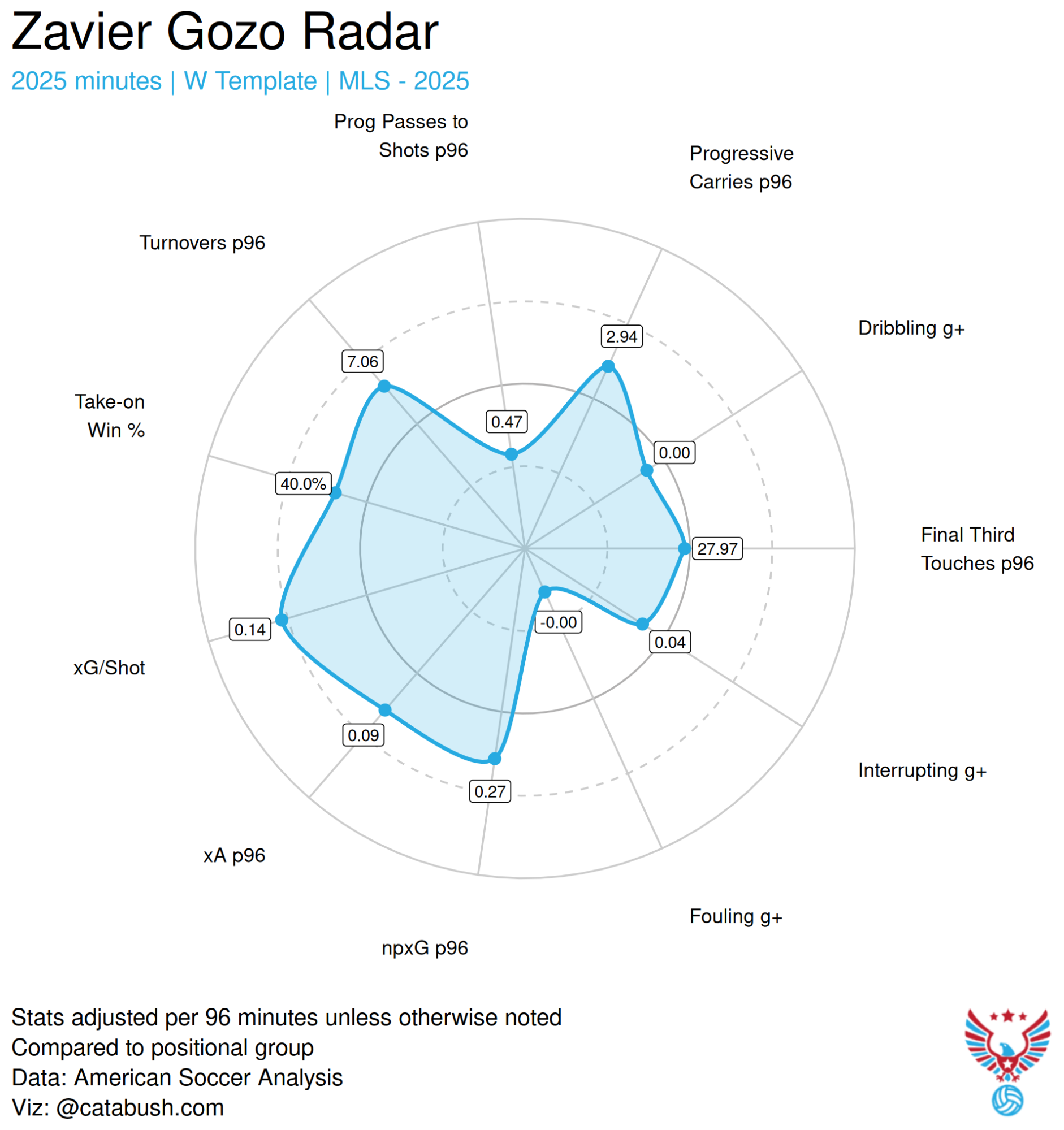
A consistent defensive showing, a specialty of Mastroeni, and an attack that can create their own goals is a recipe for a playoff team and a potentially successful one at that. Add to the fact that they still have some cap resources and it’s fair to be bullish on this organization headed into 2026.
That said there is a darker side of this coin. The organization has repeatedly failed in recruitment and identification of roster construction with regards to style and tactics. There is a lot of pressure on individuals in their first full season with this team and I don’t think anyone knows for certain how that attack will work. Is it a 3-5-2? Is it a 3-4-3? The coaching staff hasn’t consistently shown an ability to create an attack plan to help its technical players beyond their own brilliance.
Hopefully there is a solid plan in place given the volume of deals done in Salt Lake, but if nothing else, I can’t imagine this season is going to be a boring one.