

2026 MLS Previews: Portland, NYRB, Dallas
/Our 2026 MLS Season Previews have started and today we hit Michael Bradley’s new look Red Bulls, the Timbers, and FC Dallas. If you want to support this coverage of the league, you can head to our Patreon. For $5 a month you can get access to a lot of the data visualization tools we use to make these previews.
Portland Timbers Dribble Around, Find Out
Timbers fans must be wondering if the front office has lost the forest for the trees. In 2025, the Portland Timbers leaned on an over-performing defense to balance a bottom-shelf attack, limping into mid-table. Hope sprung through the disappointment by way of late-season signing Kristoffer Velde, a Norwegian winger with excellent attacking instincts. Velde was the adrenaline shot around whom fans expected Phil Nevile to energize the attack and push the team past midtable.
Then came January, and the defense was uprooted. Inter Miami acquired David Ayala, the 23-year-old who held Portland’s defense together, for $2 million. In return, the Timbers front office signed a new U22 Initiative player, Colorado’s box-to-box dynamo Cole Bassett, for $2.7 million. Steady defense will be replaced by a double-down on dribbling and progression from the highly-touted 24-year-old.
For 2026, a tactical shift might be welcome: this team had poor underlying numbers on both sides of the ball. Unfortunately, the underlying numbers behind these moves suggest a discordant attack and a wide open defense.
Attack All-In on Dribbly Bois
Two years ago, Portland had one of the best attacks in MLS, scoring 64 regular season goals. Last year, Portland’s 37 goals scored and 45.3 xG generated was good enough for the second-worst attack in the West and worst attack for all playoff-qualified teams. For the first two-thirds of the season, this attack epitomized players not living up to their price tag.
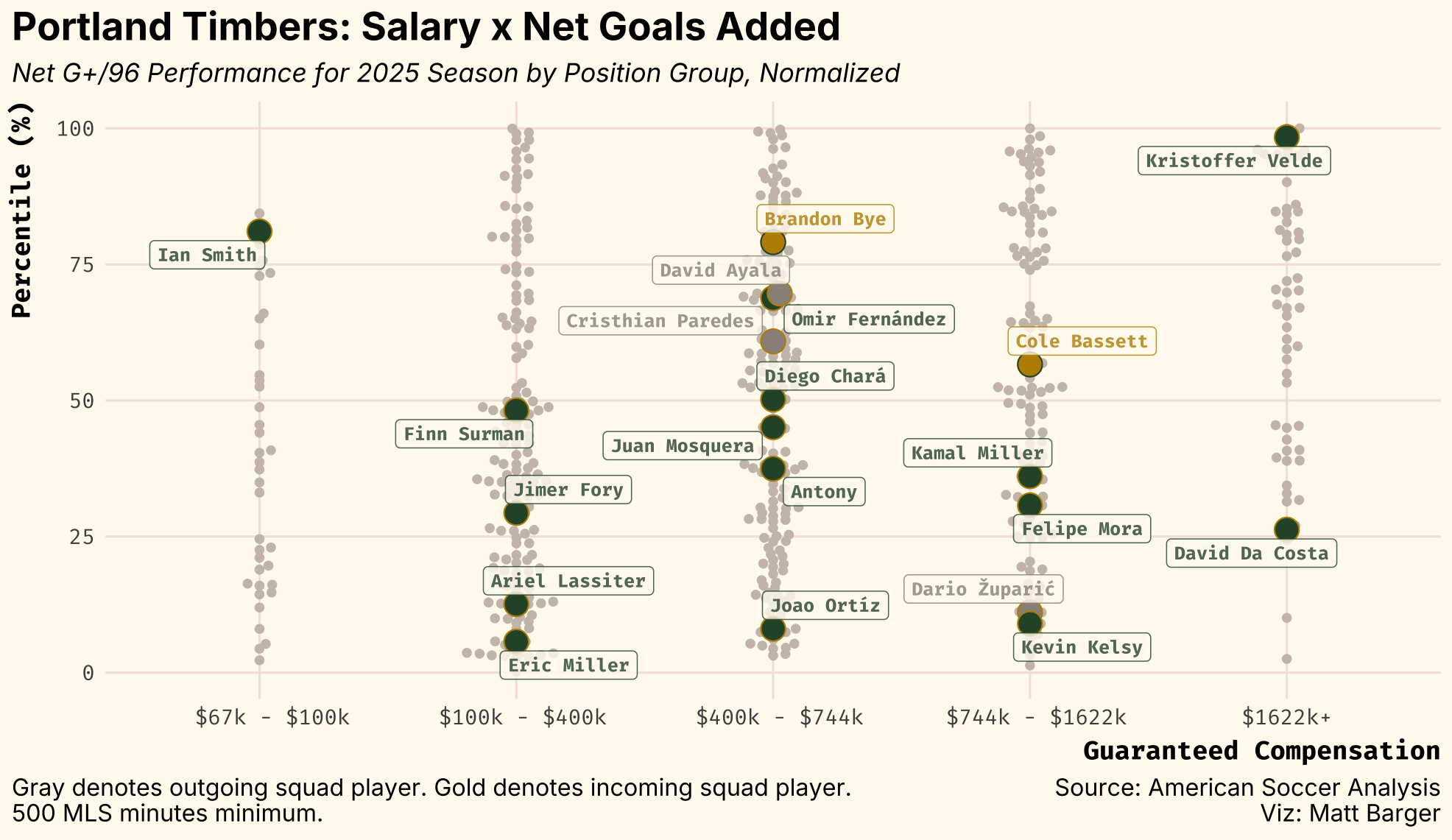
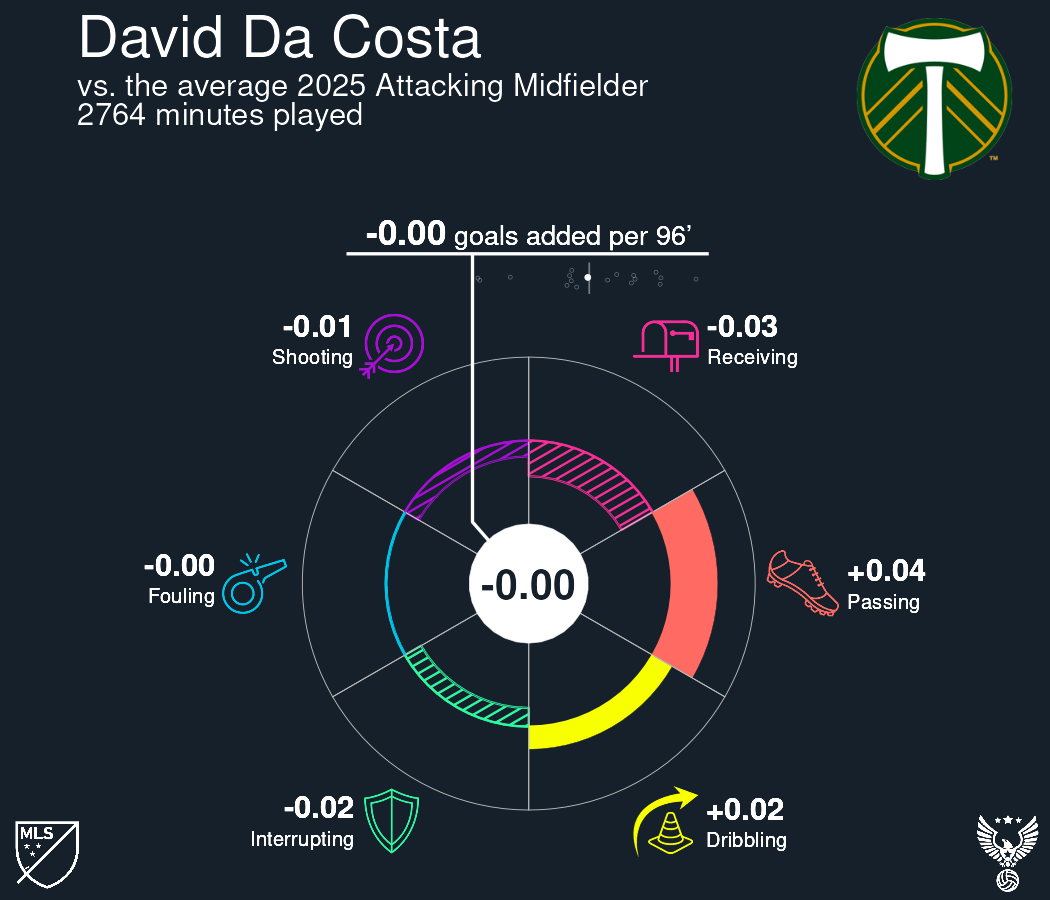
David Da Costa was never supposed to replace Evander’s orchestrating role or 30 goal contributions coming into the 2025 season. But I think all involved were hoping for a little better than a measly 10 goals and assists. Da Costa’s underlying numbers yielded a below-average season among attacking midfielders. For his price tag, that’s disappointing enough, but, Da Costa’s underperformance exposed the rot left papered over by Evander carryjobs of seasons past. If the former number-ten’s elite passing is replaced with a dribble-first ball progressor, then Kevin Kelsy, Antony, and Felipe Mora become non-factors.
The Portland front office saw their front four plummet to the lowest success rate in the finishing phase (per Futi). Then they said: what if we spent $8 million more on dribble-first attackers?
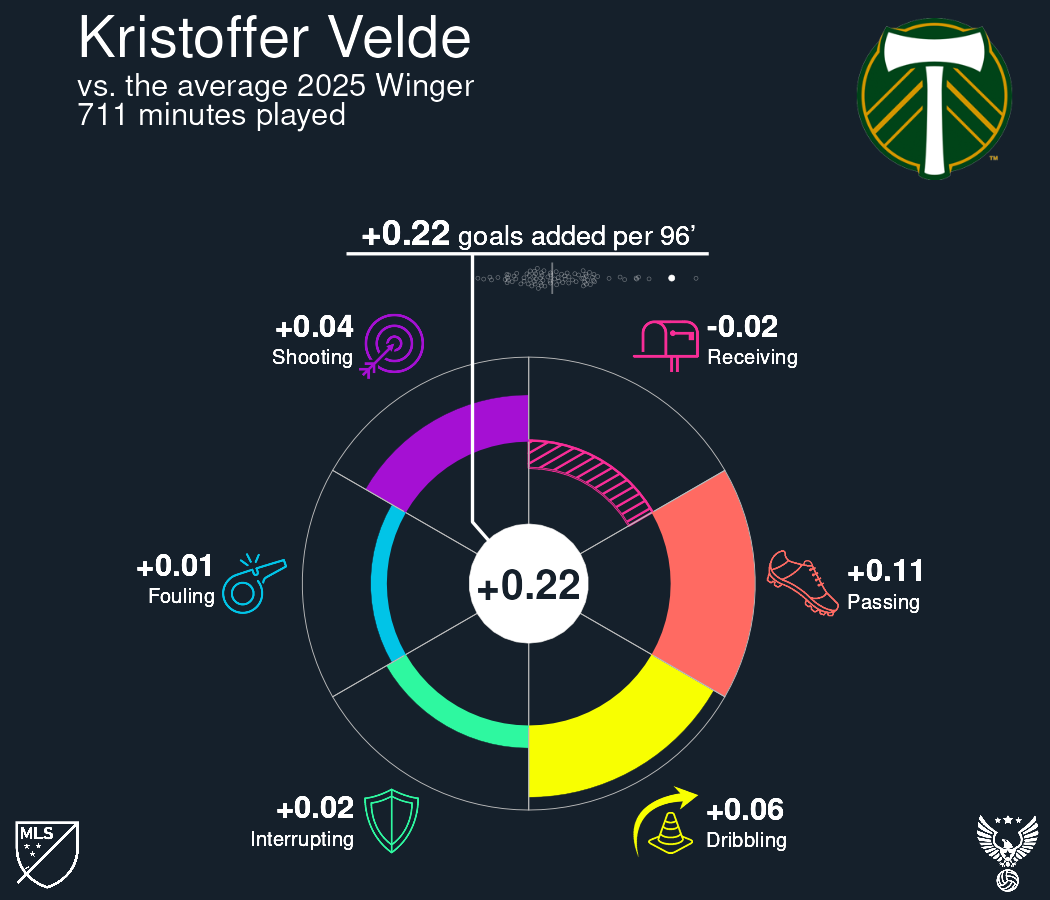
Kristoffer Velde brings hope to Portland because he passes at an elite level. Twelve games of elite performances have justified the $5 million price tag; ASA’s goals-added model rates him the second-best winger in MLS per 96 minutes (500 minutes minimum). Superb passing leads this valuation, accounting for half his advantage over the average MLS winger. Notching up 26 key passes over 12 games is definitely respectable, but two problems:
He prefers to dribble (well). Velde averaged five completed progressive carries per 96 in eight regular season games, fifth-most in the league per 96 and roughly equal to his progressive pass count.
He prefers to shoot (poorly). Velde took 41 shots over 12 games for 2 goals. Most of these shots were outside the box and poor (3 xG total). In fact, of his 41 shots, only three were classified in the “good” bucket by Where Goals Come From (he scored two of them), and zero in the “great” bucket.
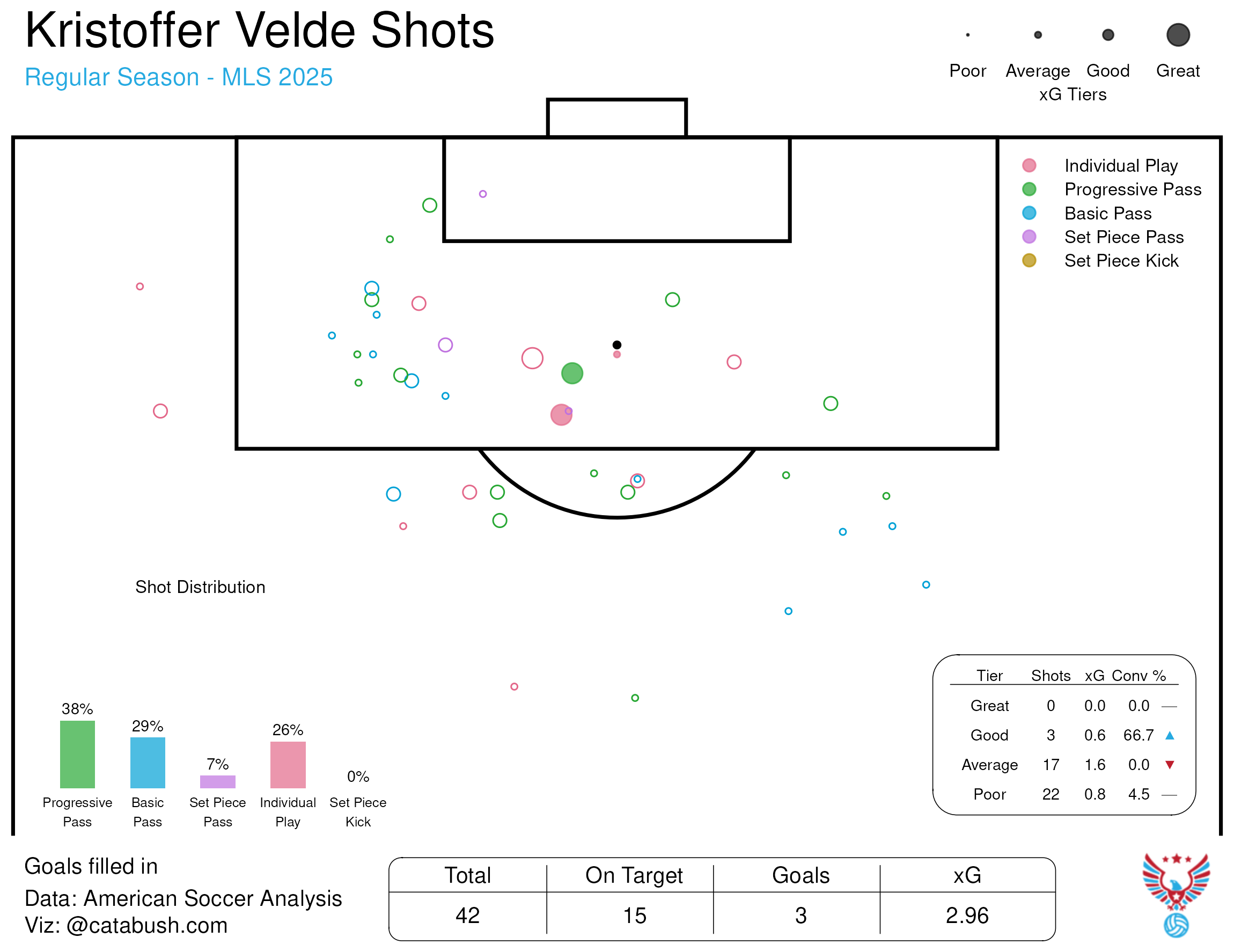
Four shots and five progressive carries a game is great volume, but if he can lean into his passing somewhat more (particularly at the expense of some of the truly garbage dots in that shot map) it could really juice some of the other members of Portland’s attack.
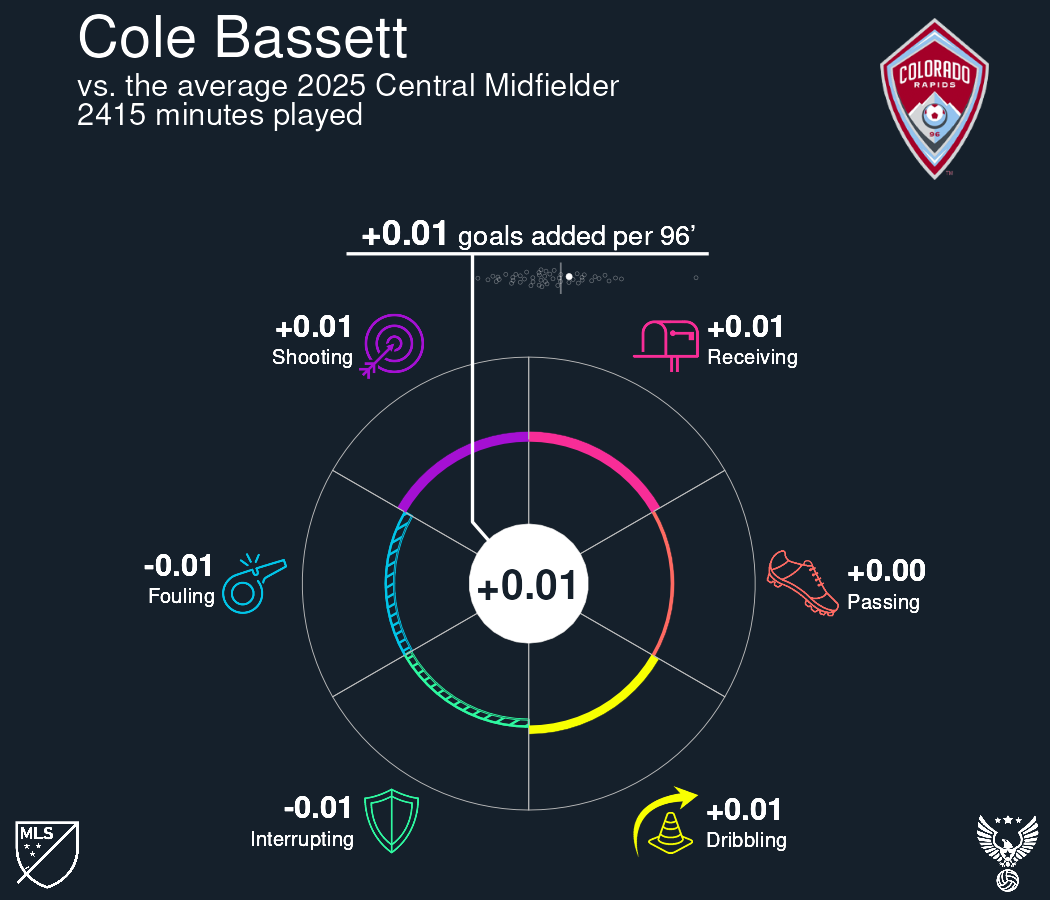
Given these issues, Cole Bassett’s signing has me stumped. Instead of a solution, Bassett’s dribbling tendencies present more of the same problem. Bassett profiles as a box-to-box center midfielder who prefers deep ball progression to defending. His game-breaking progressive carries and late-arriving box crashes made him a fan favorite in Colorado. But on paper, Bassett’s game very much resembles a deeper-lying David Da Costa, including a meager goal contribution output (six for the 2025 season).
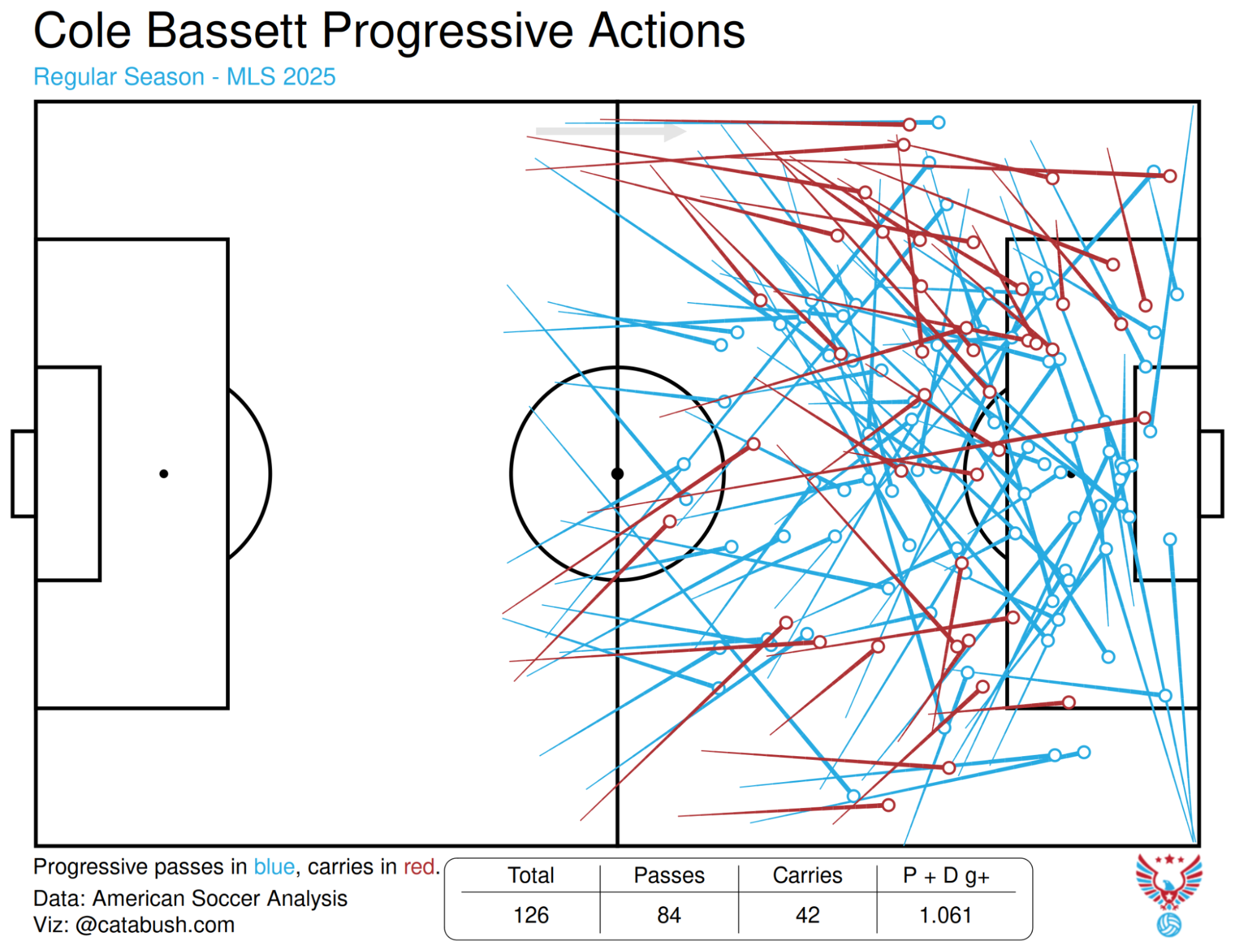
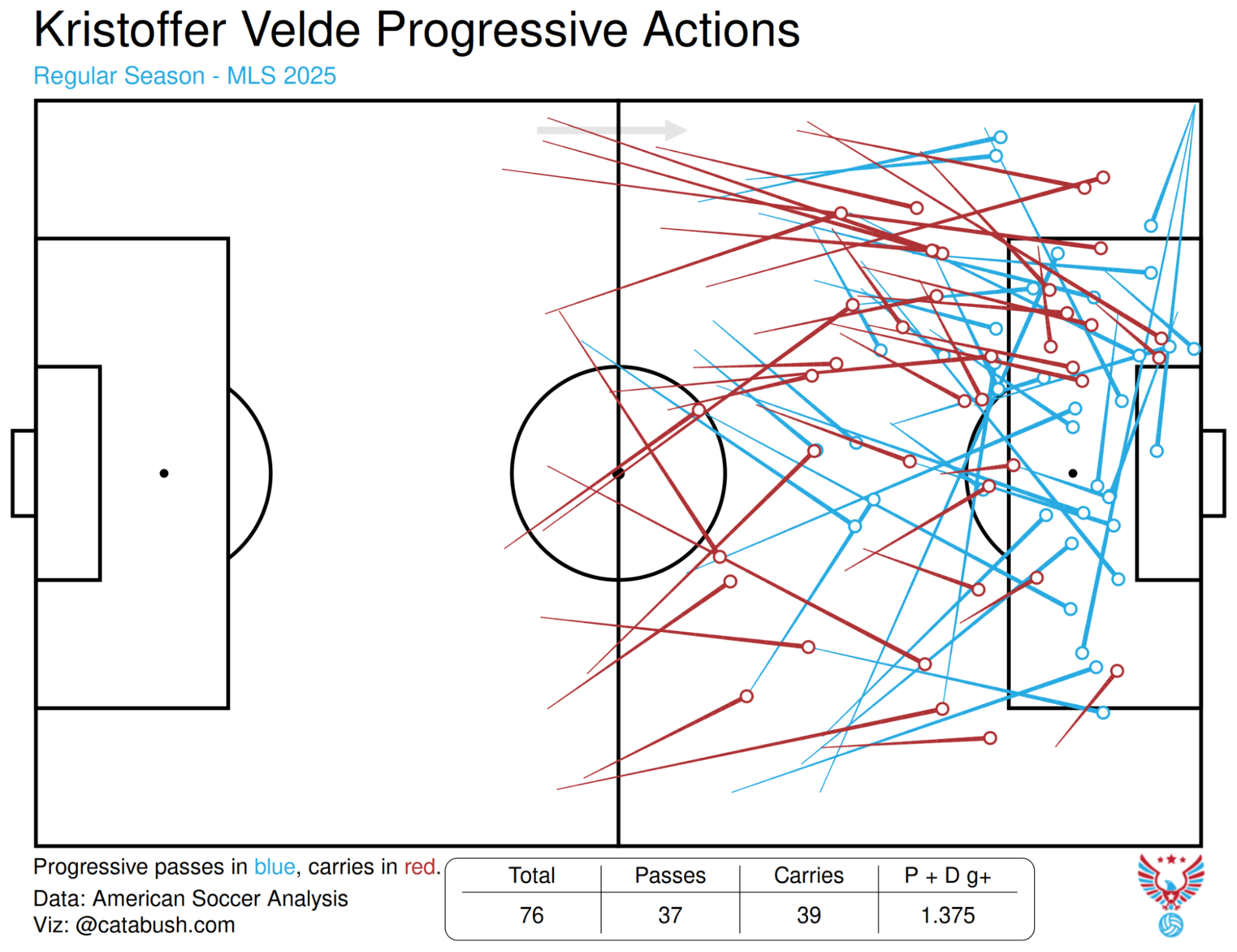
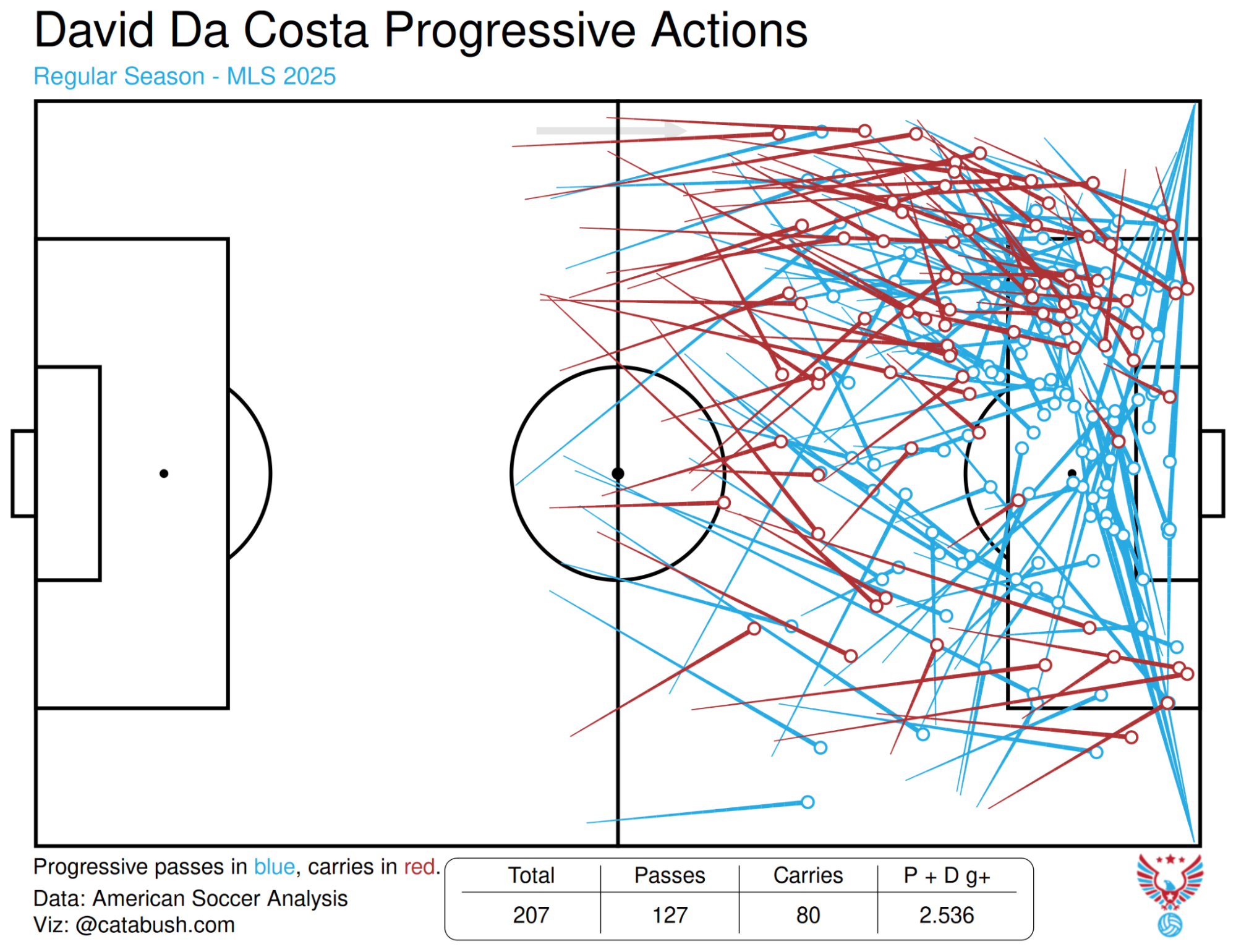
The front four will need to capitalize better on the space created by all these oncoming progressive carries. If Phil Neville can’t make the young high-value attack more than the sum of its underperforming parts, then the potential of these three promising attacking players will be sapped.
Departed Defensive Double Pivot Raises Alarm Bells
Portland’s 2026 defense conceded 47 goals off 55.8 xG, a respectable improvement from 2024. According to Futi’s Team Tendencies app, Portland did not commit to a defensive system. Therefore, this impressive defensive performance is upheld by maximal individual performers, headlined by the departed defensive midfielder David Ayala.
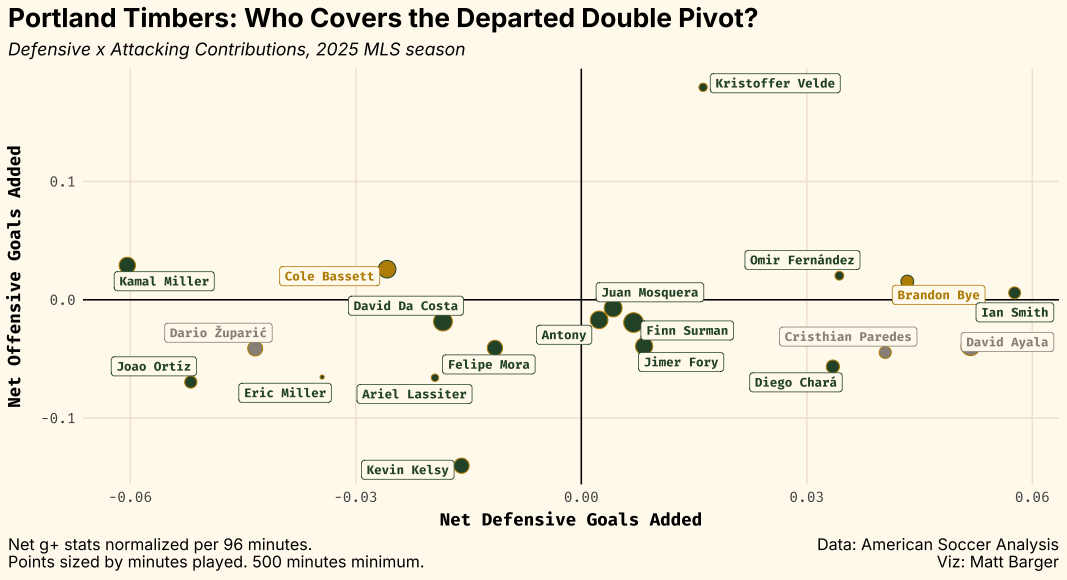
David Ayala was one of MLS’s best ball-stoppers in 2025. The defensive midfielder placed at the top of his position group and top ten in the league for interrupting goals-added and net defensive goals-added. His numbers rivaled the best center-backs in the league. Indeed, the Timbers double pivot of Ayala and either Diego Chara or also-departed Cristhian Paredes were the only players holding up the Timbers defense. As shown above, Timbers center-backs ranged from net-neutral defensive assets (Finn Surman) to net-negative defensive liabilities (Kamal Miller and Dario Zuparic).
Portland came to rely on Ayala’s and Paredes’ ability to stop attacks before they started. ASA’s VizHub shows the Timbers faced the least-effective attacks down the central channel across MLS because of the departed holding midfield.
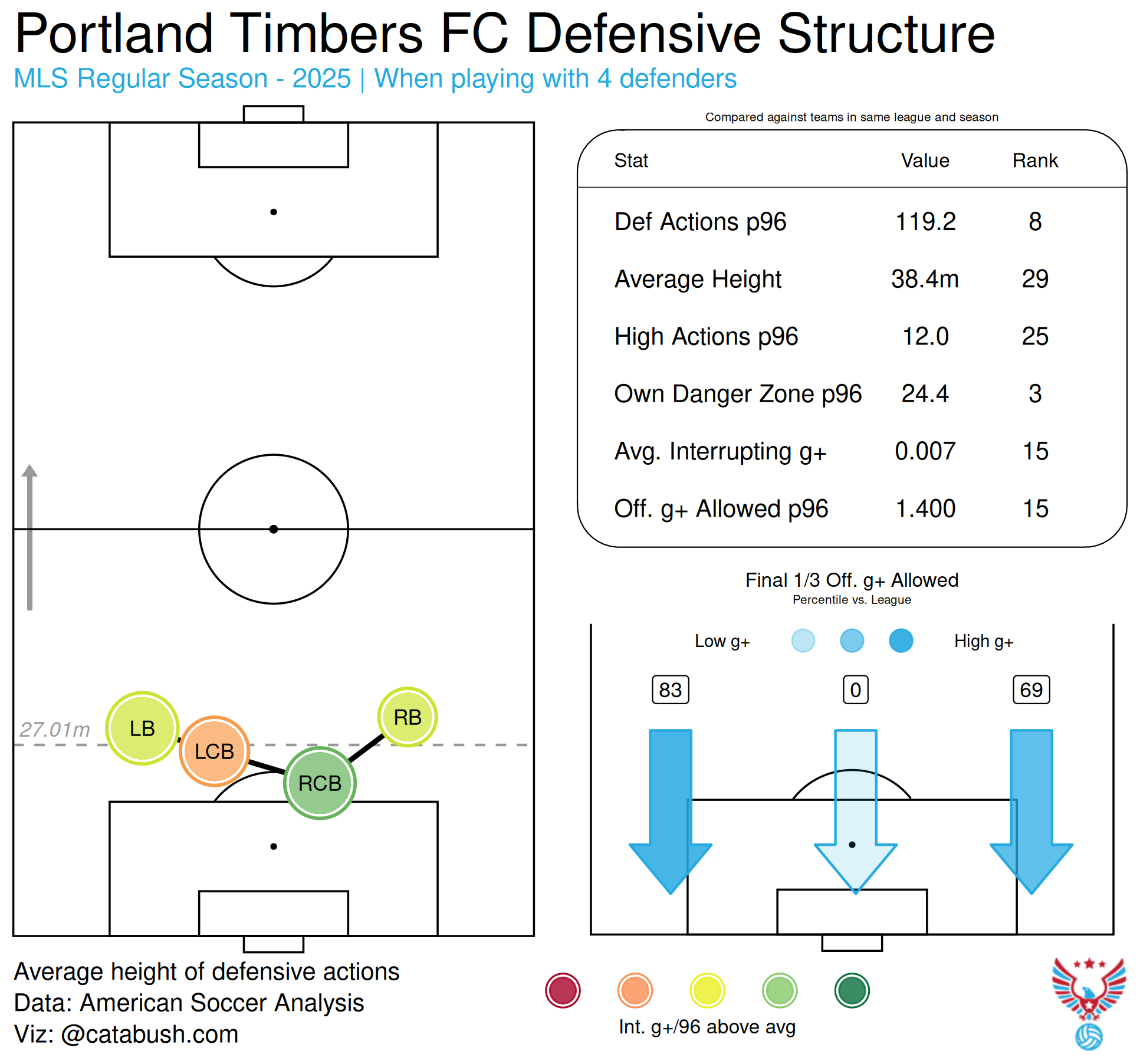
But Ayala and Paredes are gone. Diego Chara is left alone to fight oncoming attacking waves and Father Time. The 39-year-old Timbers legend acquitted himself well as a rotation option last year with the third-most interrupting goals-added per 96 among defensive midfielders (Ayala is first, Paredes second). This year, he will be called back into a larger role with less help available. His likely midfield partners, Bassett and Da Costa, will be too busy dribbling to help.
Who steps up to help Chara? The Timbers defense will be a mess in 2026. Highly-paid center-back Kamal Miller had a disappointing season all-around; his and Finn Surman’s need to improve are obvious. The depth chart holds other silver linings:
Fullbacks Ian Smith and new signing Brandon Bye are great defenders. Both rank in the top 25% among fullbacks in net goals-added. Both score so high because their net defensive goals-added numbers equal that of Ayala and Paredes (albeit on fewer minutes). Smith and Bye would have to break a longstanding fullback pairing of Juan Mosquera and Jimer Fory.
New center-back Alex Bonetig from Western Sydney will look to provide more defensive value than Dario Zuparic. While the Timbers are likely glad to be rid of Zuparic’s contract, Bonetig’s A-League stats suggest he’s more of a passing center-back in the mold of Kamal Miller.
Verdict: Clouds and Storms Ahead
This roster build is incomplete, and Portland’s offseason moves raise more questions than answers. No clear road for improvement exists for the attack nor the defense. The attack contains three progressive threats but no true goal-scoring option. The defense lost two of its best performers, meaning its underperforming center-backs will need to step up to cover the ground lost in midfield.
The front office should feel lucky that Timbers fans are used to rainy days. Designated Player and U22 Initiative spots are still available to make this build work. There should be a couple more signings at striker and holding midfield after the World Cup break. Even with the enormous potential for improvement, the Timbers enter 2026 less than the sum of their parts.
With Every Ending Comes a New Berggren
State of the Club
For as long as I’ve been watching MLS, the New York Red Bulls have been in the playoffs. That is, until 2025, which means their best-in-North-American-sports 15-year playoff streak officially ended with their second ever appearance in MLS Cup. It also means that big changes have been afoot since October. Head coach Sandro Schwartz is out, and head coach Michael Bradley is in after just six months with the Baby Bulls, his very first head coaching job, and ASA alum Sam Goldberg is the new Director of Soccer. The roster has also undergone significant turnover, Jurgen Klopp actually visited their under-construction training center, and at the heart of all of this vibe shift, it seems like truly, finally, energy drink soccer is leaving the building.
What’s that, you say? You’ve heard that line before, you say? Let’s look at the signs. The Red Bulls are only returning about 60% of their 2025 minutes played, including homegrown stalwarts in the Red Bull Arts Daniel Edelman and Sean Nealis. Not among those players are designated players Emil Forsberg and Eric Maxim Choupo-Moting, who just keep getting further and further into their 30s (lads, I get it), and were never suited for running through brick walls as a game model. The other key sign is Michael Bradley’s return to his first professional soccer club. Bradley was a ball-dominant midfielder as a player, and that is exactly how he had his Red Bulls 2 team play. After his hiring on June 12, the Baby Bulls were in the top third of MLSNP for passes for and against per game. Both were notable (though not extreme) increases from the first half of 2025. For contrast, when Red Bulls were last at their most extreme phase of energy drinking in 2023, they were in the bottom third of MLS for passes against per game and had the second fewest passes per game. Schwartz had his team use the ball a lot more in 2025, but pressing was still a key aspect of play, as Futi rated them a “press and possess” team with “launch and squish” being their second-favorite tactical posture. I expect that Bradley will not focus on pressing at all in favor of recovering his team’s shape after losing the ball in attack. Despite a high-powered attack, his Next Pro team gave up more than 2 xGA per game, and I noticed that the Baby Bulls were vulnerable to counter attack in the MLS Next Pro Cup Final (check out the game, it was a great one). I expect both their high and low points in 2026 to be defined by this shift in play style.
State of the Roster
Goalkeepers
The competition for starting keeper appears to be between MLS veteran John McCarthy and former USMNT player Ethan Horvath. McCarthy has spent most of his 11 seasons as a back-up and penalty kick specialist, but he’s essentially been a starter with the LA Galaxy since 2023. In those three years he’s been (in chronological order): average (shotstopping g+ per 96 = -0.03), decent (0.1), and abysmal (-0.33, traded to New York). Horvath was once a USMNT camp regular, a Belgian league contender, and UEFA Champions League starter. But his past two years have been on the worst-finishing team in the Championship, and while bad defenses make keepers look bad, it’s hard to imagine that he will be a high-level keeper in MLS in 2026. However, he has played with Bradley and that connection could earn him trust. Keep an eye on this during the year, but one or both of them scraping together an average shotstopping year is likely the best case scenario.
Defenders
With Nealis, Alexander Hack, and Noah Eile all leaving, New York only have two center backs on the roster:
Robert Voloder arrived in the winter from Sporting KC, and put up decent underlying defensive numbers in 2025 given what a catastrophe that defense actually was. Parker did not get many minutes after years as a locked-in starter around MLS. While his defensive numbers (and overall movement) have regressed, Parker is still a talented player that is competent on the ball and has found real value from his passing since 2024. This is a workable CB pairing for Bradley’s style of play, but while fullbacks and short-term loans from the 2 team can fill the gaps temporarily, RBNY must make this reinforcement a priority before the spring window closes.
By contrast, the Red Bulls have a wealth of options for fullback or wingback depending on formation:
Valencia and Edwards split time on the left side of defense, while Nealis plays on the right along with FC Dallas homegrown Justin Che, who returns to MLS after struggling to find his feet in Europe. Marshall-Rutty also joins from CF Montreal, and has split time on either side throughout his career. Frankly, this position feels like a log jam, and I don’t see how any young homegrowns could earn any time here on the field. I hope to see at least one of these players leave to make room for a center back signing.
Midfielders
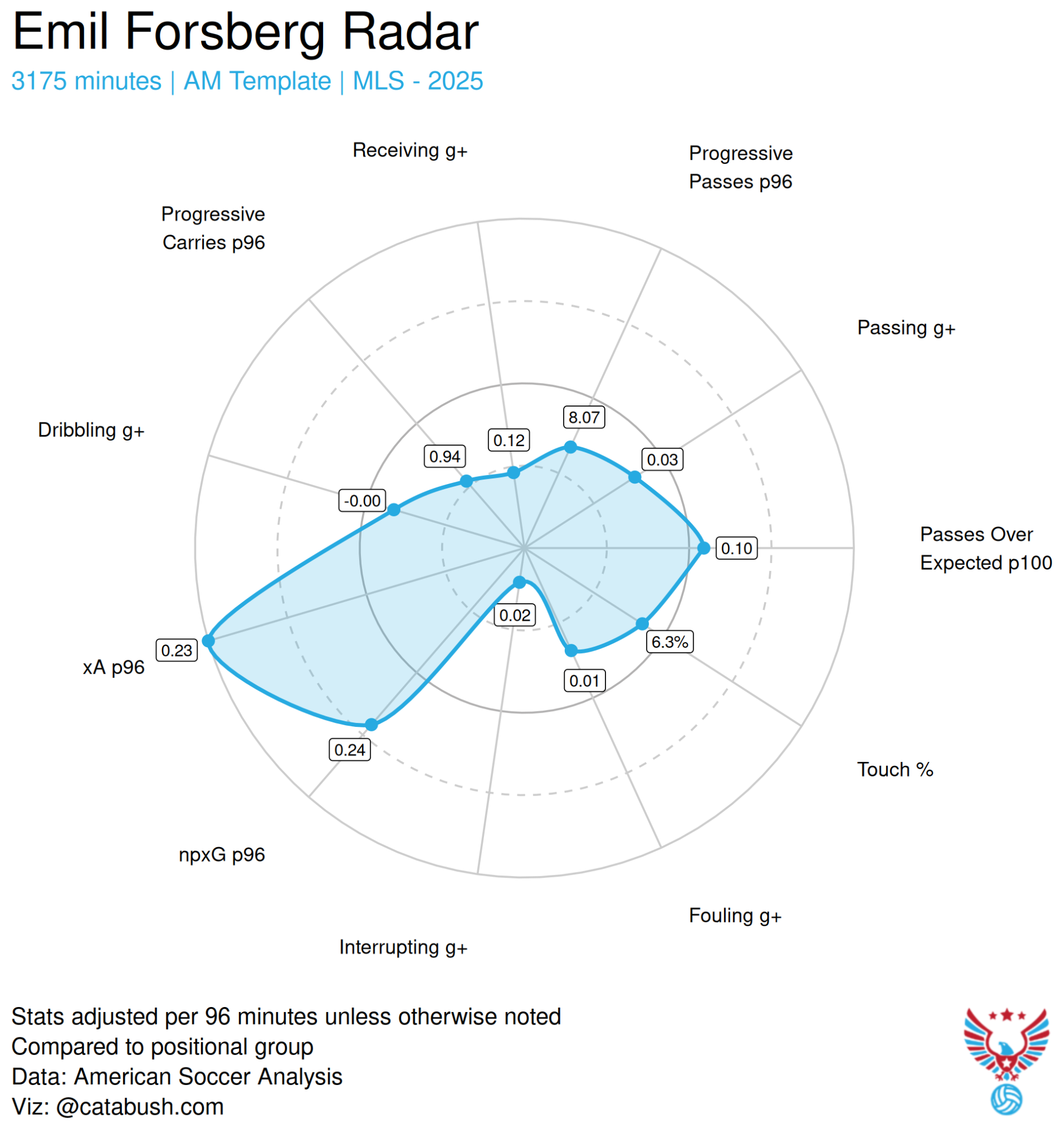
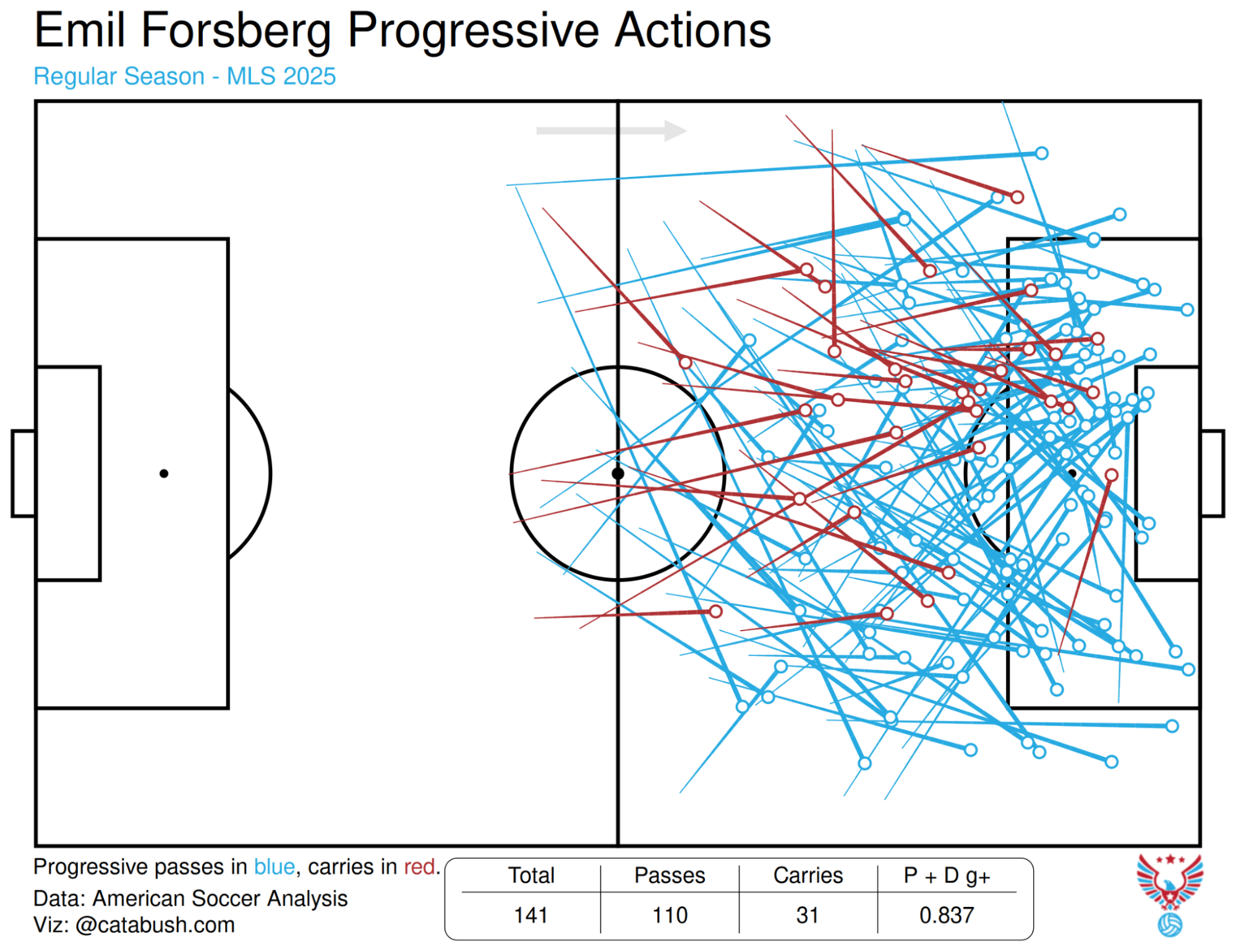
Bradley’s team lined up in a 4-3-3 in the cup final, and I expect he’ll stick with that familiar formation with the senior team. The club signed Swedish defensive mid Gustav Berggren in 2025 from Polish club Raków for a $1.8 million fee, and I expect him to fill the #6 spot on most team sheets. Apart from Emil Forsberg, the Red Bulls’ central midfield is quite young, and of those players only Ronald Donkor has real MLS experience (1,017 minutes, 0.07 net g+ per 96, we like Ronald Donkor). Young talent that has been getting MLSNP seasons like Benedetti and Jarvis will fill in minutes, but central midfield is another area where the roster feels sparse. This matters because Forsberg’s impact has been somewhat limited to high-leverage moments–for the vast majority of advanced stats, he is an average attacking midfielder at best. But yet his xA and non-penalty xG is great relative to MLS, so he still feels like a productive player in a system that wants to put the ball at his feet more. The Red Bulls kind of sucked last year, it will be particularly interesting to see how the other numbers (receiving and ball progression) creep up next season.
Forwards
Wingers and wide attackers are a spot with possibly too much competition. Andy Rojas and Rafael Mosquera joined in the summer of 2025, Cade “Temu Werner” Cowell has been loaned from Guadalajara Chivas with an option to buy at the end of the year, and 24-year-old UNAM Pumas winger Jorge Ruvalcaba has signed as a designated player. Cowell has mostly played at striker for Chivas, so it’s possible that he will spend time rotating up top, but this club already has young wide players like Dennis Gjengaar. This feels like a roster in flux, and that this offseason is only the first stage of a larger rebuild. Eric Maxim Choupo-Moting was the goalscorer the Red Bulls needed a season too late, scoring 17 in league matches. He was excellent at finding space inside the box, and provided an obvious end point for attacks to focus towards. He will be an excellent striker for what Bradley wants to achieve. Cowell will likely be auditioning as Choupo-Moting’s understudy, so that will be an interesting story to track, but keep an eye on him acting as a second striker working off of Choupo-Moting, whether from wide areas or centrally as a 10.
Outlook for 2026 Season
Michael Bradley has a lot to prove in 2026, but I’m betting on his upside and his ability to implement his possession game model. The Red Bulls have some good players that are well suited to this style, and they’re probably going to score a ton of goals as a result. But I do not think this roster is well balanced right now. They are very short at centerback, and probably short in midfield, with a whole lot of wide talent. Given the volume of young talent they appear to be trying to develop, I’m sure there are lots of moves coming in this window and the following two. It will be difficult for this team to make the playoffs this season in a stacked Eastern Conference whose bottom teams seem to be improving. Center backs are especially lacking, and the defense is likely to get exposed a lot after losing possession in an unfamiliar posture. My best guess is that they will be this year’s Quakes: full of fun, but not finishing higher than 10th in their conference.
Hoisted Upon Their Own Petar-d
Petar Musa is pretty good.
In the 2025 MLS regular season, only four players scored more than him, and two players equaled him. Taking out Lionel Messi, Anders Dreyer, and Evander from the list, you’re left with three center or wide forwards in the same echelon of goalscoring last season: Denis Bouanga and Sam Surridge with 24, and Dejan Joveljić equaling Musa’s 18. Here are the radar charts comparing Musa to those three players in relation to all MLS players; his radar chart entirely engulfs Joveljić and nearly engulfs Surridge. (Musa’s in blue in all of those.)
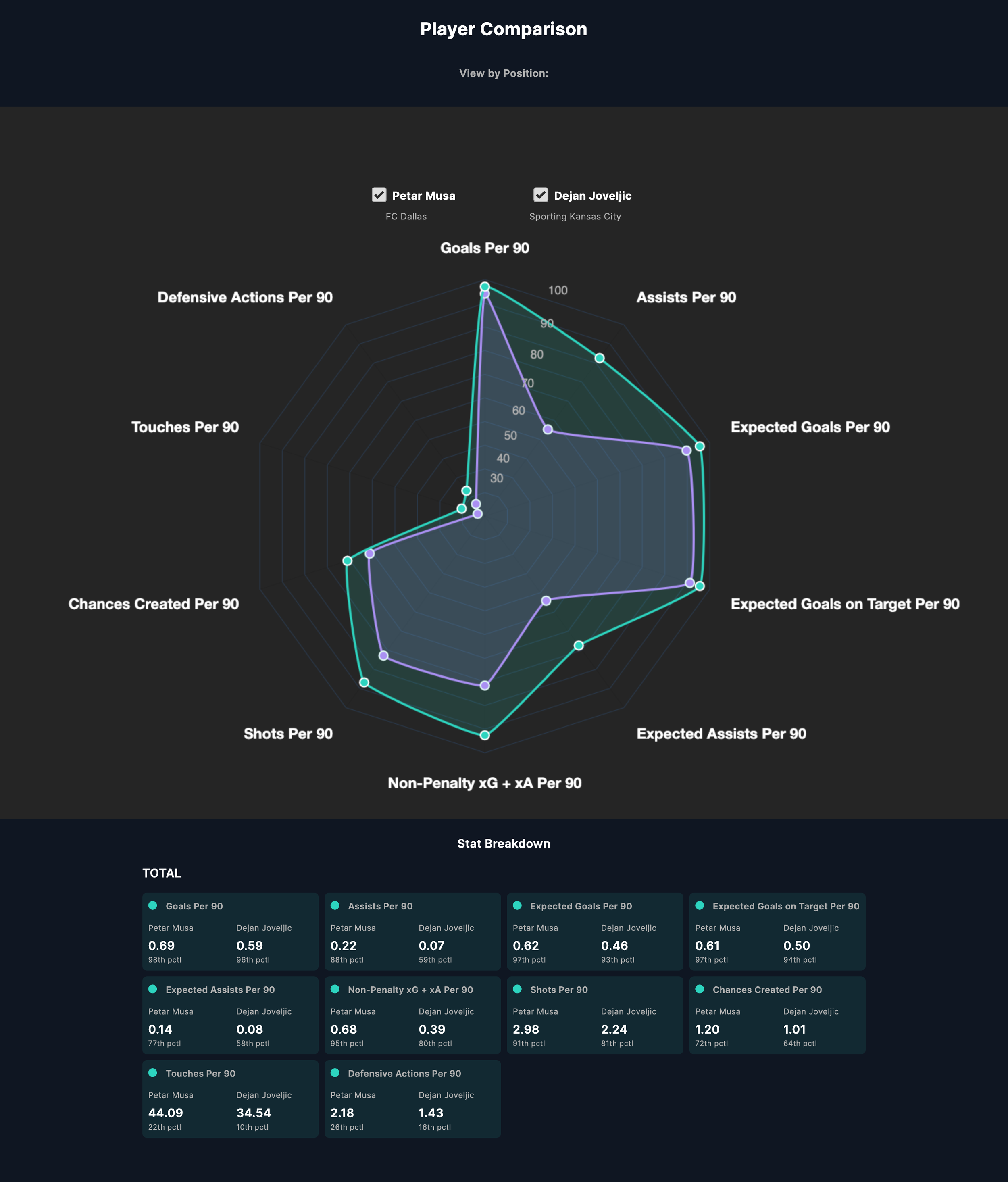
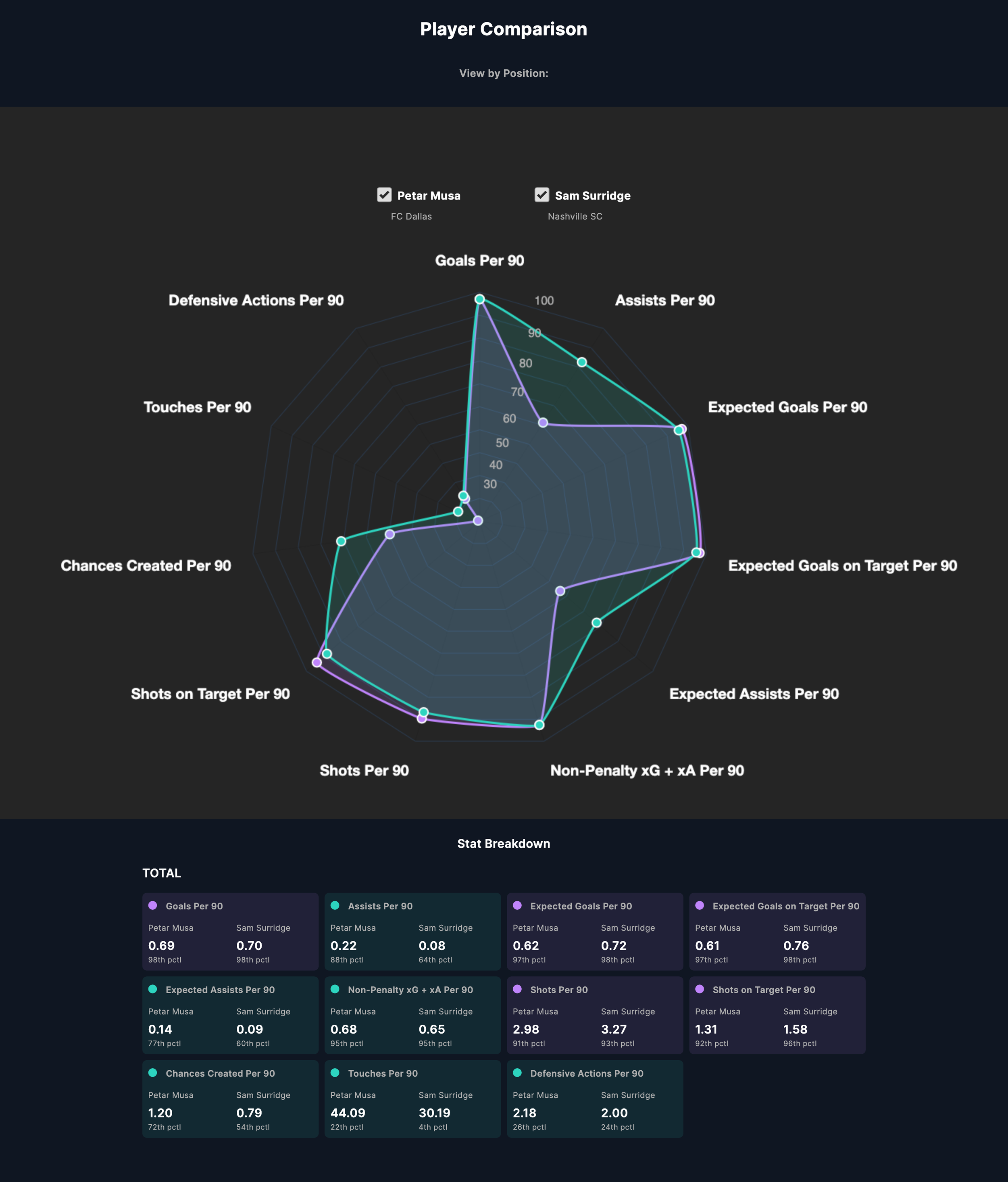
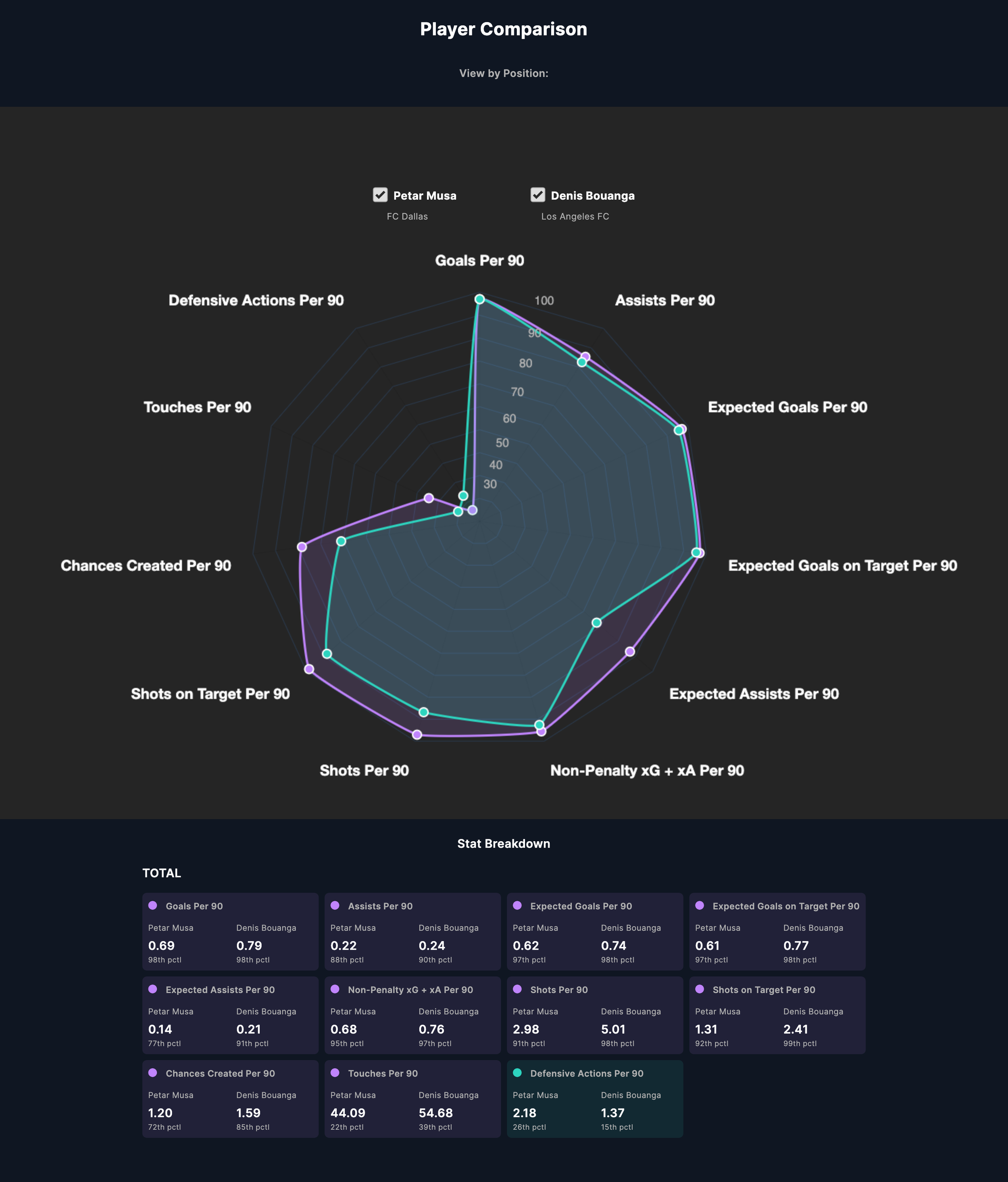
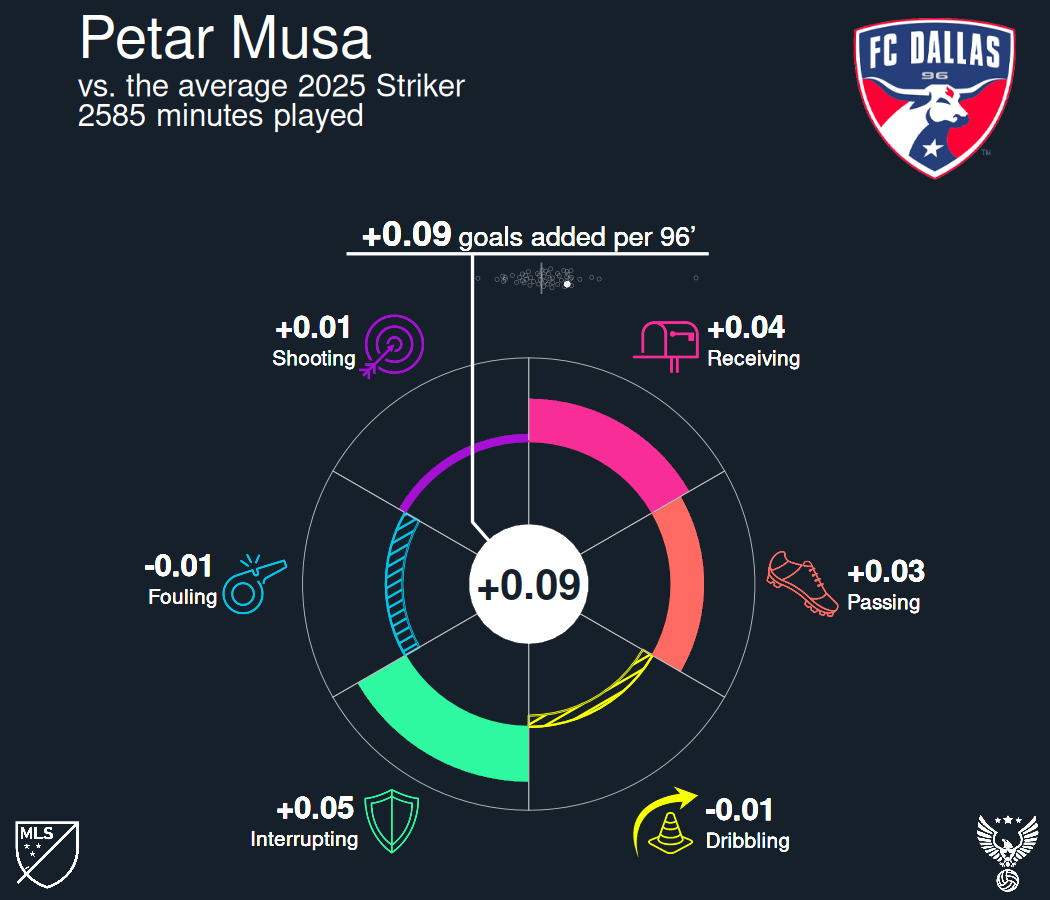
He’s no slouch in the goals added department. And his shot chart for 2025 shows what he can do in front of goal.
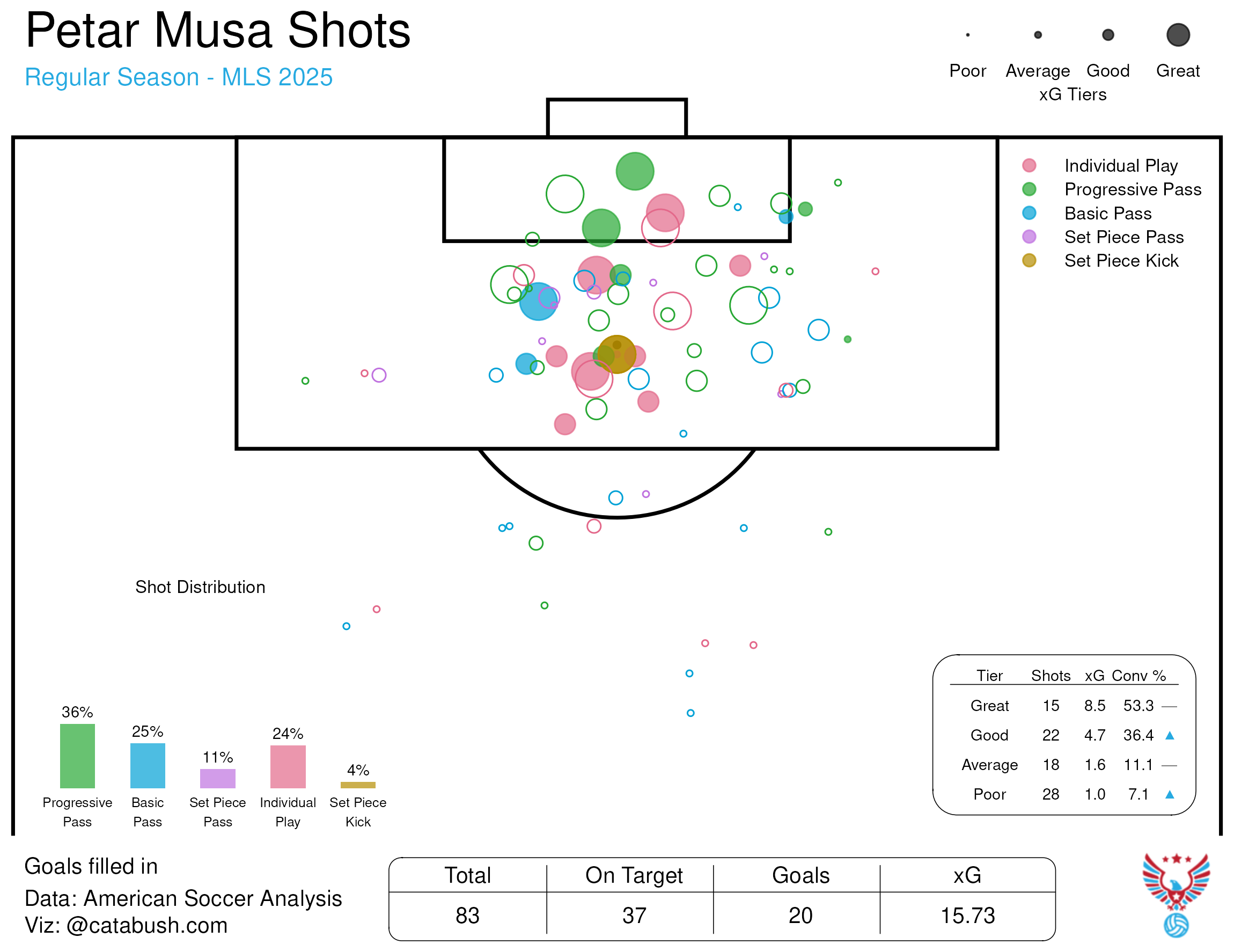
As beautiful as this all is, and as good a center forward that he is, the specter of Musa moving to a new team is going to haunt FC Dallas for all of 2026. Soccerwise’s David Gass seems to be willing Musa moving to LAFC into existence (as a presumptive Denis Bouanga replacement should he move to Brazil as rumored), while other speculation has him moving to Europe, treating it as a post-World Cup given.
If you take Musa off a team that was symmetrically mediocre last year, you presumably have Logan Farrington as a starting striker, and here’s how they compared against each other in 2025 against just strikers.
Maybe the former Oregon State Beaver is ready to make the leap. I’m not so sure.
Despite Musa’s heroics last season, FCD was a decidedly mediocre team under head coach Eric Quill, fond of a 3-5-2 (or is it 5-3-2) formation but settling into a 3-4-3 by the end of the season, per Arman Kafai’s salient preseason review.
FCD’s xPoints for 2025 was a playoff-borderline 43.3, and it slightly outdid that with a 44, with an 11-12-11 record which is about as .500 as you can be in MLS. In a comparatively weak West, that was good enough for 7th place and a first-round exit to the Whitecaps.
But heading into 2026, as of this writing, FCD’s most notable move was a move out: Goalkeeper Maarten Paes, moves on to Ajax. In comes former CFM goalkeeper Jonathan Sirois. That’s not to say that Paes was lights-out; FCD did let in 55 goals in ‘25, on 54.9 xGA, showing further that this team cleaves closely to predictive models.
Newly-acquired right wingback Herman Johansson shows a further commitment to five at the back, while Joaquín Valiente arrives as a TAM-level attacking midfielder that could provide enough of a creative spark to make it at least somewhat enticing for Musa to stay. That’s needed, because Patrickson Delgado co-led the team in 2025 with just six assists … tied with … wait for it … Petar Musa. The club also added young players in Louicius Deedson (MLS Best XI All Name Team) and Ran Binyamin (represented by the same agency who extorted the Revolution into multimillion dollar fees for average Israeli league players). Top tier process Dallas have there.
As this salary chart from last year shows, though, this is a team that is still largely built on frugality, in which players like Nolan Norris and Osaze Urhoghide represent value. However, while it’s good to get solid production out of your lowest paid roster segment, the thing that mostly decides winning in MLS is how good the expensive guys are. Musa has been great, but you need more out of the top end of the roster. Dallas fans will hope Valiente and Binyamin are that.
While FCD lucks into a home opener against a Toronto team that is holding itself hostage over the Josh Sargent situation, it then has to play Nashville, LAFC, and San Diego in succession, which could quickly put it in a making up for lost points mode to start what will be at least a half-season of suffering limbo.
Musa’s still the face of the club, evinced by being featured in the league’s unveiling of the mediocre-as-the-club DNA kit, a new home jersey that is as red and blue and hoopy as you expect. (For jersey connoisseurs, RSL does the same concept much better.) But he may not be by season’s end, which would then make the club in as much of a transition as their home stadium, currently under another year of construction as the club doubles down on its Frisco location to provide better shade to a facility that was originally nicknamed “The Oven” (for being Pizza Hut Park but also for being an inhospitable hotbox of hurt).