
2026 MLS Previews: Austin, Orlando, Chicago
/Our 2026 MLS Season Previews have started and today we hit Austin, Orlando, and the fighting Kevin Minki. If you want to support this coverage of the league, you can head to our Patreon. For $5 a month you can get access to a lot of the data visualization tools we use to make these previews.
Keep Austin Weird(ly Ineffective In An Attacking Sense Having Spent $30M on Attackers)
It’s been a challenging first five years for Austin FC. Even after getting second in the West in its second season with a 1.65 points per game average, three subpar years have pushed Verde down to a 1.27 PPG average over its first five years. If you extrapolated this out to a 34-game season, is a 43-point season. That number barely squeaks into the playoffs in years when the West is particularly moribund, and misses the playoffs otherwise.
But there’s a number that’s even worse: 1.18.
That’s Austin FC’s xPoints over the first five years, which, based on the their average outcome given the xG for and against in their individual games, is what the team should be averaging over the course of a season. Taking the last seven seasons into account, which includes FC Cincinnati’s 2019 expansion season (in which the Knifey Lions registered a dismal 0.71 PPG from 0.89 xPoints per game), the worst xPoints per game over that span belongs to Austin.
That’s the bad news. The good news is that Verde appears to be raising its floor for 2026, after a season in which it placed 6th in the West on a respectable 47 points, getting to the U.S. Open Cup final (hosting it at home), and did so without the services of its top designated player, Brandon Vázquez, for half the season. (And given that Vázquez had the second-worst G-xG in the league, only disappointing slightly less than Simon Becher, it’s arguable that Verde didn’t really have Vázquez for the parts of the season before his summer ACL injury in San Jose.)
Austin FC also did in 2025 what it did in 2022, albeit it not as dramatically: outperformed its xPoints. In 2022, Verde should have been a 42.5 point team based on xPoints, but rode career years from Sebastián Driussi (now with River Plate) and Diego Fagúndez (now looking for his next team) to 56 points and a spot in the Western Conference finals. In 2025, Verde finished with 42.9 xPoints but 47 actual points, which was good enough to get into the playoffs and avoid the play-in game.
In both 2022 and 2025, Verde were eliminated from the playoffs by LAFC, which, when you throw the 2024 Leagues Cup into the mix, seems to be their fate.
Why is Verde like this?
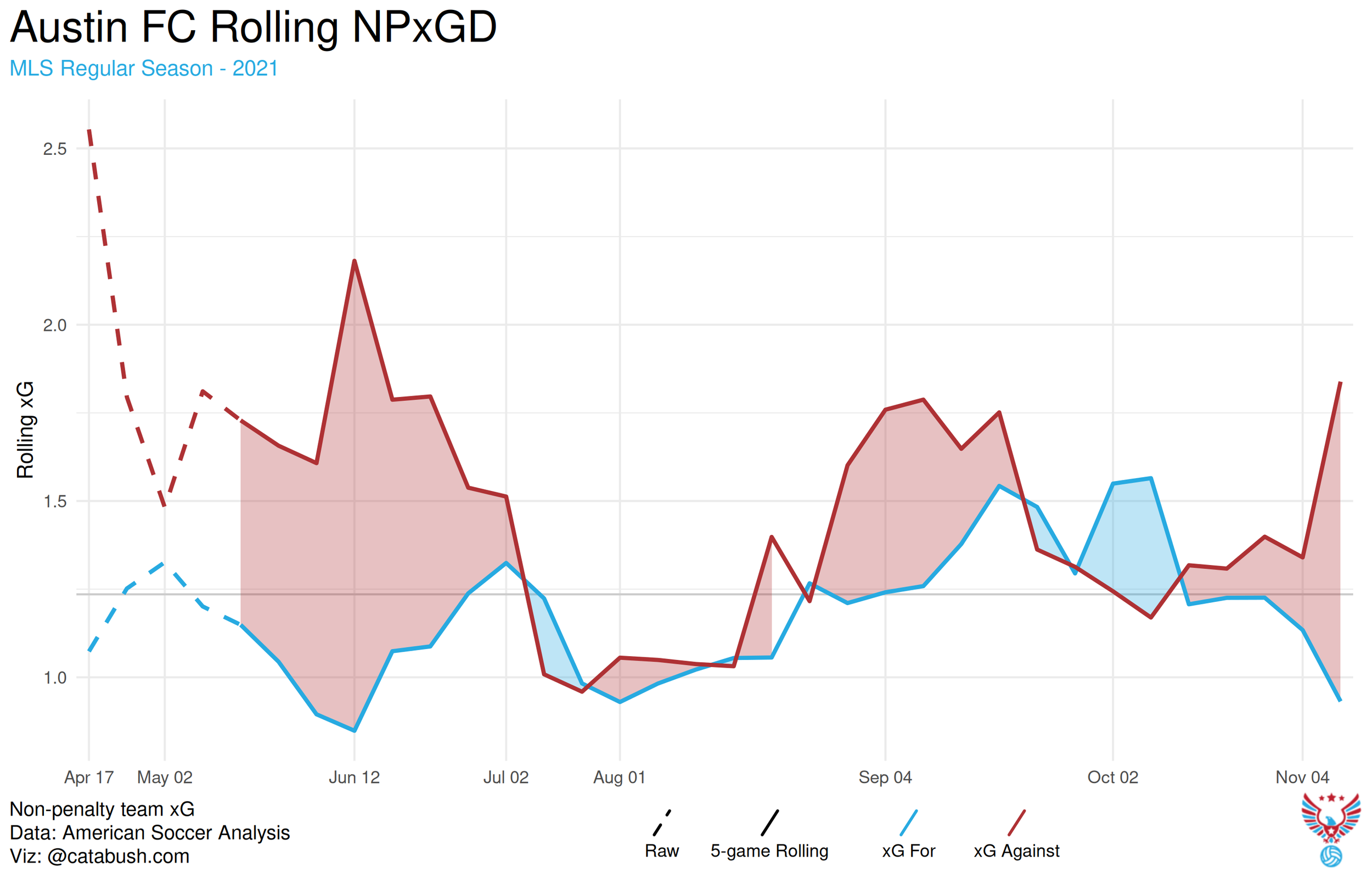
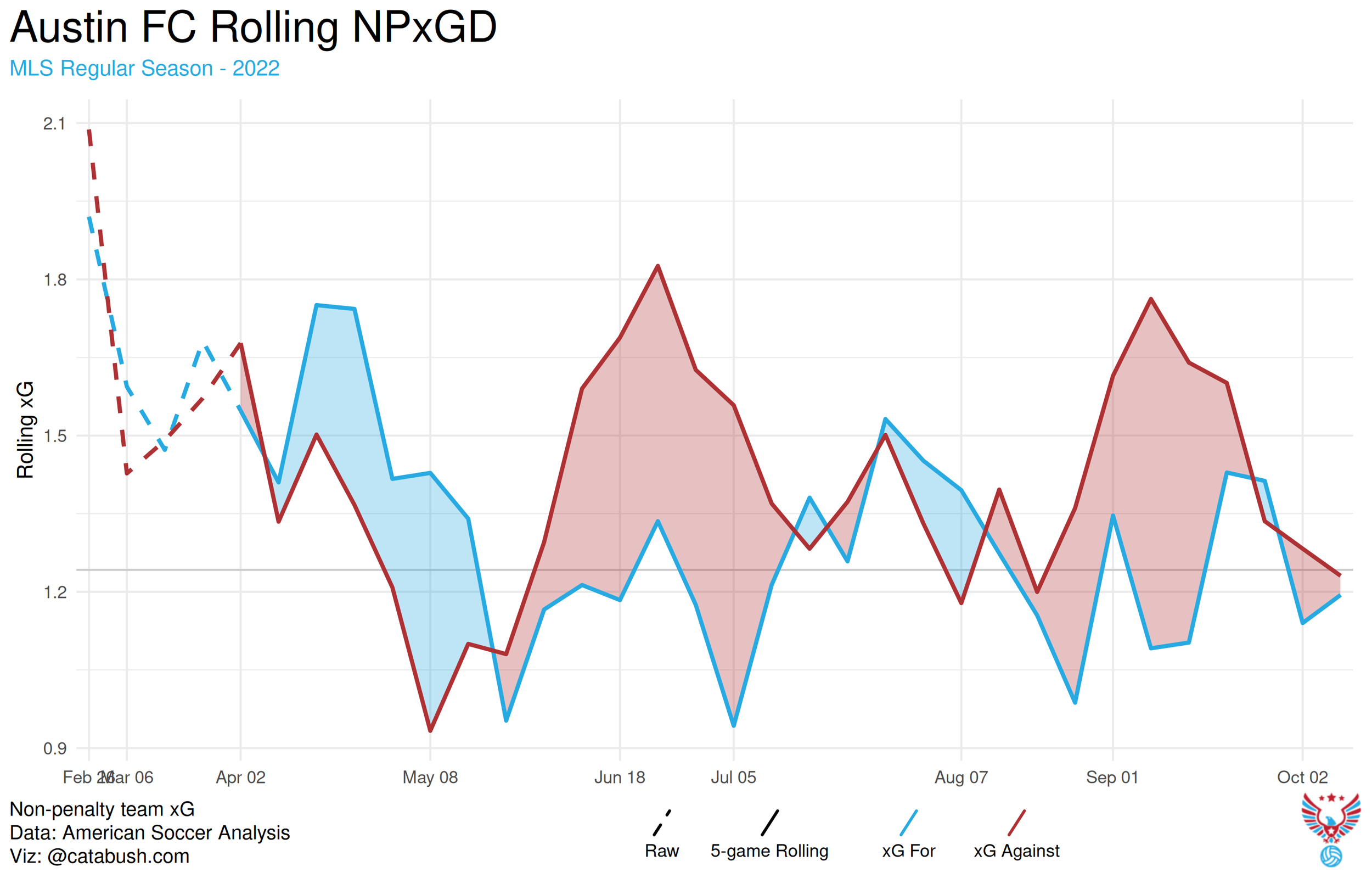
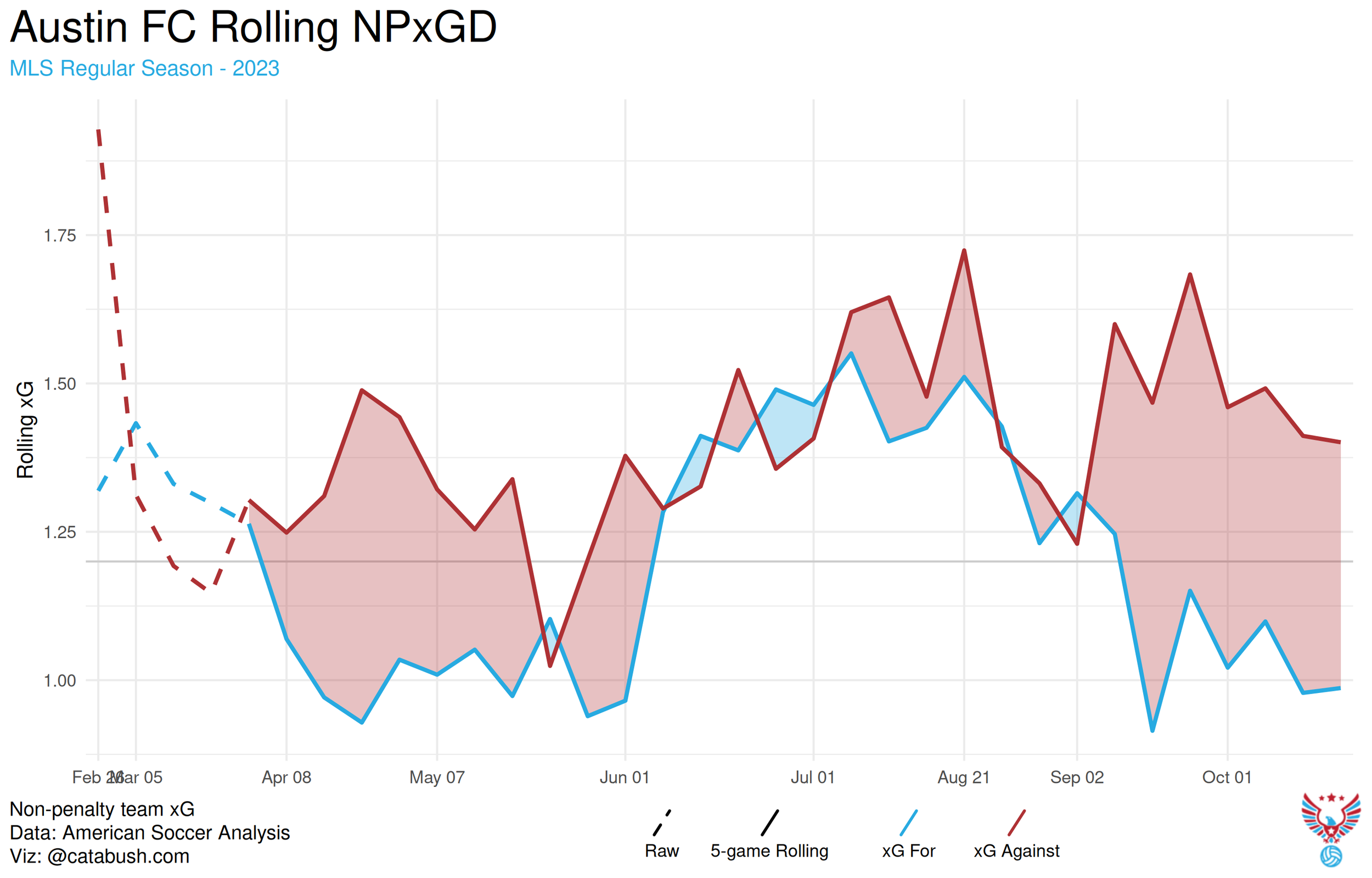
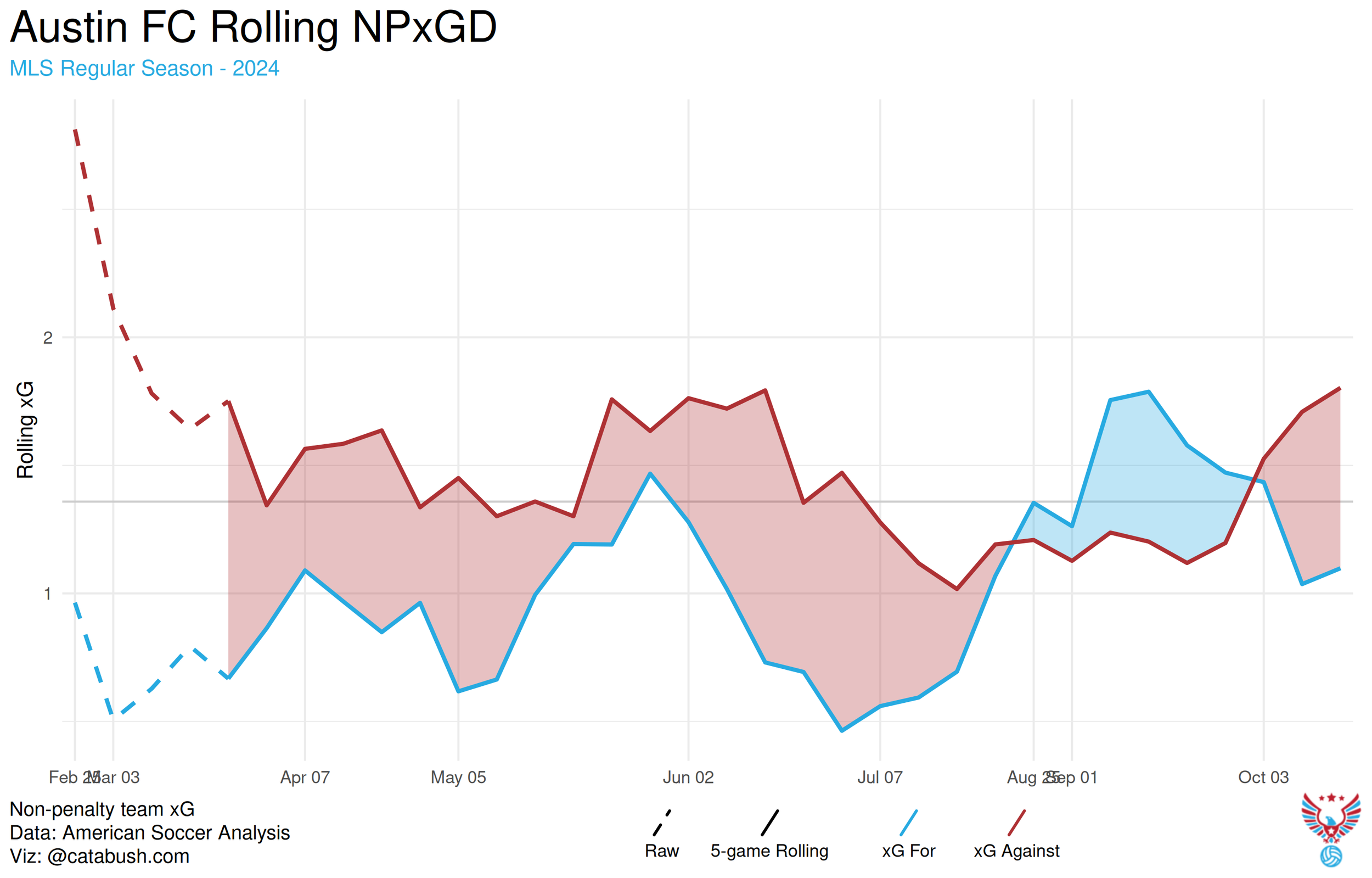
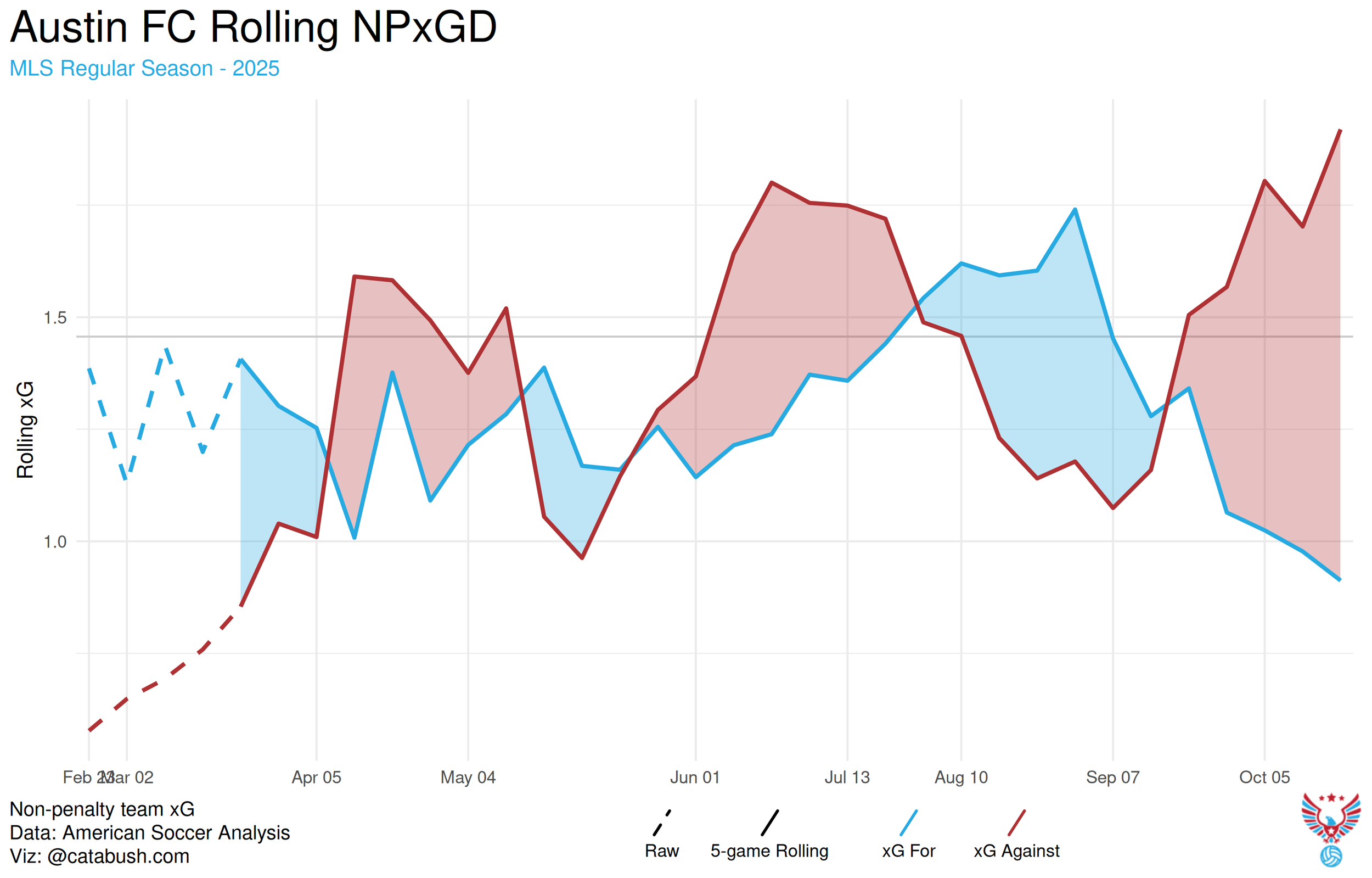
First of all, consider their propensity to not score much and to get scored on. Even in 2022, the rolling NPxGD values show how offensively challenged they’ve been in four of five seasons. Particularly last year, when they were in very real danger of breaking D.C. United’s modern-era record for least goals scored in a 34-match season.
The charts also show the team’s propensity for late-season swoons, which actually improved in 2025 with a 4W 5L 2D (1.28 PPG) over the 11 matches after Aug. 1.
Challenges with chance creation are part of the Austin FC story as we round into the ‘26 season, and the hue and cry from the national punditry over signing Facundo Torres rather than a “true” and “pure” chance creator speaks to how acutely aware said pundits are of the issue. Given that this is a fan base that was talking itself into Emiliano Rigoni showing promise for a season and a half, getting a 25-year-old who averaged 24 goal contributions a year for three seasons with Orlando is comparatively exhilarating. And players who score goals at a good rate often have a way of greasing the chance creation wheels for others, much the way good creators do for scorers. It’s a two way street.
The chance creation landscape is not quite a desert, thanks to Owen Wolff making the leap in 2025 and being the 25th-best player in the league for expected assists. From there, though, there’s considerable xA dropoff, so you might consider the landscape a steppe. Here’s the top 11 on the 2025 squad sorted by xA.
Two of those players, Osman Bukari and Diego Rubio, are no longer on the squad, though Jayden Nelson and Facundo Torres are considerable upgrades.
The fourth, fifth, and seventh highest players on the list are fullbacks or, increasingly in head coach Nico Estévez’s “formations are constructs for people who don’t know soccer” system, wingbacks in a hybrid back four/back five thing.
Joseph Rosales being in the mix — perplexingly being played as a winger in preseason, though I assume he’ll shift to wingback when matches actually matter — should also help with overall chance creation.
Myrto Uzuni, meanwhile, who is a designated player without an obvious best position — might be a second striker, might be a left winger — will start the season at center forward while Váqzuez rehabs, and though the most logical place to debut Torres for Austin is at right wing, Estévez has hinted he might play more centrally as a 10. Wolff, incidentally, led the team in assists playing primarily on the left once Váqzuez was out of the equation.
This is what Verde’s looking to improve on.
But as long as Wolff recovers relatively quickly from sports hernia surgery at the start of preseason — it sounds like he may miss the first two or three matches — he’s got the opportunity to develop even further as a chance creator. To gauge Wolff’s progression between 2024 and 2025, let’s measure him against the yardstick of 2025 Evander. Her'e’s 2024 Wolff, and then 2025 Wolff.
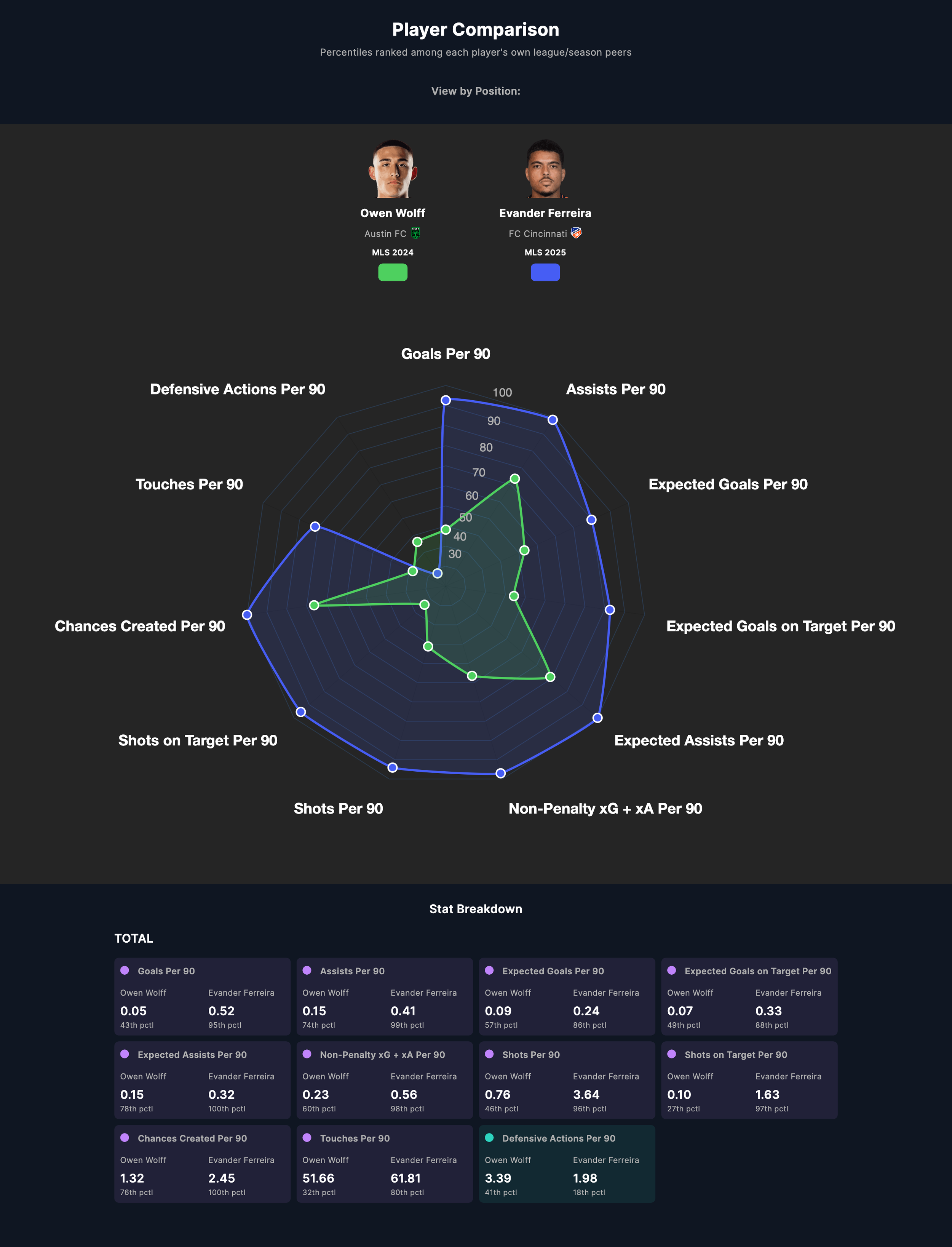
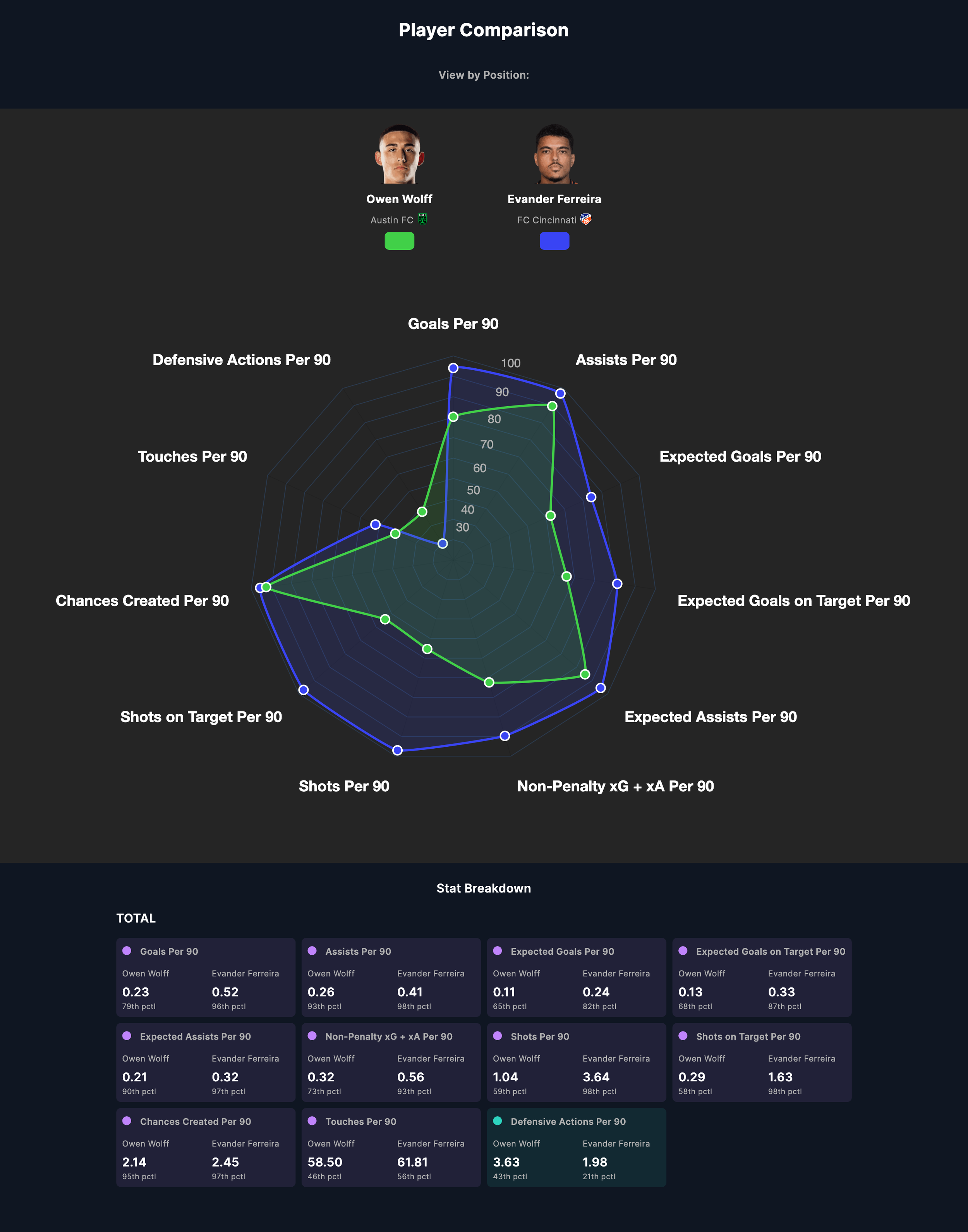
That’s not to say that Wolff’s going to suddenly become a curly-haired, mustachioed Brazilian capable of magic, but he’s still just 21 and — along with Torres — is among a subset of MLS players who could conceivably get to All-Star tier this season, without the benefits of a hometown all star game boost..
Brad Stuver’s selection last year rewarded several seasons of excellence, Vázquez’s selection was more marketing than reflective of production, and Guilherme Biro’s late sub-in for a pouty Jordi Alba was objectively hilarious and officially part of his lore. By the way, if you haven’t clued into Biro yet, he and Nouhou are fullbacks in MLS’ Delightful and Hilarious XI. He’s more than that guy who hard-fouled Riqui Puig, but he is also that guy who hard-fouled Riqui Puig.
So, can Verde improve on 1.18 xPoints a game? Certainly, Estévez has this team playing more defensively sound soccer than in the crumbling final two years of the Josh Wolff Era, and floor-raising moves over the offseason should put the offense into a better overall baseline than it’s had in past seasons. If there’s anything tangible to come out of the season, it’s likely an Open Cup, as they’re one of the better teams in the field and smarting from last year’s brawl against Nashville.
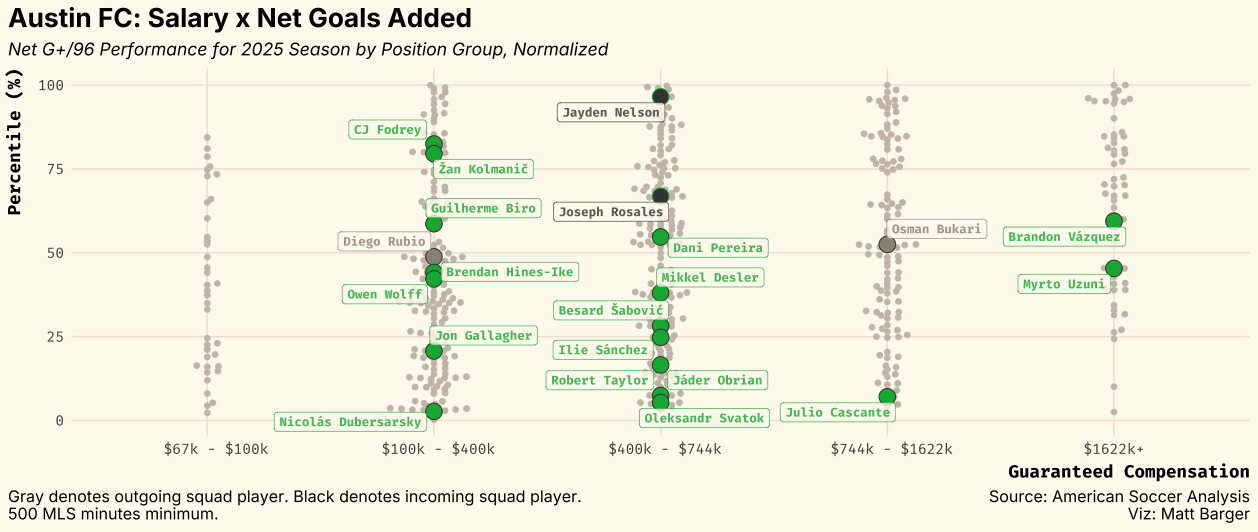
And even with designated player spends, much of sporting director Rodolfo Borrell’s strategy has been to find value with lower salaries; both players on the second-most-expensive line in 2025, Osman Bukari and Julio Cascante, have left, and Nelson in particular represents great value.
But even in the year in which they were good, xPoints said they weren’t good, and until they can escape the yoke of sub-playoff xPoint totals, they’re likely not much more than at the tier they managed last year. They should, on paper at least, be more fun, and Estévez joked that he might have a heart attack on the sidelines anticipating more goals. If they can’t increase their xPoints, at least they should be able to increase their xFun.
Orange Juice, No (El) Pulpo
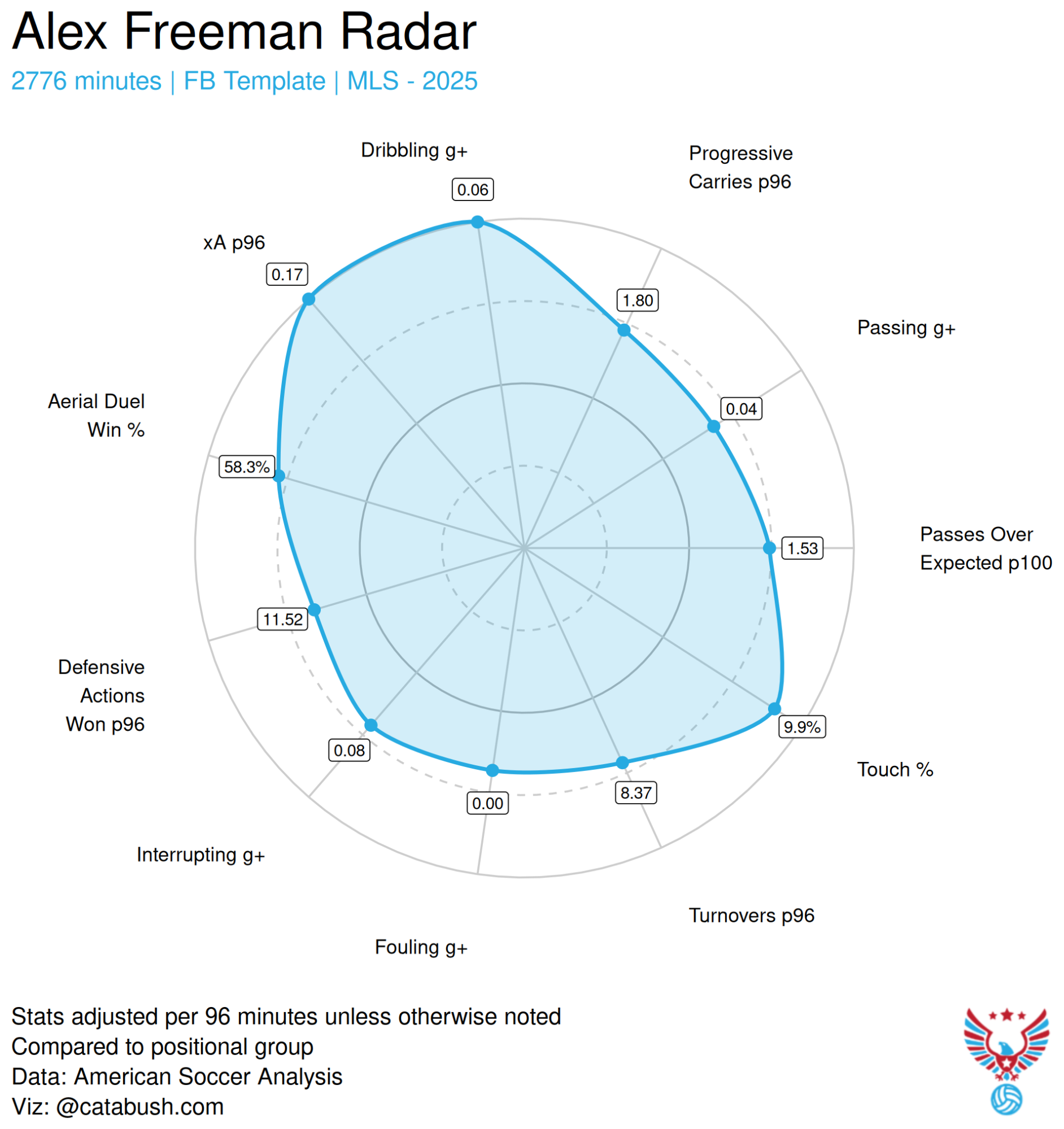
Orlando is a team undergoing a lot of change. Out go a number of guys who have become the core of this Orlando team over the past few seasons. Rodrigo Schlegel, Cesar Araujo, Luis Muriel, Ramiro Enrique, Pedro Gallese. It’s a lot of change. Most importantly, might be starboy Alex Freeman moving to Villareal. There is a bit of a knee jerk reaction with Alex Freeman moving on to Europe this off-season with a thought that he takes with him all of Orlando’s underlying numbers, which were VERY good last year.
I think there is some validity to that discussion and thought. Freeman wasn’t a system player, he was the system, player. Their attack was built upon his fairly unique attacking skillset. They are going to need either adapt or change their approach of entering the final third if they wish to be as consistently strong as they were last year in shot creation.
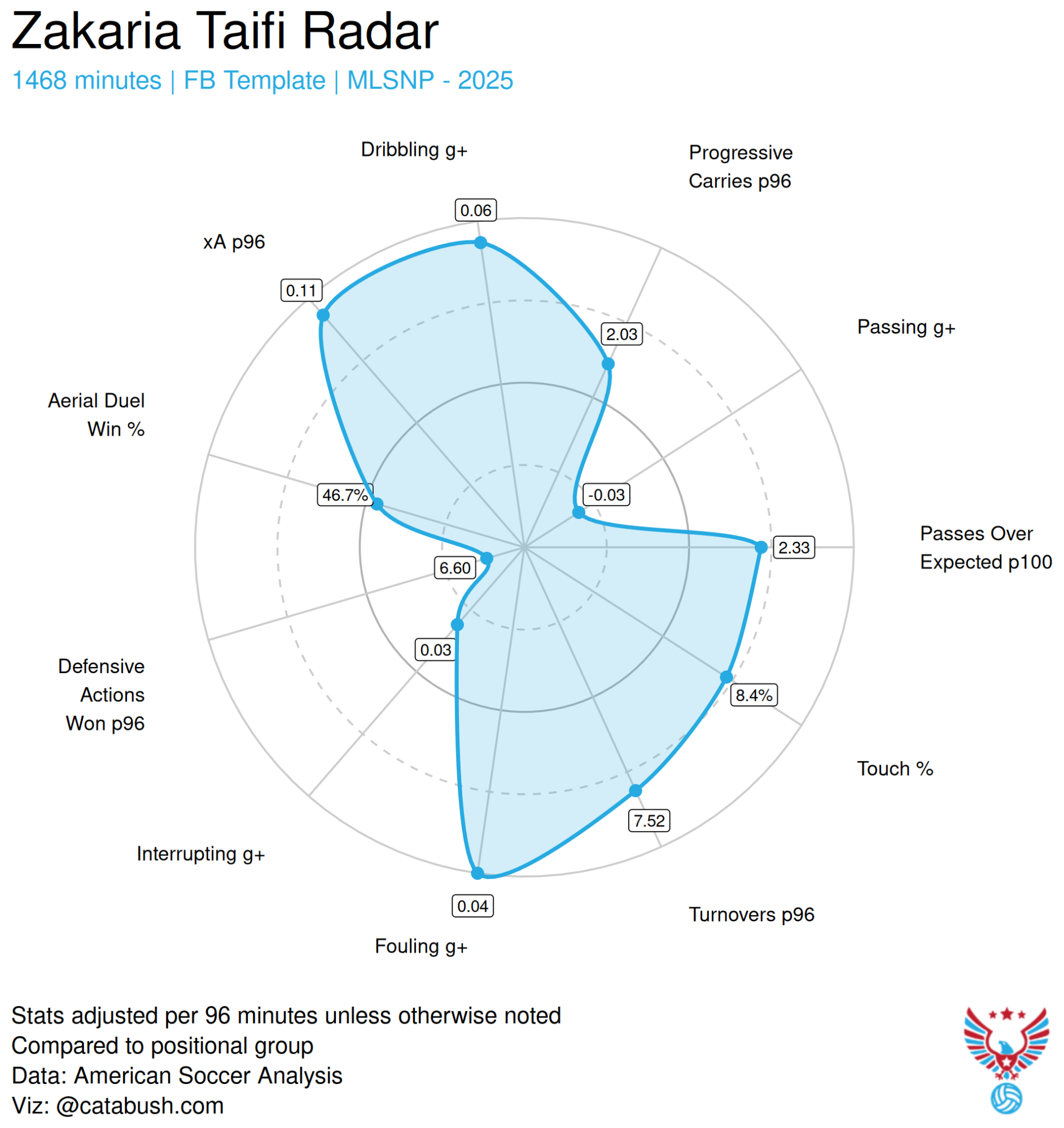
It’s really hard to know exactly how this team is going to retool itself with progressing the ball into the final third. They are, by and large, an organization that has chosen to limit information out of the team during training camp and pre-season. Further complicating the matter is the fact there are few options on this roster. The only player they do have as a right-back is homegrown Zakaria Taifi who has played almost more as a winger or wing-back-esque in very limited time off the bench last season. He’s also played some centerback and defensive midfielder while in MLS Next Pro.
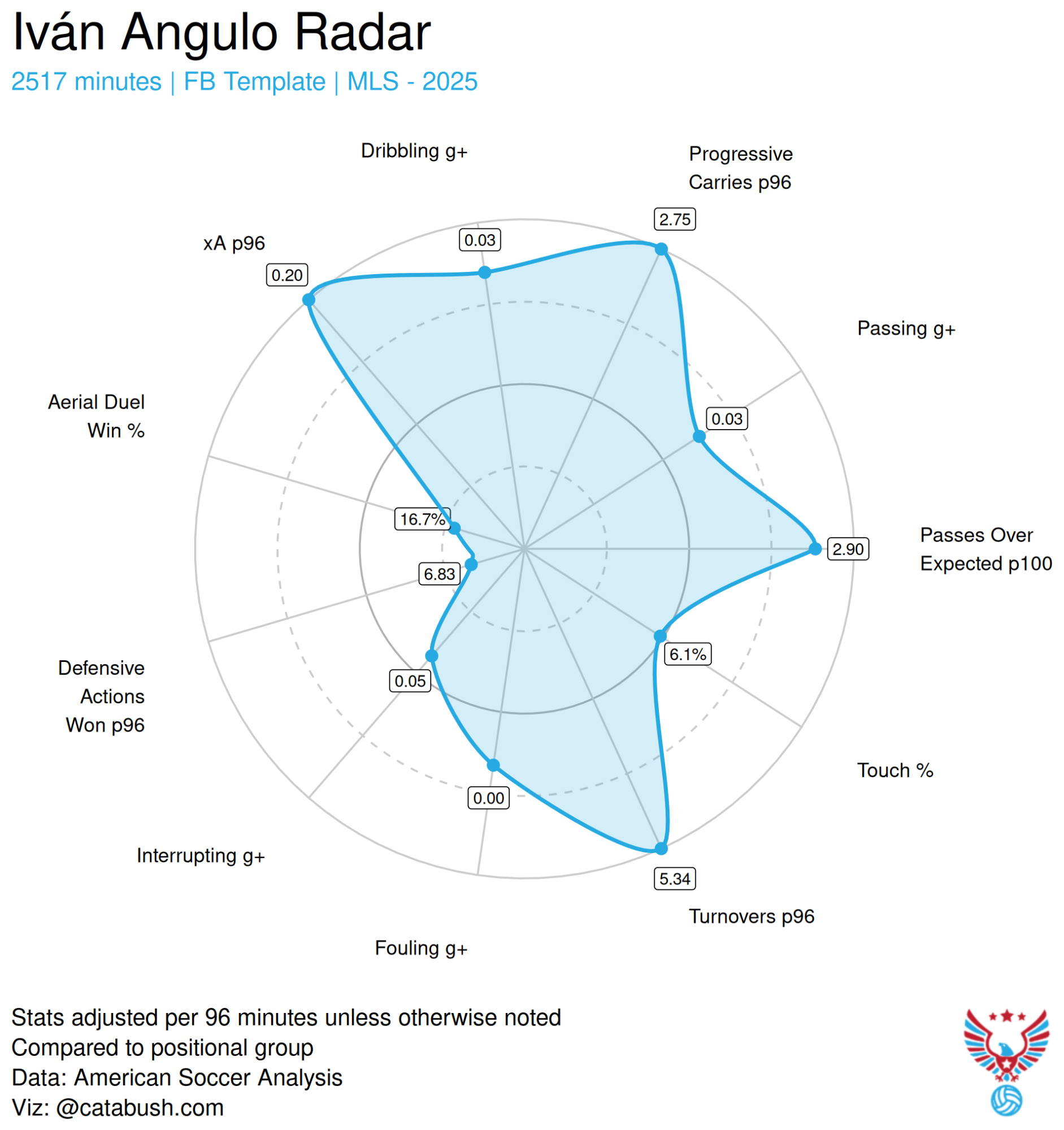
The early talk for starting right back out of the gate is Ivan Angulo who would transition to the backline from his winger role. Obviously it would be an interesting step to see him along the backline (perhaps, read as: “frightening”) but the reality is Óscar Pareja uses the position less as a defensive depth mechanic and more as an instrument in launching the attack and developing patterns inside the attacking third.
Considering Angulo’s two best tools, creating for others in the final third and carrying the ball upfield in a hurry (he had the 10th highest top speed for an MLS player) there is a potential fit here in a weird niche-Brian Schmetzer sort of way.
Anyone who watched an Orlando City game last year can attest to just how high Freeman played both in and out of possession on the right flank. But even just looking at the passing network we can see how high Alex Freeman was on the right side and how consistently he played higher than his left back counterpart in either of the two prominent formations last year.
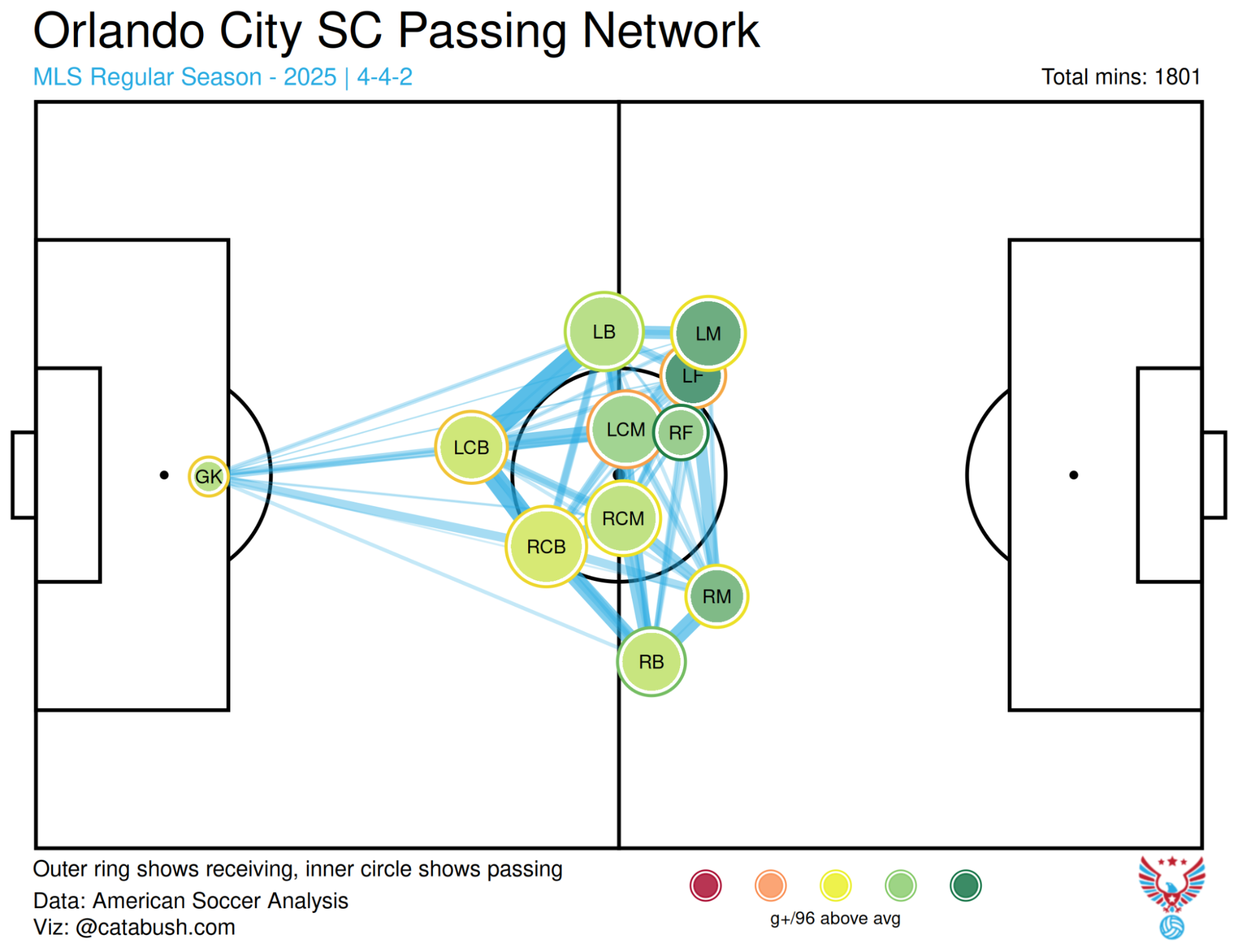
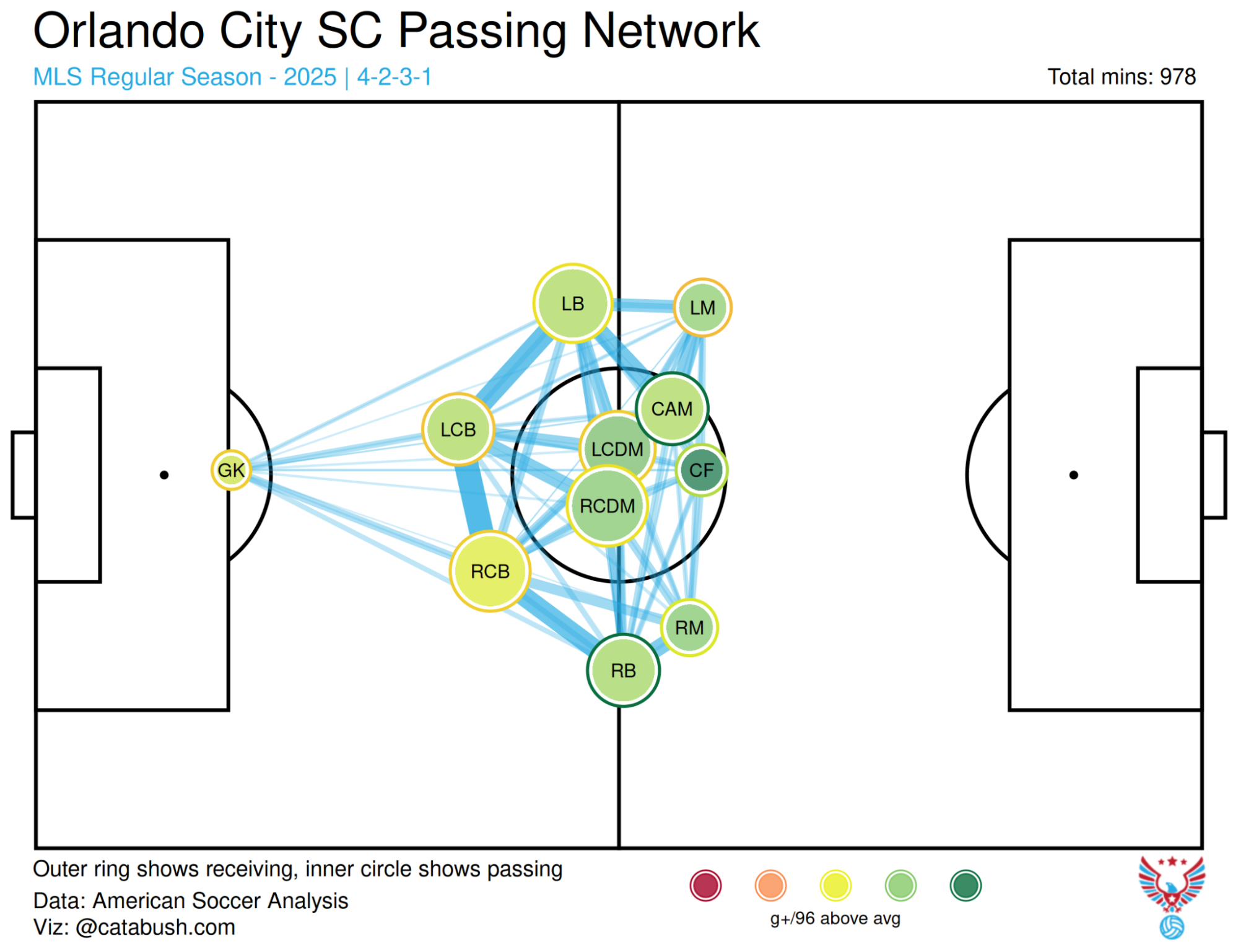
As a result it ended up opening a lot of space for attackers to try and take advantage of in turn. This means, regardless of who that right back actually is, the defensive stability will fall more on Slovenia international David Brekalo and the likes of newcomers Iago, Luis Otávio, and Maxime Crepeau. The exciting part here is both newcomers project to be defensive upgrades over their predecessors Rodrigo Schlegel and Pedro Gallese both who showcased multiple unfortunate defensive lapse moments for the club over the last two seasons. The improved defense could even, if you’re a real optimist, off-set the attacking loss in Freeman.
One to watch: Duncan McGuire
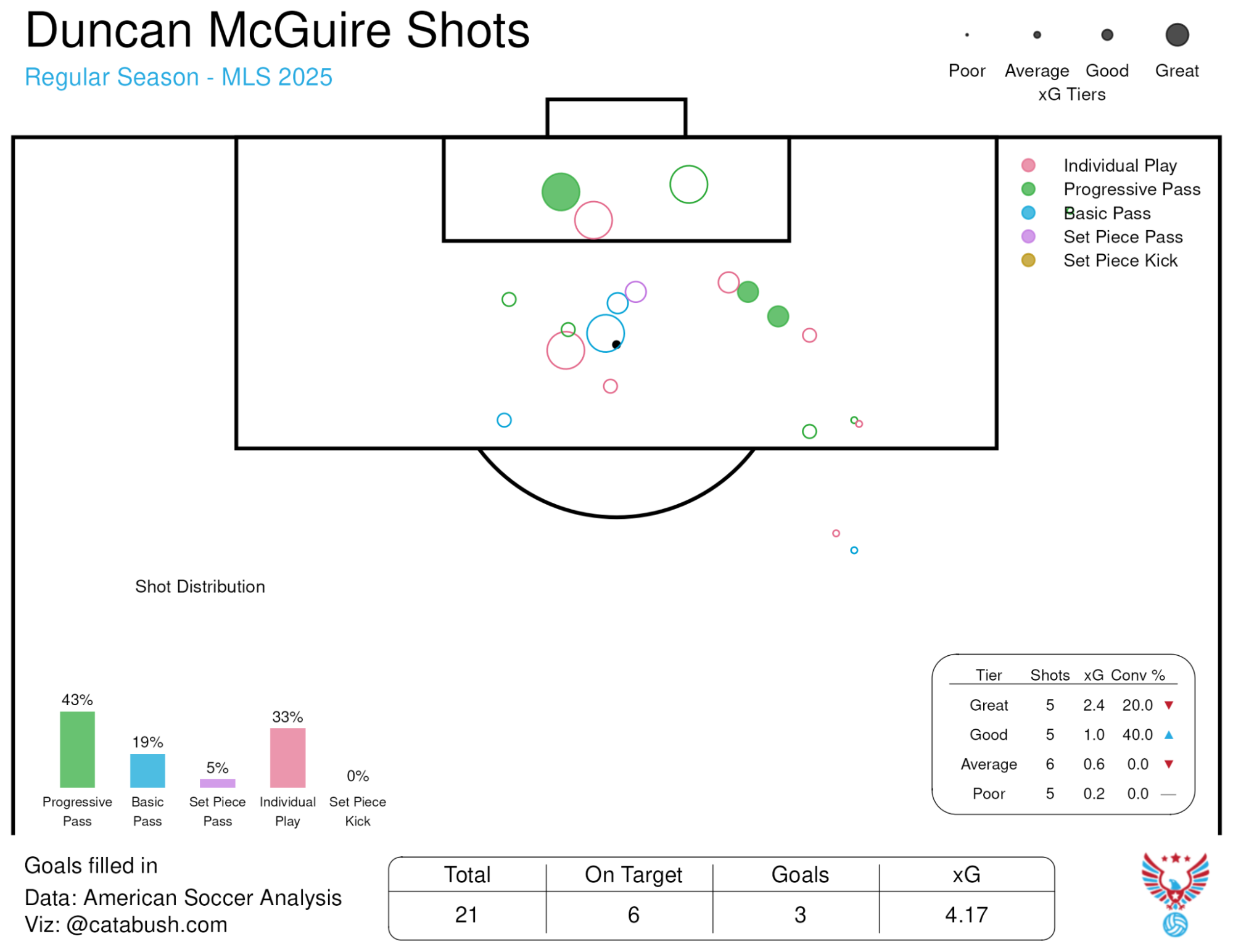
Two years ago Duncan McGuire was a silly error away from going to Blackburn Rovers and The English Championship, for a sizable fee. Now, two years later, he’s finally looking to reestablish himself post two major shoulder surgeries in six months.
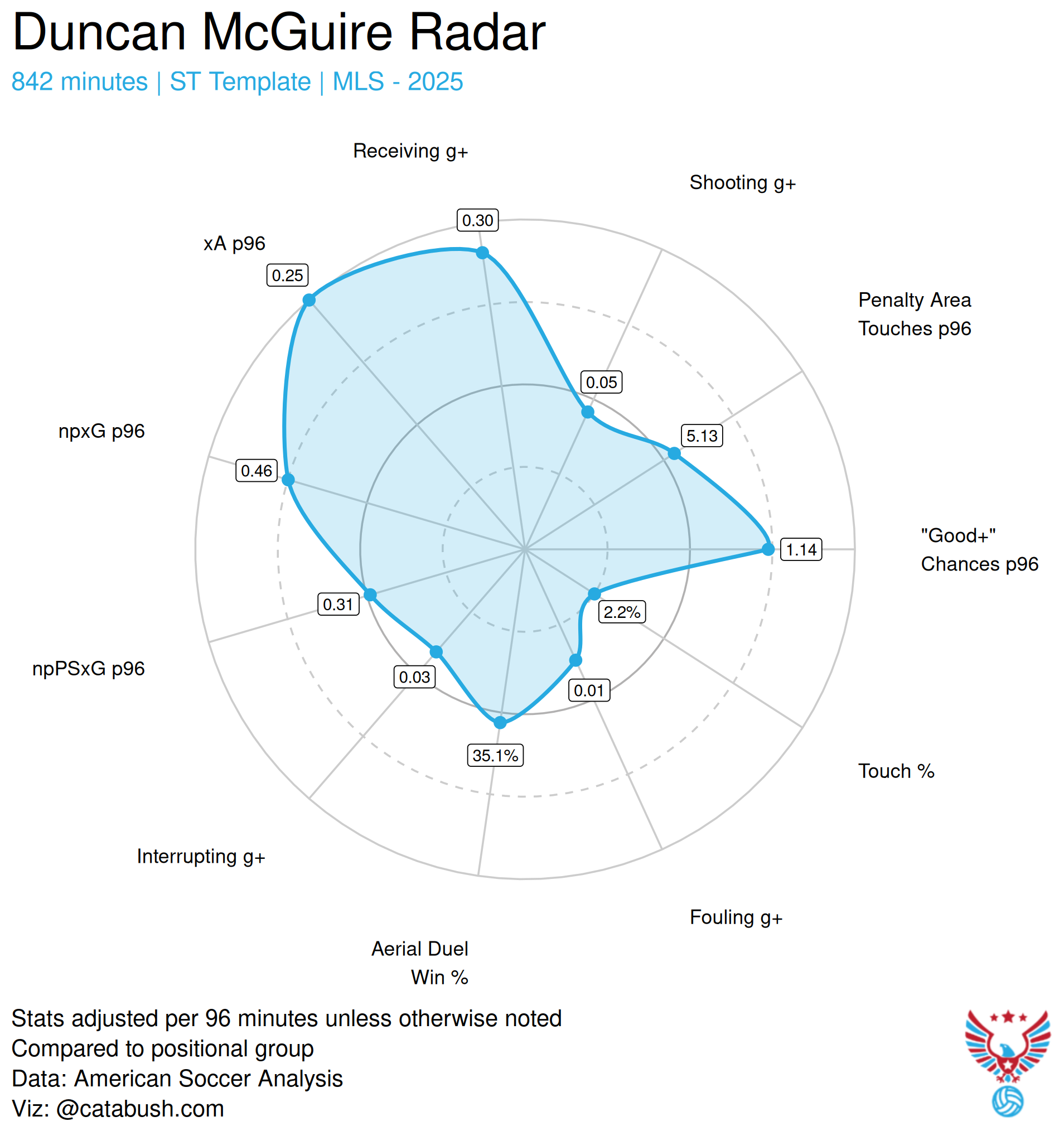
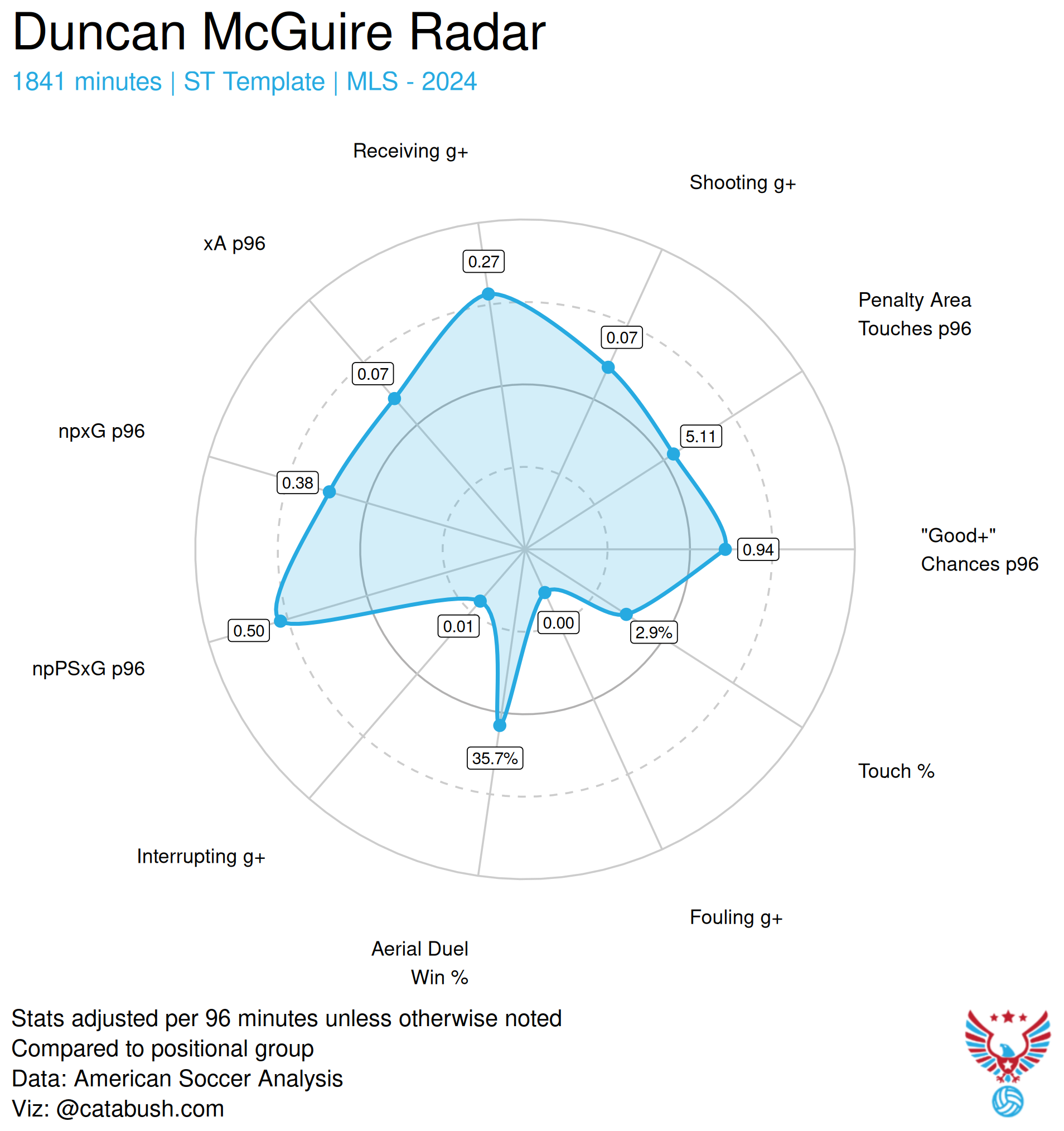
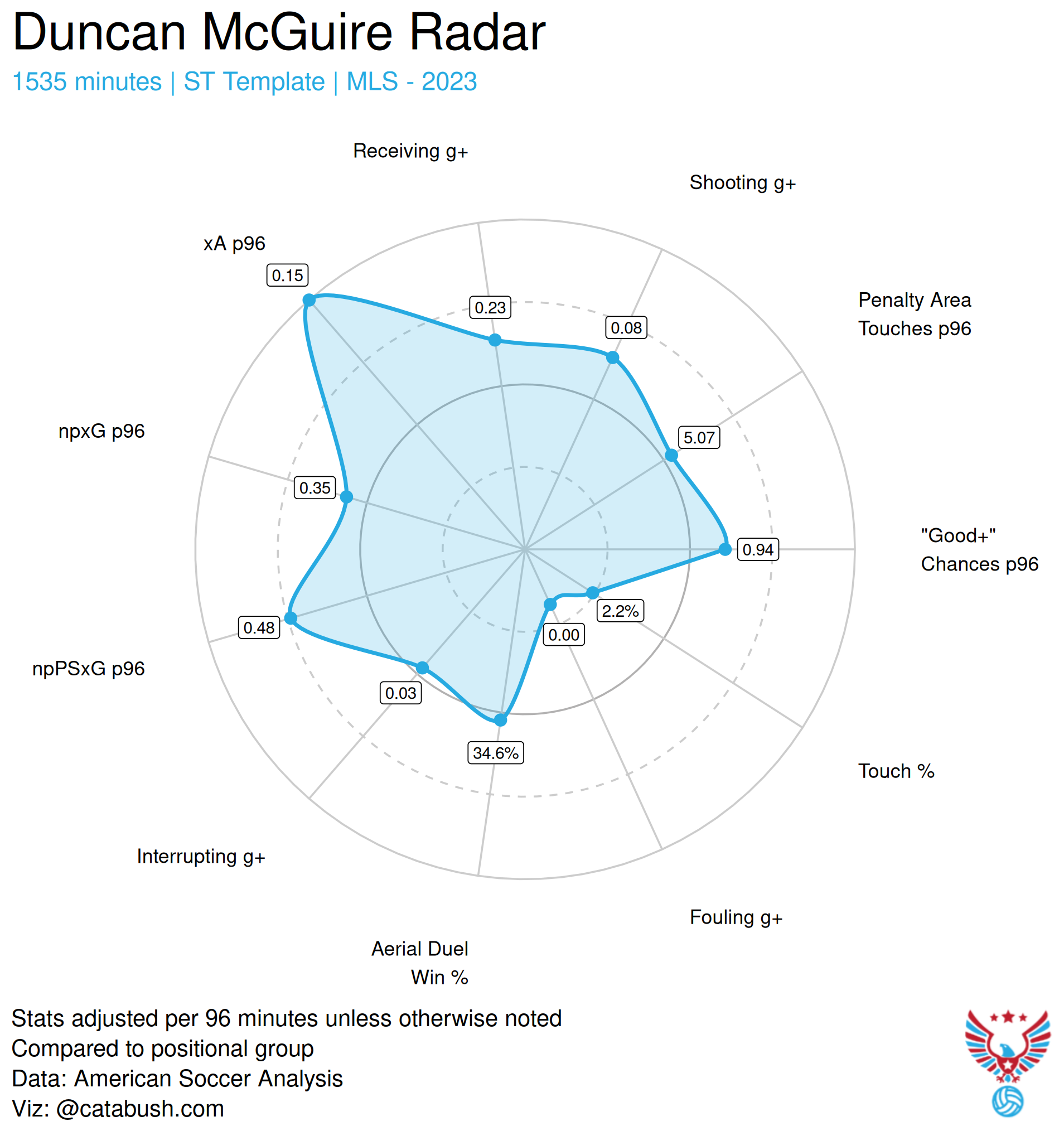
On one hand, McGuire has put up 26 goals across 4,200 minutes spread across three seasons. That’s ahead of relatively more heralded forwards in Joao Klauss, Tai Baribo, Mikael Uhre and Leo Campana that have all moved in deals north of $2 million. In that same time frame, he also has one fewer goal contribution than Jordan Morris in almost 2,000 fewer minutes.
On the other, his underlying numbers are much less fantastical. He gets into good shot locations (check the shot chart above) with a strong xG/shot, and has shown some shot creation chops for others. He just needs more shots for him. It’s hard to be a top guy when you’re taking fewer than three a game. Throw in the shoulder and various injury problems he’s accrued since being drafted by Orlando, it’s troubling. It’s exciting that he looks healthy now and is potentially exciting to have a season where “he’s the guy” but also who knows how this all shakes out.
What if... this actually all works out
Like, let’s just say it does. Let’s just say Ivan Angulo is Freeman 2.0. The defensive core is in fact an upgrade. Duncan McGuire does the goal contributions, and Martin Ojeda is, once again despite underlyings, Messi-lite. They're going to compete for both number one spot in the east and the shield.
Like okay hold on.
Yes, that's quasi absurd and not probable. But it is possible.
I feel like a lot of folks are sleeping on the acquisition of Braian Ojeda from Real Salt Lake, an acquisition that does get a little lost in the shuffle. He’s a guy, not an “I am him” type guy but just *a guy*. This is the invisible type dude that makes guys like Eduard Atutesta and Martin Ojeda so much better just by being their dependable clean-up guy something they were constantly missing last season.
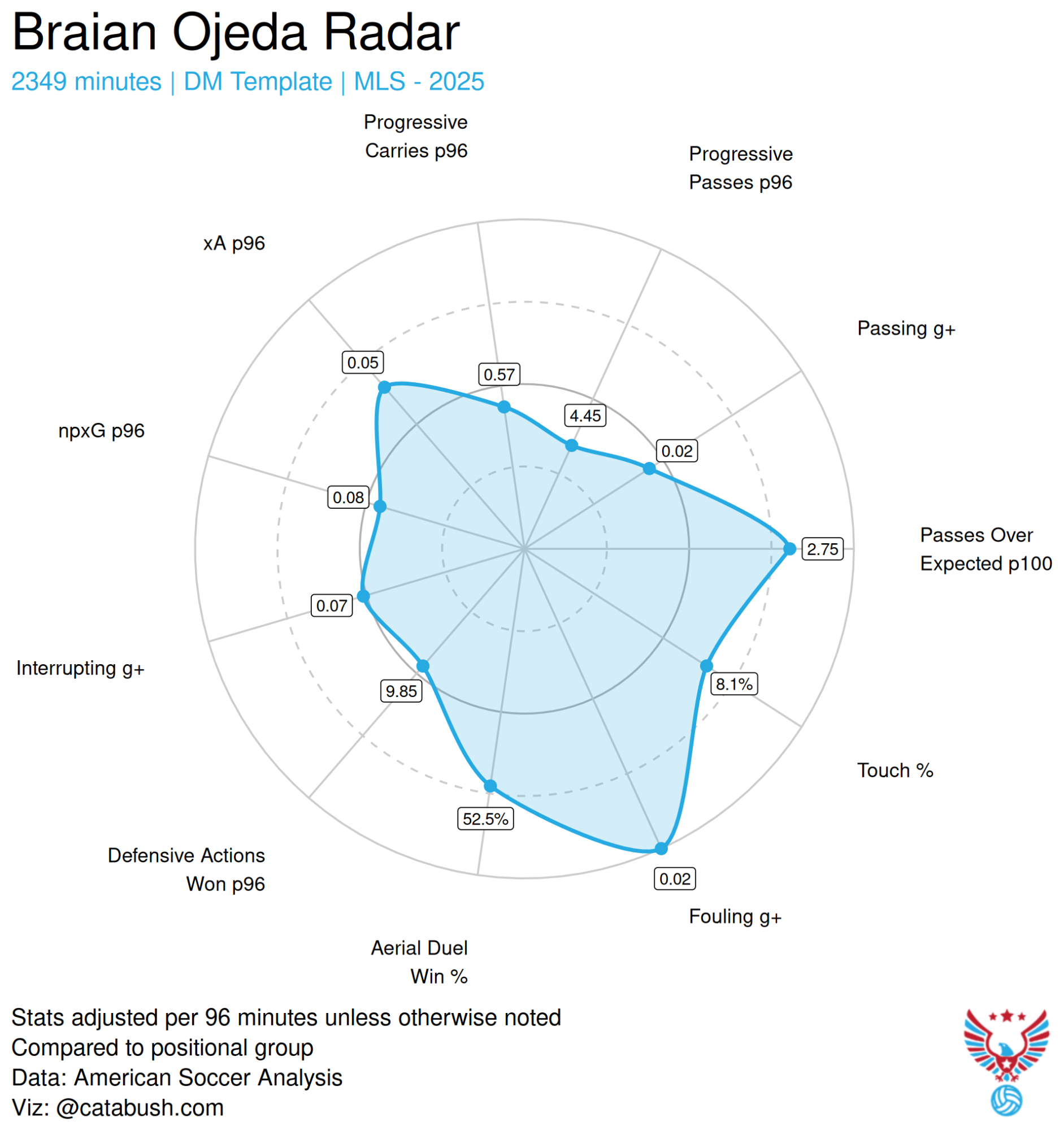
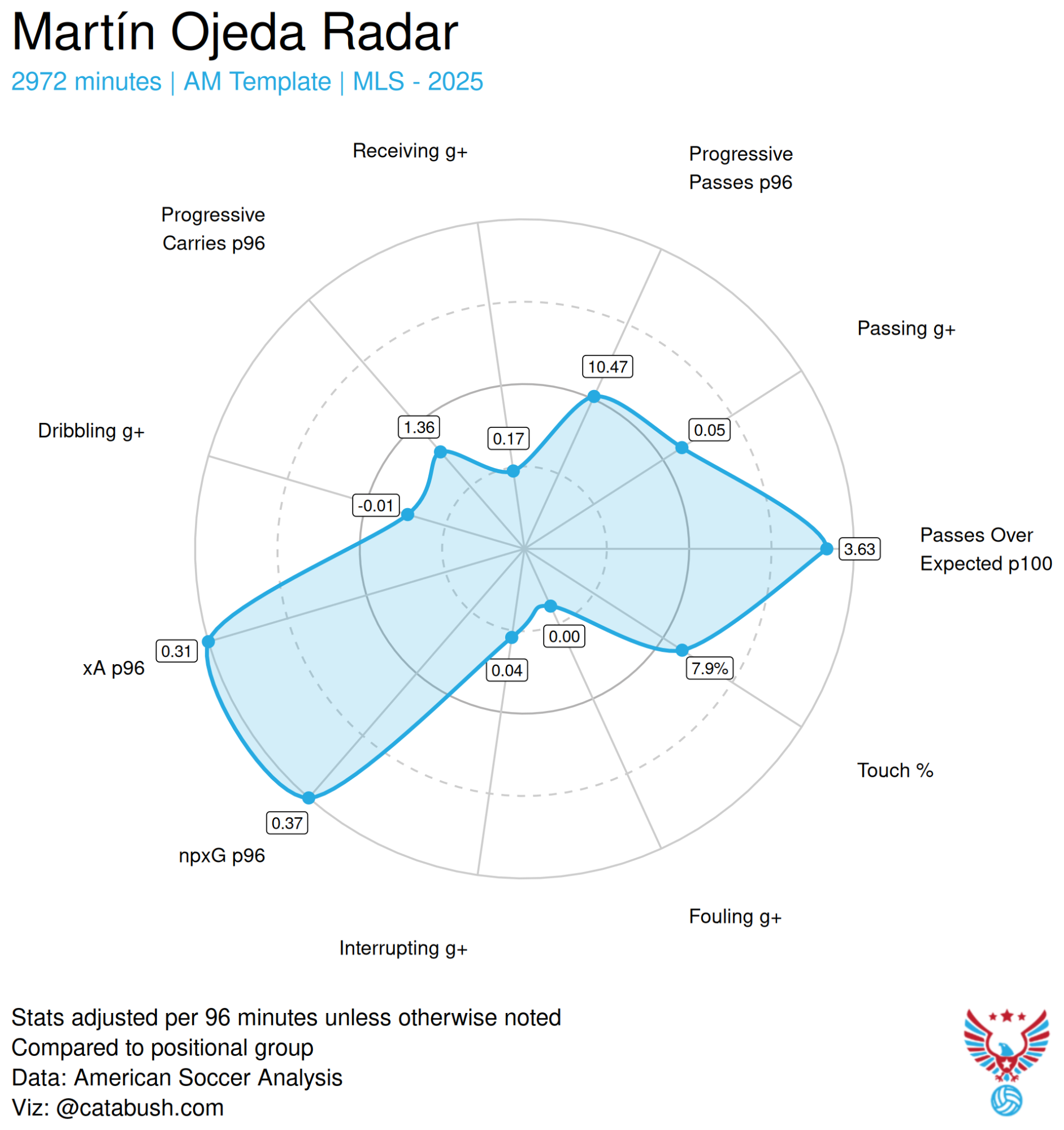
That said they also have a floor which when considering defensive depth concerns and unknown tactical challenges could see them sitting out of the playoff window come end of October. It’s not as if the attack didn’t go missing for huge swaths in 2024 and was almost wholly dependent on Facu Torres outpacing his underlying numbers to reach the playoffs.
Just like their ceiling I don't see this as a true or likely outcome either but again, all those possibilities exist and even ones we aren’t considering. Realistically they’re a team that is caught somewhere in the middle and probably closer to being a playoff first round host than a team stuck in a late playoff spot battle, but boy is the confidence interval wide on this one.
On the Next Season of Chicago Fire
The Chicago Fire returned to the Major League Soccer playoffs in 2025 for the first time since 2017. Though the team’s run ended with two defeats against the Philadelphia Union in the best-of-three first round, things seem to be on an upward trajectory for the Men in Red.
Off To A GGGood Start
After a, let’s say, divisive tenure as the manager of the U.S. Men’s National Team Gregg Berhalter returned to MLS last offseason as manager and director of soccer of the Fire and fit seamlessly back into the job.
There was a small but impactful improvement in the team’s advanced numbers, going from -3.43 expected goal difference (xGD) in 2024 to 2.24 xGD in 2025 according to American Soccer Analysis data. Berhalter’s first season coincided with better luck, too. In 2024, the Fire were exceptionally unlucky, scoring 40 goals on 48.09 xG and conceding 61 on 51.53 xGA. In 2025, the team scored 67 on 61.66 xG and allowed 57 on 59.42 xGA.
Stylistically, Berhalter’s 2025 team differed from Frank Klopas’ 2024 team but not necessarily in the way outsiders might expect a Berhalter team to, pressing a little bit less and enjoying less field tilt.
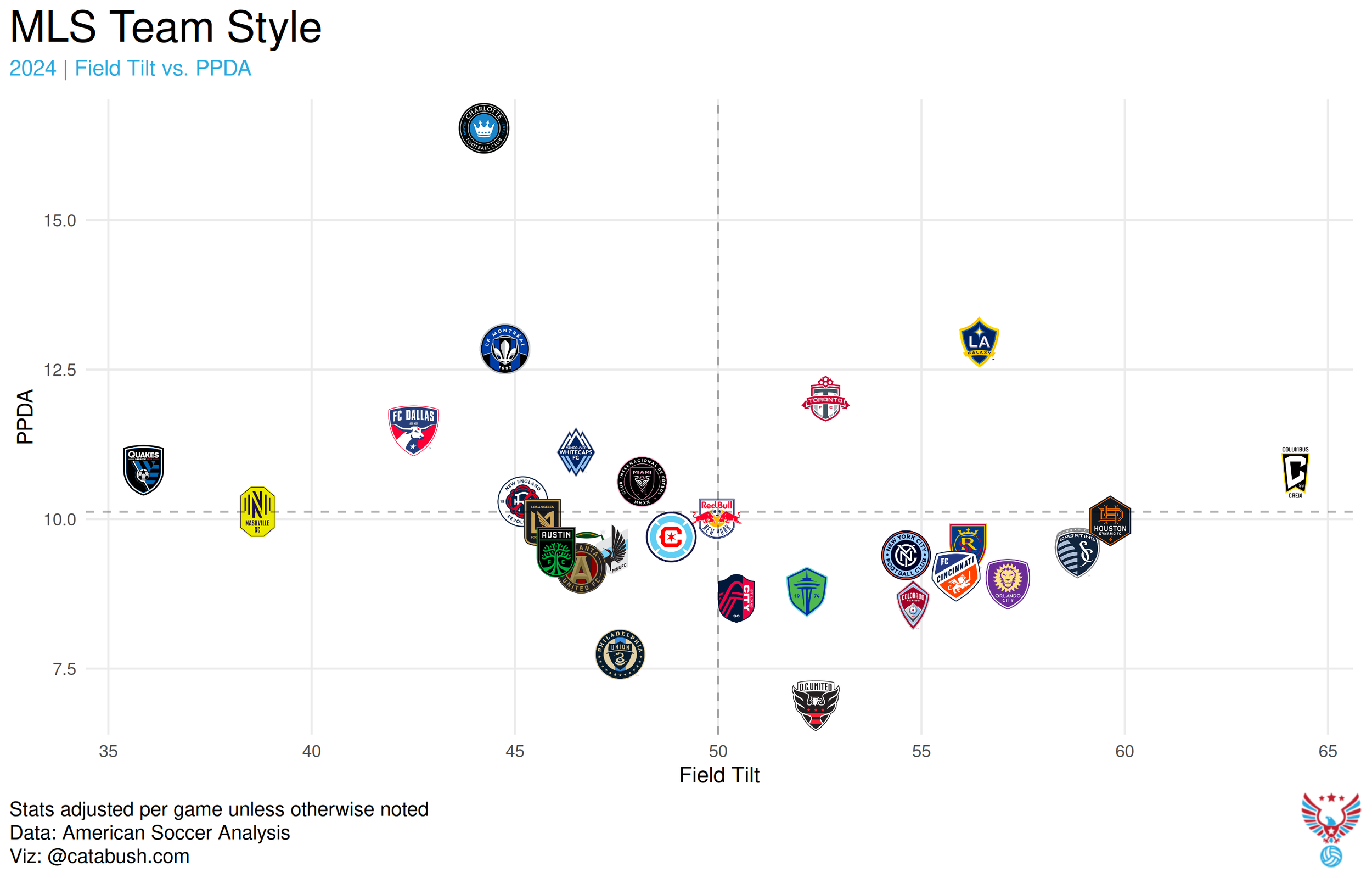
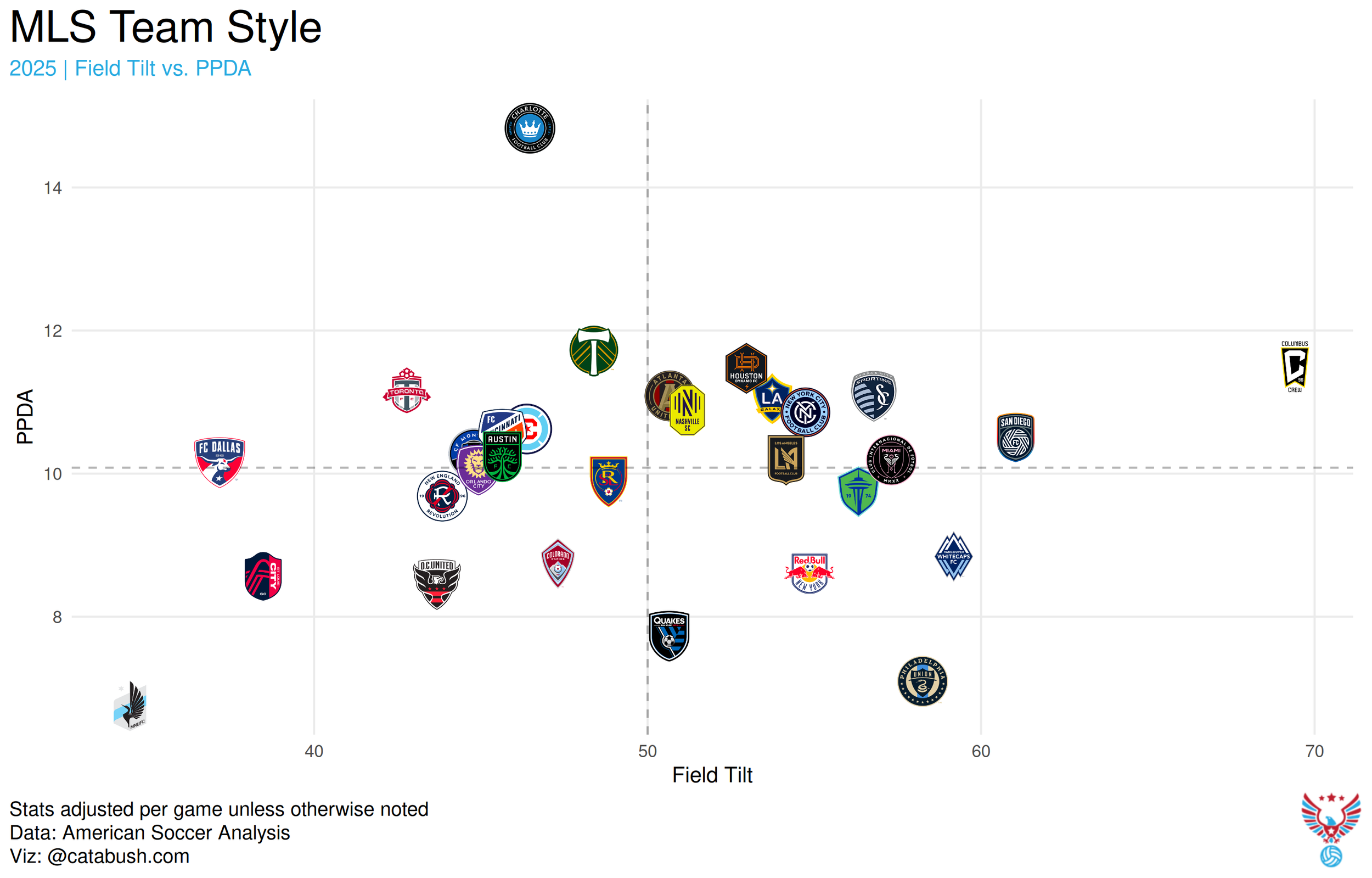
Our friends at Futi categorized the dominant styles of the 2025 Chicago Fire as “Control and Regroup” (41%) and “Press and Possess” (38%), though more emphasis towards Berhalter’s historically preferred style of press and possess seems likely with more time and influence on the roster. Either way, those styles are ideological cousins compared to “Bunker and Counter” or “Launch and Squish”, Berhalter definitely got his style across.
Questions About An Attack Without Brian Gutiérrez
Any conversation about the Fire in 2026 has to start with the offseason departure of Brian Gutiérrez to Chivas de Guadalajara. Put simply, Gutiérrez was one of the best players in the league last season, posting the sixth highest raw G+ Above Average total in MLS in 2025.
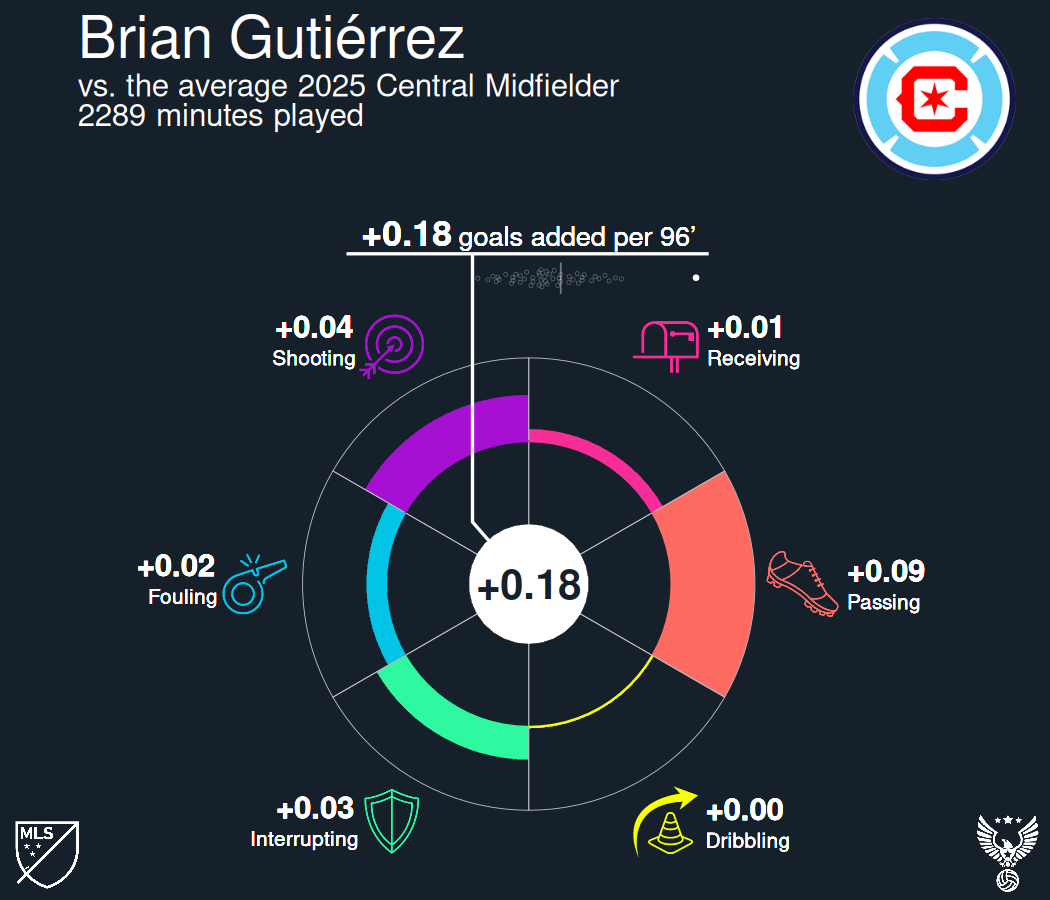
His 0.49 xA + npxG/96 was an elite total for a central midfielder but his defensive impact shouldn’t be overlooked, either. His 0.22 net G+/ per 96 minutes was the highest among MLS central midfielders who played at least 1,000 minutes. Without Gutiérrez, the Fire loses its most dynamic midfielder, and one who still probably hasn’t reached his peak. So what’s the plan to replace that production?
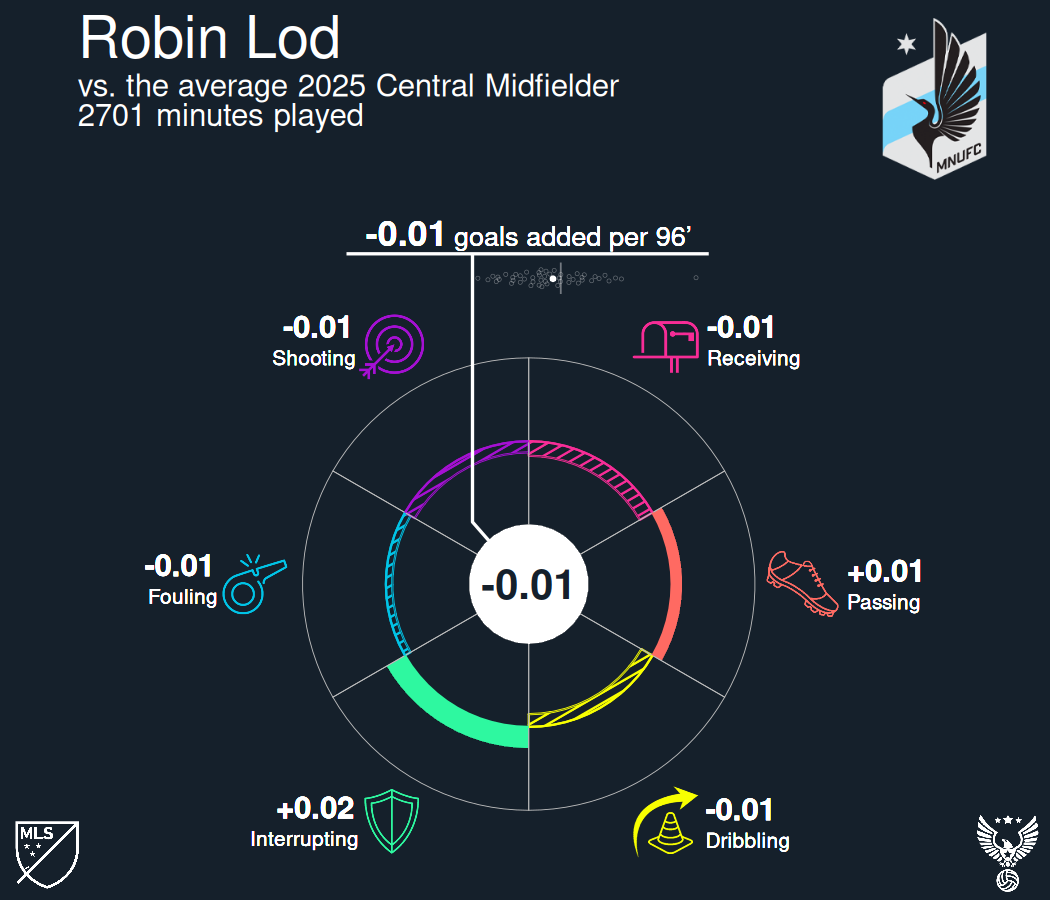
Free agent signing Robin Lod is certainly the most proven, and likely, replacement for Gutiérrez, at least early in the season, which doesn’t inspire a tremendous amount of confidence.
Lod has MLS experience and is still a capable player but Chicago’s midfield is significantly less dangerous going into this season than it was at the end of 2025. André Franco (0.12 net G+/96 in 435 minutes) figures to be the more direct Gutiérrez replacement once he returns from a late season ACL injury.
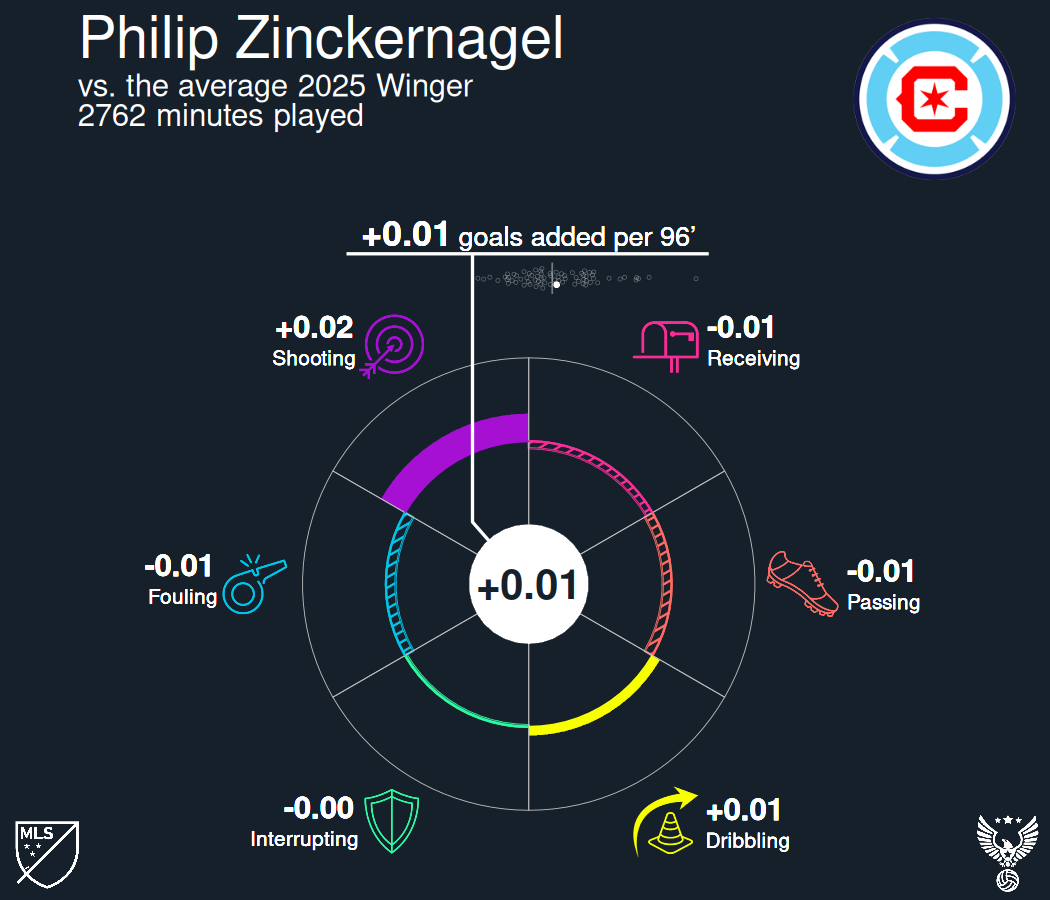
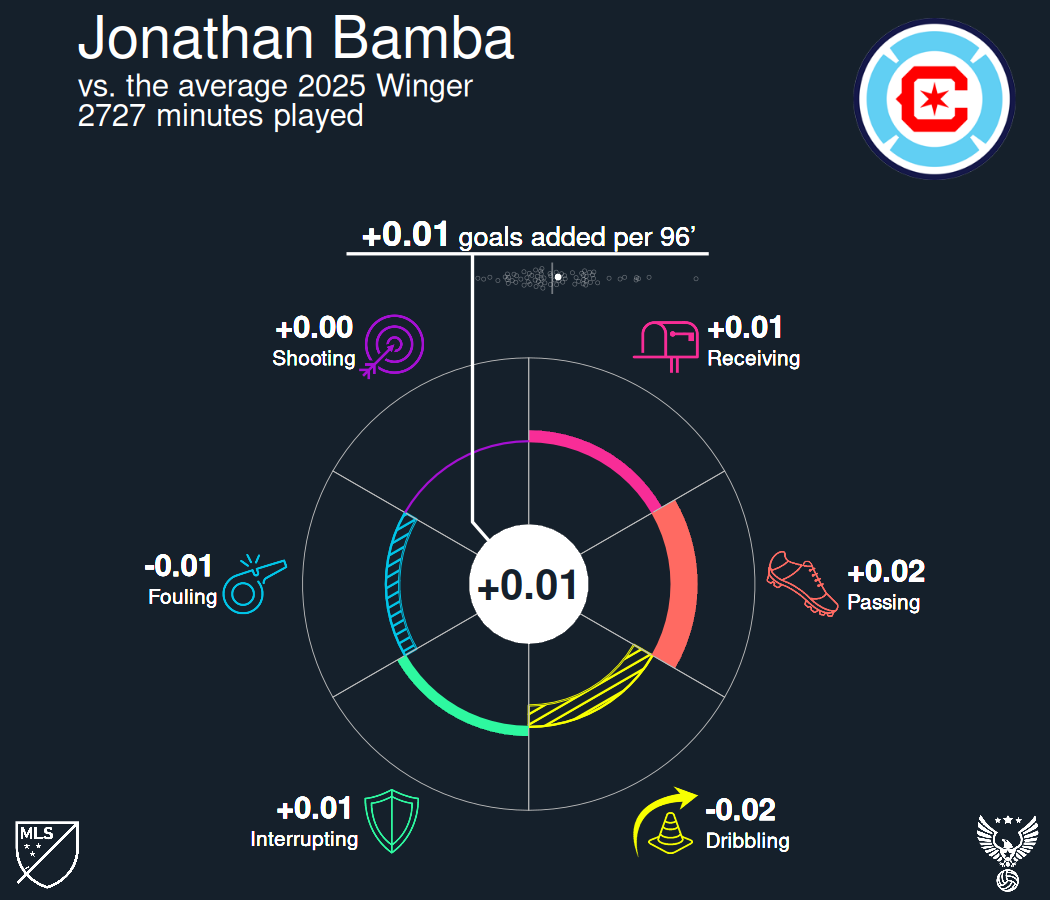
In the interim, an even larger burden of the team’s creation will fall to wingers Philip Zickernagel and Jonathan Bamba. Zickernagel put up impressive stats in 2025 but, digging deeper, there’s room for some skepticism. His assists and xA were largely driven by his duties on set pieces, specifically on corners. Berhalter will be hoping one of the team’s two Designated Players, Jonathan Bamba, will take another step forward in his second year stateside after a relatively unremarkable debut.
After a disappointing first season in the league, Hugo Cuypers, Chicago’s other DP, turned in a pretty great season in 2025, consistently finding space for good shots in the box. His xG jumped from 0.38 per 96 minutes in 2024 to 0.68/96 last season.
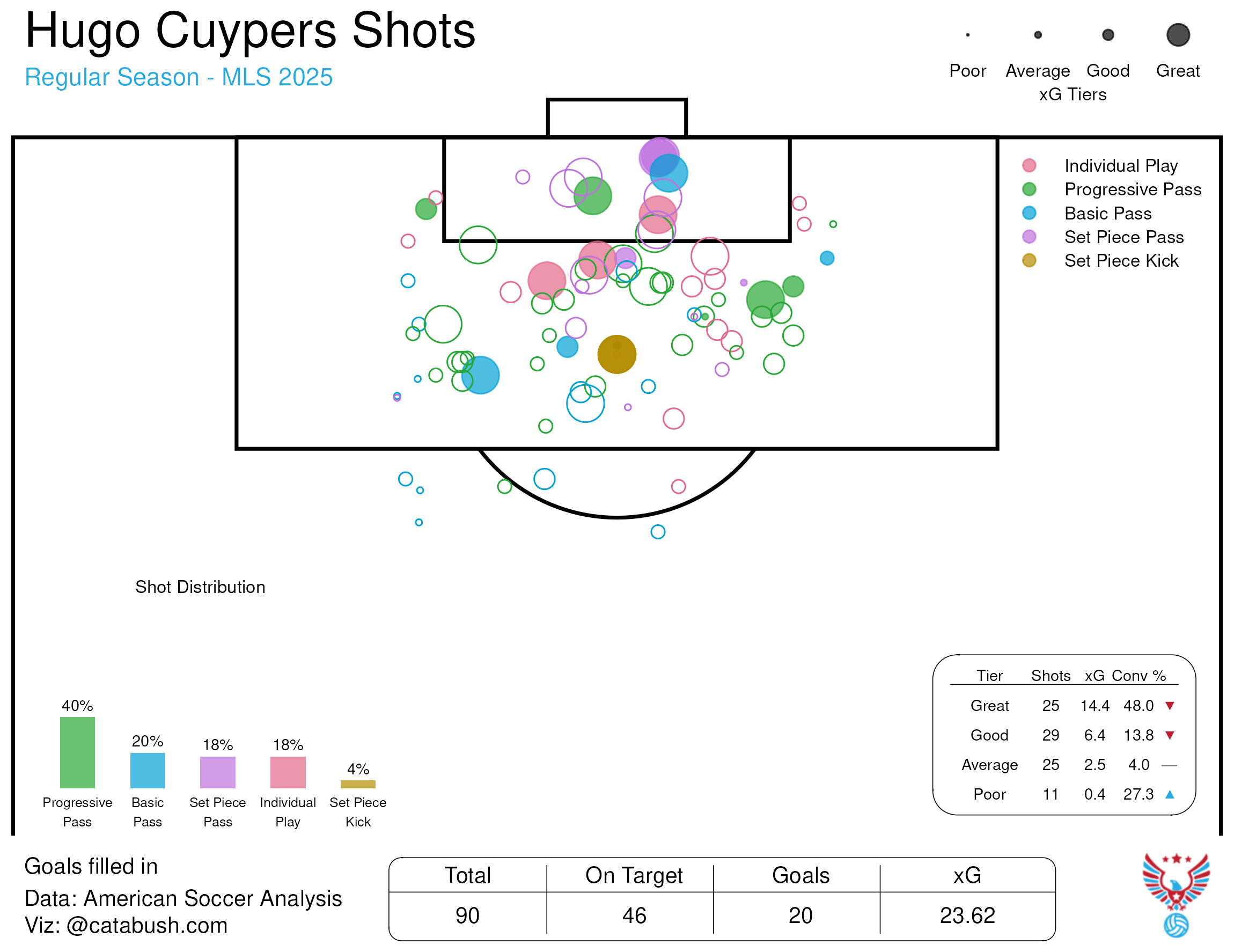
But as with so many strikers in the league, Cuypers needs someone to get him the ball in the box. The biggest question facing the Fire in possession in 2026 is if they’ll be able to consistently get the ball into dangerous spots. If the answer to that is yes, expect another big year from Cuypers.
Unresolved Defensive Issues
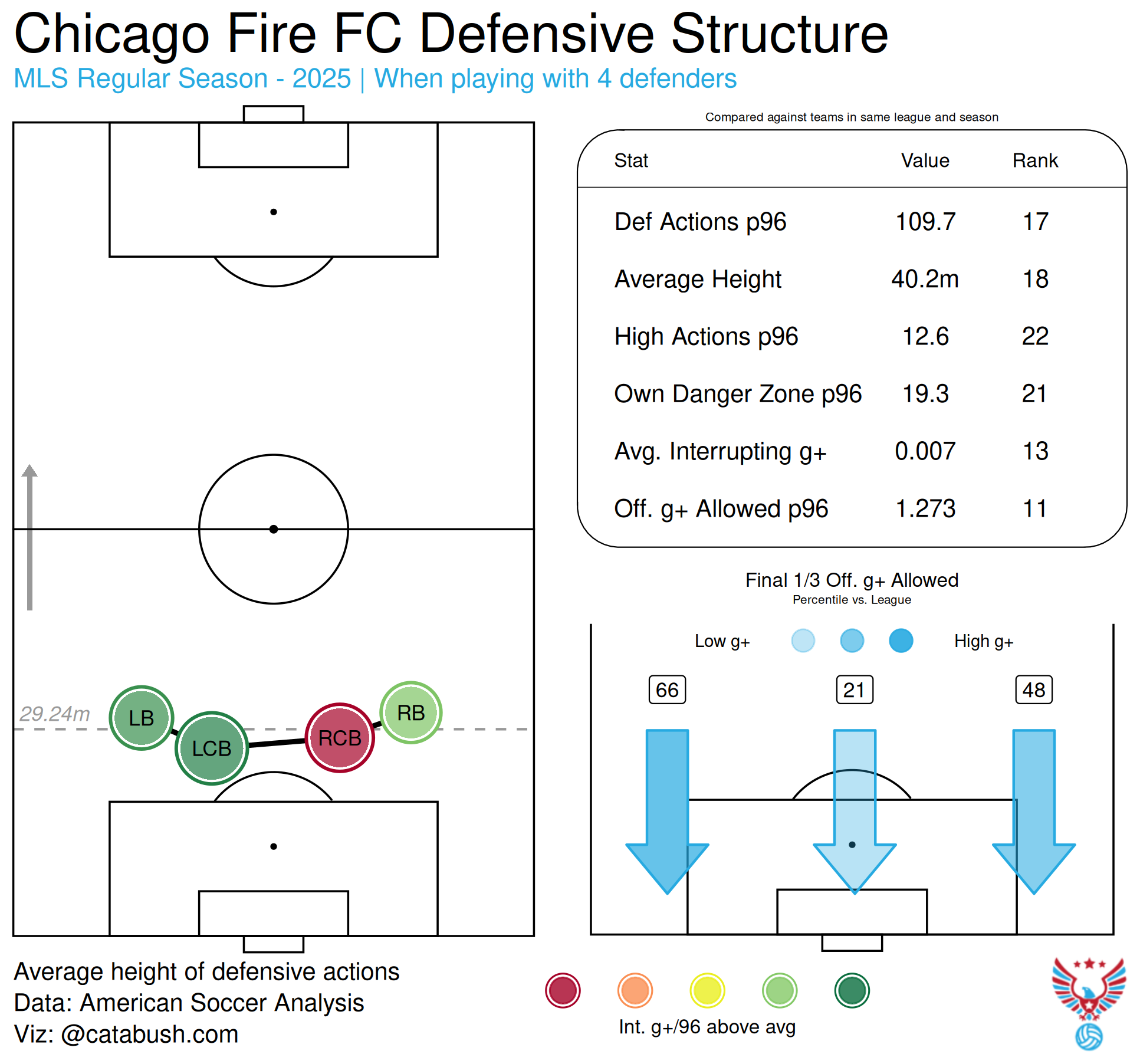
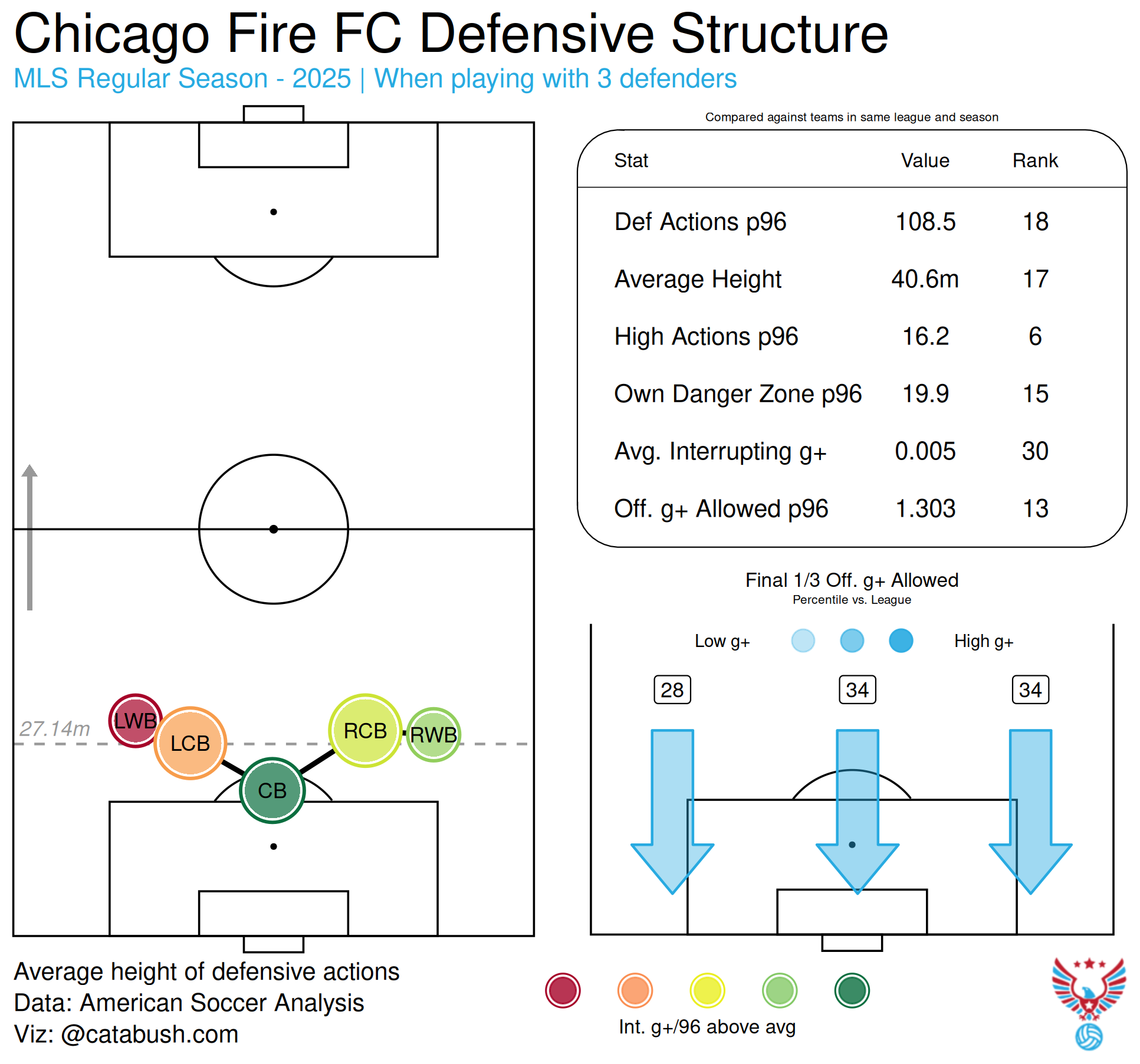
Entering 2026 there are defensive questions. As noted above, the Fire’s defense was considerably more porous in 2025 than before GGG’s arrival. Jack Elliott and Andrew Gutman’s names should be written in pen on the lineup card as long as they’re healthy and U22 Leonardo Barroso could be the front runner to start at right back after a solid first 1,000 minutes in the league.
Who starts next to Elliott at center back remains a question in multiple ways. Berhalter used both two and three center back formations down the stretch of the 2025 season though the on-field defensive results were not too different.
This winter, Chicago brought in Mbekezeli Mbokazi, a 20-year-old with senior international caps for South Africa, as a U22 initiative signing, joining veteran Joel Waterman and USMNT prospect Christopher Cupps to round out the center back room.
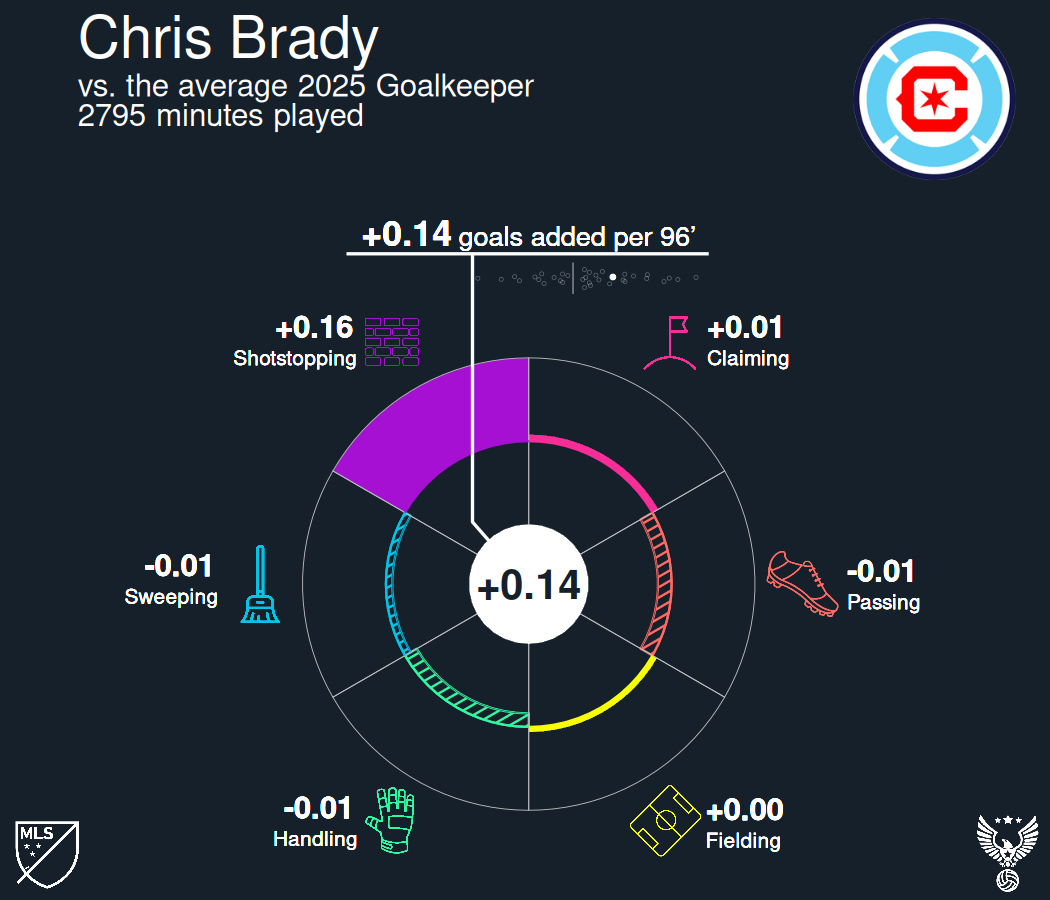
At least some of Chicago’s defensive overperformance can be attributed to goalkeeper Chris Brady and his best shotstopping season so far.
There could be room for improvement, too. Despite entering 2026 with 92 career starts in MLS play, Brady will turn 21-years-old in March. If Brady’s shotstopping can continue to develop, he’ll take more pressure off a defense that still allowed opponents too many good chances in 2025.
Upside
Even after losing Gutiérrez, the time to win is now for the Fire. The team’s attacking core is at its peak (or maybe even coming down the other side of the age curve). Cuypers and Bamba are both 29-years-old, Elliott is 30, and Zinckernagel is 31 at the start of the season, putting the emphasis on winning now. Berhalter has been a successful coach for a long time, despite what USMNT truthers will interject when not asked, but he faces a big test to maximize a roster built for success in 2026 that just lost its best player.
Will the defense take a step forward towards average (or can Chris Brady do an even better job keeping shots out of goal)? Can the team still create consistent scoring chances for Cuypers without Gutiérrez? Even with a new stadium on the horizon, this iteration of the Chicago Fire is built to compete now.