
2026 MLS Previews: Inter Miami, Cincinnati, Philadelphia
/Our 2026 MLS Season Previews are ending and we finish with Inter Miami, FC Cincinnati, and Philadelphia. If you want to support this coverage of the league, you can head to our Patreon. For $5 a month you can get access to a lot of the data visualization tools we use to make these previews.
Inter Mr. Evil
Can we call Inter Miami the villain in MLS?
After winning MLS Cup and being led by Leo Messi and friends, Inter Miami is back with a refreshed squad. Out are Messi’s old pals, Sergio Busquets and Jordi Alba. In are his (potential) new buddies in German Bertarame, Dayne St. Clair, and Sergio Reguilon.
Are they cheating? I mean, I don’t think so. When you have one of the best players in the history of this sport, players will play for pennies. It happened with LeBron and the Heatles, and they were the most hated team in the NBA until Kevin Durant signed with Golden State.
But enough of that. We’re going to actually look at the way they shape up on the field. Are they actually better than where they were in 2025?
Argentine Malbec, 1987 Vintage
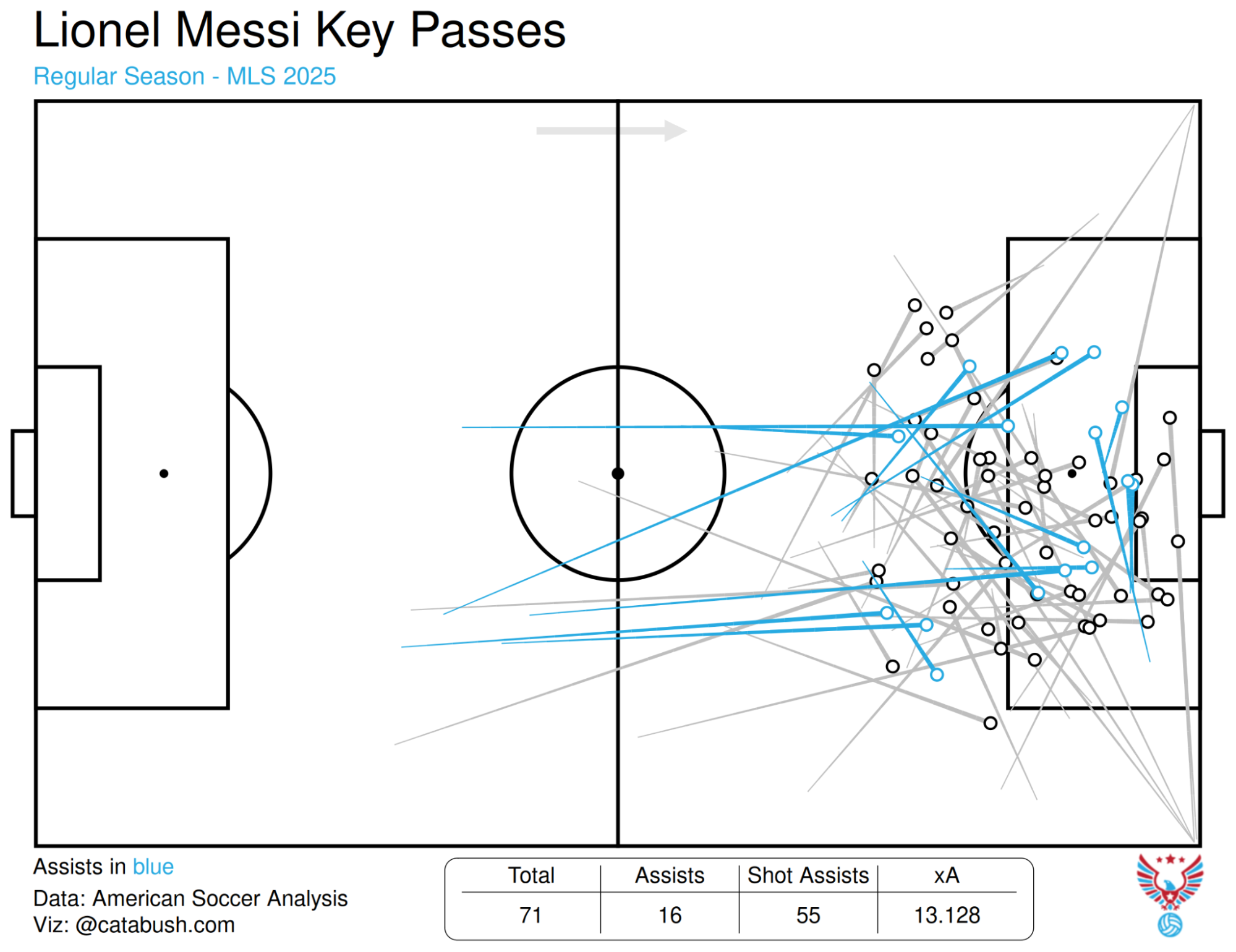
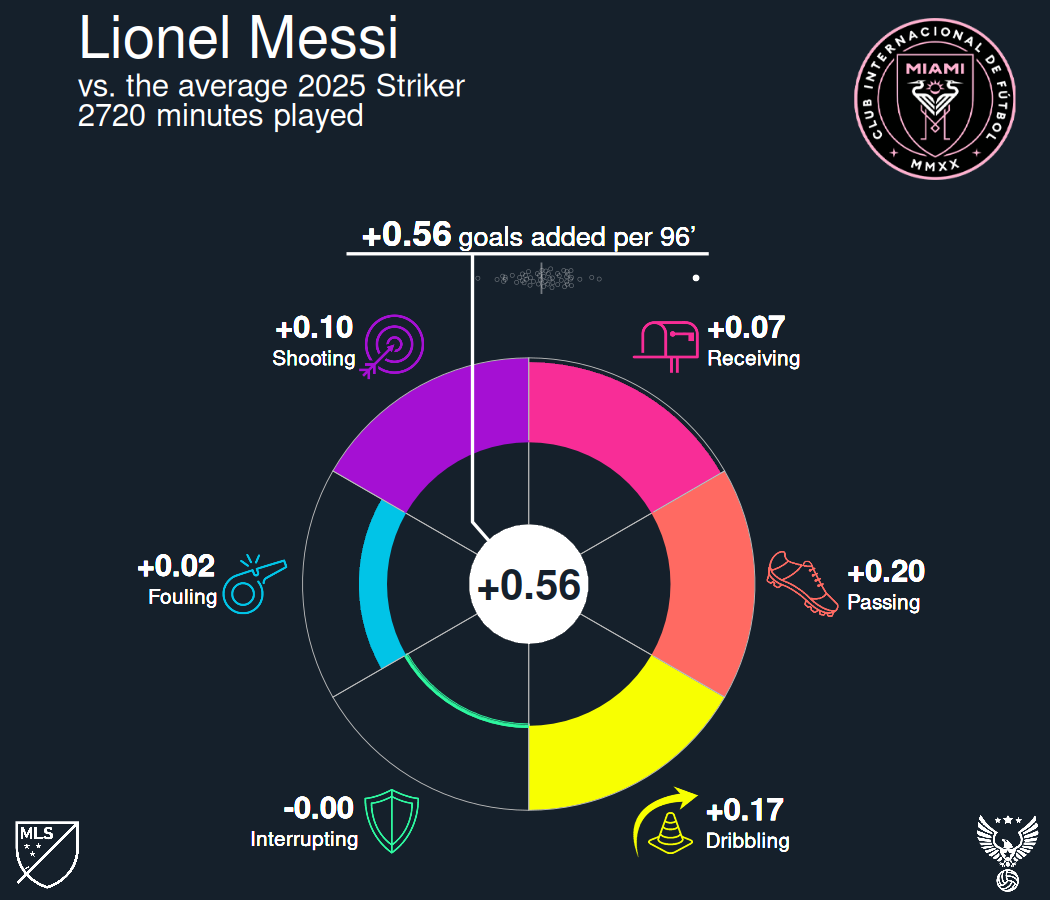
Lionel Messi is just aging like a fine wine in MLS. He continues to be atop of the G+ numbers year after year. Since he joined the league in 2023, Messi’s raw G+ per 96 is at .70. For reference, second on that list is Cucho Hernandez, who is sitting at .49 raw G+ per 96. No one has come even close to touching his impact during this time, and as he enters year 39, he’s coming off of an MLS Cup win and back-to-back MVPs.
The only question with Messi lies in his preparation for the 2026 World Cup. Will Messi play a lot after the league restarts if Argentina makes a deep run? If they win it, like they did in 2022, I would not be surprised to see Messi take some sort of time off with his bodyguard Rodrigo De Paul.
Messi led MLS in G+ above average per 96 at .56. He led the league in xA+npxG with 1.26 per 90. That was with Luis Suarez leading his front line before coach Javier Mascherano decided to change it up, putting Tadeo Allende and Mateo Silvetti into the attacking line. I’m not saying Messi is untouchable or unbeatable, but man, his numbers are flat-out dominant. I really can’t find any reason to see him slowing down minus his commitments to the national team.
The New Guys
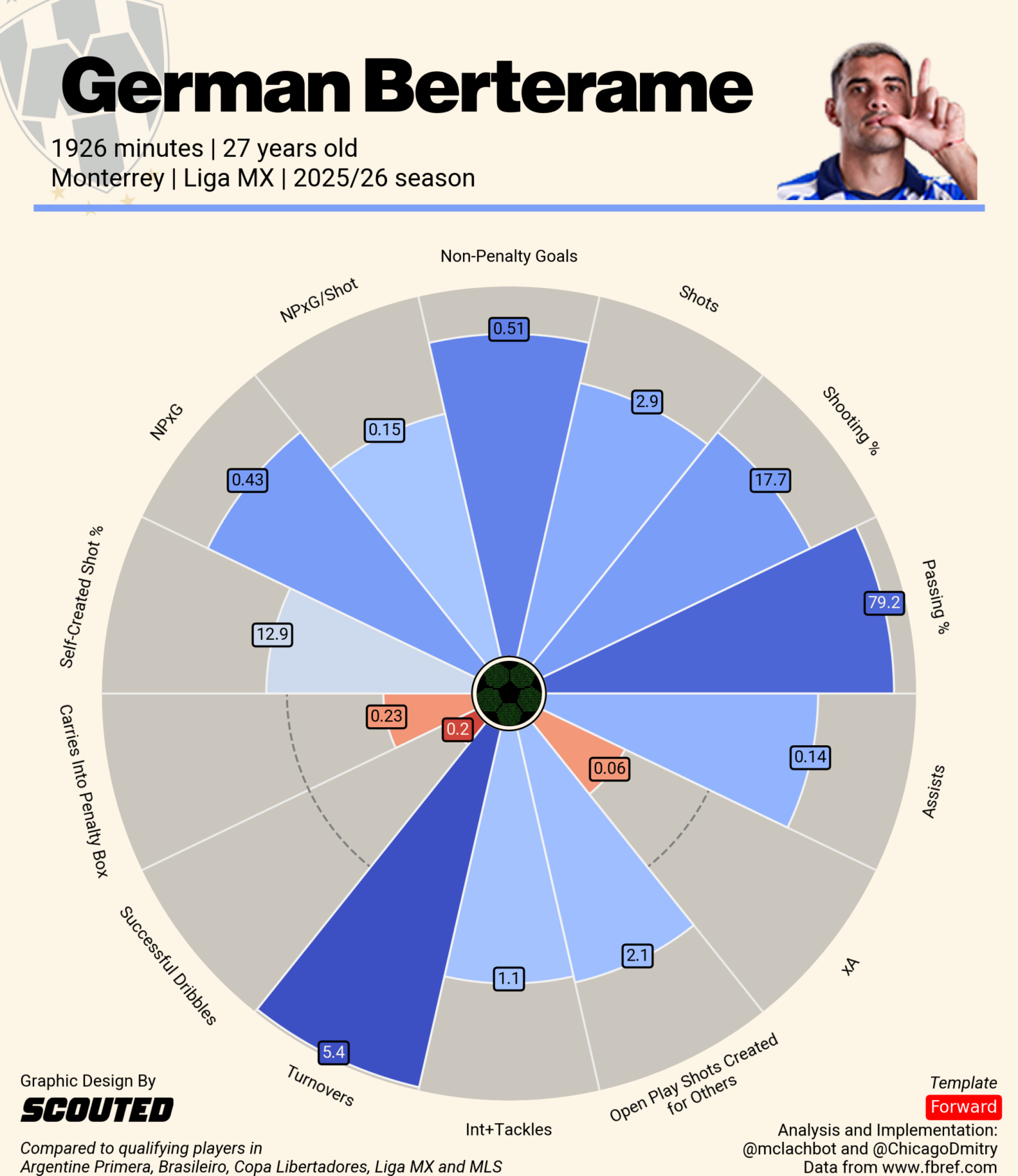
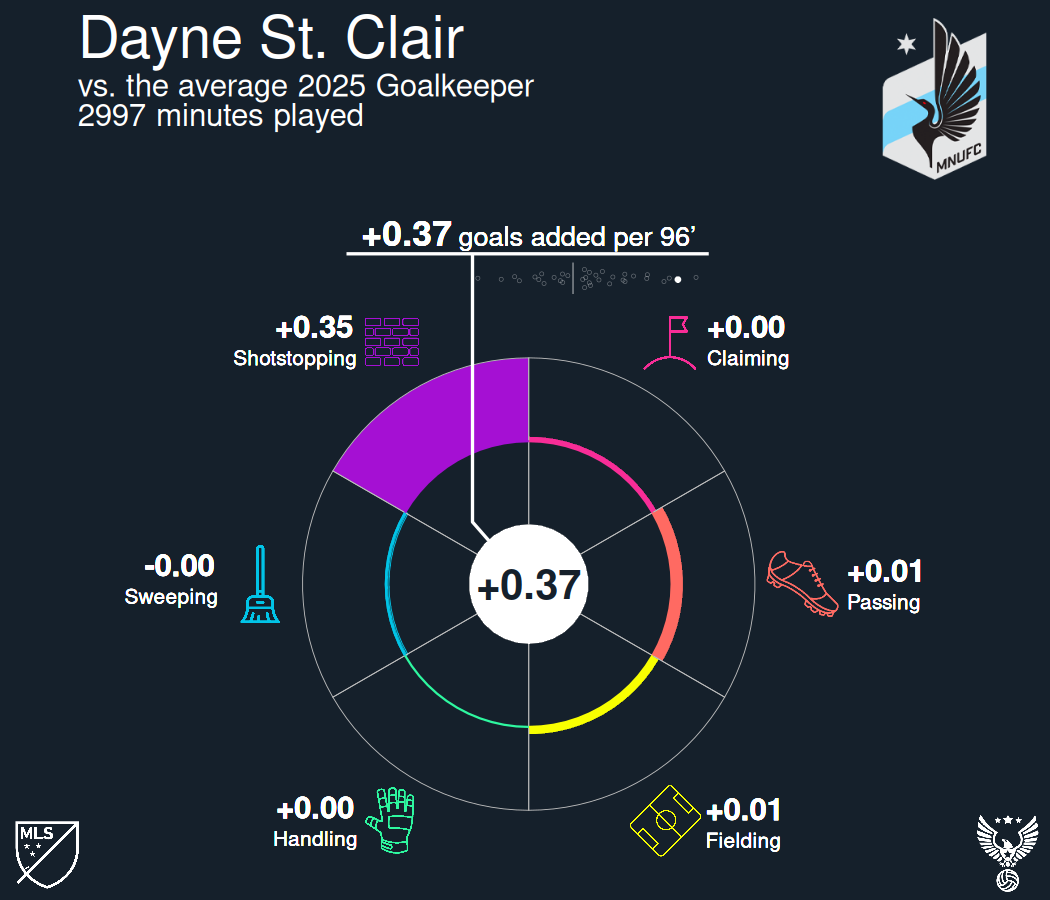
German Berterame joins from Monterrey as the team’s third Designated Player for a reported $15M. The nationalized Mexican was absolutely prolific for Monterrey during his time at the club, scoring 68 goals for the club in his 3.5 seasons. In the 2025/26 Apertura, Berterame’s non-penalty xG hit .49 per 90, while his xA was very minimal. Our Paul Harvey has pointed out that while Beterame may be prolific in his scoring, it’ll be interesting to see if he can pick up some of Suarez’s playmaking. For reference, Suarez’s xA was .33 this last season in MLS.
Berterame adds more firepower to a team that really went wild during the 2025 MLS Cup Playoffs. Since 2021, Miami’s 3.17 goals per game in the playoffs were just behind the LA Galaxy's 3.60 in their 2024 MLS Cup-winning season. I won’t count Allende as a new signing, but bringing him in on a non-DP deal is absolutely huge for Miami. Allende’s G+ number wasn’t great, essentially being even with the average winger. But we saw what he did in the playoffs, and he was absolutely lethal.
Dayne St. Clair was absolutely incredible in 2025. The GKOTY stunned everyone by turning down a big offer from his club, Minnesota United, to join the Herons. For players who played 1200 minutes or more, St. Clair’s G-xG number per 90 was the fifth highest in ASA’s dataset. It was behind other players who went to Europe, in Djordje Petrović and Matt Turner. St. Clair faced plenty of shots with Minnesota’s style of play, but he will be called upon to make big saves whenever Miami makes a mistake. Rocco Rios Novo was key in their MLS Cup run, and DSC will need to continue that across multiple competitions.
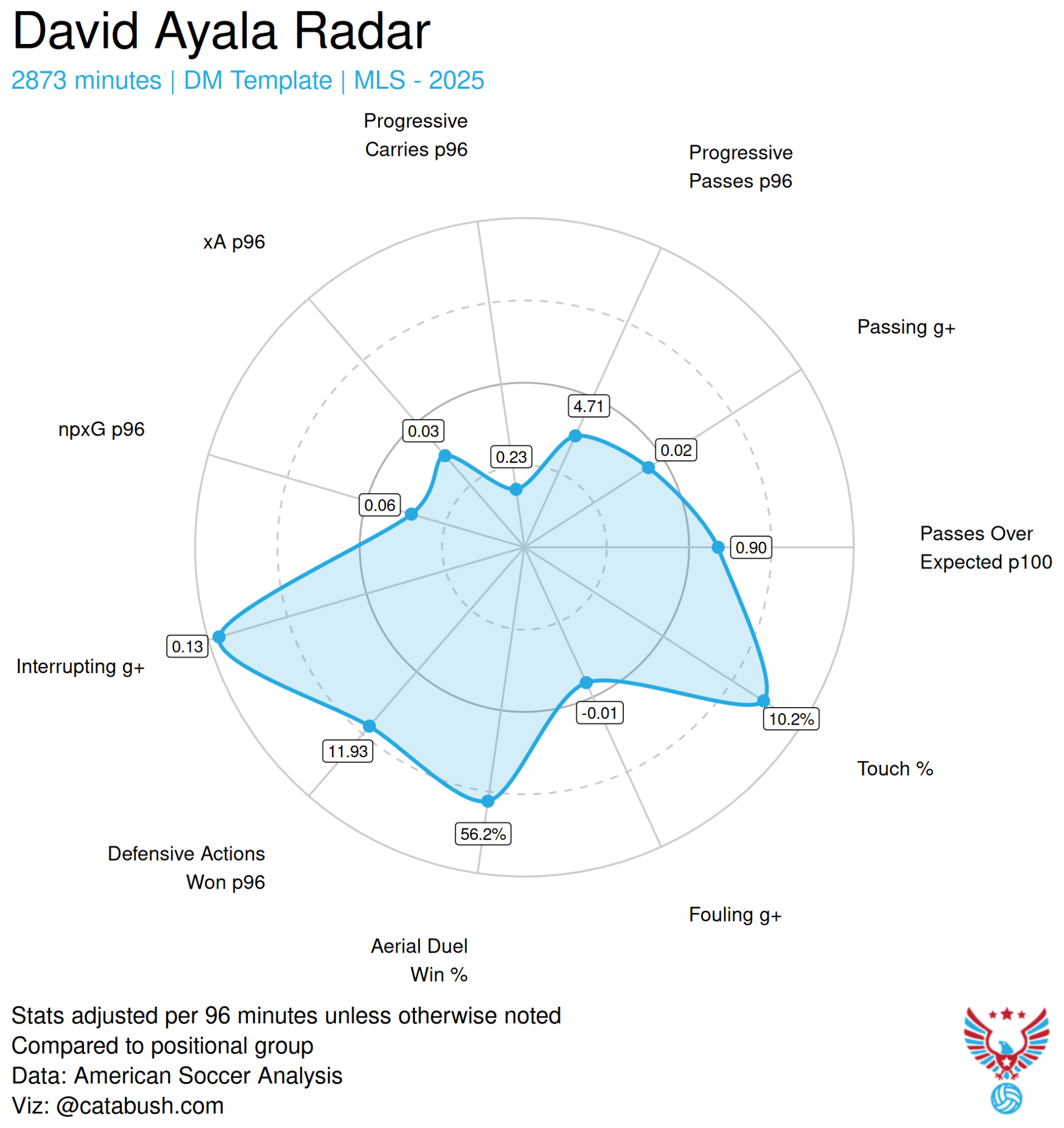
David Ayala was +0.03 in goals added above average as a defensive midfielder for Portland. Much of his positive value in Portland has come through his ball winning, and sure, he’s not going to be the passing maestro that was Busquets. But Miami have guys like De Paul or Telasco Segovia to help progress the ball up the field, win it and give it to them. For $2M, you could do a lot worse than a U22 player who played 2873 minutes in 2025.
Outlook for 2026:
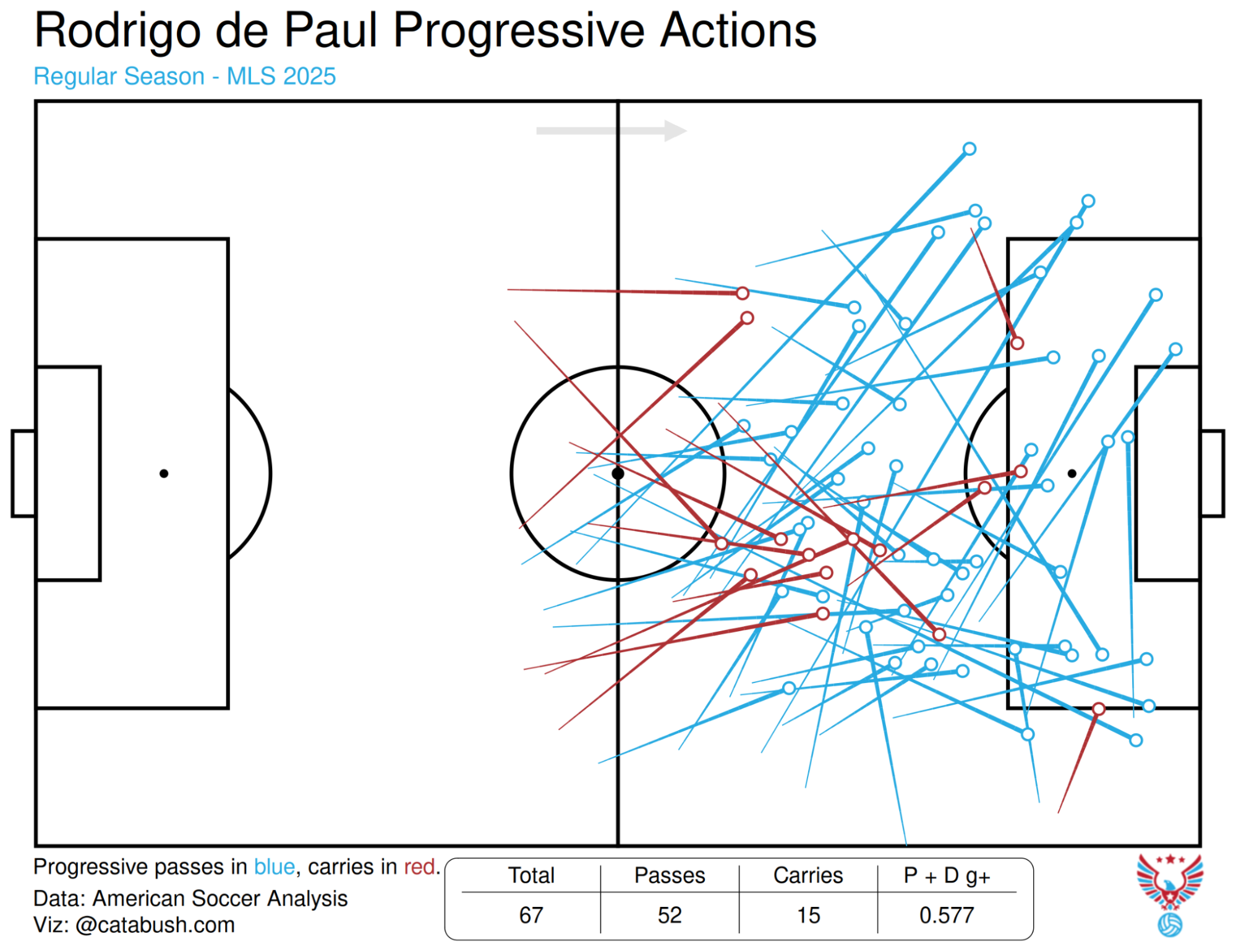
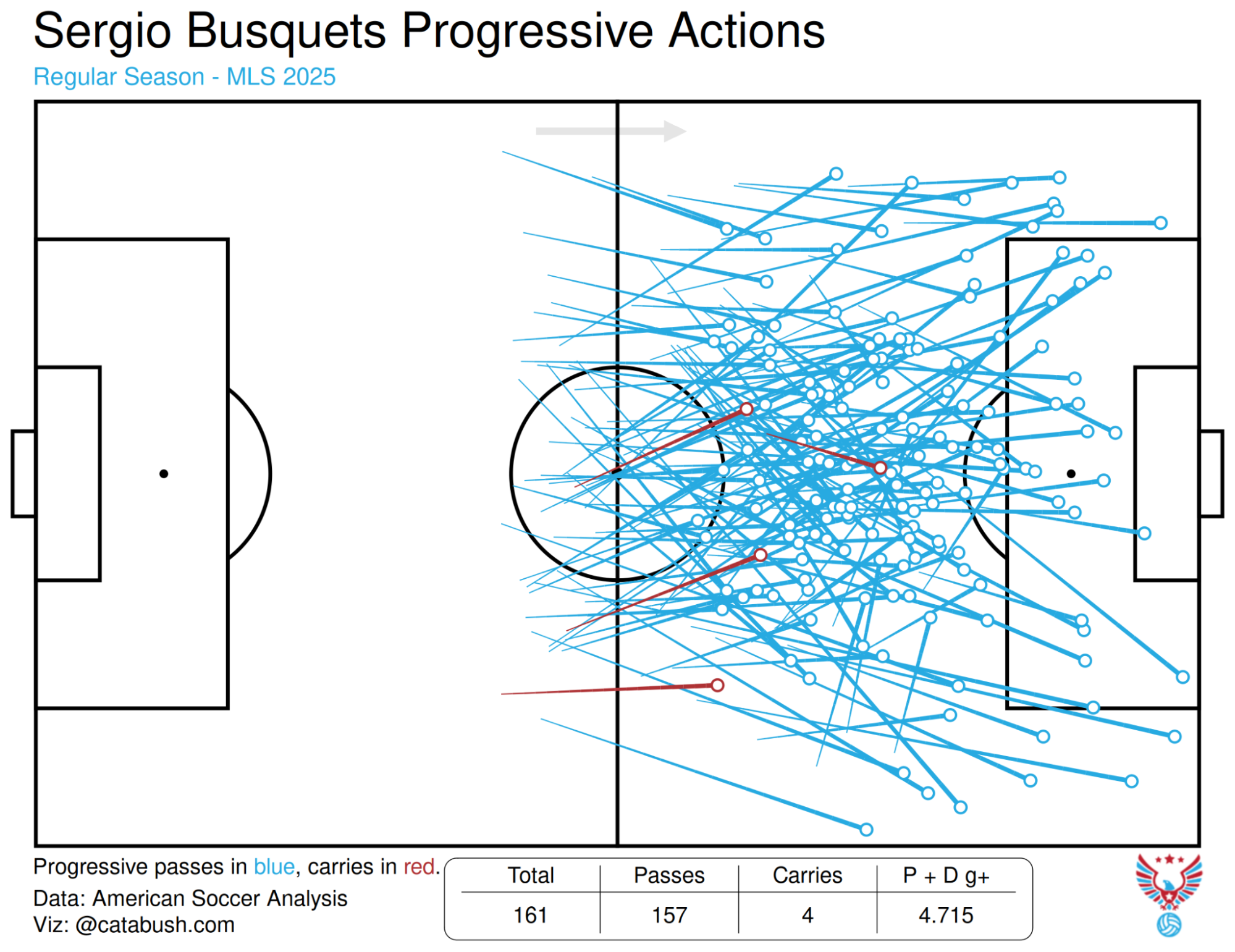
Look, Miami lost two of its best players to retirement in Alba and Busquets. While they replaced them with strong talent, the sheer volume of games many Herons’ players will have to play will cause issues. Not only is it MLS, but it’s also Concacaf Champions Cup. It’s World Cup tune-up matches. It’s the literal World Cup. There’s a chance that Berterame, Messi, De Paul, and Dayne St. Clair all receive call-ups. I mean, three of the four are for sure starters and Beterame is competing for a spot on Mexico. Ian Fray can make the Jamaican squad. That’s why I don’t have them winning the Supporters’ Shield. The club has stated its focus is on the CCC, and hey, we’ve seen them win MLS Cup not as the No. 1 seed and make a very late run.
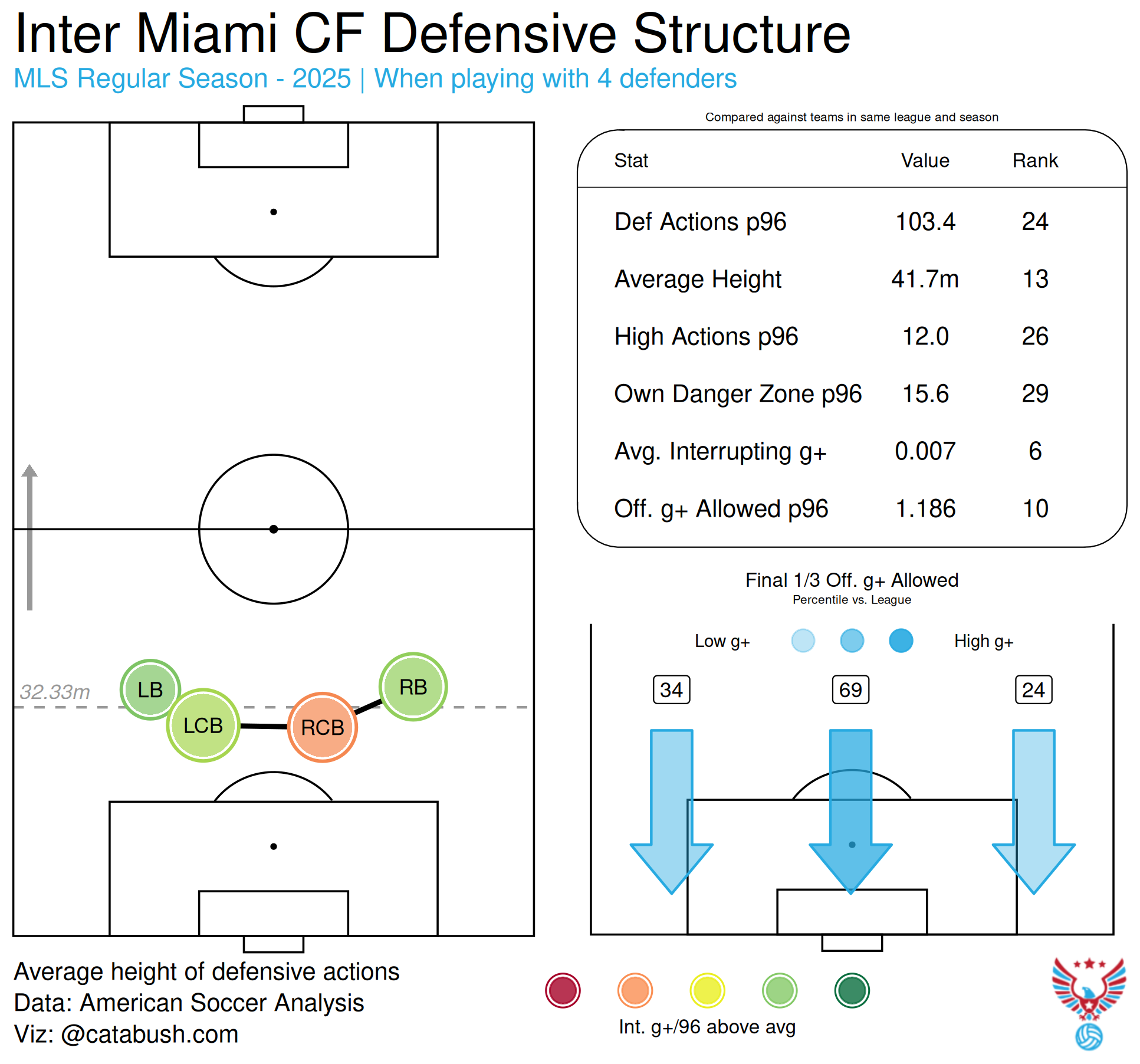
The big question is the defensive identity that Miami has. Look, we know what they can do on the offensive end. As we said earlier, Rios Novo had to make key saves in MLS Cup, and there were moments where Vancouver just looked so unlucky not to score. Their xGA was the 11th-worst in MLS and even with the safety valve that is St. Clair, you do not want to rely on him single-handedly keeping you in games. There were moments where Mascherano’s team would keep teams under control by the way they would possess. As you can see below, they didn’t allow a lot of G+ but did allow a bevy of their own danger zone actions.
I can absolutely see a scenario where Miami may not have the strongest start to the year. However, they heat up, end the season strong, and no one wants to face them in the playoffs once again.
The loss of offensive-minded Jordi Alba will make this team look a bit different as well. Will they continue to rely on some verticality from their fullbacks, or will there have to be a shift in tactical shape? Overall, while Miami are betting favorites, there’s still so many questions to be had.
FC Regression
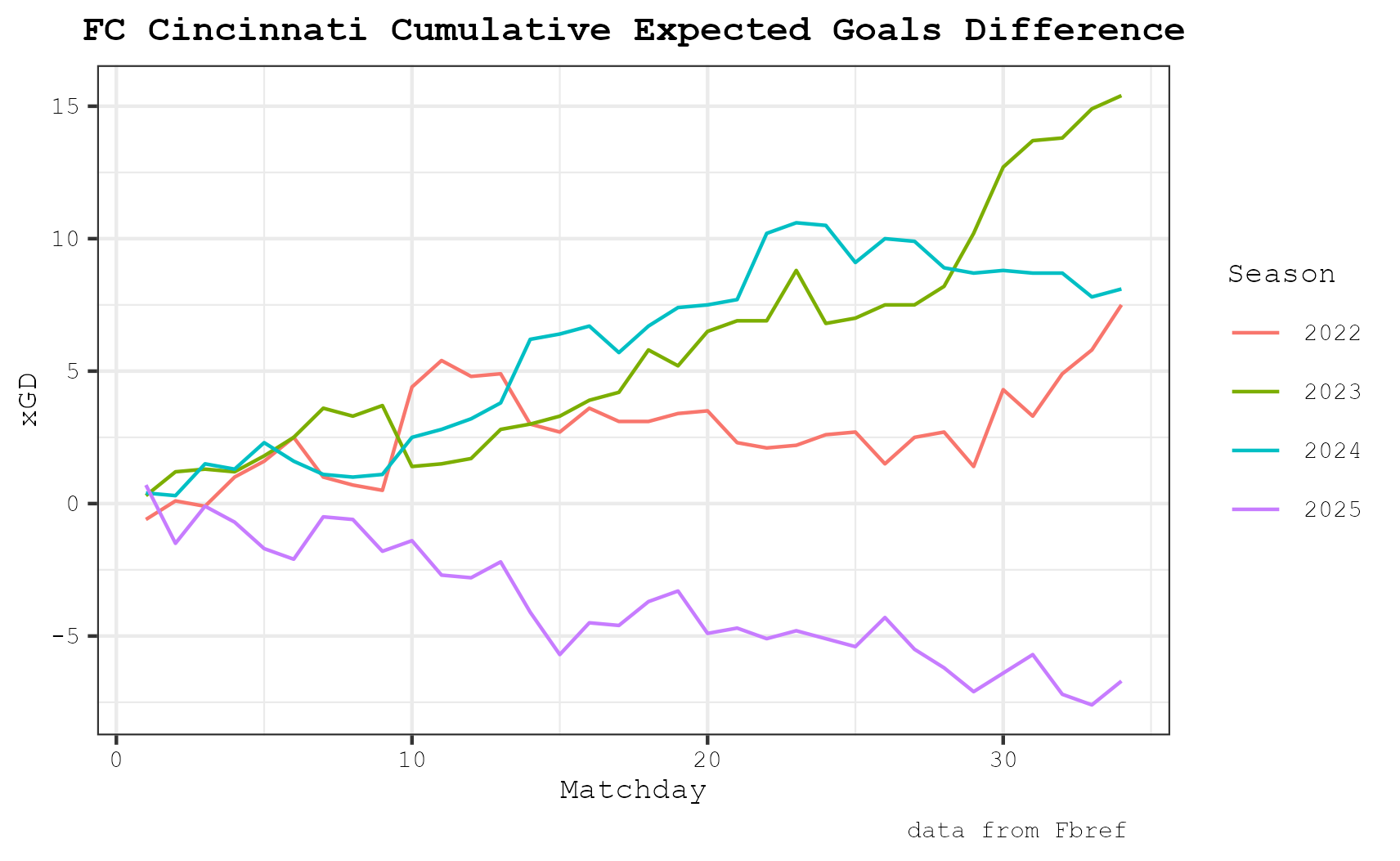
In 2025, for the first time in the Chris Albright and Pat Noonan era in charge of FC Cincinnati, the team wasn’t very good. The results were at the level we’ve somehow come to expect from the Orange and Blue but the underlying numbers (and the eye test) told an entirely different story.
Basically, the team struggled to create good scoring opportunities and allowed its opponents way too many over the course of the season. That’s a pretty simple story to tell. The wrinkle is that FCC finished second in the Supporter’s Shield, missing out by a single point to the Philadelphia Union and tying with eventual MLS Cup champions Inter Miami.
There’s little debate that there’s a lot of individual talent on the Orange and Blue’s roster - but the talented pieces on the field in 2025 never became more than the sum of their parts. The 2026 team is largely the same (with one addition who figures to make a big impact but doesn’t necessarily command headlines), so internally, the management must think there’s a way to recapture the pre-2025 magic.
The Evander & Denkey Show
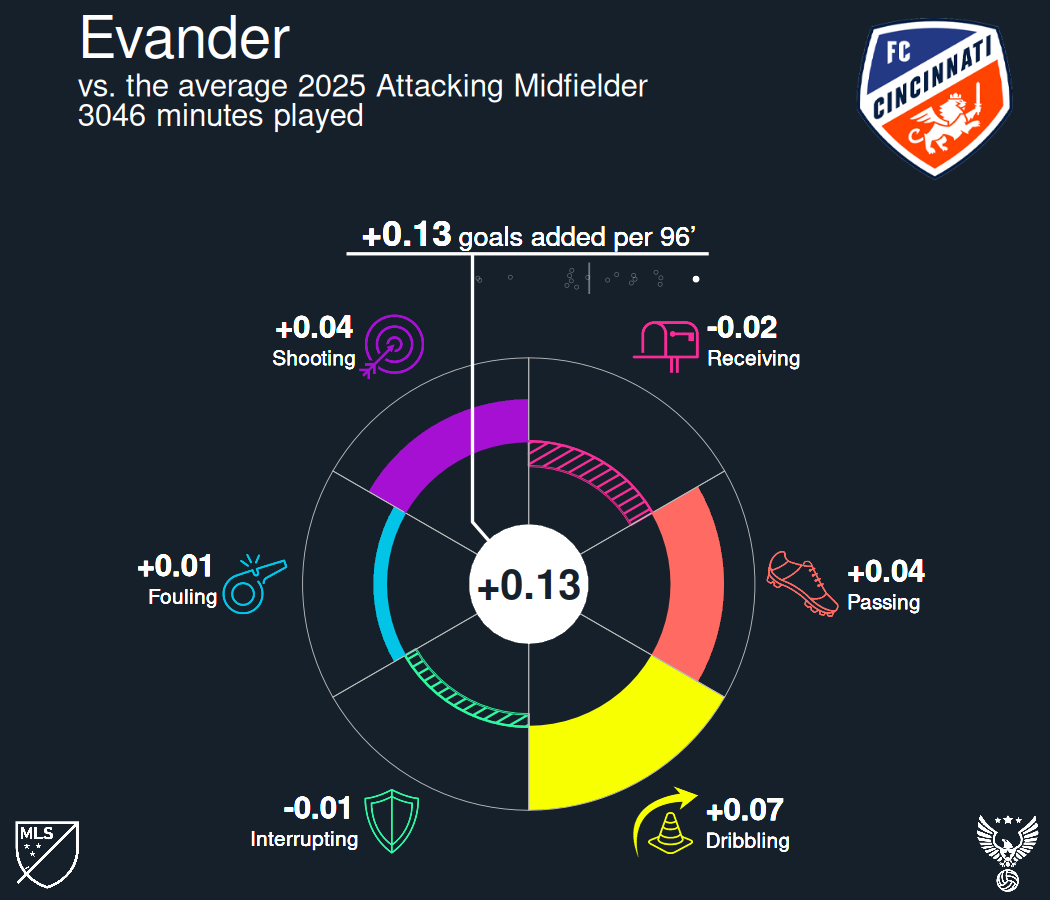
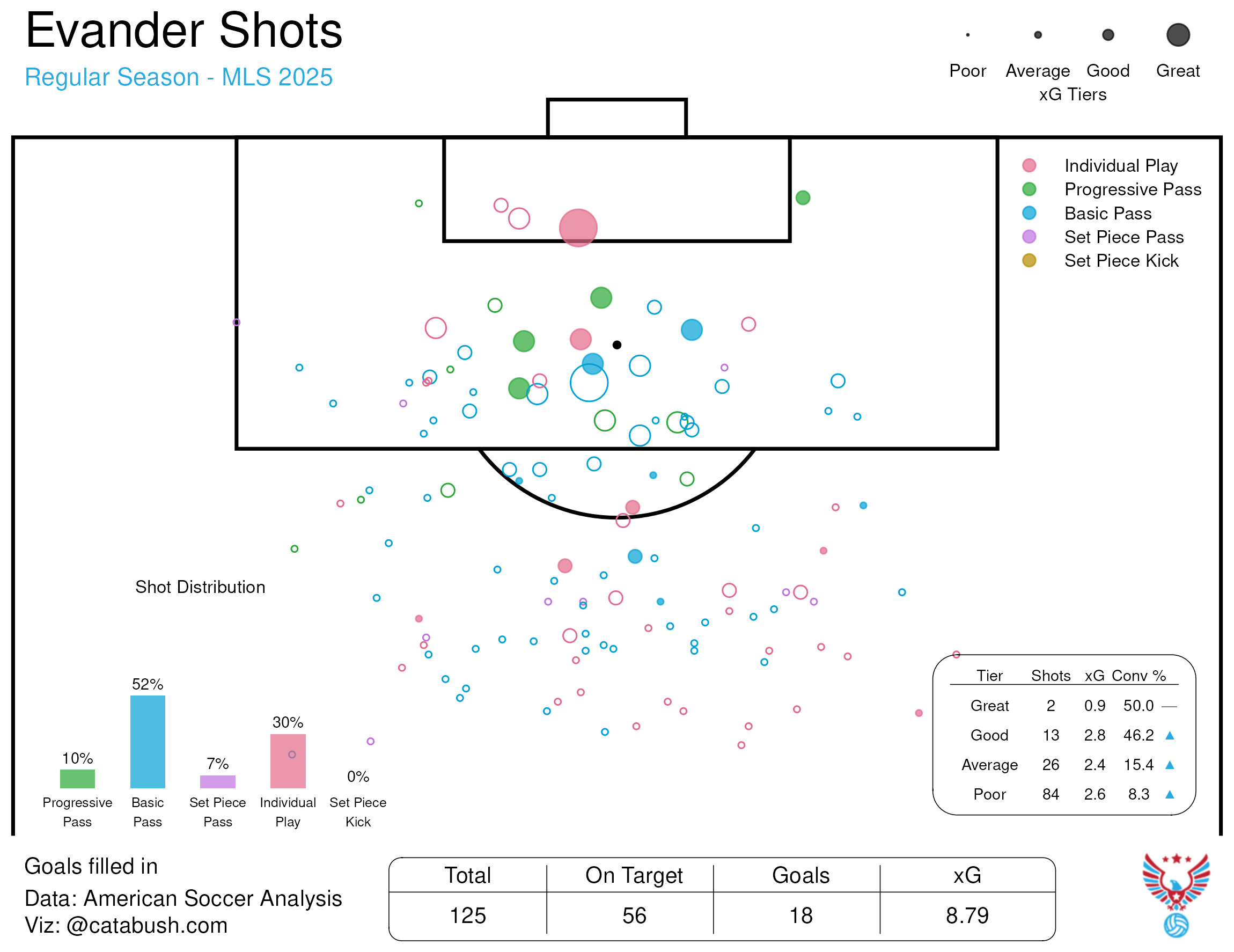
Evander was really, really good in 2025 in his debut season in the Queen City. However, he wasn’t Lucho Acosta, so struggled to fit the very specific, Acosta-sized hole at the center of the Orange and Blue’s plans. Evander isn’t the ball progressor that Acosta was nor is he the same kind of presser. Both of these issues limited FCC’s upside with and without the ball last season.
However, if you’re looking for a foundational player in the league, Evander has to be pretty high on the list. A major reason for FCC’s overperformance was Evander’s shooting from outside the box, which almost certainly isn’t replicable because it might’ve been the best outside the box shooting season in MLS history. But it is fun to look back at.
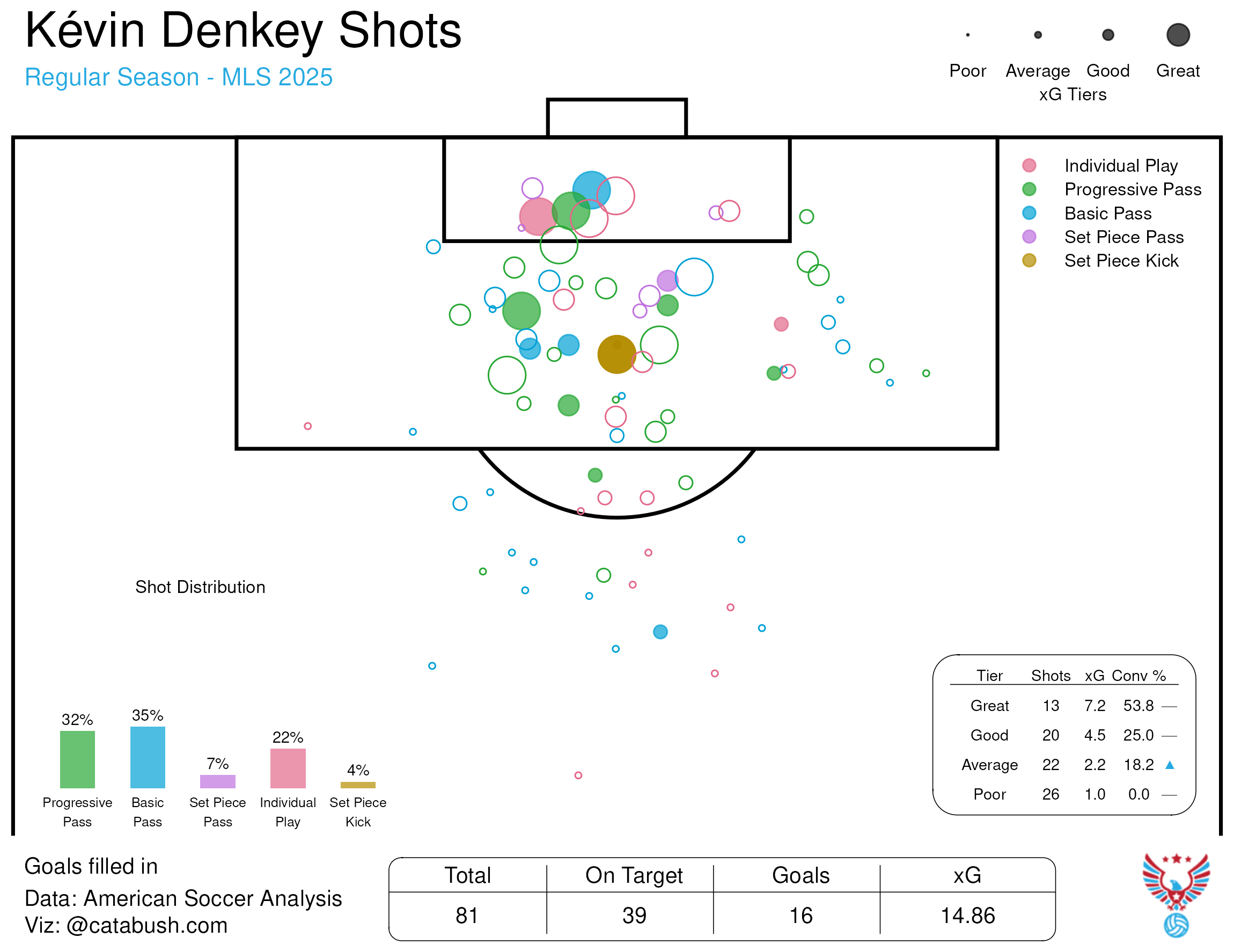
Kévin Denkey is the other major player the team will be looking to maximize in his second year in the Queen City. Even though he wasn’t very good by Goals Added (-0.05 G+/96), he was isolated for much of the season with limited options to get him the ball in dangerous situations. Still, he scored 12 non-penalty goals on just over three shots per game.
The team’s thinking, and honestly it makes a lot of sense, is that if things can be just a little bit easier for the team’s best players, good things will happen. The question is, how does the team do that?
Betting The House On More From The Wing Backs
Since Albright and Noonan’s first season in charge, FCC has depended on significant attacking contributions from at least one wing back. First, the team somewhat lucked into Álvaro Barreal being an elite player at the position then replicated the Argentine winger-to-wingback conversion with Luca Orellano. However, in 2025, the team missed. Lukas Engel is a pretty good soccer player but he’s not a dynamic attacking force. Ditto DeAndre Yedlin. Both now find themselves in Utah, likely playing as outside centerbacks, not wingbacks.
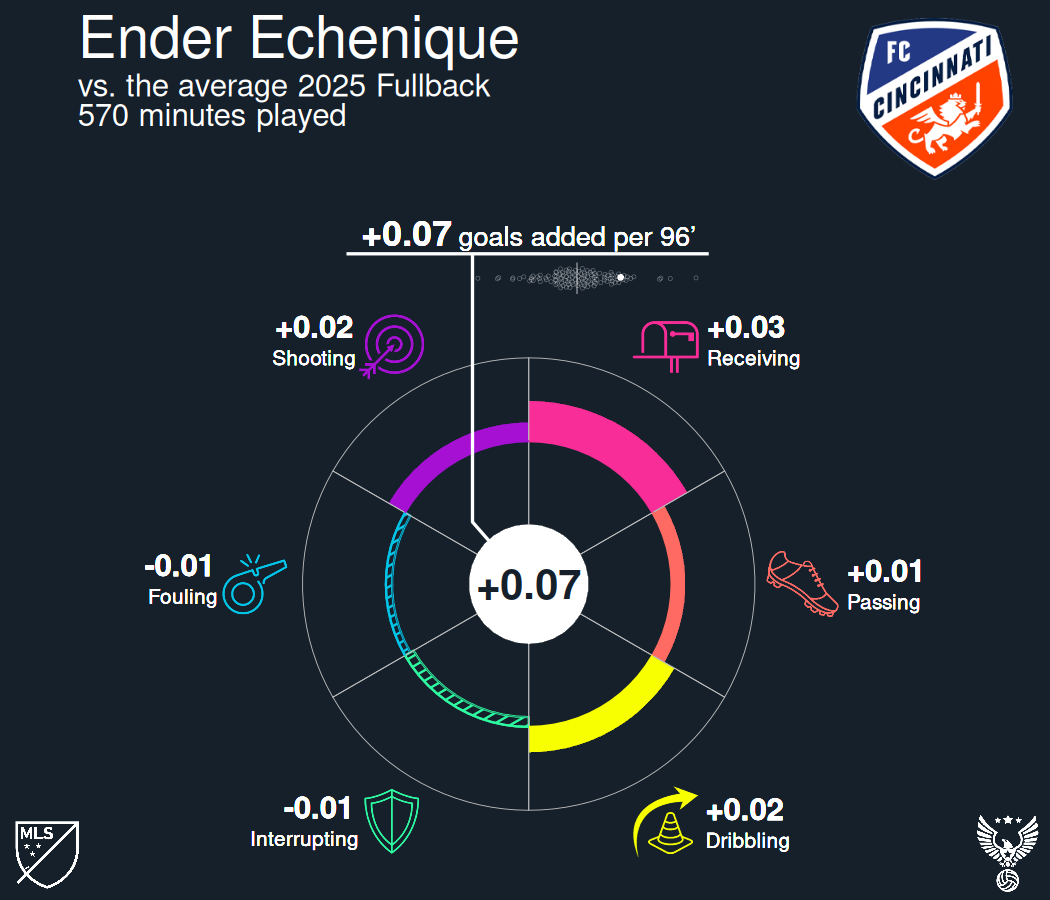
So Albright went back to what worked. Ender Echenique joined the team as a U22 signing during the summer window, flashing attacking ability as a right wing back even if he wasn’t the best defender.
The Orange and Blue’s marquee winter signing Bryan Ramirez will play on the left, opposite Echenique. In contrast to others, Ramirez has actually played wing back before, though he also operated further up the field for LDU Quito. In terms of expectations, Ramirez put up solid attacking and progression numbers in Ecuador’s Liga Pro and in the Copa Libertadores but, as always, how he’ll adapt to MLS remains a bit of a mystery.
If Albright and company got their wing back evaluations right, what was a stagnant attack should be considerably more dangerous in 2026.
Hazier Defensive Answers
However, the issues with 2025 FC Cincinnati weren’t only in possession. There are similar, if not bigger, questions surrounding the defense heading into 2026. For context, FCC went from conceding 41.17 xGA in 2024 to 56.76 xGA in 2025 according to American Soccer Analysis data. Even with that difference, somehow, the team conceded eight FEWER goals in 2025, in some part because Roman Celentano was a solid shot stopper but mostly because the ball just didn’t go in the goal. However, alarm bells should be ringing about the team’s ability to prevent goals in 2026 given the defensive performance last year.
A couple things stand out in terms of differences between the two seasons. In 2025, the Orange and Blue allowed opponents more possession in the final third and pressed less, two things it did pretty well in 2024 en route to an elite defensive season.
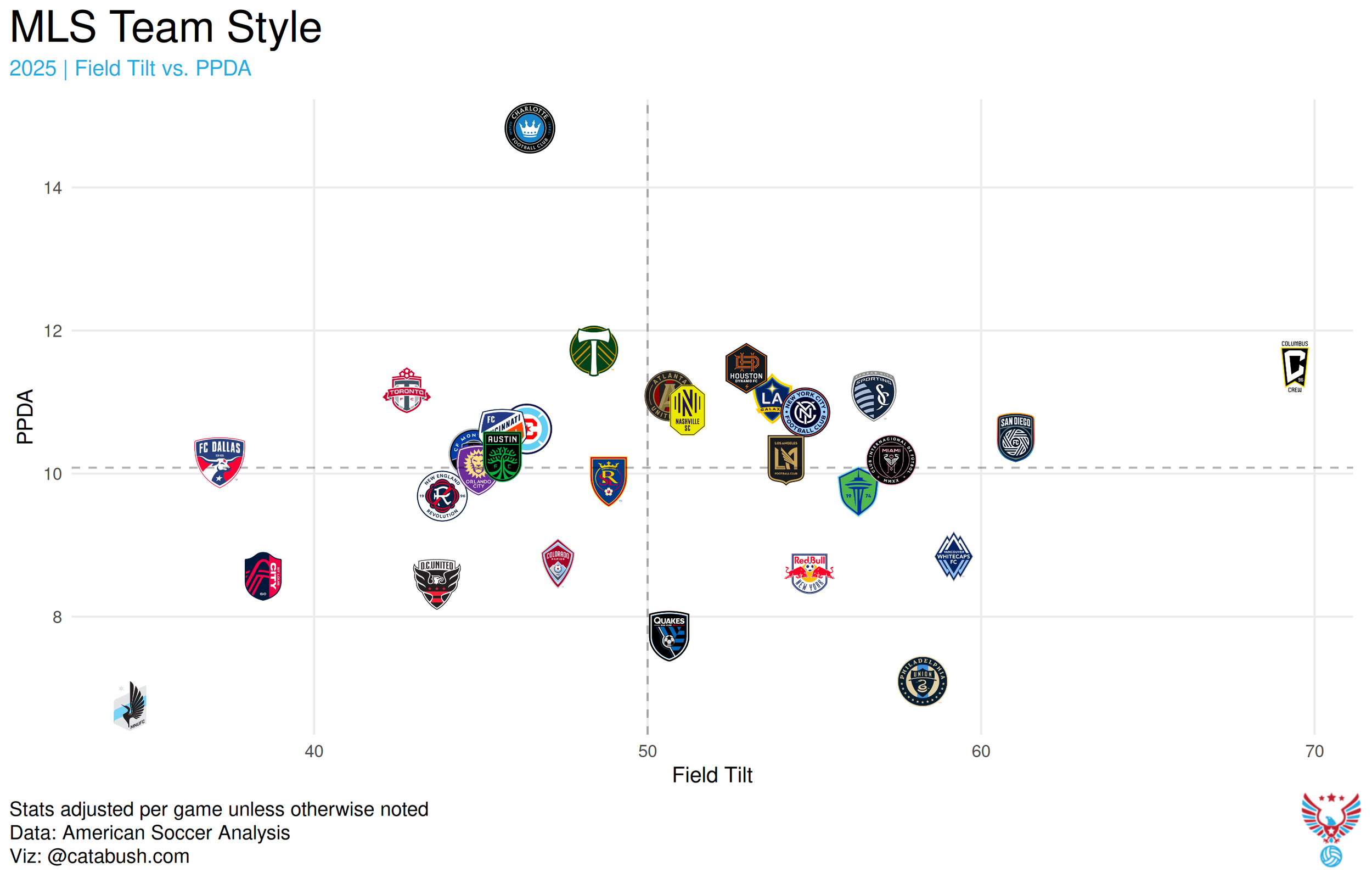
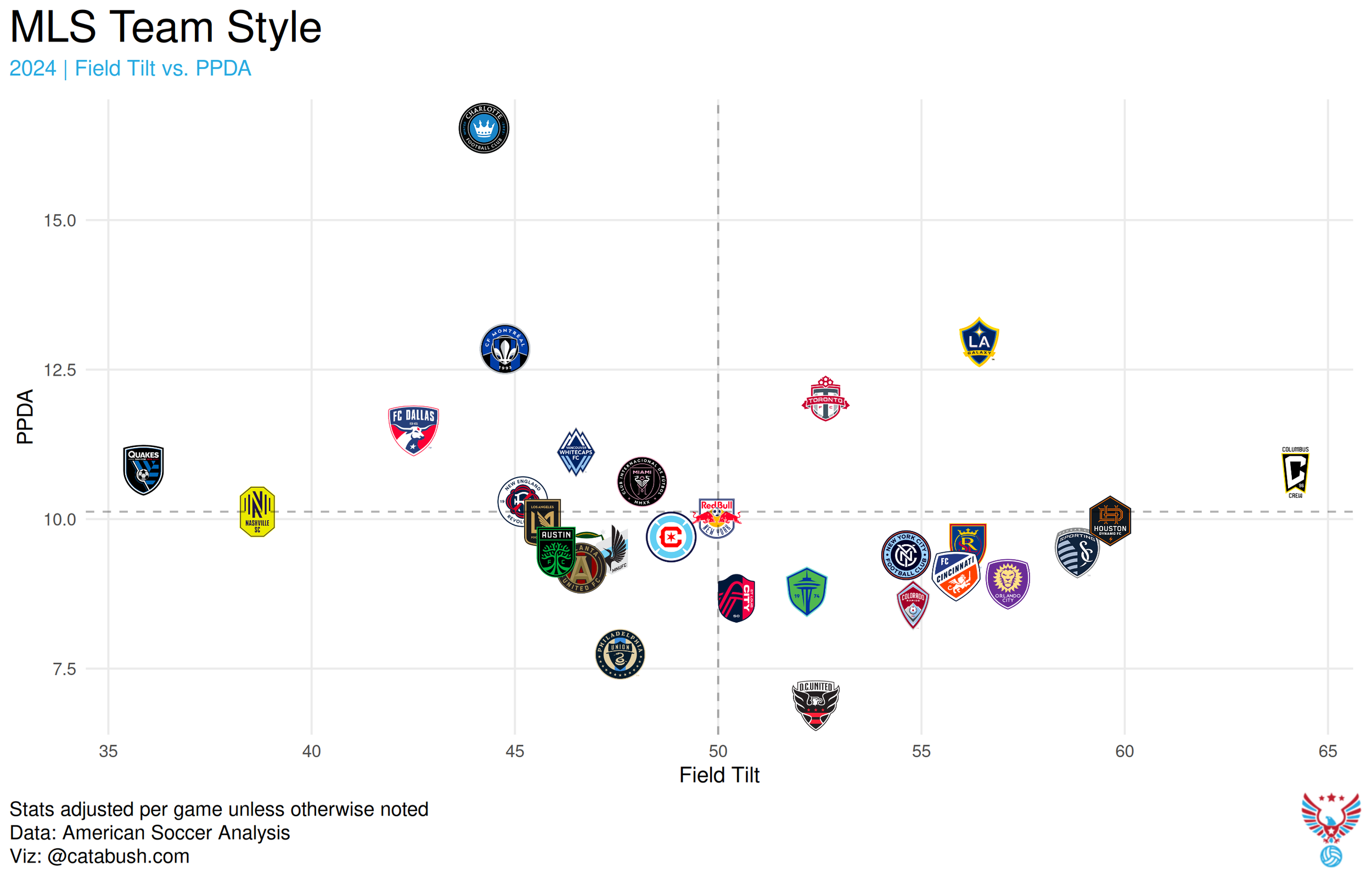
If the team is to improve defensively, some of that will come from being better with the ball, which, as noted above, relies heavily on better play from the team’s wing backs. However, the pressing needs to be better, too. Noonan’s best teams have pressed aggressively, and unless there’s a larger stylistic shift, the team needs to figure out a way to win the ball back higher up the field - even with Evander’s general lack of pressing.
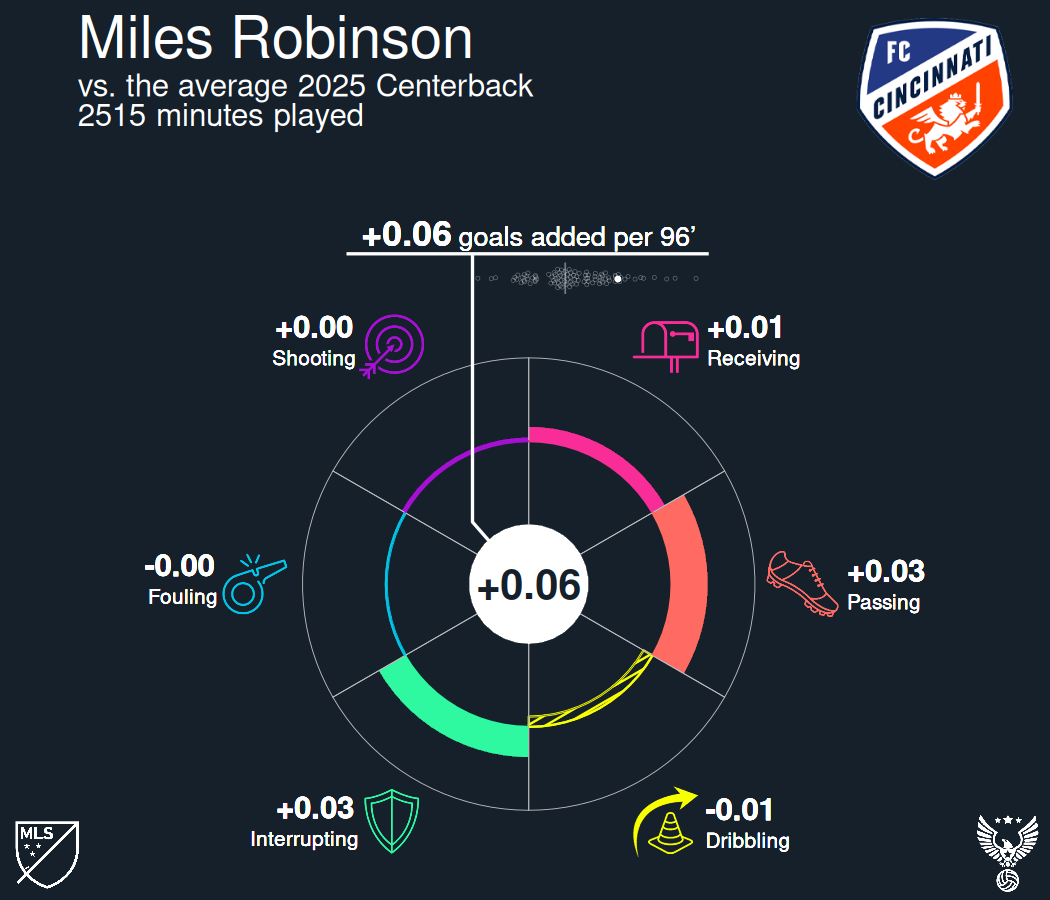
The clearest piece of FCC’s defensive structure, at least the one with the fewest questions, is Miles Robinson. He should be one of the best center backs in MLS, but, after signing an extension last season, he moves into divisive territory as a DP CB. Still, he’s a good player and provides a solid platform on which to construct an out of possession shape.
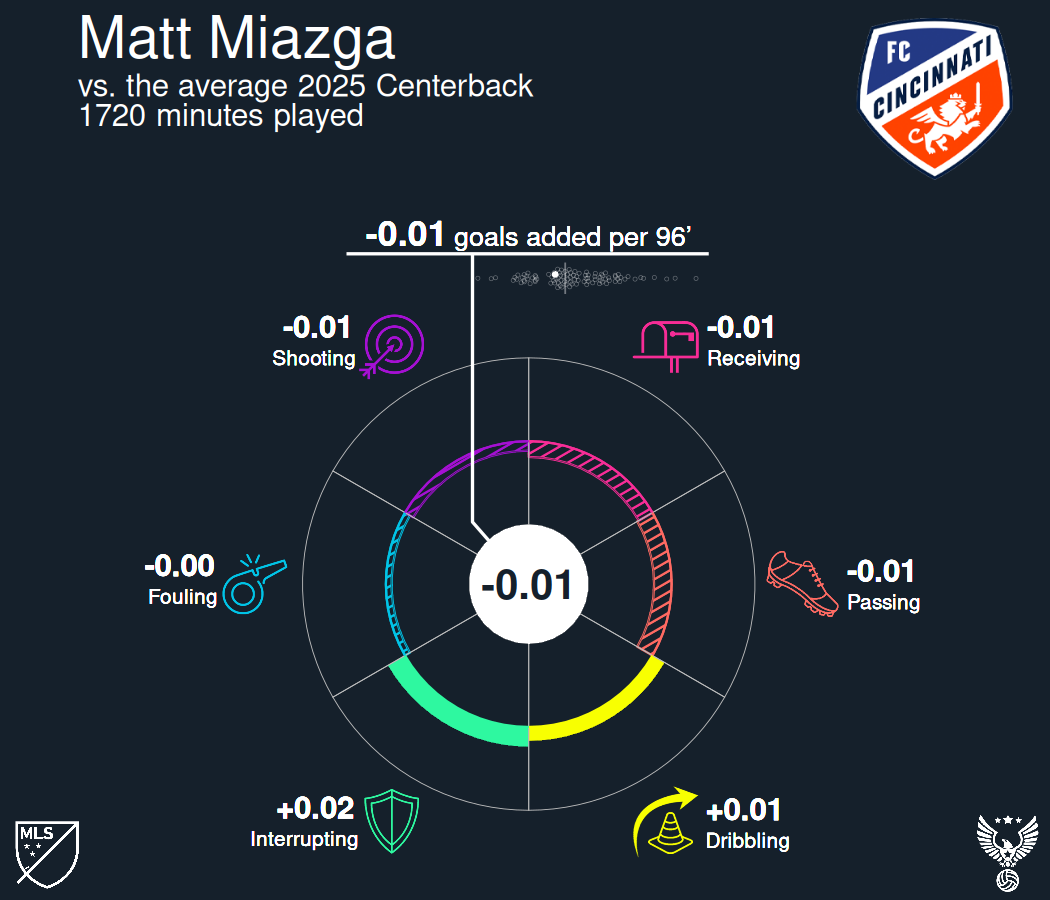
Ideally, Matt Miazga would start with Robinson. However, Miazga hasn’t played since a leg injury suffered at the end of last season, and unfortunately, that’s not the first injury to have led to missed time over the past few seasons. Miazga may not be what he once was as a defender but his ability to organize and win the ball in the air is still solid. However, relying on Miazga’s sustained health as a solution to defensive issues is a risky proposition.
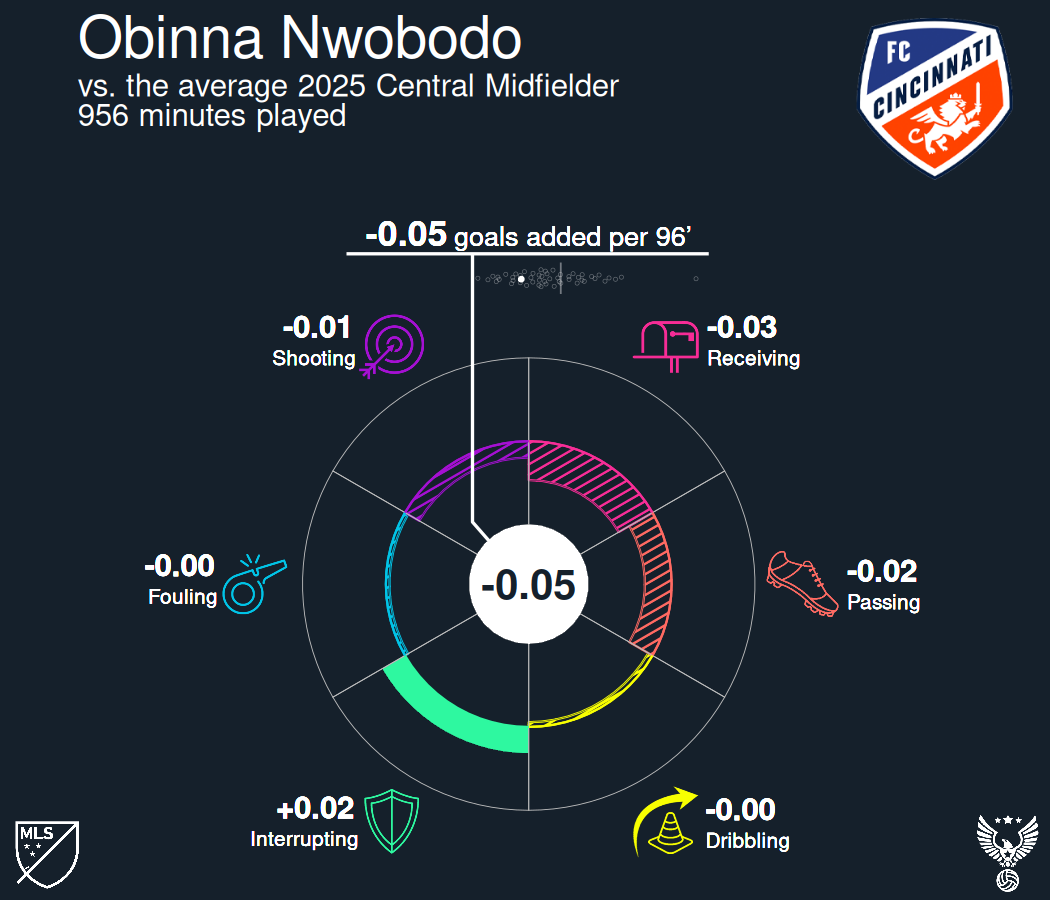
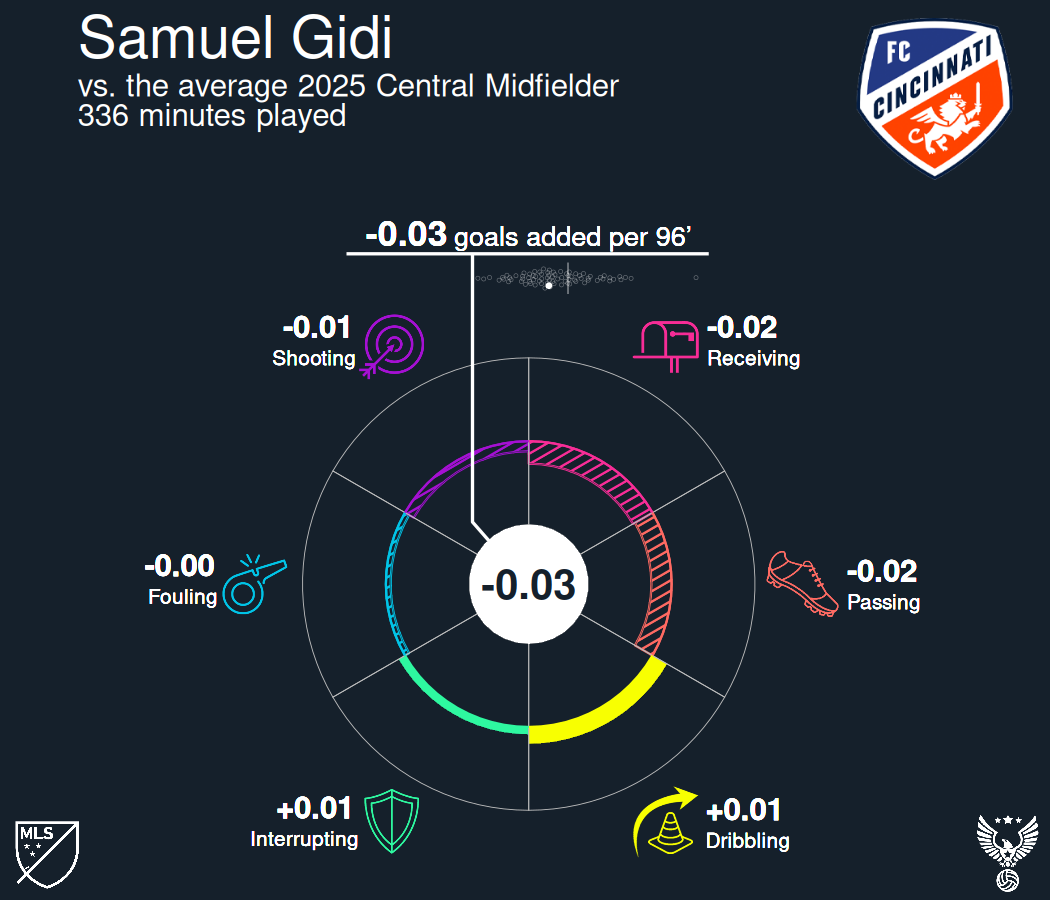
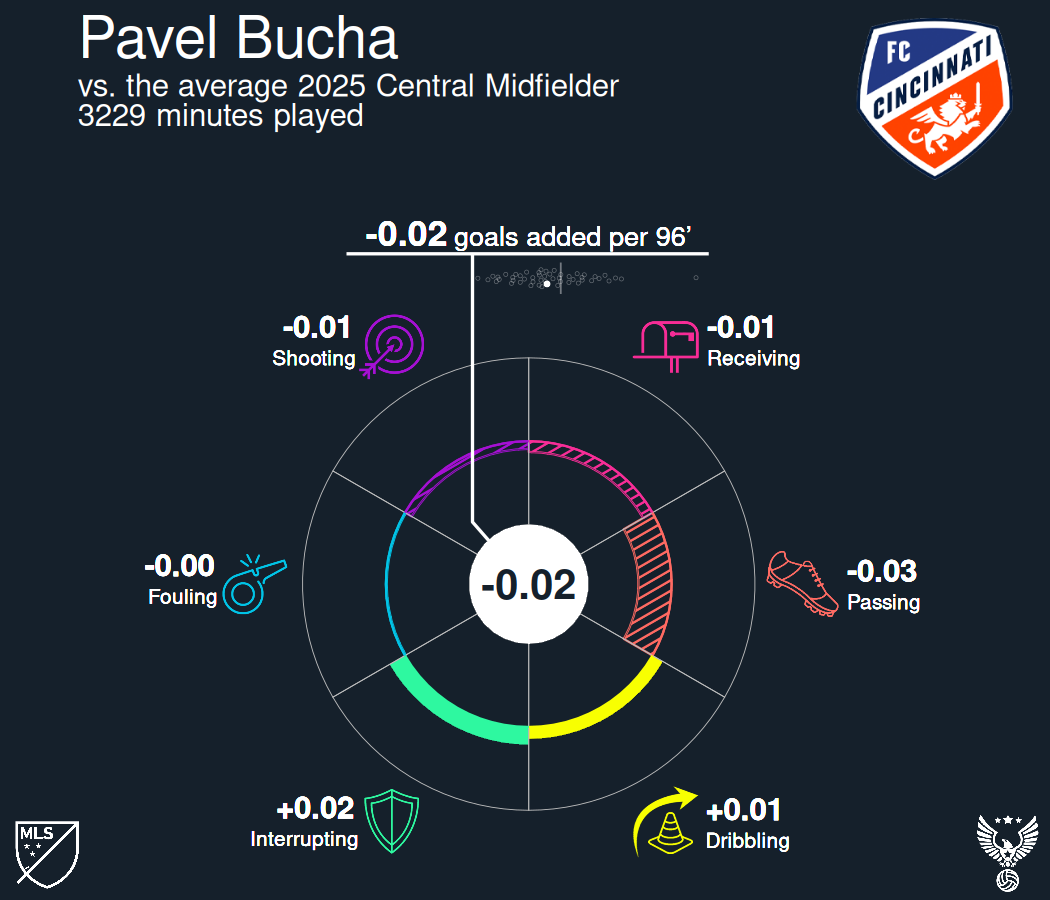
How much defensive production Obinna Nwobodo can provide is another question for similar injury-related reasons to Miazga. Samuel Gidi, another U22 signing from last summer, played down the stretch last season but it remains to be seen if he’d be an upgrade on Nwobodo alongside Pavel Bucha in central midfield.
Pushing The Chips In The Middle
FCC’s 2026 depends on a series of bets. Will more attacking wingbacks open things up enough to maximize Evander and Denkey in the final third? Will Miazga and Nwobodo be healthy enough to justify their cap costs and contribute to an improved defense? In his time as General Manager in Cincinnati, Albright hasn’t been shy in maximizing his team in the short-term. The question remains, is he making the right bets this season?
If he’s not, and the team plays like the advanced numbers ended up being last season, the Orange and Blue could be in for a much more eventful offseason next year.
Baribout, Augustin
Going into last season, no one expected much out of a Union side that had mostly run back the same roster that failed to make the playoffs the year prior. Most pundits had Philly in the bottom half of the table or even contending for the dreaded Wooden Spoon. But if there’s one thing Philadelphia loves more than cheesesteaks, soft pretzels, Gritty, or a man eating a rotisserie chicken on a pier, it’s a good underdog story, and the 2025 Union was just that. They finished top of the MLS standings with 66 points and claimed the Supporters Shield for just their second trophy in club history. While they ultimately lost in the conference semifinals, 2025 was a successful year for the Union.
Out with the Old
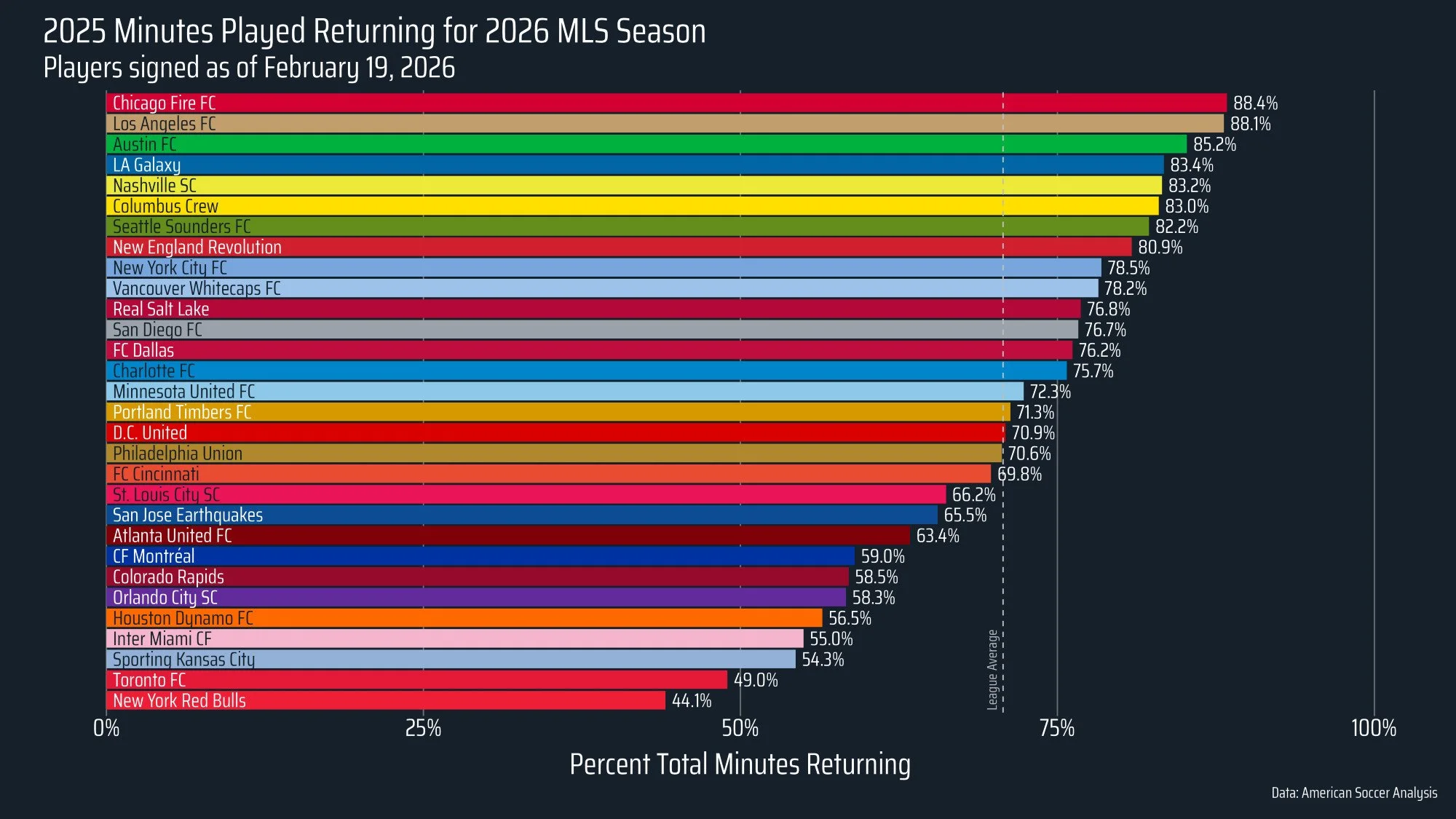
One might expect the team to run it back again after a successful campaign, even though they fell short in the playoffs (something about their game model not translating), but the Union turned over a large part of their core roster during the offseason. Gone are Jakob Glesnes, Kai Wagner, Mikael Uhre, and Tai Baribo. Combined, they accounted for almost 50% of the goals and assists the Union had last year, leaving only 70% of the teams minutes returning from last season. Even though they are losing the aforementioned production, these transfers did two helpful things. The first is that it lowered the Union’s average age, all four players mentioned were either approaching 30 or over it and with Philly’s play style of chaosball, being young and able to run is paramount. Secondly, it generated a good chunk of GAM for the front office to go out and spend on some new additions.
In with the New (kids)
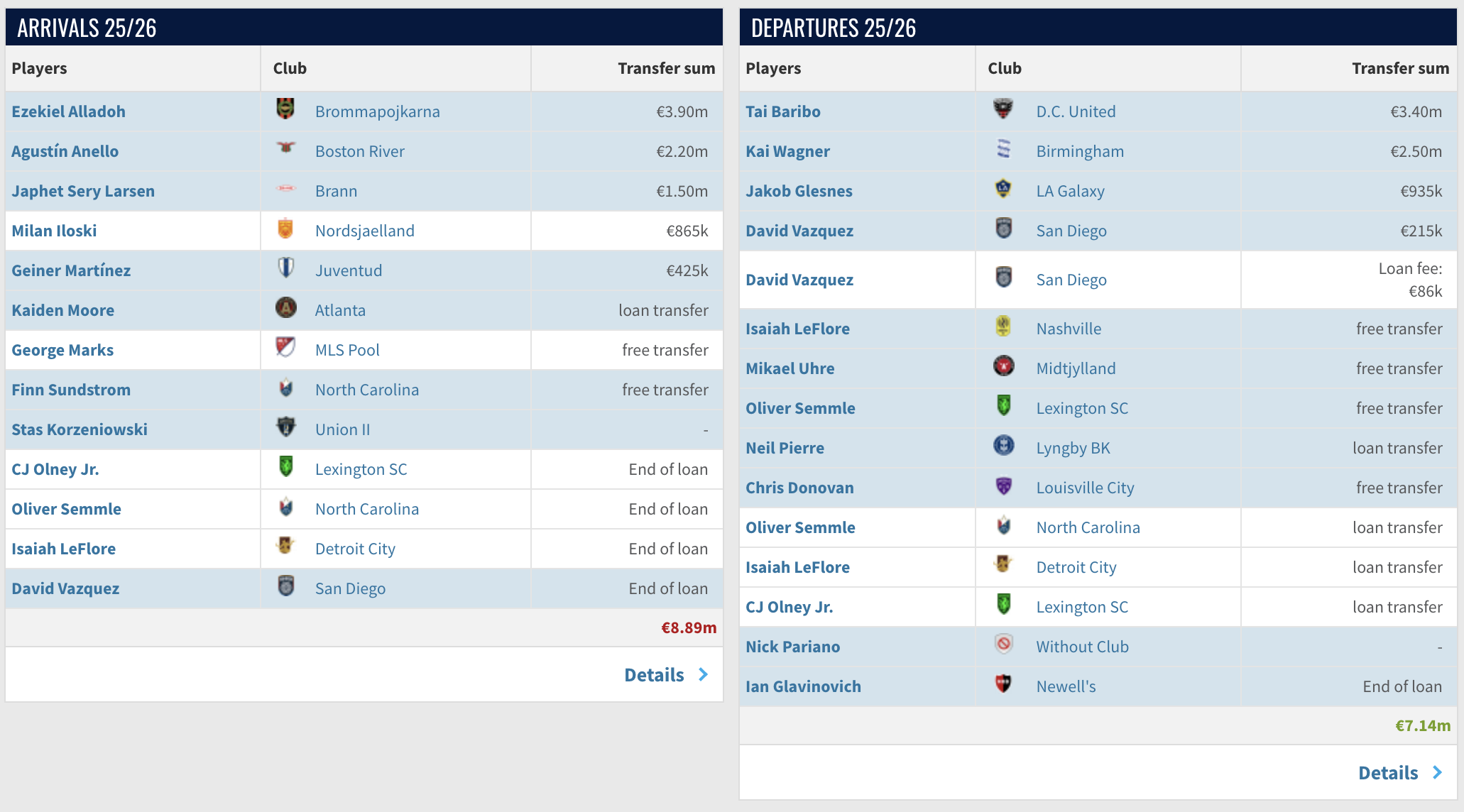
In come, Japhet Sery Larsen, Geiner Martinez, Philippe Ndinga (reported but not official yet), Ezekiel Alladoh, and Agustin Anello. This is a really weird list. All guys from leagues that we, the public, have very little data driven insight to, but let’s try.
Larsen is an ex Smart Odds Brentford Mydtjylland centerback who couldn’t quite break into the Bodo/Glimt team, before settling in to play a lot of games in and around the smaller intercontinental European competitions with Brann. That reads awfully like a nerd seal of approval. Martinez, another centerback, has puttered around the Uruguayan second division, and given the small fee and contract (two years plus two option years), this is a real flier. Ndinga has bounced around the French third division before settling at Degerfors in Sweden, and has only played approximately 1000 minutes above U-19 level according to Transfermarkt.
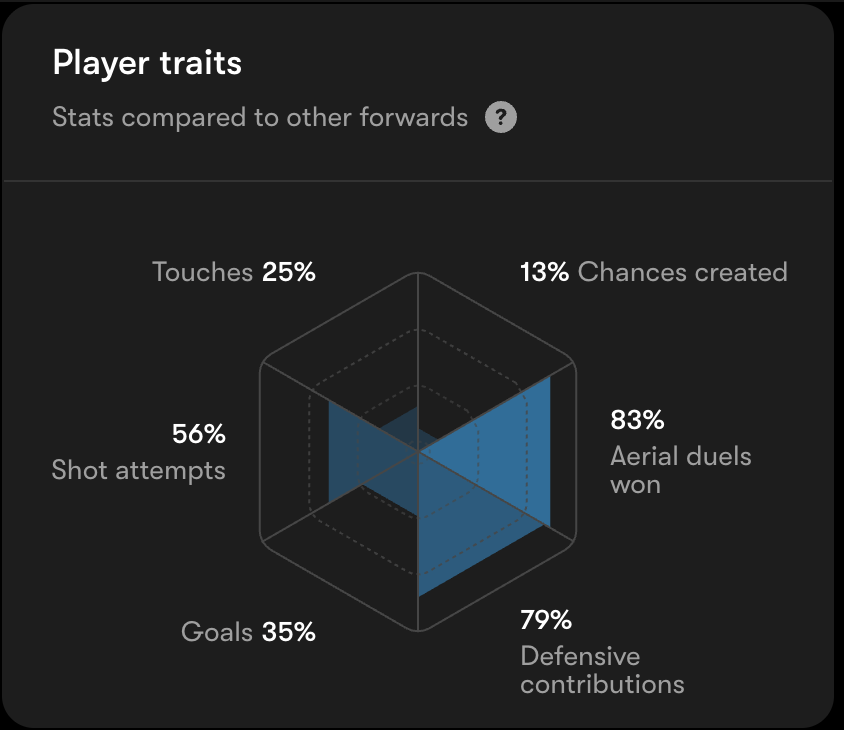
The two that stand out, both in the data perusal and the fee paid for them, are Alladoh and Annello. Alladoh should give the Union something they didn’t have last year in a target striker. Standing at 6’3”, Alladoh came over from the Allsvenskan league in Sweden where he had seven goals and one assist in just over 2000 minutes as a 19 year old. With the loss of FBref advanced data, we can take a look at his FotMob radar to see how he compared to other forwards. As you can see, he is a certified Absolute Unit. His aerial duel percentage stands out but what is a little more interesting is his defensive contributions. Strikers in Bradley Carnell’s pressing system are asked to do a lot defensively and Alladoh should slot in nicely.
And if there’s one thing energy drink soccer loves to do, it’s pair a Unit to win long balls with a buzzy forward next to them. Bruno Damiani is no doubt that guy, but Annello might be as well. Annello bounced around Europe in the Netherlands and Belgium before landing at Boston River and putting up fourteen goals and assists in 2600 minutes last season. With Annello, Damiani (both from Boston River) and Martinez, it seems the Union feel they’ve found an edge.
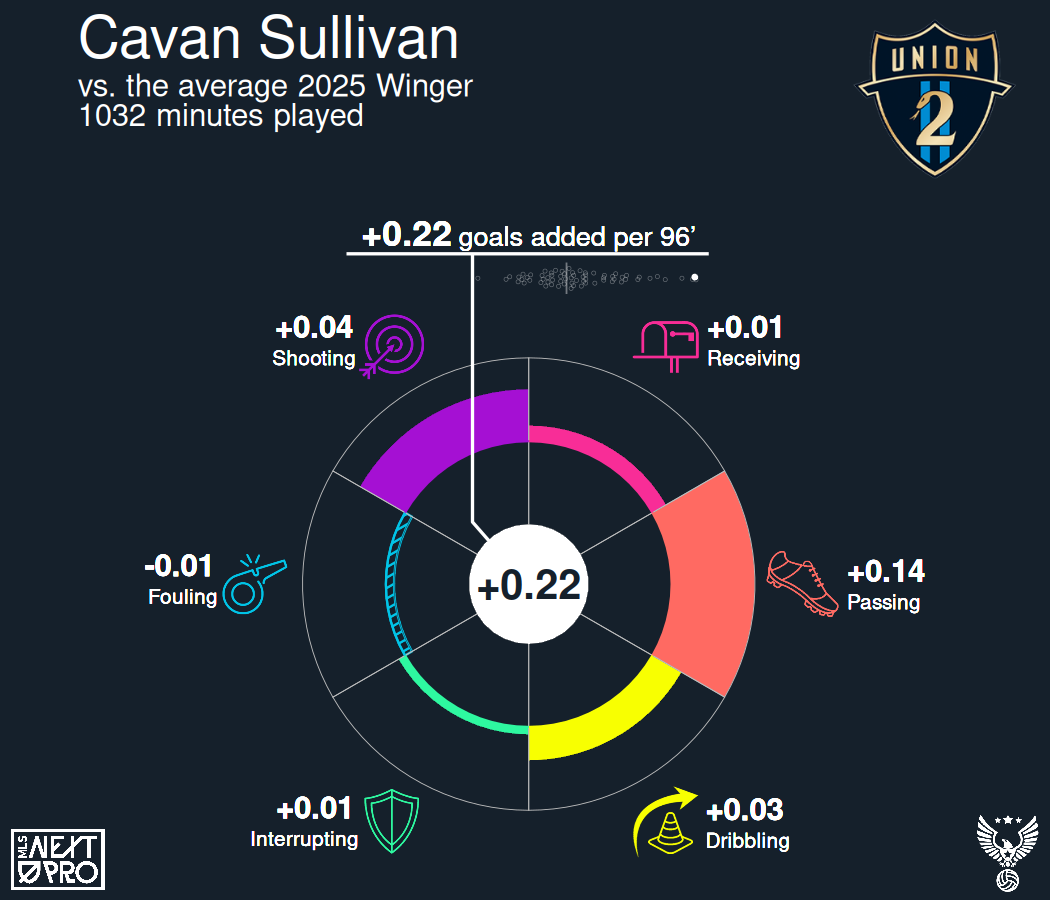
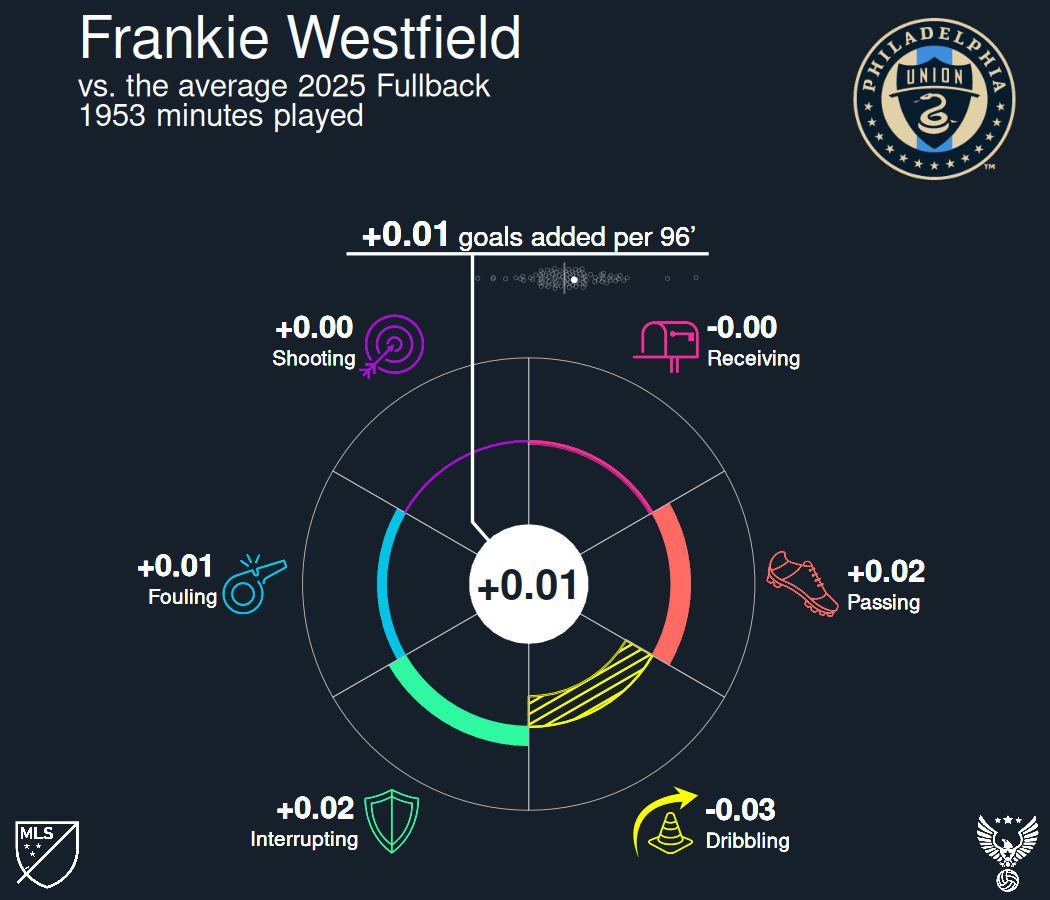
As much as the outgoing transfers of veterans are a vote of confidence in Philadelphia’s ability to hit on incoming transfers, it’s also a sign of how much they trust in their academy pipeline. Frankie Westfield was the beneficiary of this in 2025, playing a slightly better than league average 2000 minutes. Keep an eye on Cavan Sullivan to be that guy this year. Sullivan absolutely wrecked MLS Next Pro last season and has already agreed to a transfer to Manchester City, but the 16 year old picked up an assist in the Union’s CCC opener and should feature more this year.
Drink New Chaos Energy Drink
Much has been written about Minnesota United’s use of the long throw-in and playing something that doesn’t always quite look like soccer, but the Union should be part of that conversation as well. Using the newly released team tendencies from futi, we can take a look at how the Union play compared to other teams in MLS. It should come as no surprise that Philly are in the 93rd percentile or better in Direct Transitions, Counterpress, High Press, Chaos and Central Buildup. You can bet that the Union are going to look the same in 2026.
A bet on the Philadelphia Union is a bet on their system and academy talent. And that has been a reliable bet for the last five years, for the regular season at least. Even with a larger roster turnover than usual, the Union will need to prove that bet also translates in the playoffs and ultimately an MLS Cup in 2026.