
2026 MLS Previews: DC United, Atlanta United, CF Montreal
/Our 2026 MLS Season Previews have started and the beginning can be found below, beginning with DC United, Atlanta United, and CF Montreal. If you want to support this coverage of the league, you can head to our Patreon. For $5 a month you can get access to a lot of the data visualization tools we use to make these previews.
Dead Cat (bounce) United
After finishing dead-last in 2025, DC United committed to their second teardown rebuild in as many years. This overhaul is more comprehensive; as the Black and Red:
saw off star striker Christian Benteke, their only designated player,
spent $13 million for four international players and two MLS veterans,
announced a firm commitment to mid-season addition coach Rene Weiler’s high-pressing style.
In other words, they’re throwing more money at the problem and hoping for better results.
Last year, United fans watched their team drop a designated player and keep his cap hit (Mateusz Klich), sign seven squad players (five internationals and two MLS veterans), and commit to a high-pressing style from a former New York Red Bulls coach. Their patience received a league-worst attack, an incoherent defense, and a wooden spoon.
United fans deserve better.
Can the power of money resuscitate a one-note attack?
Let’s start with the $11 million question. After two years of losing designated players, Louis Munteanu from Romania’s CFR Cluj ($7 million) and Tai Baribo from Philadelphia ($4 million) joined the club. DC has signed two assets that add up to nearly 85% of their entire 2025 payroll.
Fans will hope that Munteanu and Baribo can inject some cohesion into an anemic attack that held two competing truths: (1) Christian Benteke continued his high-level play as a top-ten striker in goals added and xG. (2) DC United scored the fewest goals and took the fourth-fewest shots in MLS. Christian Benteke is no longer with the club.
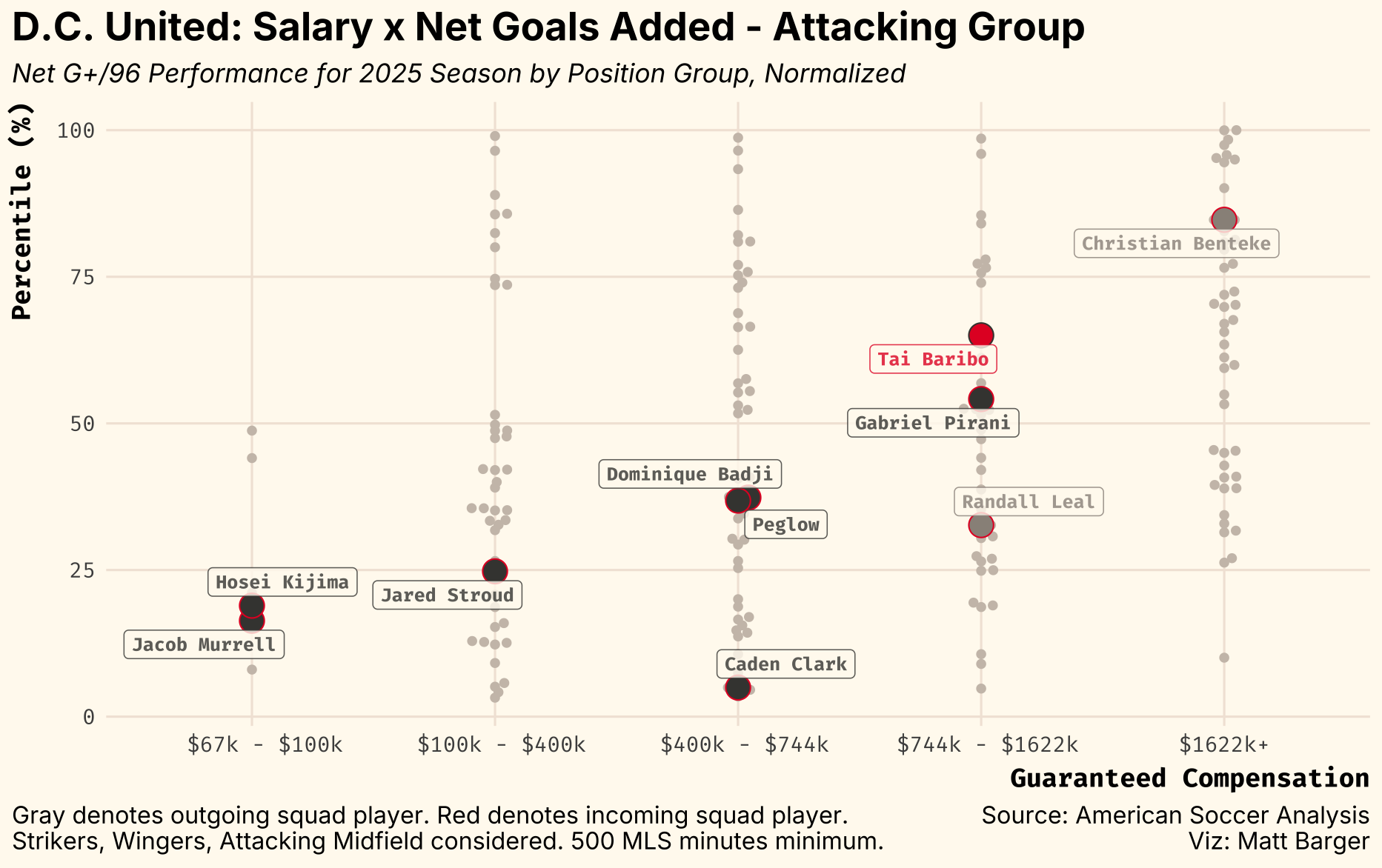
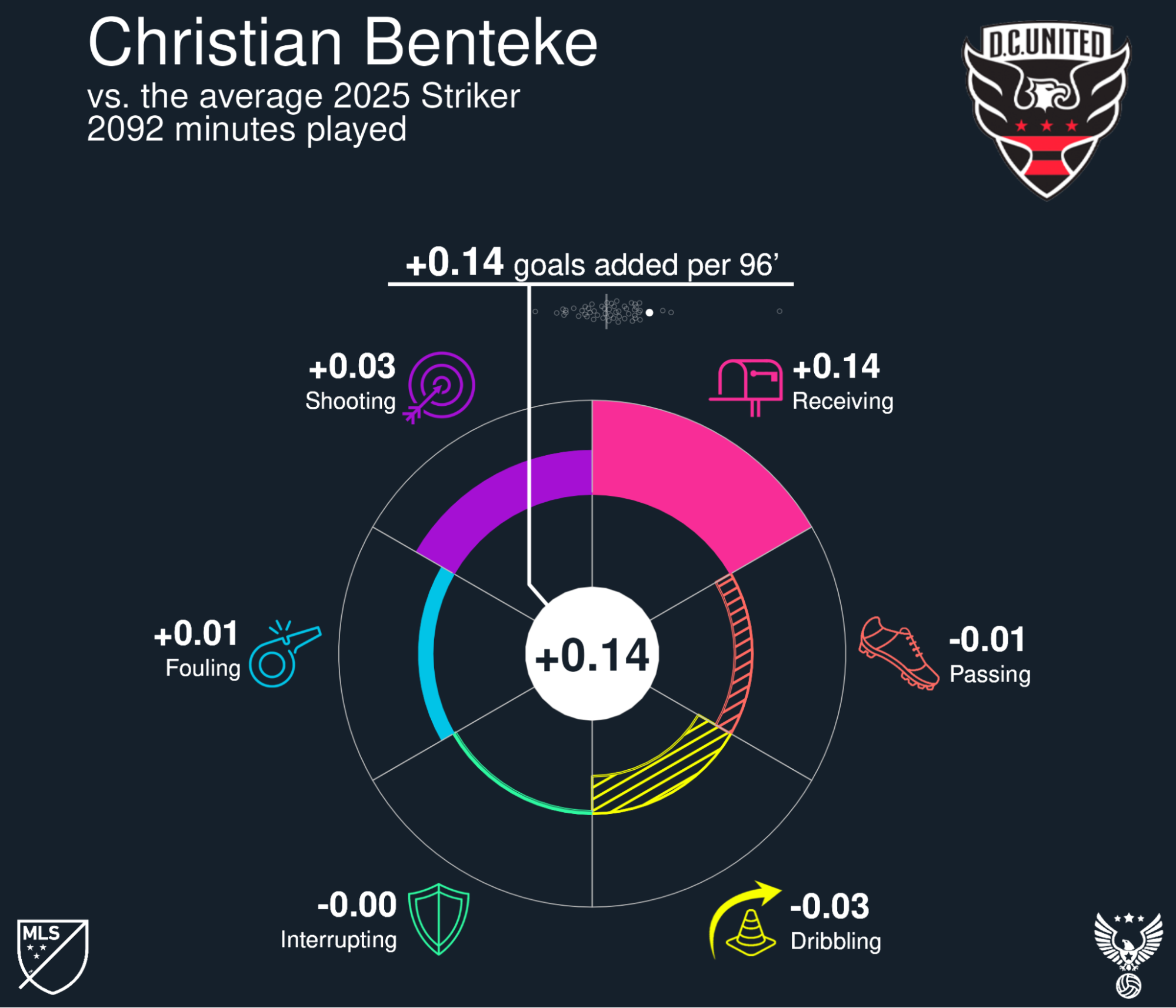
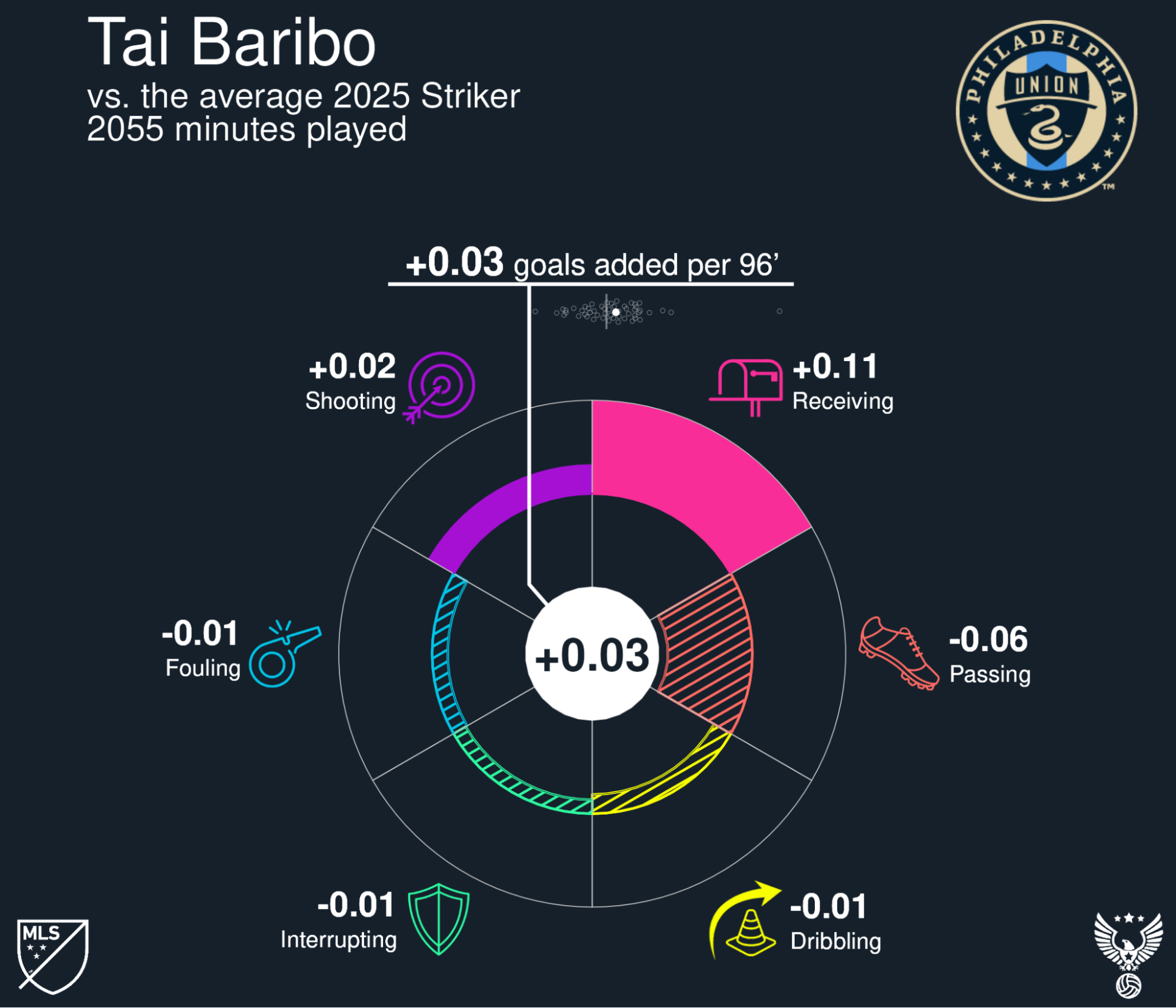
Tai Baribo had a hot start to the 2025 season with six goals in his first three games. He also finished the regular season with “only” ten more goals. While the shape of their g+ wheels is reasonably similar, the magnitudes matter, and so do the weaknesses. Baribo is entirely unable to create shots for himself, and isn’t nearly the ball progression outlet Benteke was for others. $4 million is a hefty price tag for a striker who carries well-known question marks in creating his own shot or shots for his teammates.
If Baribo turns out to be as one-dimensional as feared, DC United will have fallen back into the same trap as before. Defenses need only crowd Munteanu to cancel out Baribo’s required service, leaving the attack burden to last year’s anonymous alternative options. Provided Gabriel Pirani, Peglow, or Caden Clark cannot step up their contribution, DC’s new-look attack rests on a high-variance gamble.
Can the DC high press feed their attack?
At Baribo’s signing, DC’s new chief soccer officer Erkut Sogut flexed his LinkedIn influencer chops to send a message to the league: “That style of game [that Baribo played in Philadelphia], that’s what we will play: attacking, high-pressing football.”
DC United maintained a respectable press intensity in 2025, with a PPDA metric alongside the Supporters’ Shield winners. If the LA-based doctor-slash-remote-CSO would like to see DC play like their I-95 neighbors, they need a pressing structure that feeds its attack and takes the pressure off the defense. Compared to Philadelphia, DC has two distinct deficiencies: ball retention and ball progression.
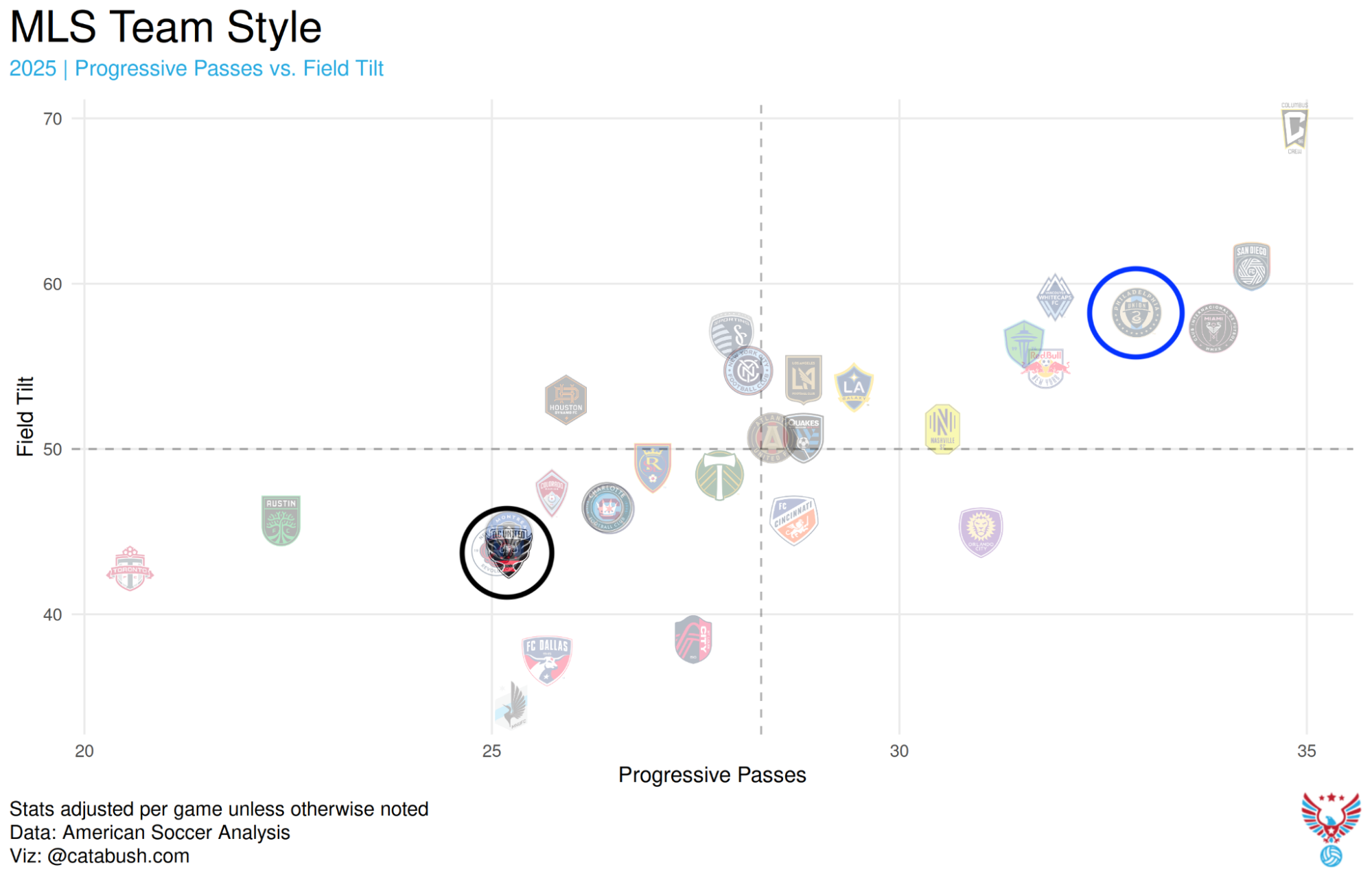
First, DC’s counter press needs to be an effective means of keeping them in the final third. While Philadelphia were up near 60% of total final third passes every game, DC United’s midfield struggled to achieve just over 40% of total final third passes. This places them alongside much more conservative pressing teams. They’ll have to be much more effective as a pressing unit, rather than just active, in 2026.
Second, DC was one of the worst-performing teams with respect to progressive passes and carries. DC United collectively completed 25 total progressive passes per game, firmly in the bottom five in the league. These two problems point to just how bad the midfield was last year. Of those players, only Matti Peltola maintained a strong sense of defensive effort and positioning, but the rest struggled to meet the value denominated by their price tag.
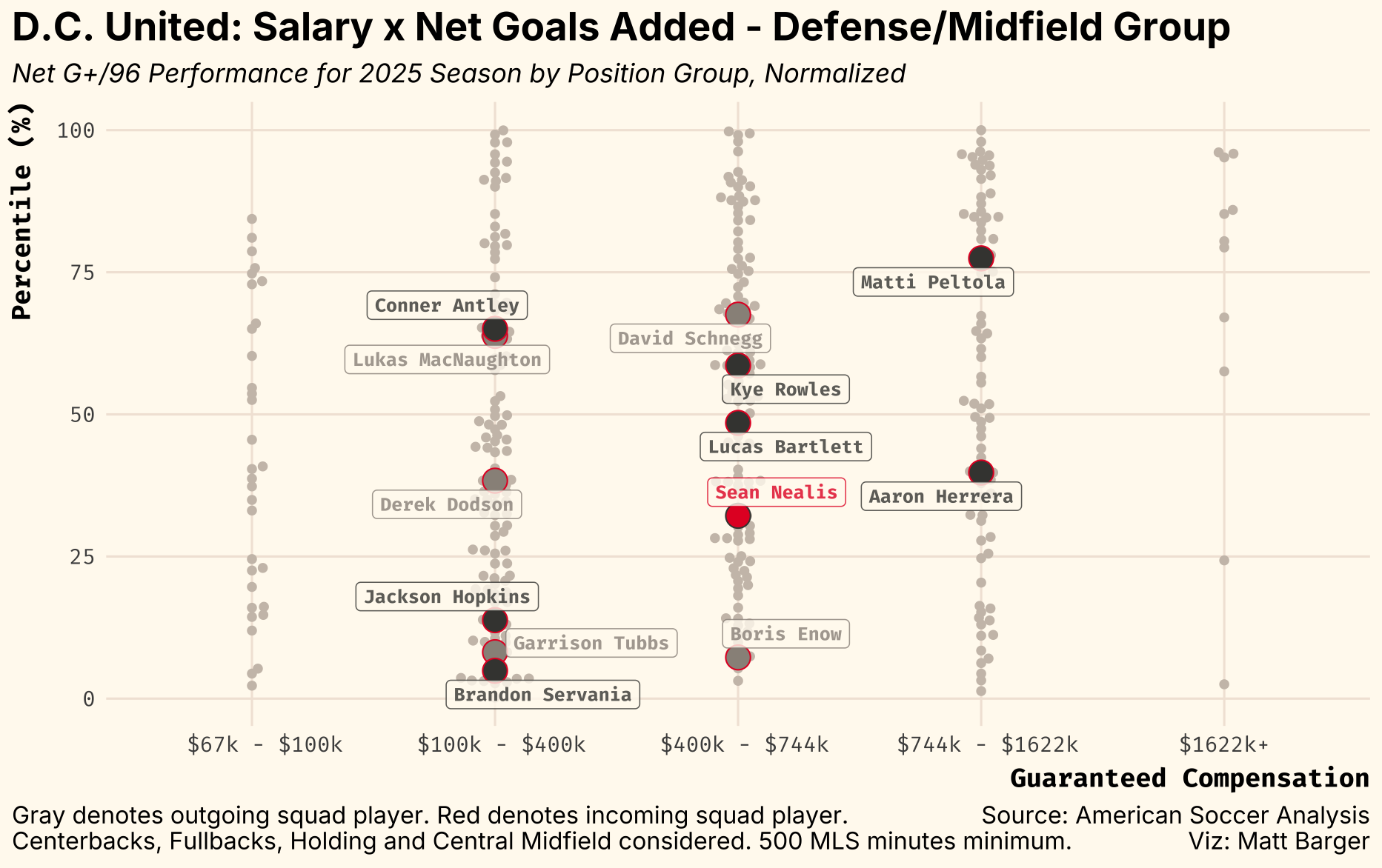
It may be easy to point at Brandon Servania or Boris Enow or out-of-position Jackson Hopkins as individual liabilities (they were). But transition defense and ball progression are often as much big picture structural as they are talent dominated. There are no new signings in the midfield, only Enow’s departure, and none of the other additions profile as plus deep ball progressors or zone 14/half space into-the-box type guys. Sogut added flash at the top and bottom of the lineup card, but how the midfield progresses and retains the ball could decide the season. For this, all eyes are on Rene Weiler.
How does this team leak fewer goals?
United fans should look forward to an improved defense in 2026. DC United’s defense conceded 54.3 xG, around the league average. But they conceded 66 goals, second-worst in the league. This suggests poor execution and bad defensive structure, two things that should be fixed by one signing.
Former USMNT goalkeeper Sean Johnson should raise the level of DC’s defensive execution by himself. Goalkeeping was a major issue for United in 2025. Collectively, DC’s goalkeeping combined to concede 7 more goals than expected. Johnson, on the other hand, conceded 8 fewer goals than expected by himself. This impressive performance places him a close second behind Dayne St. Clair for fewest goals conceded compared to xG faced. He alone should improve United’s defensive execution if he can maintain that, admittedly excellent, performance.
The majority of effective attacks DC United faced last season came from the left side and the center. The right side remained relatively unscathed, as Aaron Herrera and Conner Antley were forced to stay back and help defend. This readout suggests that DC’s holding midfield and center-back pairing struggled to cover the space their advanced left back (the departed Schnegg) left behind. Starting center-backs Kye Rowles and Lucas Bartlett turned in average defensive goals-added metrics, suggesting they are not liabilities but clearly need help covering the space.
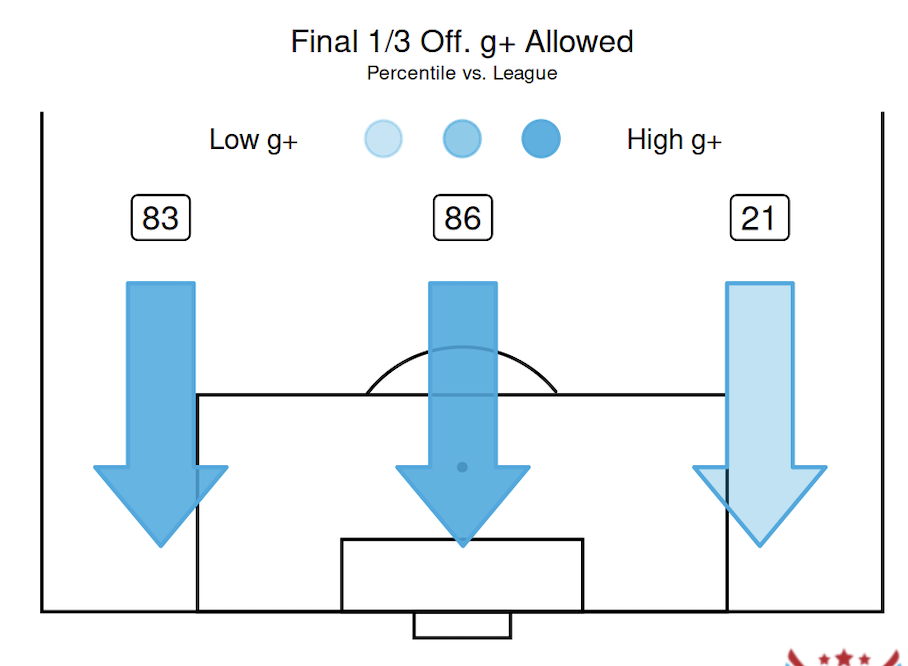
The signing of Sean Nealis from New York Red Bulls suggests that Rowles and Bartlett will get some help in depth, a real problem last year. New addition Keisuke Karokawa at left back is a similarly marauding option to David Schnegg, keep an eye on how Weiler manages that hole.
Verdict: For Good DC Soccer, Watch the Spirit
Fresh off last place, DC United embarked on another ambitious roster overhaul. Unfortunately, new signings alone can’t fix a bad system. Dr. Remote CSO Erkut Sogut bypassed glaring structural issues for shiny new attackers with known question marks. The defense should improve and the new designated players could thrive, but the ineffective press remains in Rene Weiler’s hands.
Return of the Tat(a)
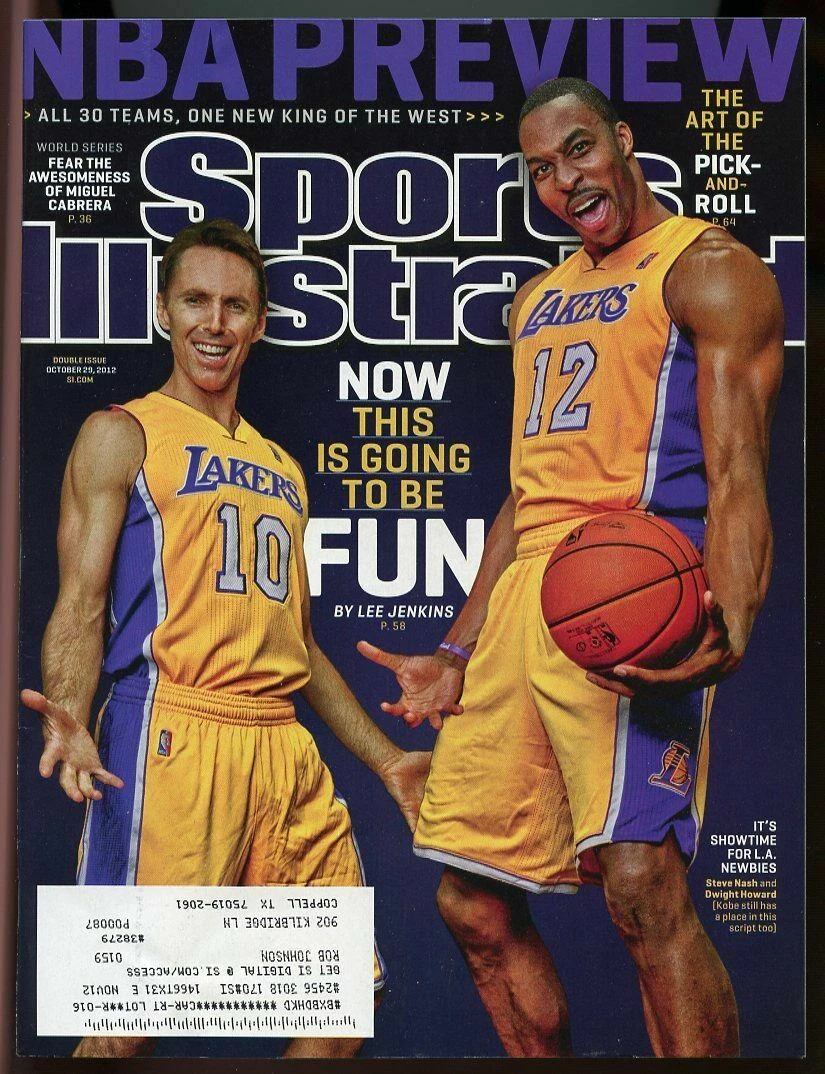
Way back in the day, in October of 2012, Sports Illustrated published their magazine with what is now one of the most iconic covers - on it, Steve Nash and Dwight Howard pose in celebration in their new LA Lakers uniform. The text - NOW THIS IS GOING TO BE FUN - stands boldly in front of them.
Well, if you weren’t a Lakers fan, it was fun. It was delightful to see all those preseason expectations go up in smoke almost immediately. All that money spent, all that excitement, all that buildup - just to disappoint. A banner day for haters everywhere.
In 2025, we got to see a repeat of that with Atlanta United.
Going into 2025 the question wasn’t if Atlanta could win the league, but who would be their competition. They had seven players who at one point were designated players in MLS, but with creative and clever cap management had worked themselves into cap compliance. They had spent 30 million American dollars on attacking talent, including Emmanuel Latte Lath and club legend Miguel Almiron. They had scammed DC out of Mateusz Klich, solving the problem created by the retirement of Dax McCarty. They had even hired MLS Cup winning manager Ronny Deila, whose NYCFC team was an absolute powerhouse. Before the season started, they were on top of the world. Then the season started.
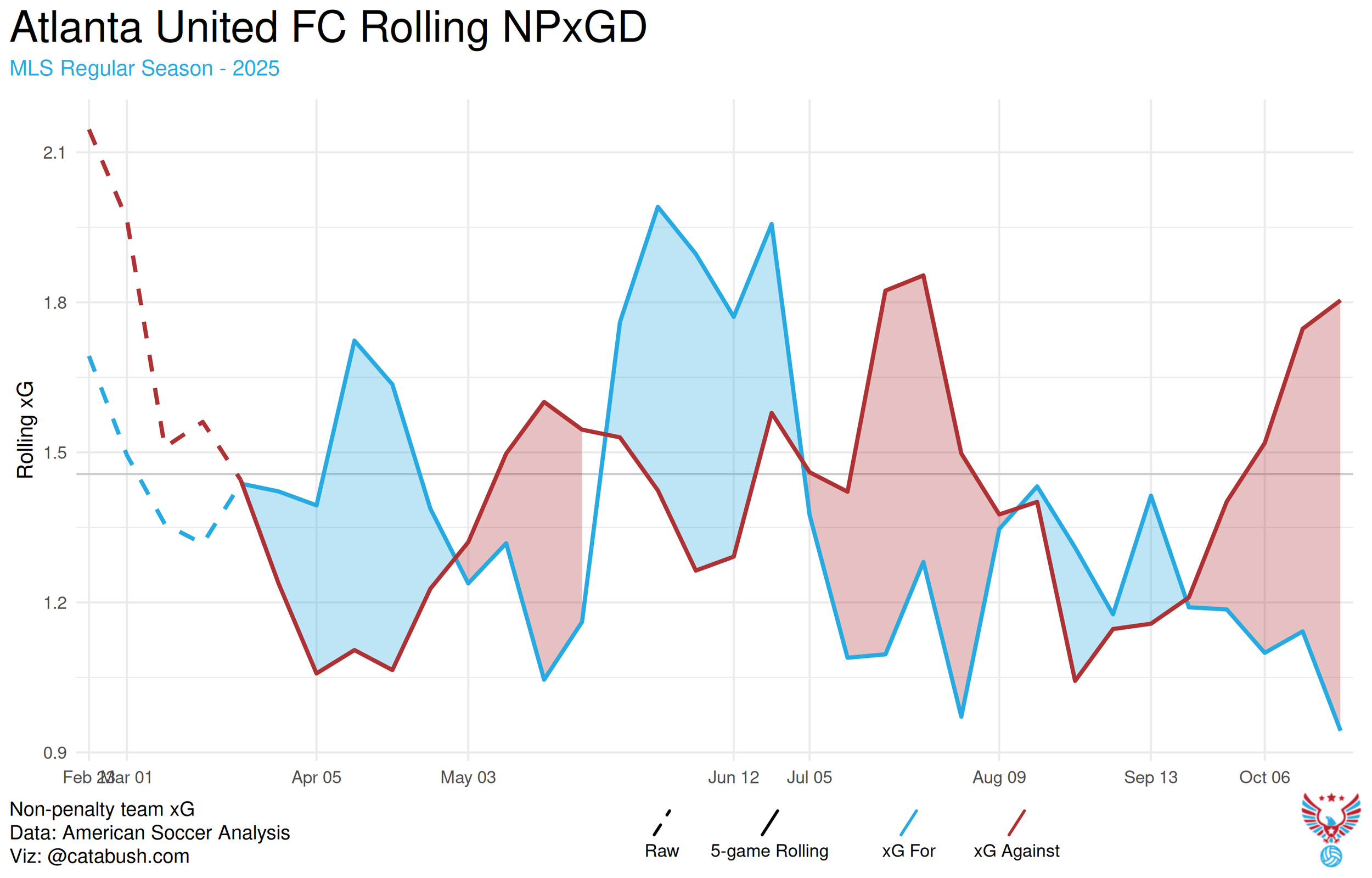
In many respects the team backslid from 2024. Despite marginal gains in possession and field tilt, the team struggled to create chances from their attacking positions. That especially hurt after all the money that had gone into building the offense. Loss of production from the fullbacks was a killer. Pedro Amador and Brooks Lennon lost their ability to fashion vital chances in the attack, but kept all the defensive weaknesses.
Defensively, the team was extremely shaky with their worst defensive efficiency (xG allowed per final third pass) since their opening season and their lowest all time PPDA. Though they managed to maintain possession and control most games, whenever that control broke down they could easily get carved open and let easy chances by. They couldn’t manage an effective press, but dropping into a defensive shape was fraught with danger as well.
Meanwhile, Brad Guzan had a bad season. Not an atrocious one, but well below his usual standard, and where before he could be counted on to claw points back just through his shotstopping in 2025 he ended up costing points on the table.
The results led to Ronny Deila’s firing, though it’s fair to question just what he could do with the roster he was given.
Return of the King
After the departure of Ronny Deila, Atlanta turned to Tata Martino, their first and most successful manager. It’s a clear effort to roll back the clock with a manager who has been successful now twice over, but with a much worse roster than he had in either of his stints
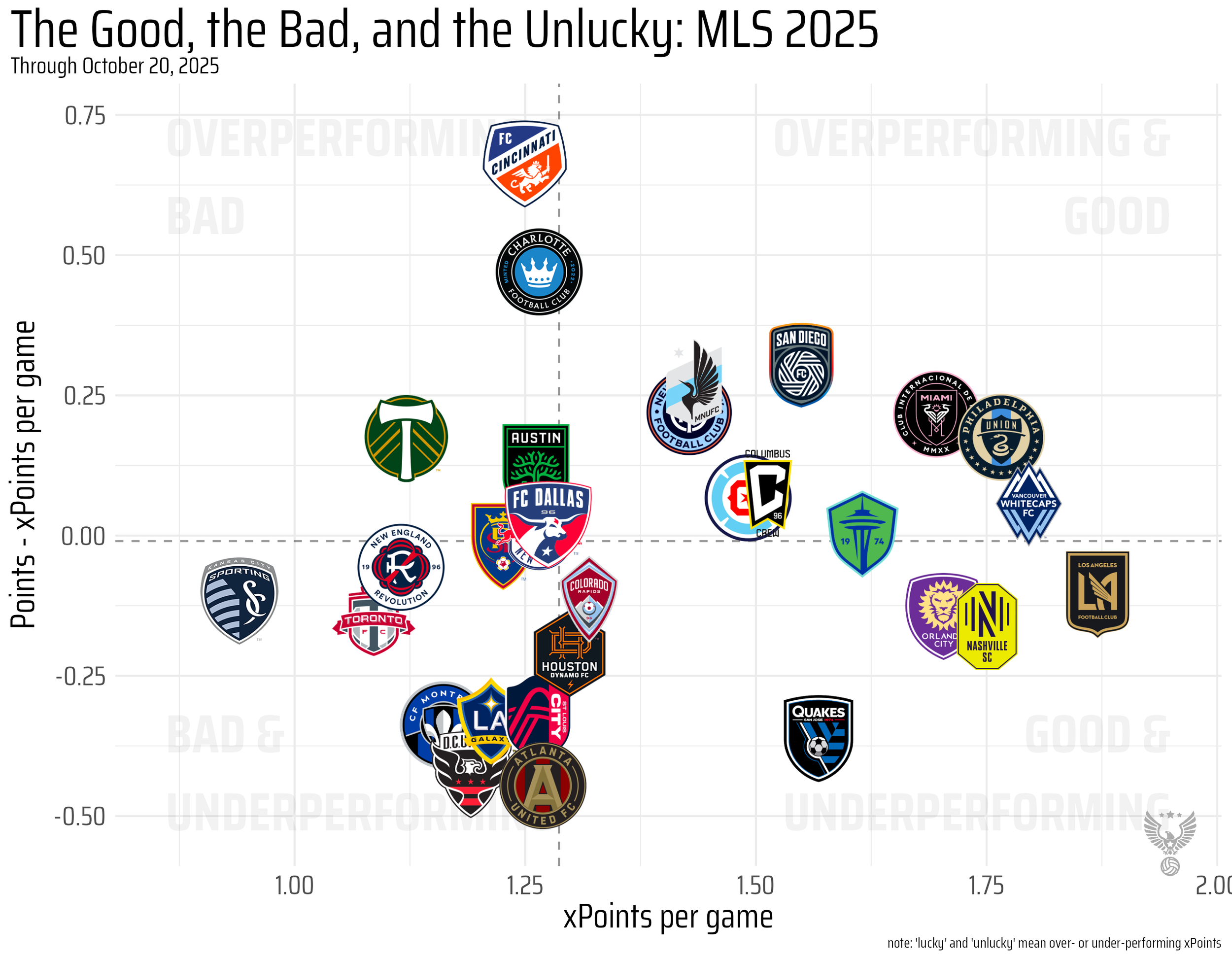
There are definitely signs that 2026 could be better, as well. In fact, the team as a whole was one of the unluckiest in MLS history, earning just 28 points from an expected 43.18 points. That’s the second worst underperformance in the ASA database. In other words, we can expect this team to bounce back if they can reload effectively. Part of this was due to the goalkeeping, and Atlanta brought in Argentine veteran Lucas Hoyos to provide a solid baseline if 2024 draftee Jayden Hibbert can’t win the job outright.
DPs (Disappointing Players)
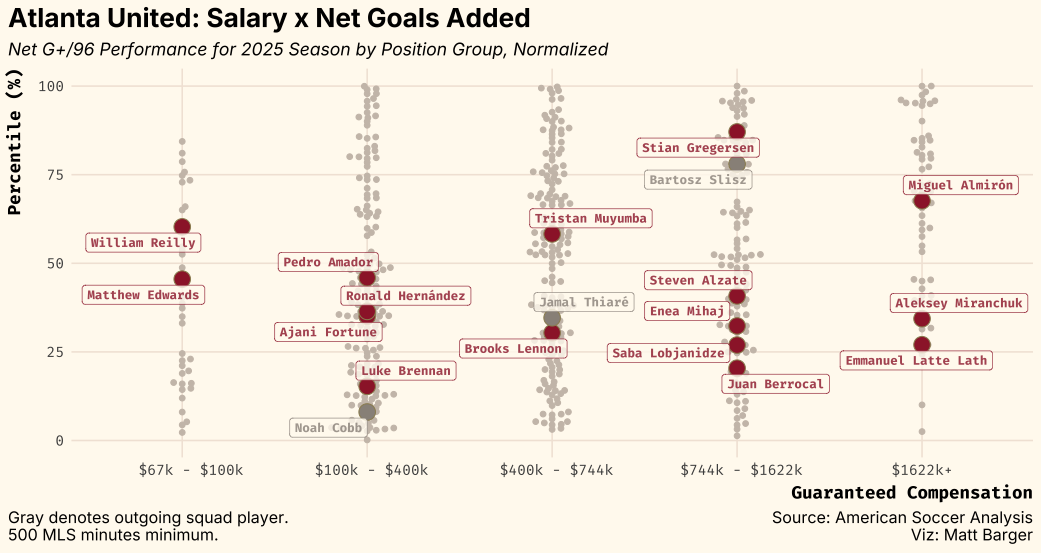
The issue in large part comes back to Atlanta’s three headed monster of DPs. So far, all three have disappointed. Miguel Almiron is a club legend and the underlying numbers suggest he’s still pretty good, outperforming the average player in progressive passes, carries, and shots. At the same time, he was the worst underperformer vs xG (-4.87 G-xG) in MLS last season. That usually means a regression up the goal scoring charts, but it’s still an uncomfortable experience for Atlanta fans.
The other two DPs have been worse. Both Emmanuel Latte Lath and Aleksey Miranchuk are performing worse than the average player at their position as measured by goals added (-0.07 and -0.02 net G+/96 respectively), despite being brought in at extraordinary acquisition and salary figures. Curiously, both Latte Lath and Miranchuk are taking more shots and generating more xG than their peers. That means that all three DPs are taking shots and generating xG, but none are creating chances for other players. All three are more likely to be the end points of a possession rather than improving it further.
It’s a significant issue as a tremendous amount of resources have been invested in these three players, but their struggles to make an impact are hampering the team as a whole. The obvious answer would be to jettison one to make room for a creator - and Miranchuk is the most likely candidate here.
Midfield Woes
One of the strange things about Atlanta is that for all the money they’ve spent over the years, they’ve never been able to recruit decent holding midfielders. In the entire history of Atlanta United they’ve had 2 CMs or DMs above average in Net G+; Darlington Nagbe and Bartosz Slisz.
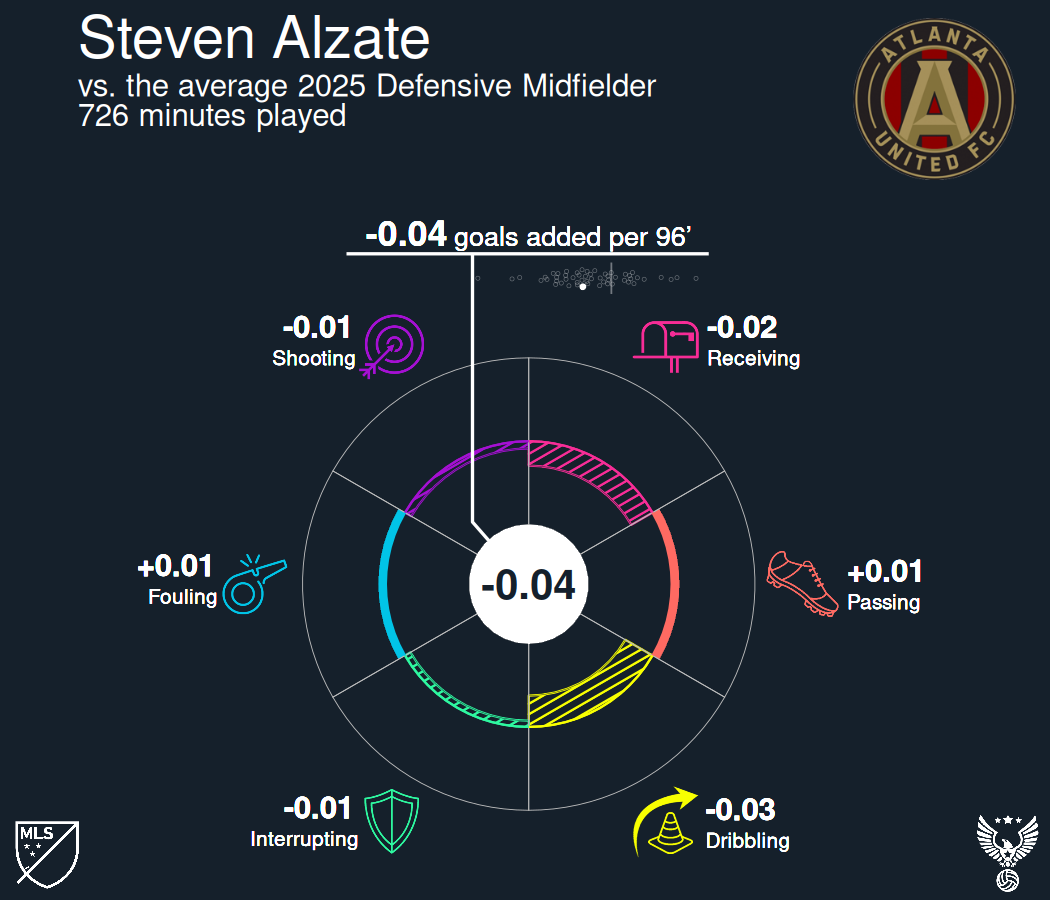
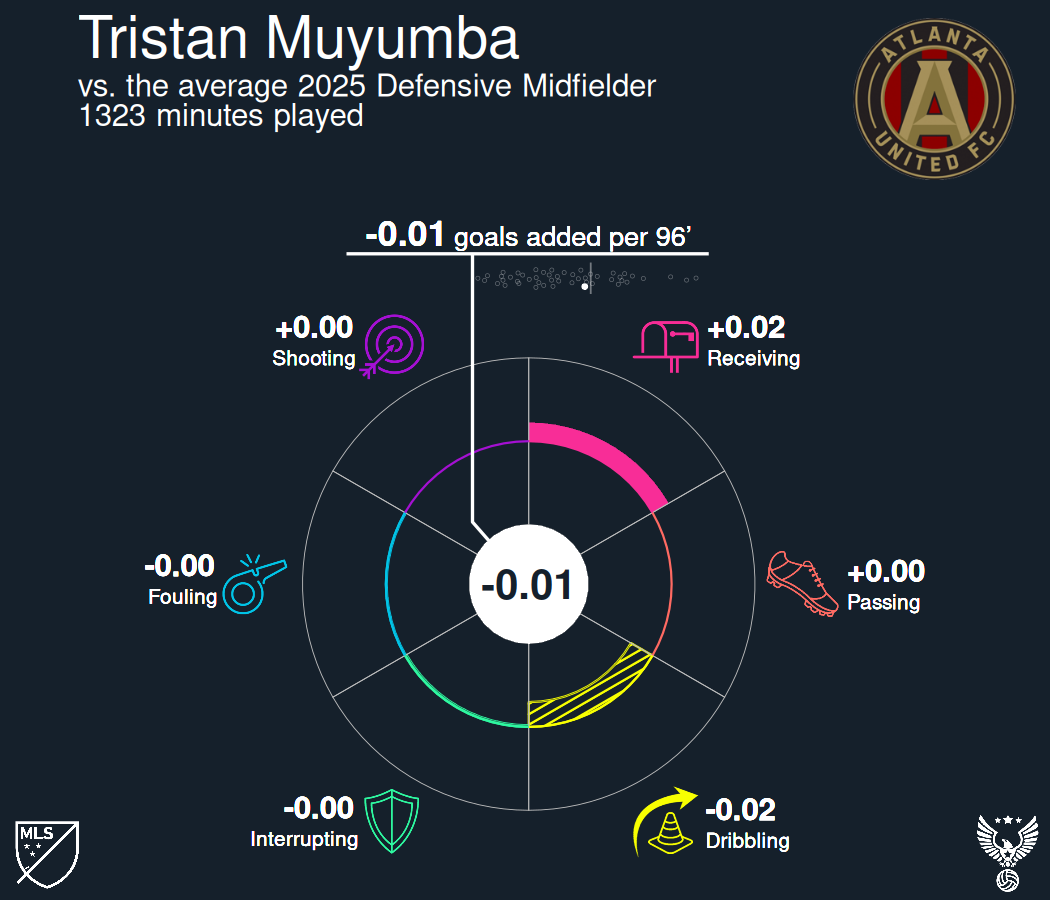
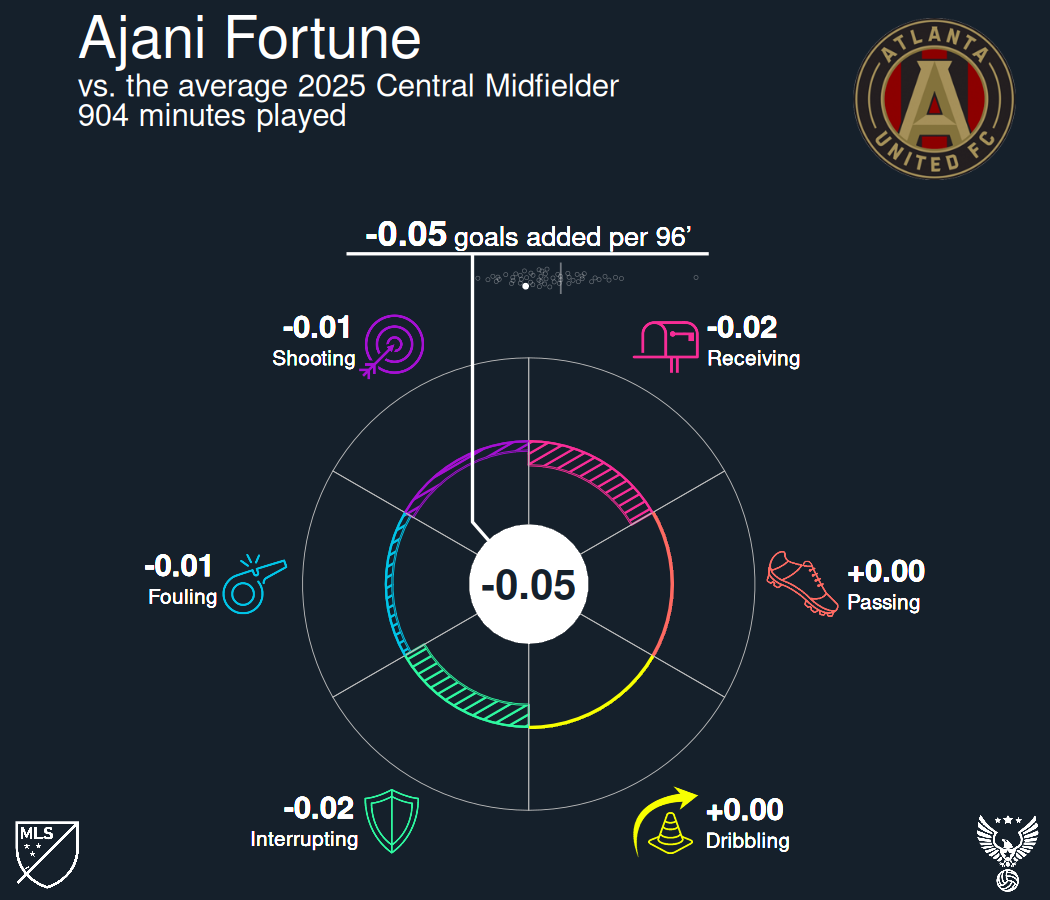
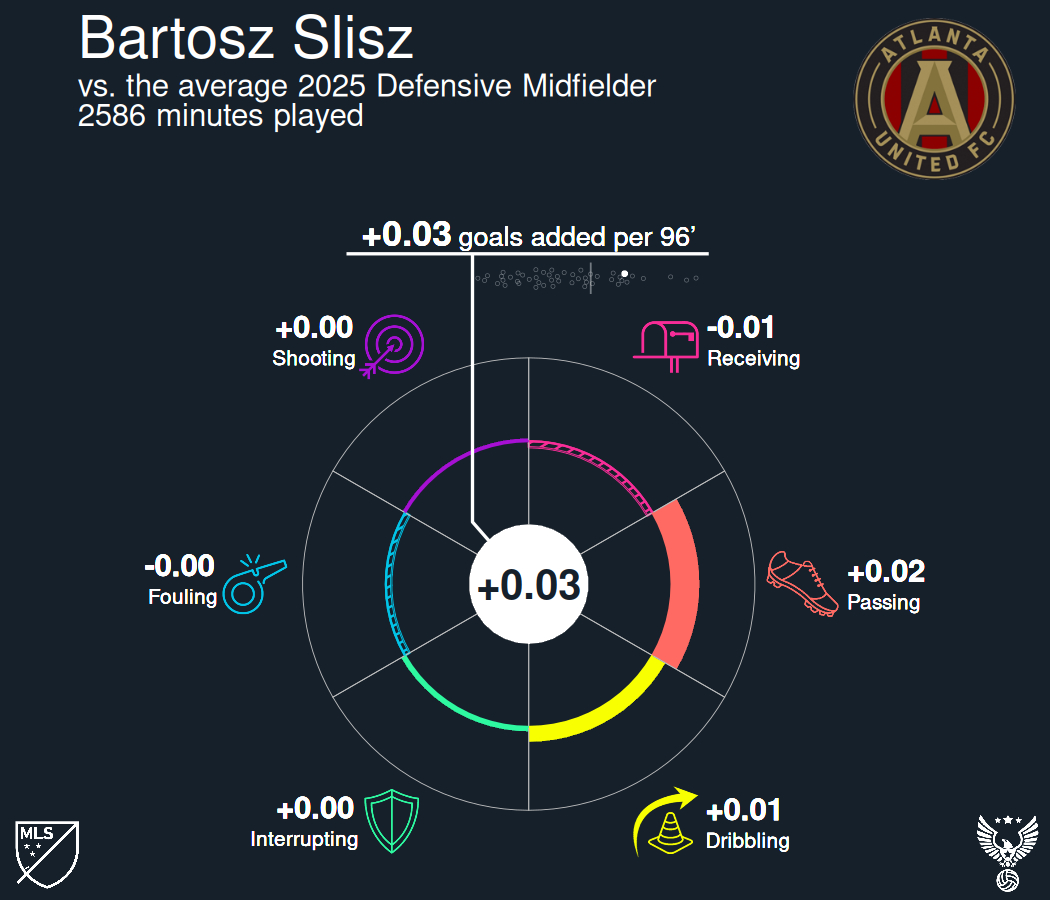
Slisz’s departure leaves Atlanta United with Ajani Fortune (-0.03 Net G+ p96 in 2025), Tristan Muyumba (-0.01), and Steven Alzate (-0.04). Spot minutes were also provided by homegrowns Will Reilly and Cooper Sanchez, but neither looks fully ready for a starting role.
Atlanta were rumored to be bringing in Guido Rodriguez, of Club America and Real Betis fame, but he ended up with CF Valencia instead. They have brought in Adrian Gill, an American who came up in La Masia. Gill unfortunately has struggled with injuries and has just four games for UE Cornellà as a resume as a professional, so he is a wild card and quite possibly an Atlanta United 2 player.
Other Reinforcements
Atlanta has been, for their standards, relatively quiet in the offseason in terms of bringing in players. They’ve brought in players like Hoyos and Gill as well as defenders Tomas Jacob (possibly a midfielder?) and Elias Baez. None of these are big signings, and some of them come into positions where there are already established starters. Baez, for example, is a more defensive left back who provides a very different style than Pedro Amador. Does his signing mean that Amador will not be as important of an attacking piece?
I doubt that Atlanta is done in the market, but at the same time the season is coming quickly. There will not be as much time for new signings to gel the later they are made.
2026 Outlook
2025 was miserable but there were glimmers of hope. Atlanta had the worst underperformance vs xGD and xPoints in the league, both overall and in even game states. Even a normal regression to the mean would lead to a jump up the table. In that sense Tata Martino has a comfortable path to meeting expectations.
At the same time, Atlanta’s schedule is fairly front loaded in terms of difficulty. That’s both a challenge and an opportunity; if they can manage the first part of the season before the World Cup, there can be more aggressive moves over the summer to fix any holes that come up over that time. Also, everyone knows that the World Cup is going to draw more eyes to the sport. Signings around the tournament are the most likely to catch attention and build excitement around the team. It would not be surprising to see Atlanta make a big splash in the market in July or August in order to make a real stretch run for the playoffs.
If Atlanta falls hard at the start, though, it could be a long season. Fighting back from being around the bottom of the table would be demoralizing for a group that has already struggled through various coaches. Tata Martino is a good manager, but this would be his biggest challenge in MLS so far.
You Cheddar Believe It
There are many teams for whom the 2026 season is full of promise, whose new signings look to build on a strong foundation, and whose fans are already starting to look up hotel prices in October.
CF Montreal is not one of those teams.
Montreal’s problems date back well before 2025. In fact, manager Laurent Courtois was hired to right the ship back in 2024, with Montreal hoping that Wilfried Nancy’s assistant could replicate Nancy’s success. Courtois managed to overperform xPoints in 2024 by almost five, and had Montreal near a playoff spot. That was enough to keep his job.
They cleared the decks after 2024, returning just 60% of their minutes, and leaned heavily into young and cheap players to build a foundation for the future. In fact, players under 26 years old and with a salary of less than 400K per year accounted for 24,109 of Montreal’s on field minutes. The next closest team was Philadelphia at just over 16K.
Unfortunately that didn’t go so hot.
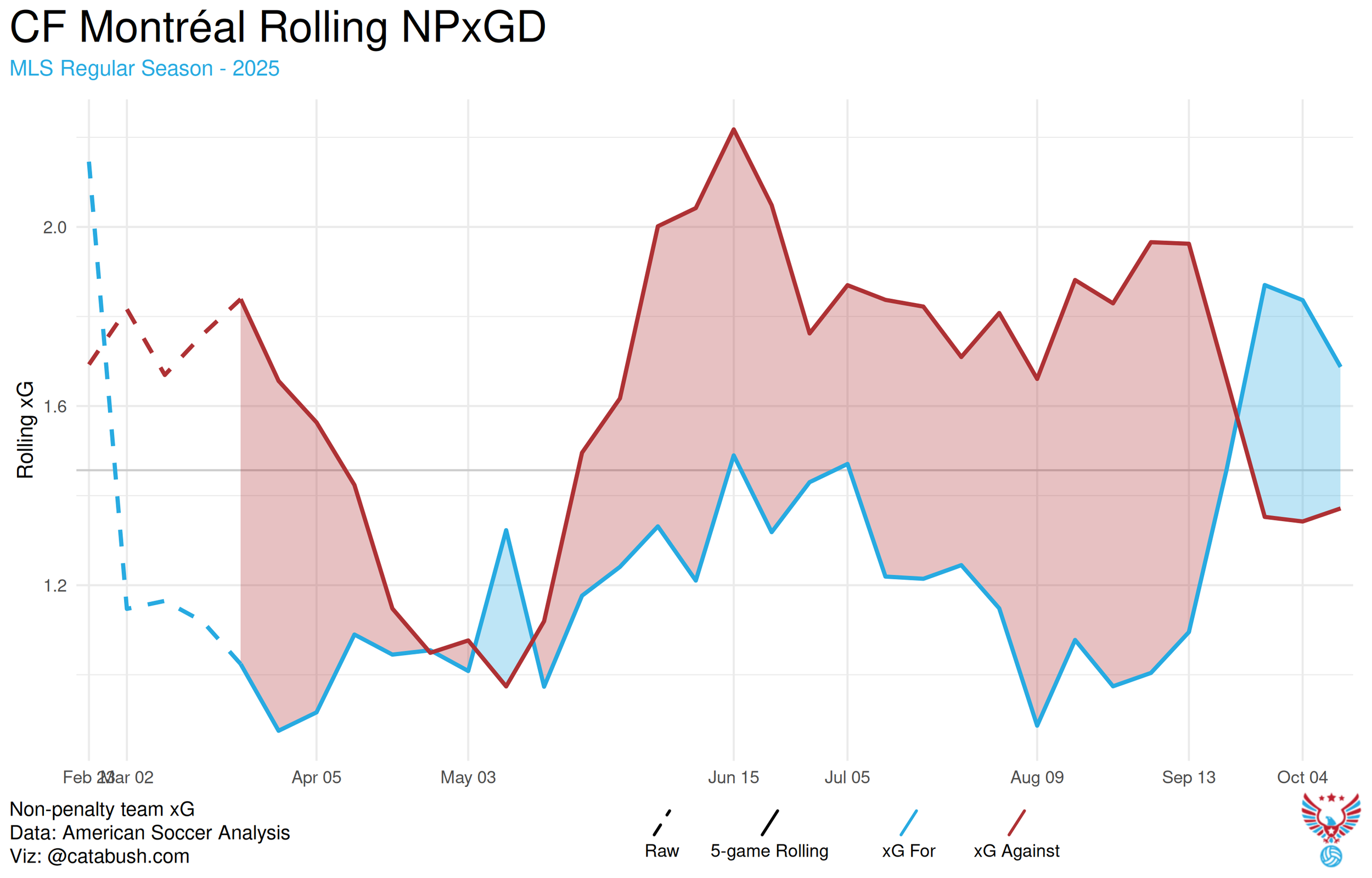
Generally, teams don’t want to see that massive cavern in the middle of the season. The terrible performance led to the departure of Courtois, and interim manager Marco Donadel righted the ship somewhat and returned. In some ways, Courtois was a victim of bad luck; despite having an almost identical xPoint total from 2024 to 2025, the actual difference between the two seasons was 15 points.
What about the young players? Well, some of them did actually perform well - and were promptly removed to buy a new coagulating vat for the Saputo cheddar line. Here’s the players who did well in 2025 with Montreal:
Nathan Saliba: transferred to Anderlecht
George Campbell: transferred to West Brom
Dante Sealy: traded to Colorado
What’s the point of developing your foundation if you immediately dig up said foundation and move it to another country?
The State of the Roster
Montreal struggles to keep good players around, but they do have a couple worth noting.
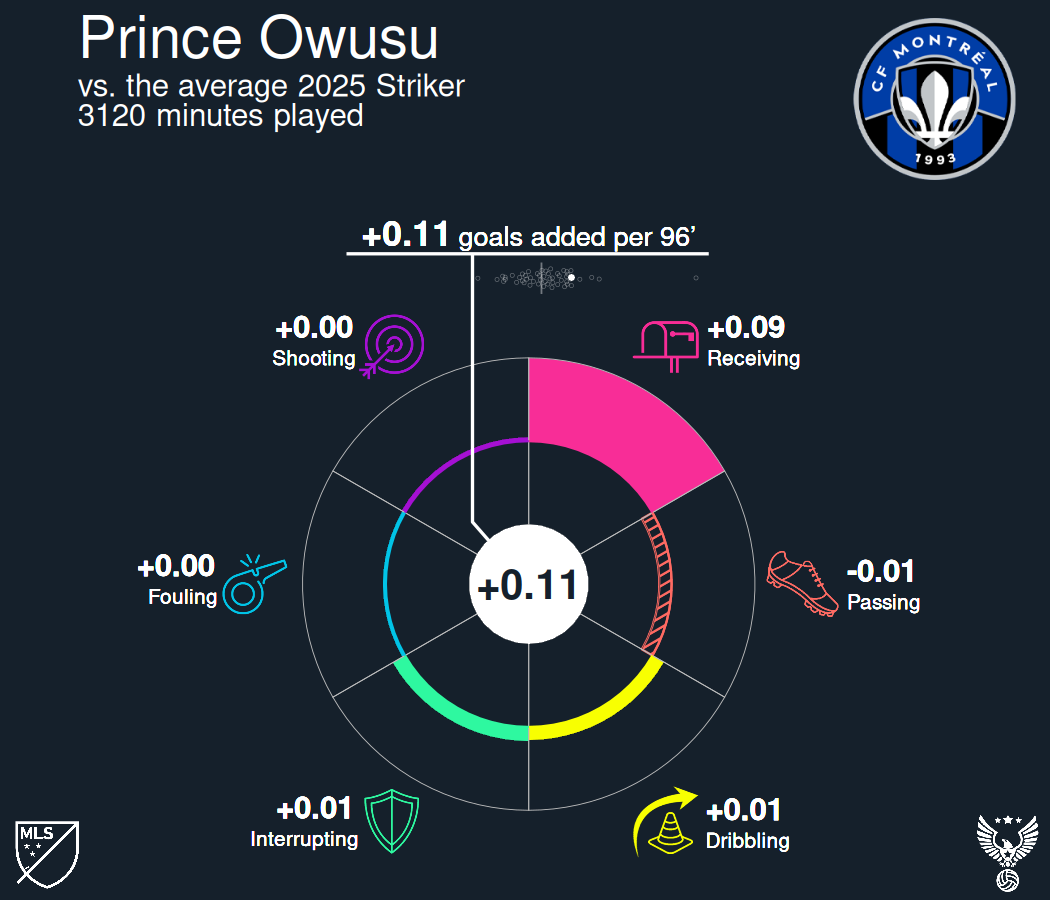
Prince Owusu was quietly one of the best strikers in the league. He is at peak age, puts up surprisingly good numbers despite being surrounded by incompetence (check his time in Toronto), and is fairly well rounded. He just signed an extension, but if he is under the DP threshold, he continues to provide offensive production at a very reasonable price.
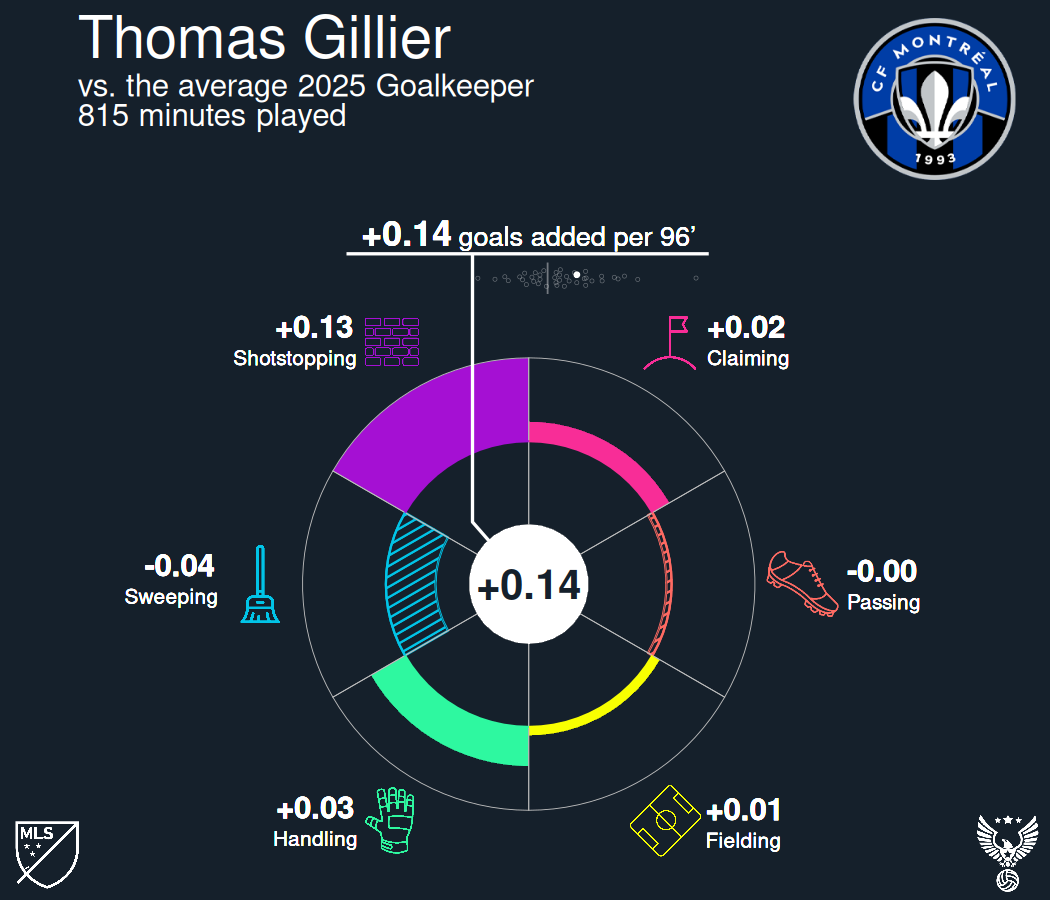
Jonathan Sirois was the primary starter at goalkeeper for Montreal and was pretty bad. They loaned in Gillier from Bologna for additional cover in the summer, and he very quickly took over minutes and looked like the best keeper available. If he can continue the form he had in 2025, he will likely be one of the better goalkeepers in the league. His loan does expire in the summer, but if Montreal wants a permanent deal or a loan extension then Bologna’s ownership might be willing to oblige.
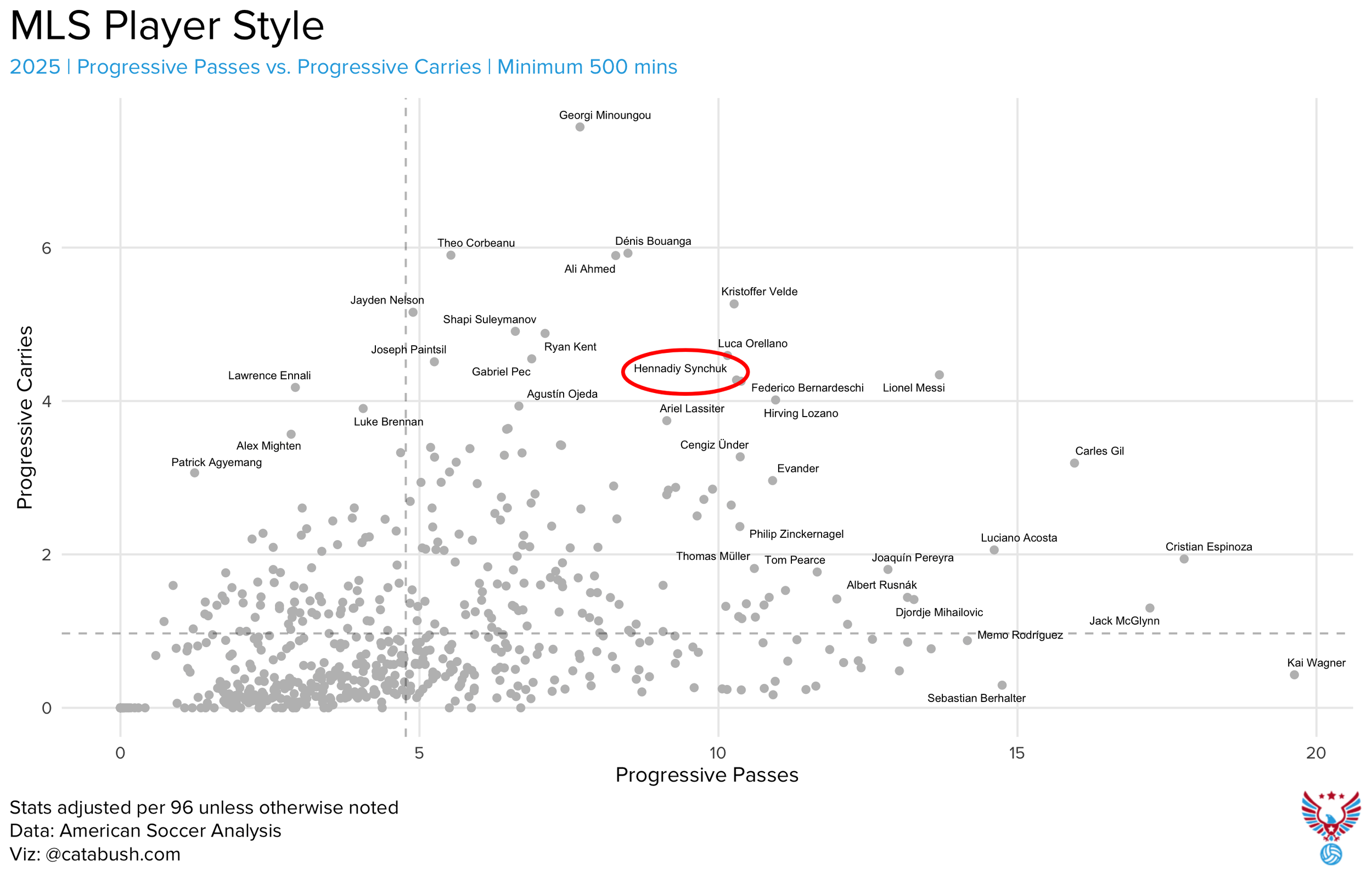
Finally, U22 signing Hennadiy Synchuk had a promising 2025 as a ball progressor. He doesn’t do much else at this stage, but as a young player there’s still plenty of growth to expect from his game. If he can add end product, some better off ball movement, and a little more comfort in possession, he could be one of the better young players in the league. Of course if that happens he’s just as likely to get shipped off to Europe on a cut rate deal.
What is success for CF Montreal:
The start of the season is going to be rough. With a month and a half to go, there haven’t been any signings to really get the supporters excited. Brayan Vera and Daniel Rios are veteran additions at center back and striker respectively, and while Vera was an overpay he will likely be an important stabilizing piece of the defense.
They also have brought in Ivan Losenko and Tomas Aviles on loan. Losenko is a Shaktar midfielder who can’t really get on the field and doesn’t offer much beyond defensive activity and slightly above average ball progression. Tomas Aviles is an inexplicable bailout for Inter Miami, especially considering Montreal gave up an international spot to secure the loan. It’s not that Aviles is a terrible player, despite the multiple public and brutal gaffes like rolling around on the floor while Atlanta eliminated Inter Miami in the 2024 playoffs. He could even blossom into a half decent player. It’s that what they’re giving up to get him makes no sense at all.
In terms of the schedule, Montreal’s opening run is brutal. The first 6 games are on the road, 4 of which are against teams that made the playoffs last year. If they can manage double digit points by May, they’ll probably be ahead of where they were last year. The playoffs do not feel like a reasonable expectation for this team.
So what’s reasonable? I think that if these things happen, Montreal can consider this season a success:
End up higher than Toronto in the table
Finish above 35 points
Identify a player who can handle possession in the middle as well as create chances
Get Owusu to 15 goals and one other player to at least 6
Find a way to keep Owusu, Synchuk, and Gillier, and add more pieces around them
Allow Donadel to define a clear approach to the game
On that last note - Montreal did not have a clearly defined style in 2025, aside from “terrible soccer team”. They were below average in field tilt, possession, defensive solidity, and preventing tilt. They were mildly above average in counterattacking play. They did not press aggressively, nor did they maximize set pieces. They did not have any notable playmakers. If you look at Futi’s new Team Tendencies, they’re middle of the pack at basically everything except central ball progression. Courtois could not play his style with the roster he had, and ended up with a grab bag approach that made the team perform below their talent level. Donadel’s biggest task is to find a sensible approach to the game that maximizes his team’s chances as the underdog.
If they can do that, then maybe Montreal fans might be able to look forward to 2027.