
2026 NWSL Previews: Racing Louisville, San Diego Wave
/Our 2026 NWSL Season Previews have started and today we hit Racing Louisville and San Diego Wave. If you want to support this coverage of the league, you can head to our Patreon. For $5 a month you can get access to a lot of the data visualization tools we use to make these previews.
If you’re more of an audio person, our friends at Expected Own Goals podded about San Diego and Louisville, available wherever you get your pods. If you want to support them, you can head to their Patreon.
Waitin' by the railroad track. Lookin', lookin'
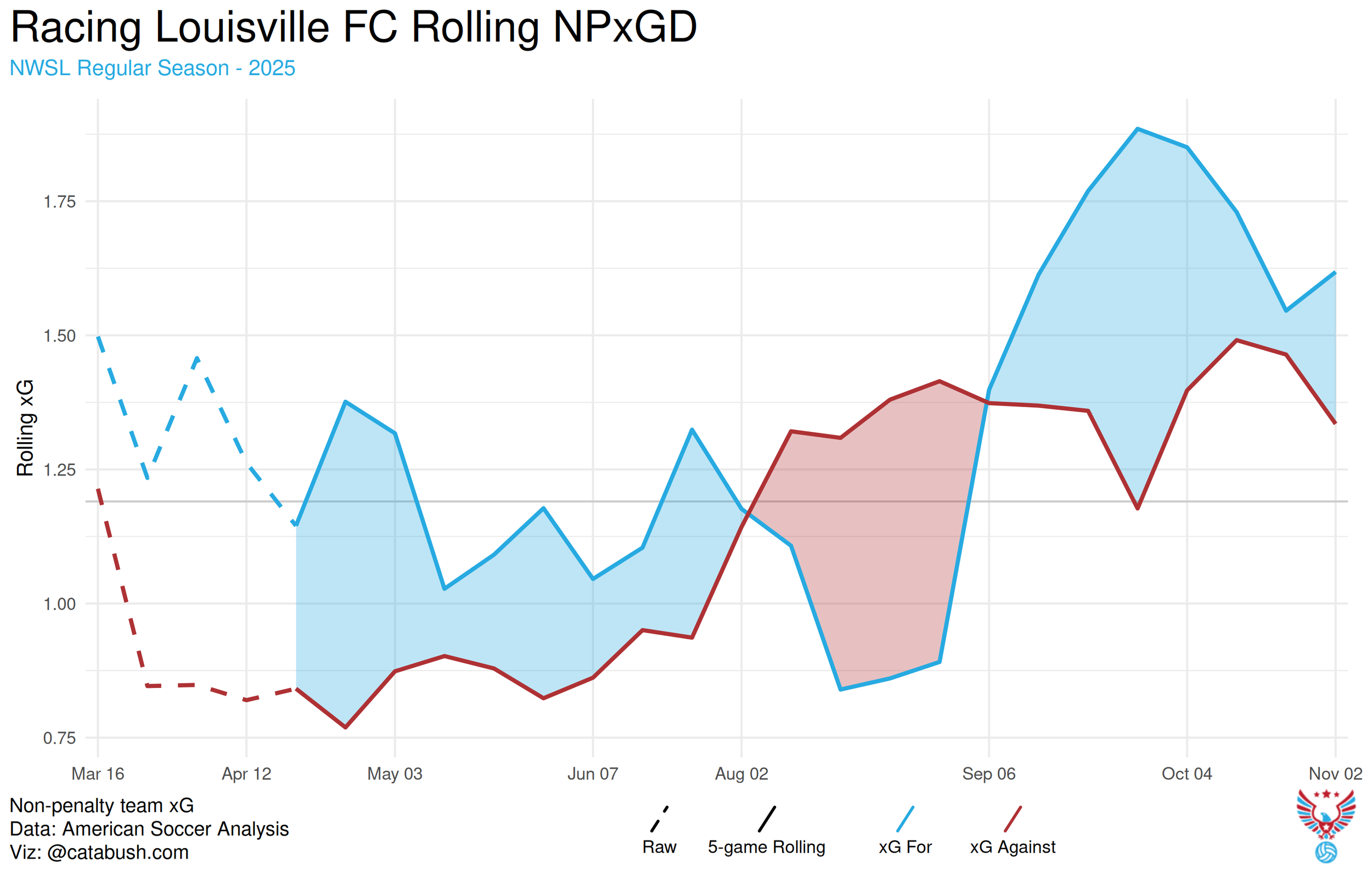
For the first time in the team’s existence, Racing Louisville didn’t finish in ninth place and there’s every reason to believe the team can finish even higher in 2026. In fact, Racing was actually pretty good last season, finishing 7th in the table before giving the Washington Spirit all it could handle in a first round exit from the playoffs. Advanced numbers agree, with Racing’s 2.14 expected goal difference ranking seventh in the league, closer to sixth than eighth place.
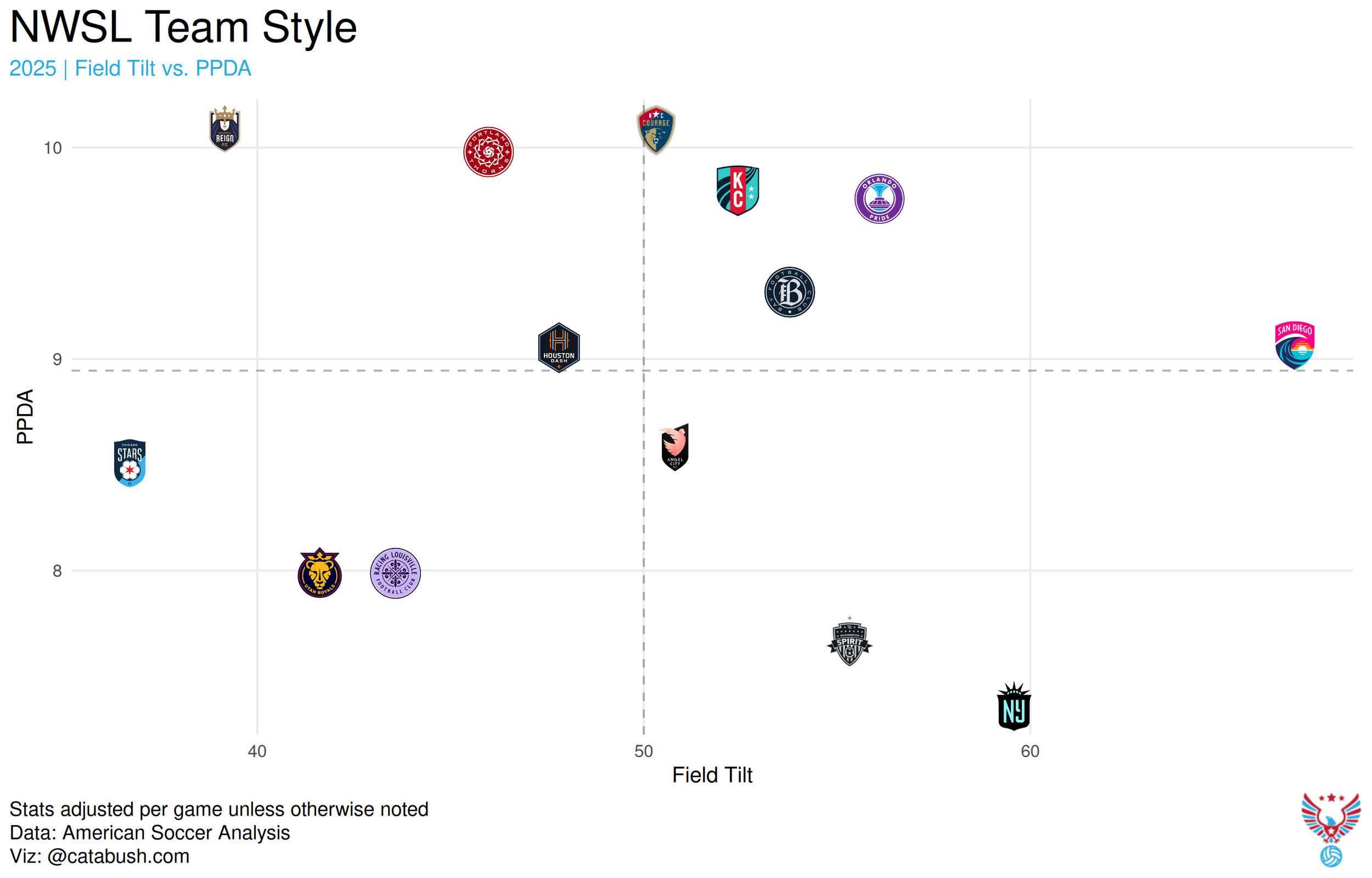
Racing was a good team in a somewhat unique way, too. Louisville pressed often - and effectively - but didn’t dominate the field tilt battle like so many of the other good teams in the league. So If Jürgen Klopp’s teams played Heavy Metal Football, can we say Yanez’s teams play Disco Ball?
Helping to make up for having the ball in the final third less often, the team capitalized on set pieces. More than 30% of Racing’s shots came from set pieces and the team led NWSL with a +3.05 xGD in set piece and corner situations according to ASA data. A quarter of the team’s season xG came from corners and set piece situations. Having aerial threats like Taylor Flint and a winger like Emma Sears certainly helps in those situations. Coach of the Year Bev Yanez set her team up to play to its strengths and the future is looking bright in Bourbon Country.
Direct
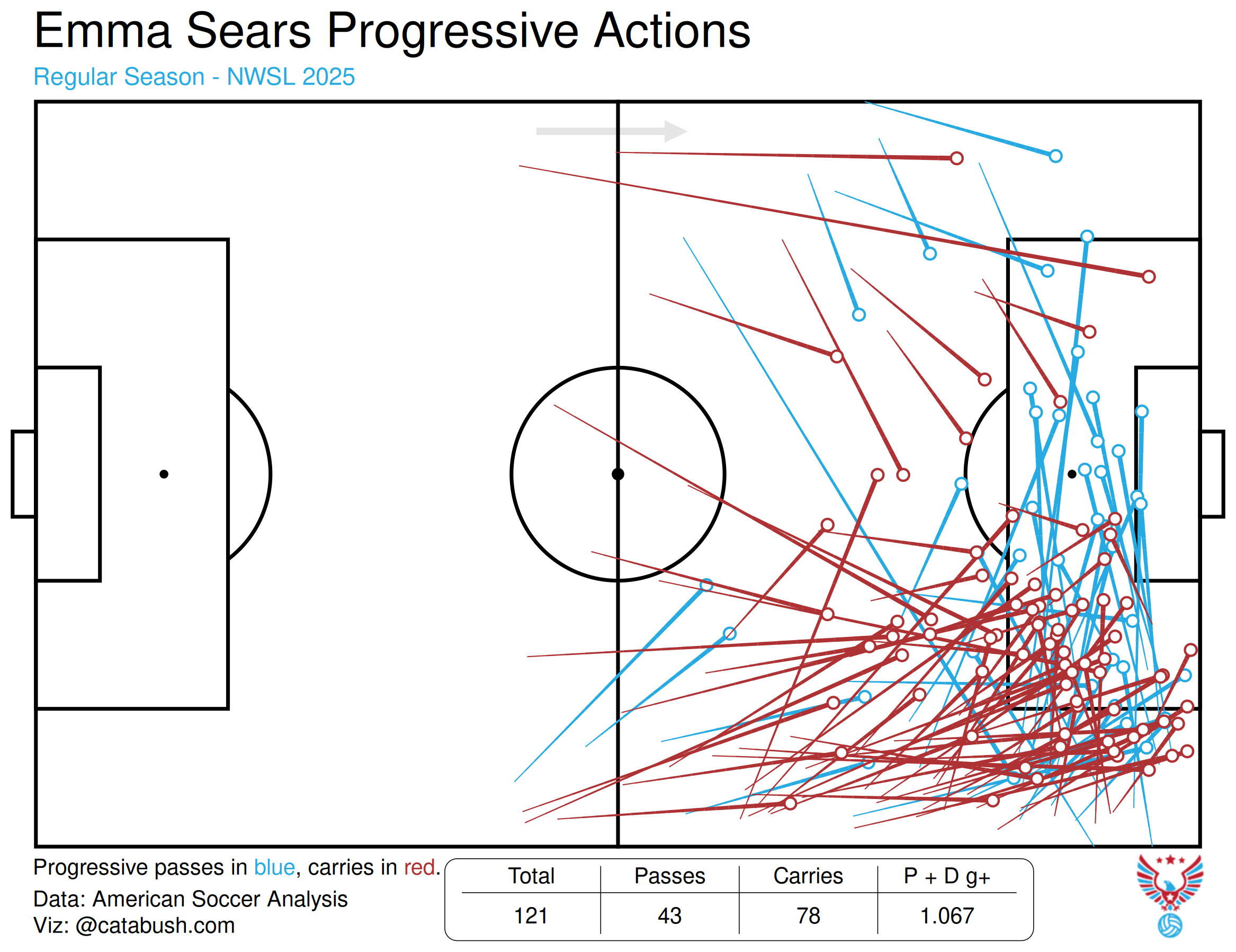
A hallmark of Yanez’s style in 2025 was very direct soccer. The team finished 2025 with the highest average direct possession speed and the lowest number of passes per possession. Racing could set up to play like it did in large part because of Emma Sears. With the ball at her feet and open space in front, she’s one of the most dynamic players in the league, consistently moving it into dangerous positions on the field on the dribble.
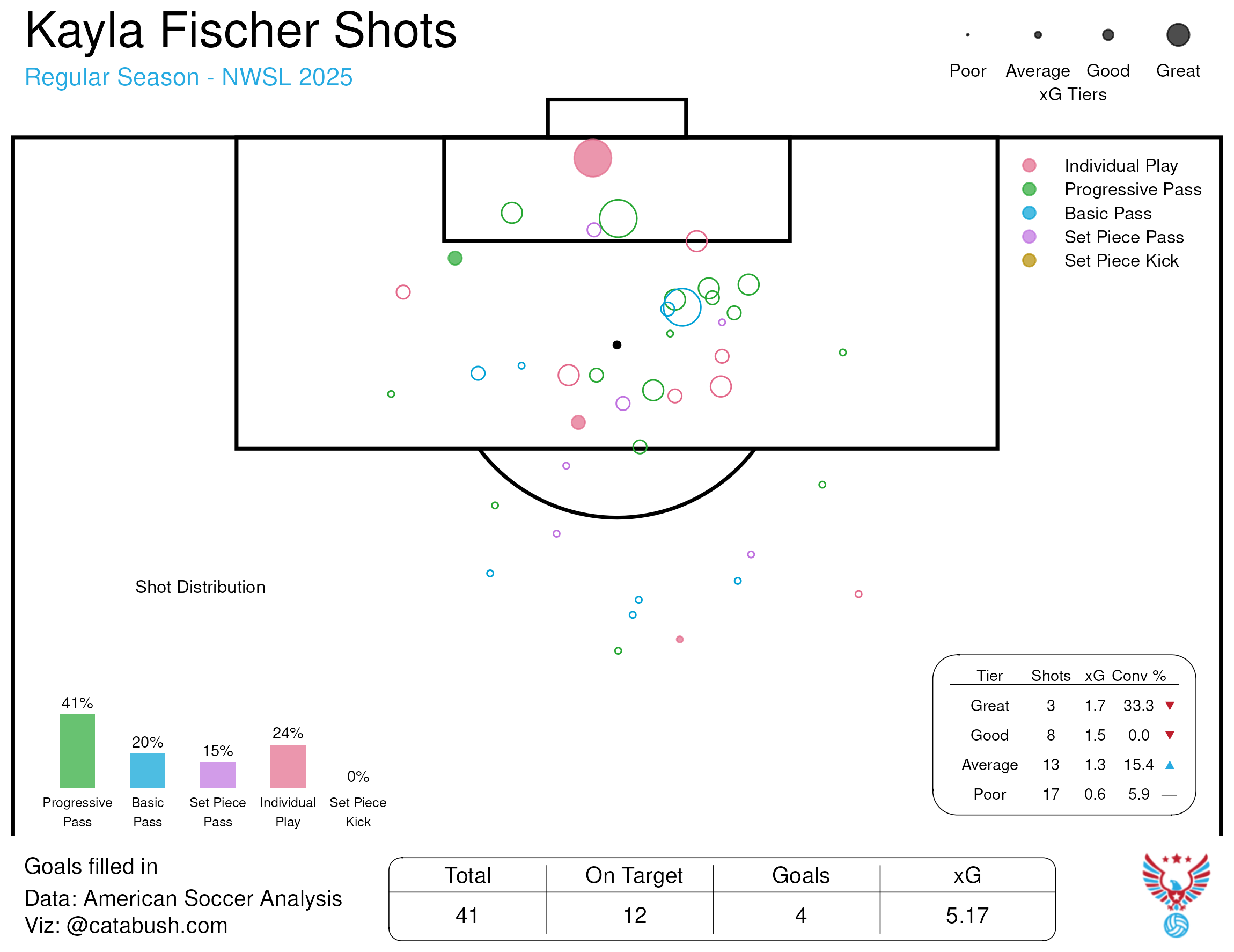
Getting more consistent striker play would provide an added dimension for Racing in 2026. Bethany Bos didn’t provide the consistent attacking threat from a central striker that Louisville would’ve hoped for when the team traded for her in 2024. However, Kayla Fischer flashed enough in 2025 to provide some optimism about her striking ability in 2026. Though she played just under 1,400 minutes, she consistently got into some promising positions. If, and it’s a big if, she stays on the field, Fischer could provide attacking stability in the attacking penalty area.
Another player who could contribute is rookie Maja Lardner, who scored 14 and assisted four more at Georgetown in 2025. She ranked highly on Paul Harvey’s college player board, coming in as the 11th best prospect in the country in 2025, with a grade that suggests she could be a future star in the league..
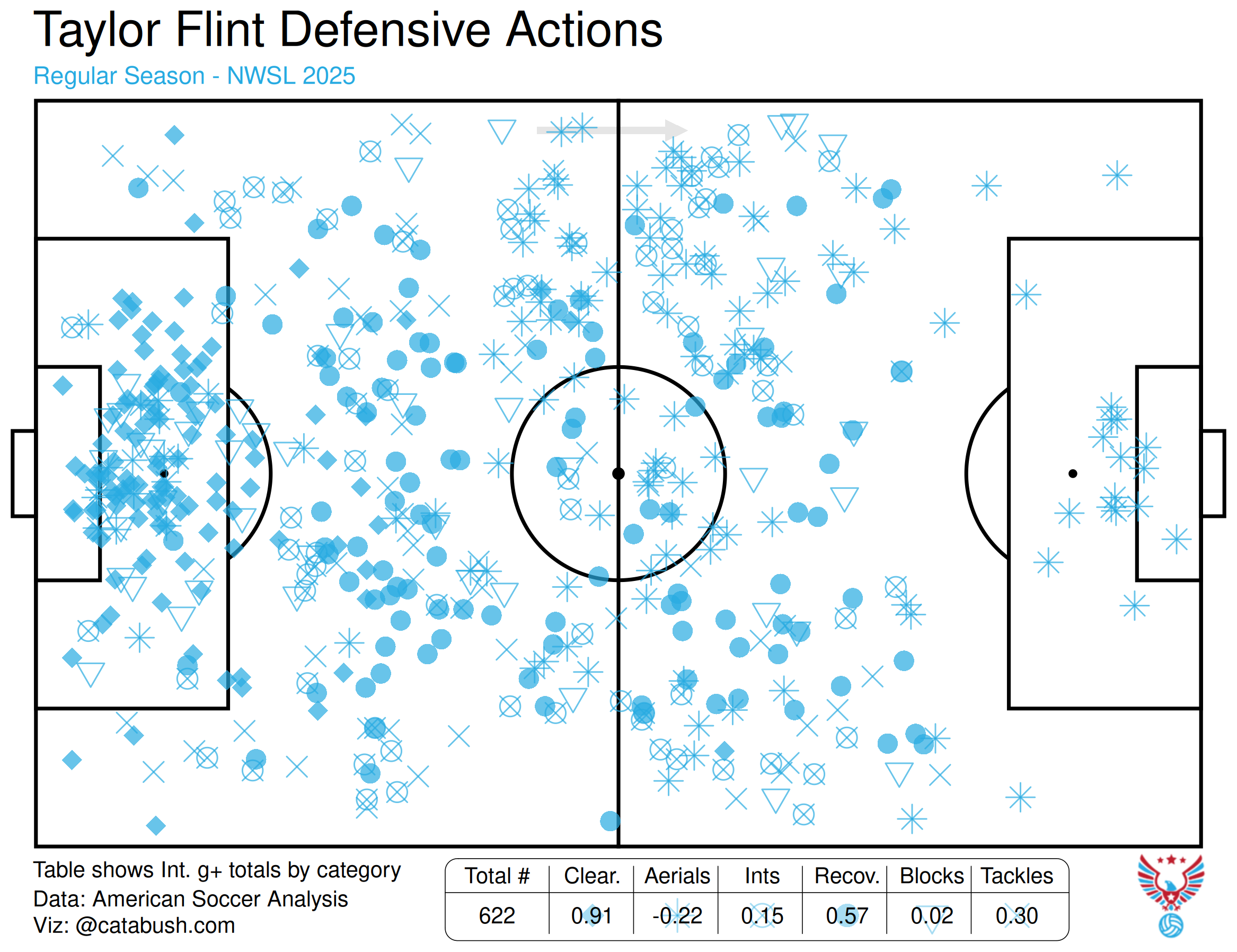
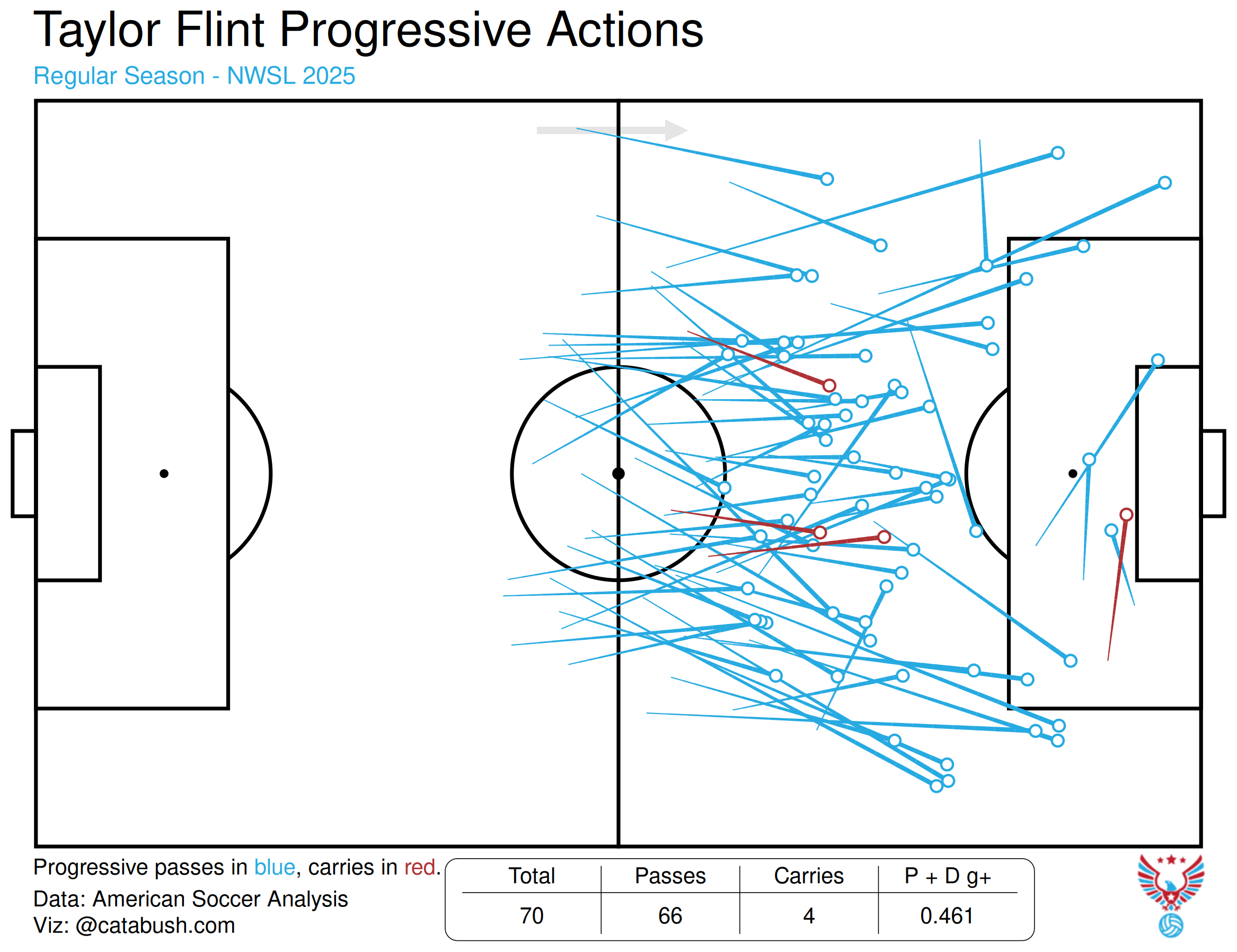
Taylor Flint has been a rock at the base of midfield for Yanez. She offers an aerial outlet in midfield as well as on attacking set pieces and moves the ball up the field to Racing’s attacking players. Defensively, she’s a huge part of Louisville’s recovery differential dominance and general ball winning plans.
So, for good reason, Racing is (mostly) running it back. The only players on the field for more than 1,000 minutes in 2025 who won’t be back are Ary Borges and Janine Sonis, who departed for Angel City and Denver Summit respectively.
Macey Hodge, for whom Louisville traded a combination of assets to Angel City in February 2026, seemingly replacing Borges in midfield. Following the trade, Hodge signed a new deal running through at least the 2027 season. Though Hodge’s 2025 numbers aren’t convincing (-0.08 Net G+/96 in 940 minutes), she seems destined to play a big role in the middle of the field. .
Savannah DeMelo’s 2026 status is unknown at this point, too. She reported to training camp per the team’s official website. At her best, she’s a piece that could push Racing’s ceiling higher, providing another attacking piece in midfield. However, following her health situation towards the end of last season, there’s just not enough information to factor her into a season preview.
Midseason arrival Makenna Morris, listed as a midfielder on the team’s preseason roster, will provide another depth piece in midfield or at fullback. Midfielders Marisa DiGrande and Katie O’Kane will also likely earn minutes alongside Flint and Hodge in midfield.
Another One
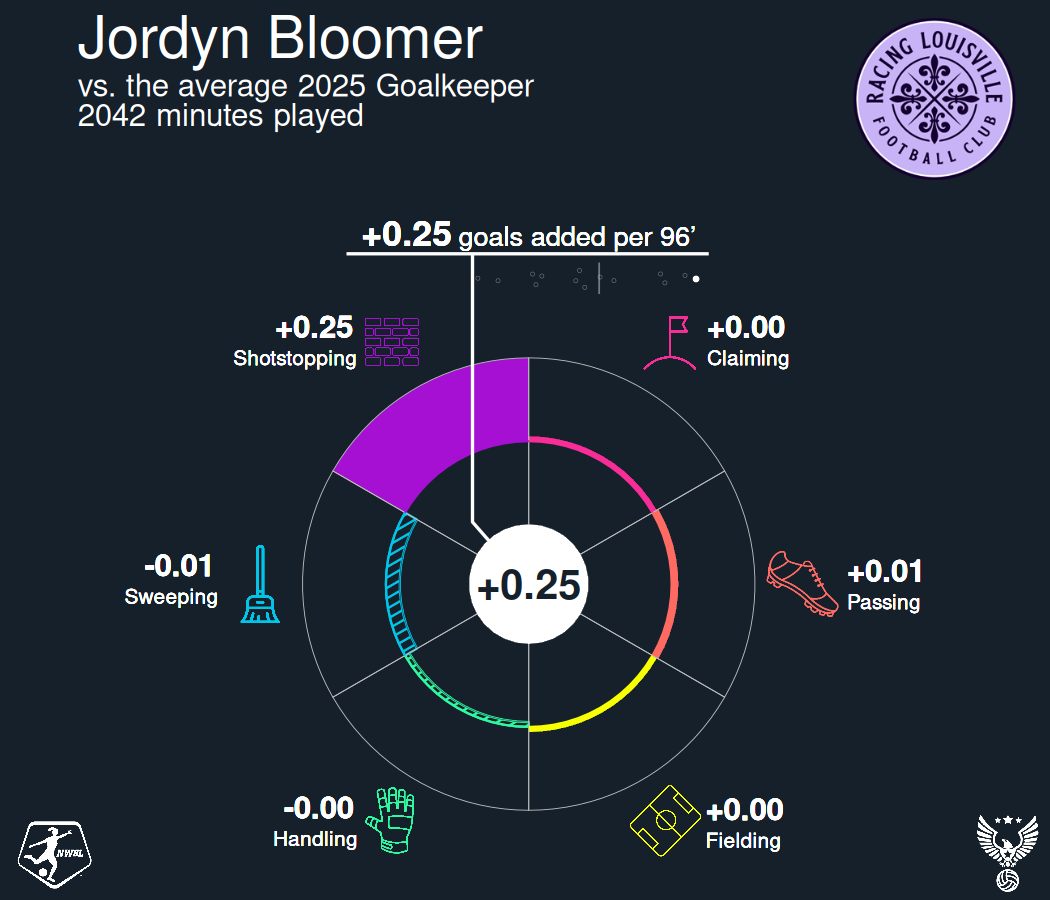
However Racing scouts its goalkeepers should be studied because, pardon me if you’ve read this on American Soccer Analysis before, but, Louisville has an elite shot stopper in goal.
Jordyn Bloomer took over in goal from Katie Lund Atkinson in May 2025 and never looked back. In her 20 games, Bloomer’s -0.23 goals minus expected goals per 96 minutes tied with Seattle’s Claudia Dickey for best in the league among starters.
Louisville’s pressing can lead to vulnerabilities in transition but having a goalkeeper who can bail a team out raises the defensive floor. Racing returns most of its key defensive contributors in Arin Wright, Courtney Peterson, Ellie Jean, and Lauren Milliet. Rookie Macy Blackburn should figure into the full back discussion, too.
Project
Louisville enters 2026 in the cluster of “pretty good” teams according to ASA’s projection model. There are certainly questions in midfield but Flint’s presence sets a pretty high baseline of performance. Maybe Sears takes another step forward (can she play a little bit more on the left and generate some more shots by cutting inside?) or Fischer or another striker contributes more goal scoring. It’s tough to see Racing becoming a much better defensive team but so long as it continues to win the ball high up the field often enough, is deadly on set pieces, and Bloomer continues to be who she was in 2025, marginal improvements should be enough to lead to the playoffs for a second straight season.
I can't sleep cause what if I dream
In our 2025 season preview, I sort of wondered how this team has a good structure and makes things work in a competitive way. Where do the goals come from? Does a young backline and a midfield devoid of ball winning work?
It turns out the answer to the first question was: not a lot of places, and by scamming xG, and the answer to the second question was: a resounding yes.
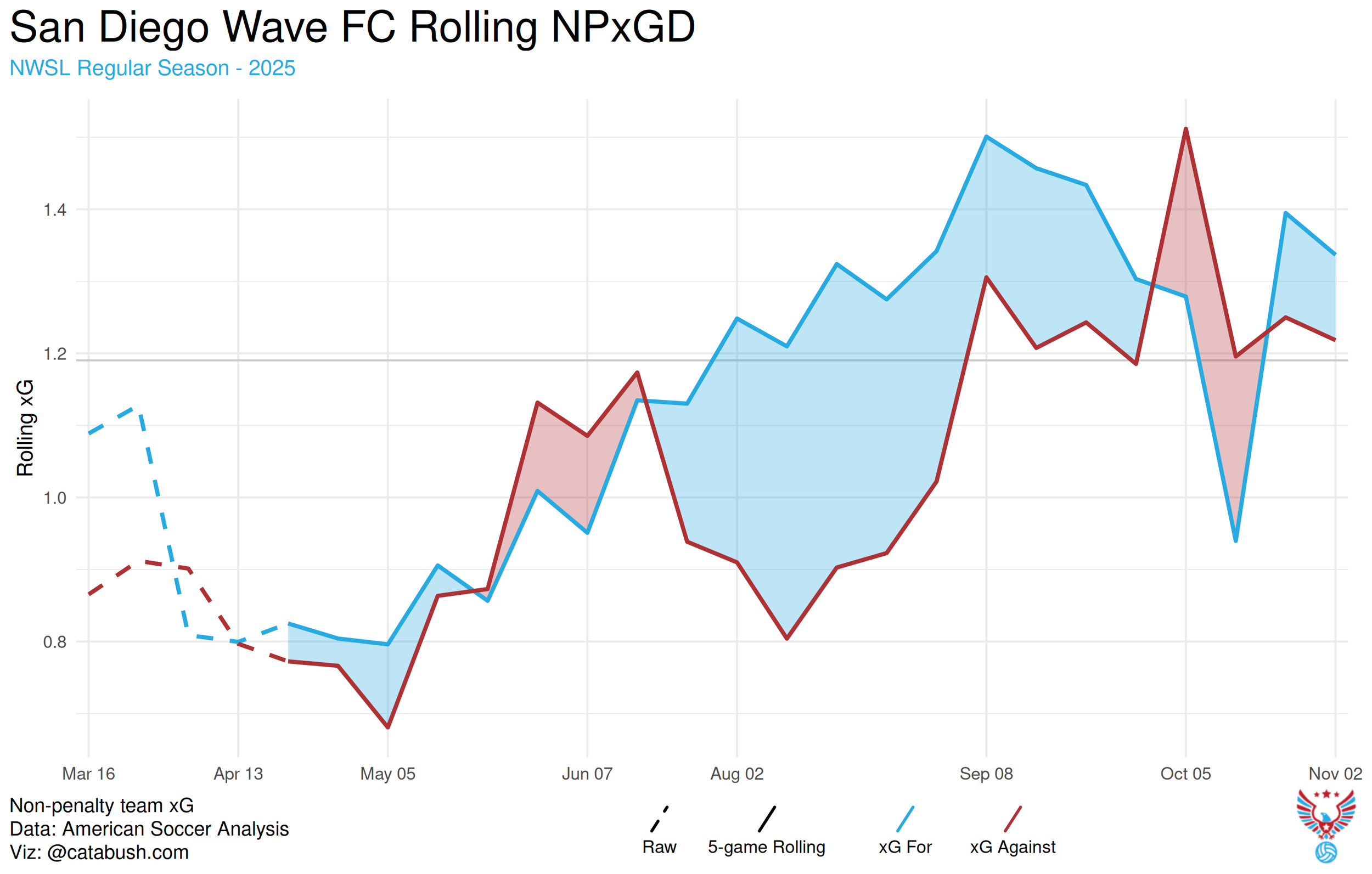
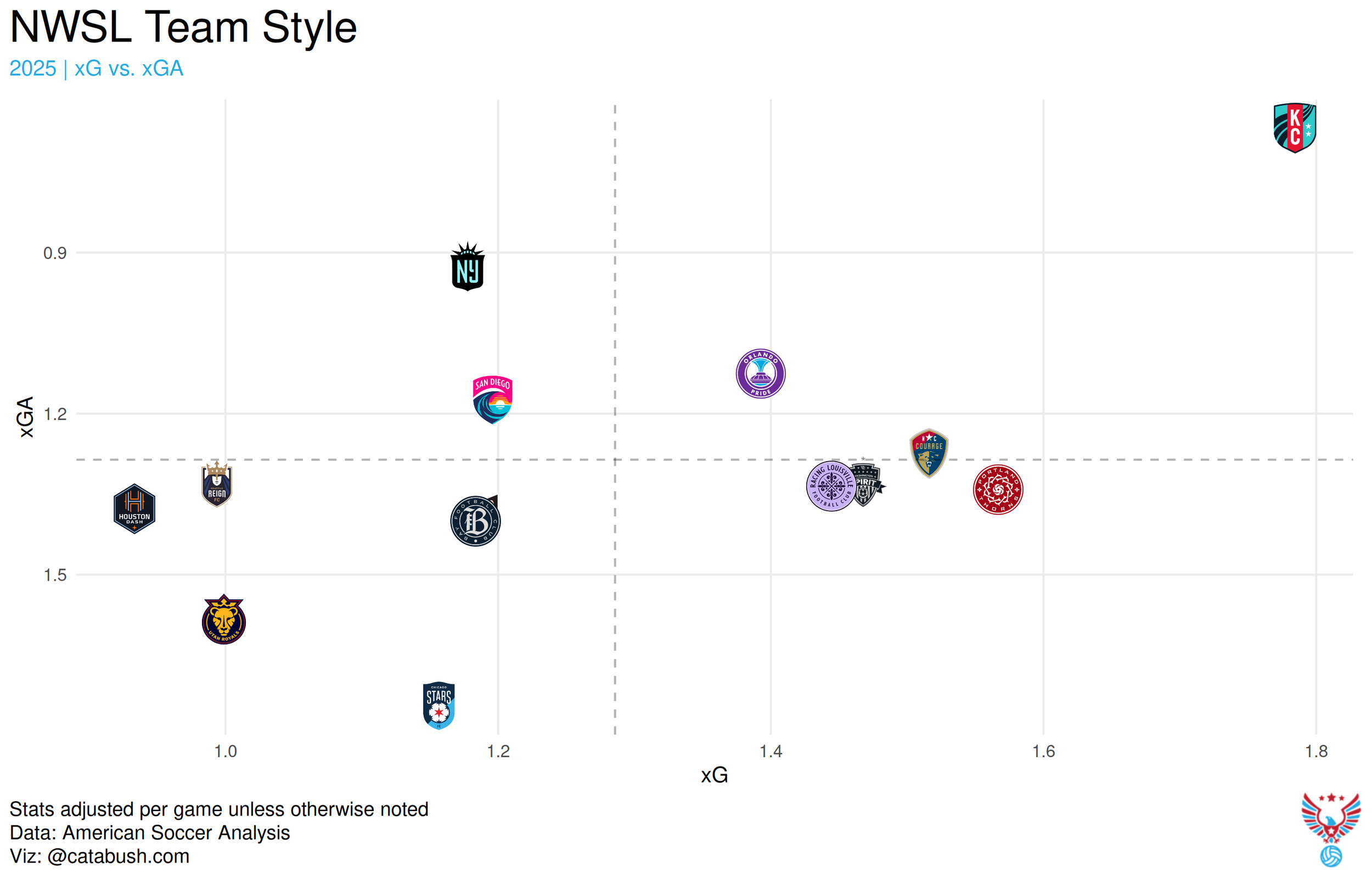
Jonas Eidevall’s Wave ran a flat xGD across the length of the 2025 season, mostly by virtue of being the fourth best defense in the league, while driving a league average attack that finished very hot. ASA’s current pre-season prediction model has them pegged for 8th and 40 points, but Wave fans and their organization will be betting on internal improvement and some big attacking gets will drive them even higher in 2026.
Structure, Structure, Structure
Everything with the Wave comes down to structure defensively. Well, that and hitting on one of the league’s best centerback pairings, who are 18 and 25. Trinity Armstrong is the real deal folks, and Kennedy Wesley ain’t no slouch either. Centerback stat evaluation is hard, defenders on bad teams can accrue loads of interrupting g+ by clearing crosses and constantly tackling players in the box. If we look at net goals added to remove those effects, that is all the regular goals added categories plus g- (how much value does a player allow into and through their zones) and g+ boost (how much excess value do players create with the passes you give them), Armstrong is the second best centerback in the league, and Wesley is ninth. That is a roster builder’s dream.
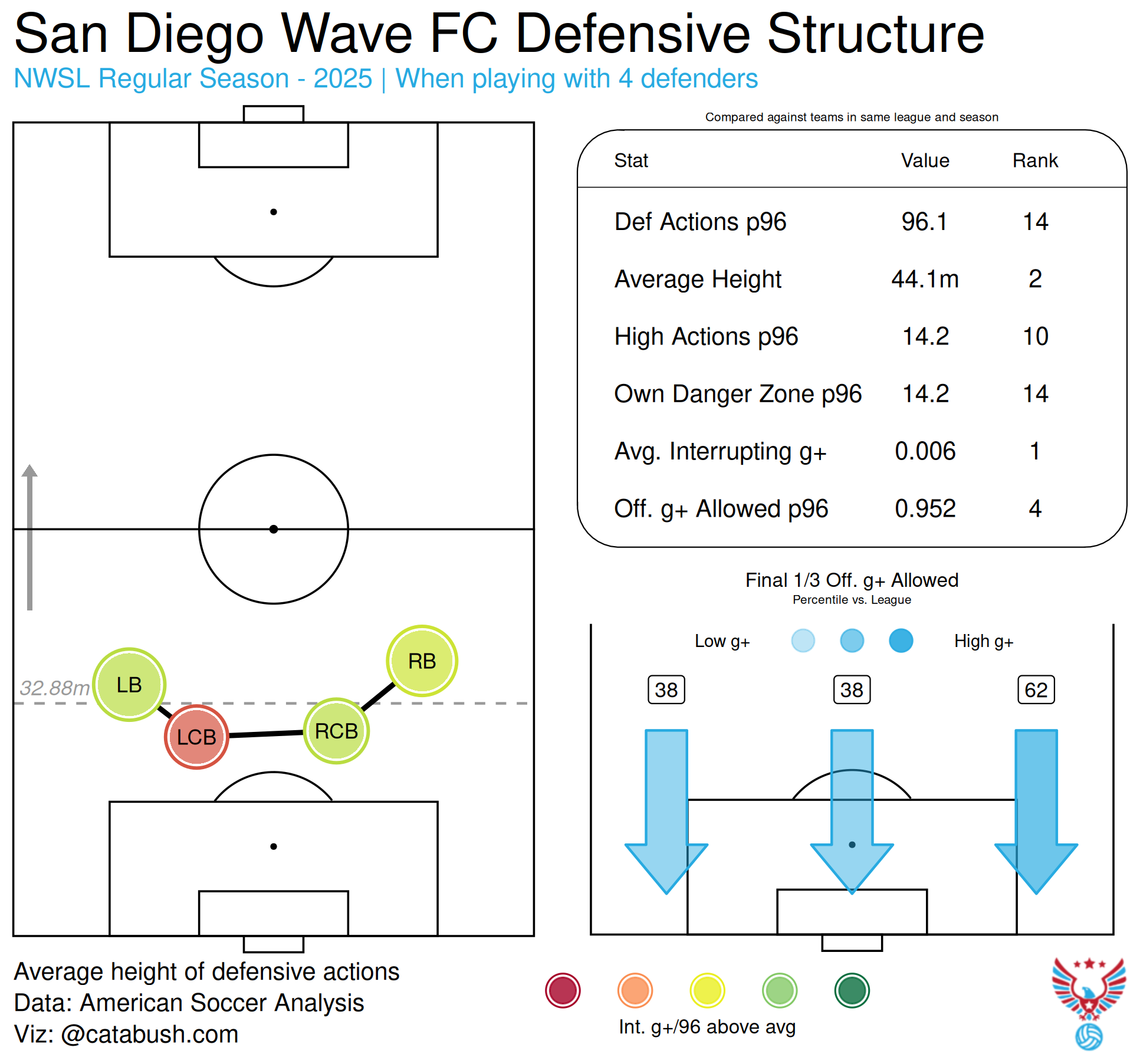
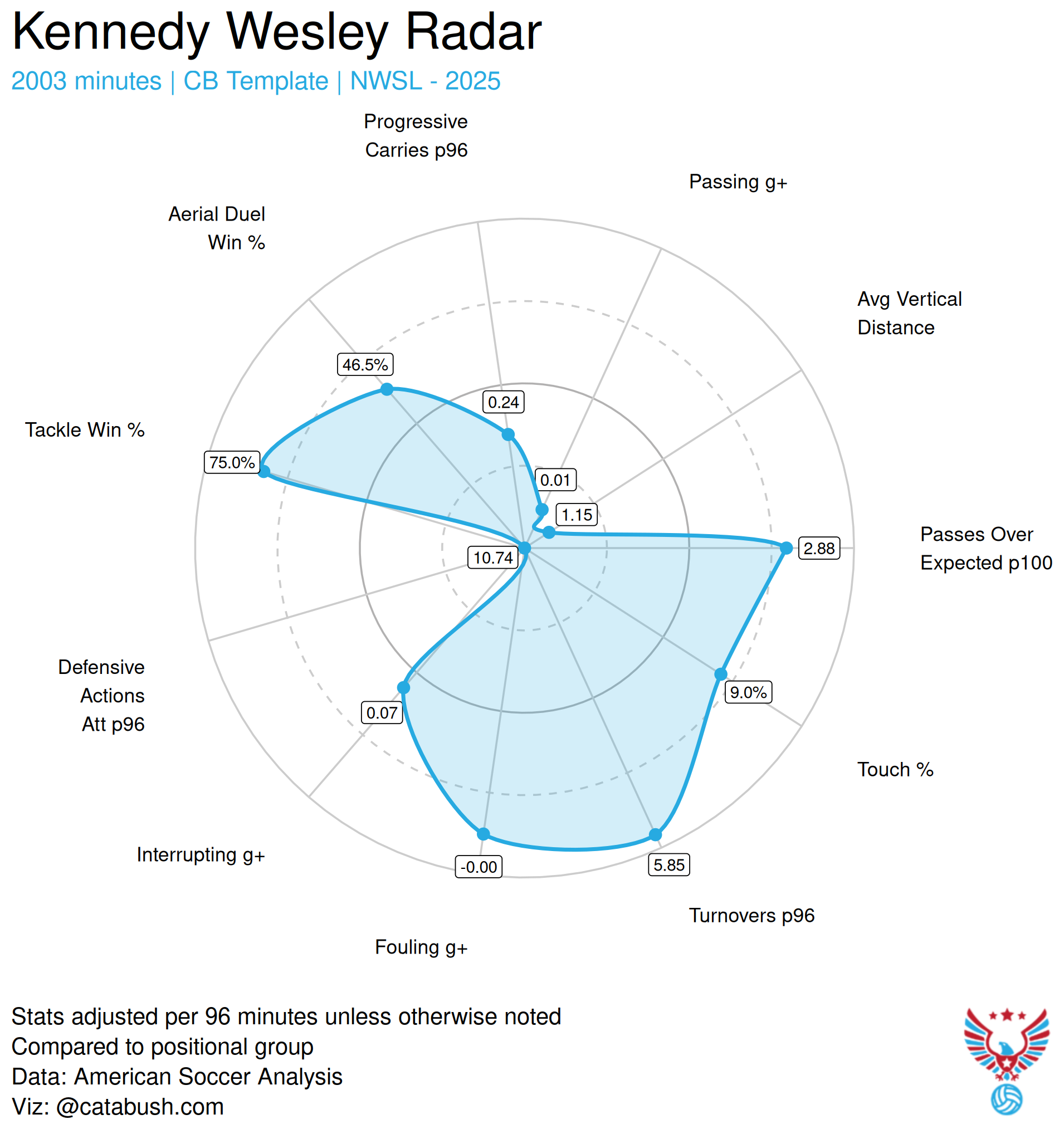

Given the team got really solid minutes out of Hanna Lundkvist as well, it’s very unfortunate she finds herself in Manchester. What a weather downgrade. On the other side, Perle Morroni left something to be desired. These at least appear to be true on the individual level. At the team level, the Wave gave up significantly more g+ through the right channel than the left.
Unfortunately, Armstrong is on the SEI list through preseason after an apparent knee surgery, and the right back slot does not seem particularly well delineated yet. The club re-signed Nya Harrison to a one year deal shortly before the pre-season roster came out. An unfortunate amount of San Diego’s ceiling is going to be decided by how they navigate those two holes. College signee Mimi van Zanten profiles more as left back than left centerback, but might eat some of the Armstrong minutes.
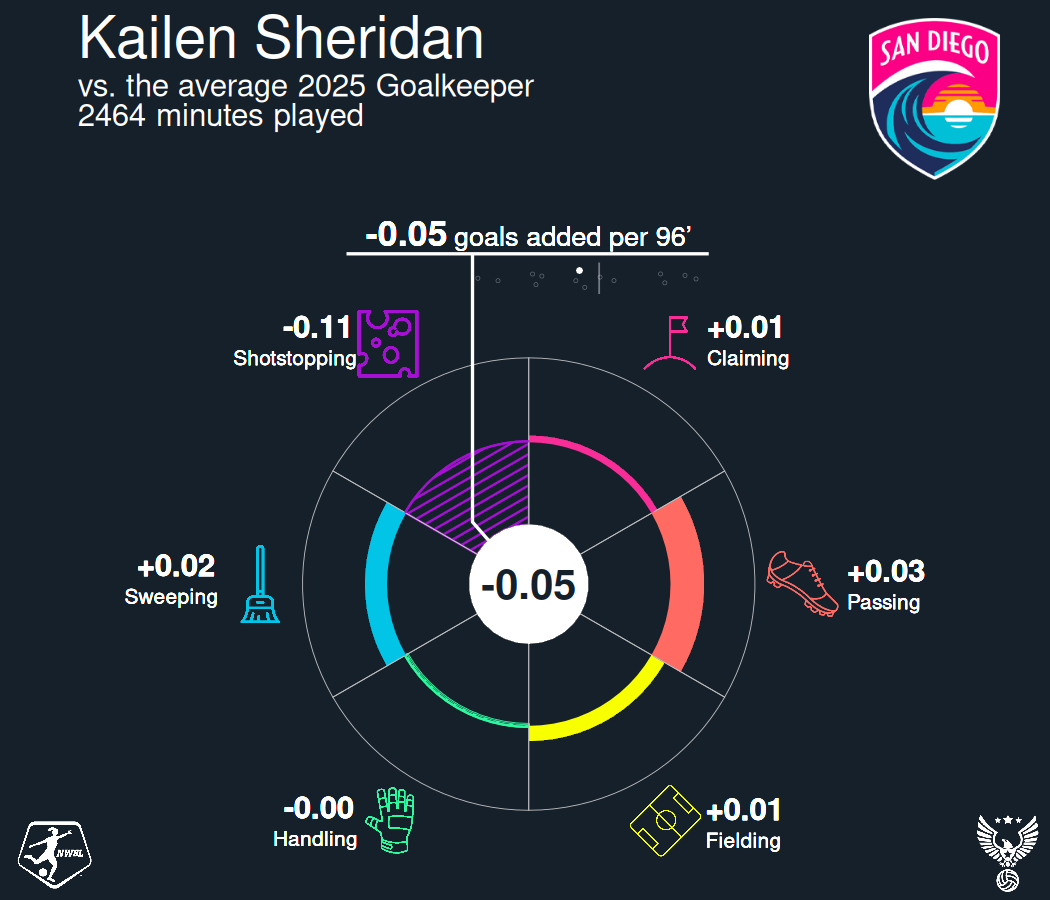
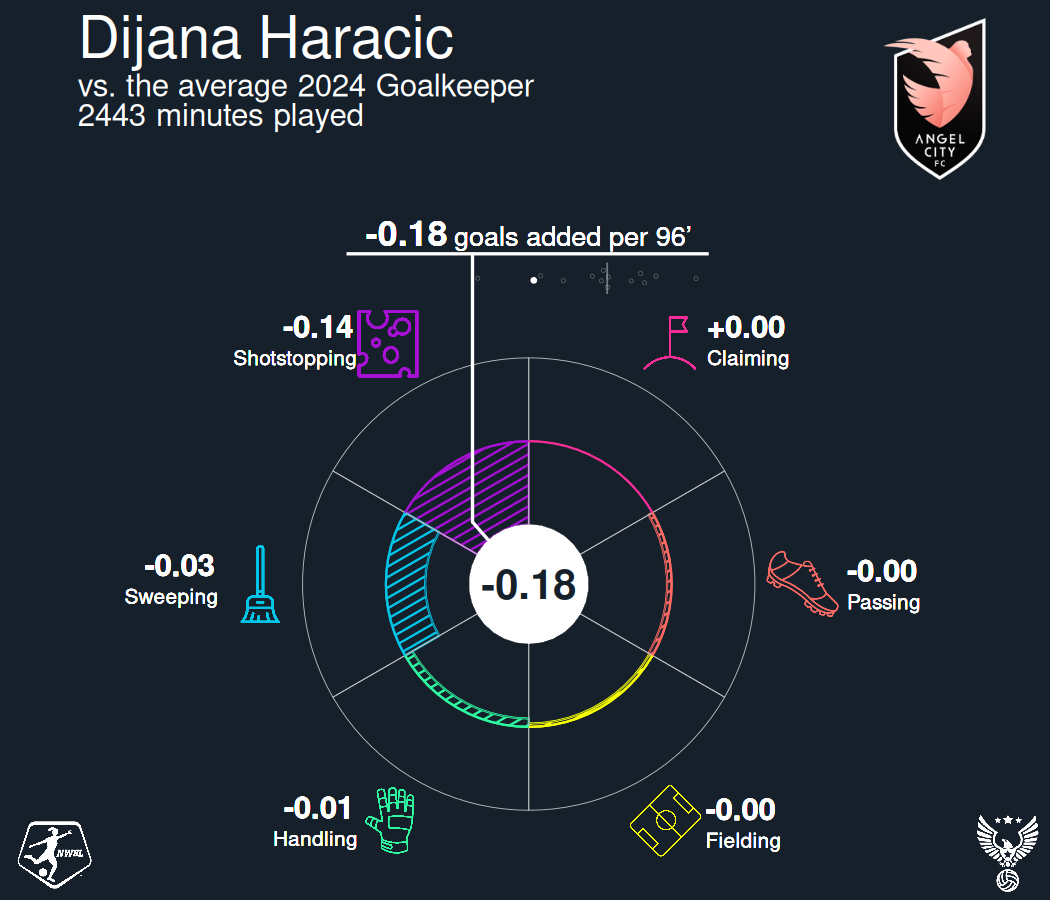
Behind them saw the departure of long time star goalkeeper Kailen Sheridan to North Carolina, with some pretty big question marks filling the hole she leaves. Sheridan has historically been excellent, but her shot stopping numbers have declined precipitously over her last few seasons, with 2025 scoring the lowest of her career. Unfortunately, likely starter DiDi Haracic has been fairly bad for some time, Luisa Agudelo of Colombia is a big ol’ question mark, and Leah Freeman spent last season as Bay’s third choice goalkeeper.
The Engine
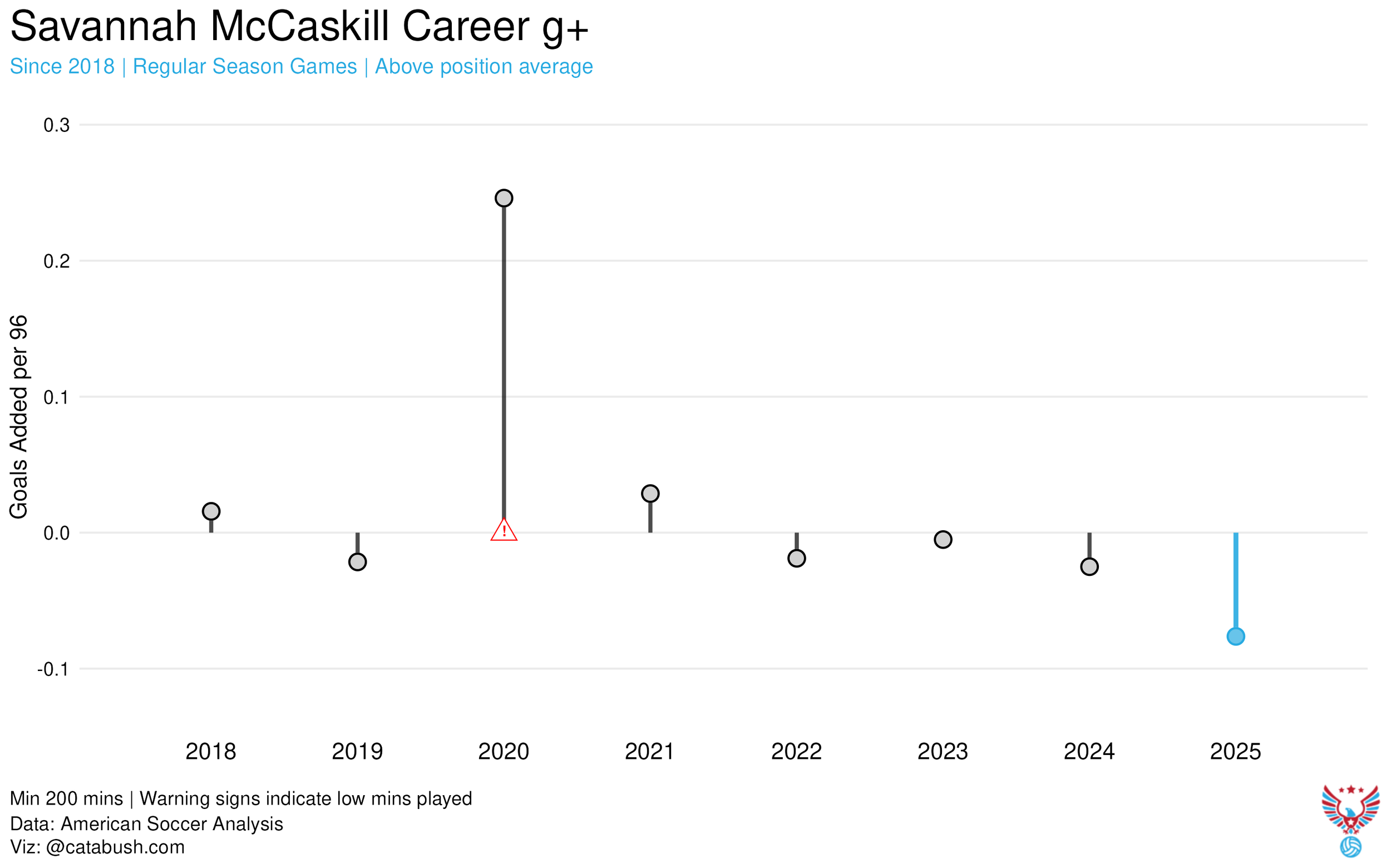
San Diego made it work last year by getting a very good season out of the newly contract extended Kenza Dali, and aside from her, a whole lot of below league average minutes from a cavalcade of Gia Corley, Savannah McCaskill, and Laurina Fazer. Eidevall and co. will be hoping for slightly more from that group, particularly with Fazer and Corley having a lot of room for growth at 22 and 23 respectively. New additions Kiki Pickett and Lia Godfrey aren’t huge needle movers here, but more bodies to throw on the ball recovery and progression wheel. Savannah McCaskill departs, soon to be 30, after the worst season of her career by g+.
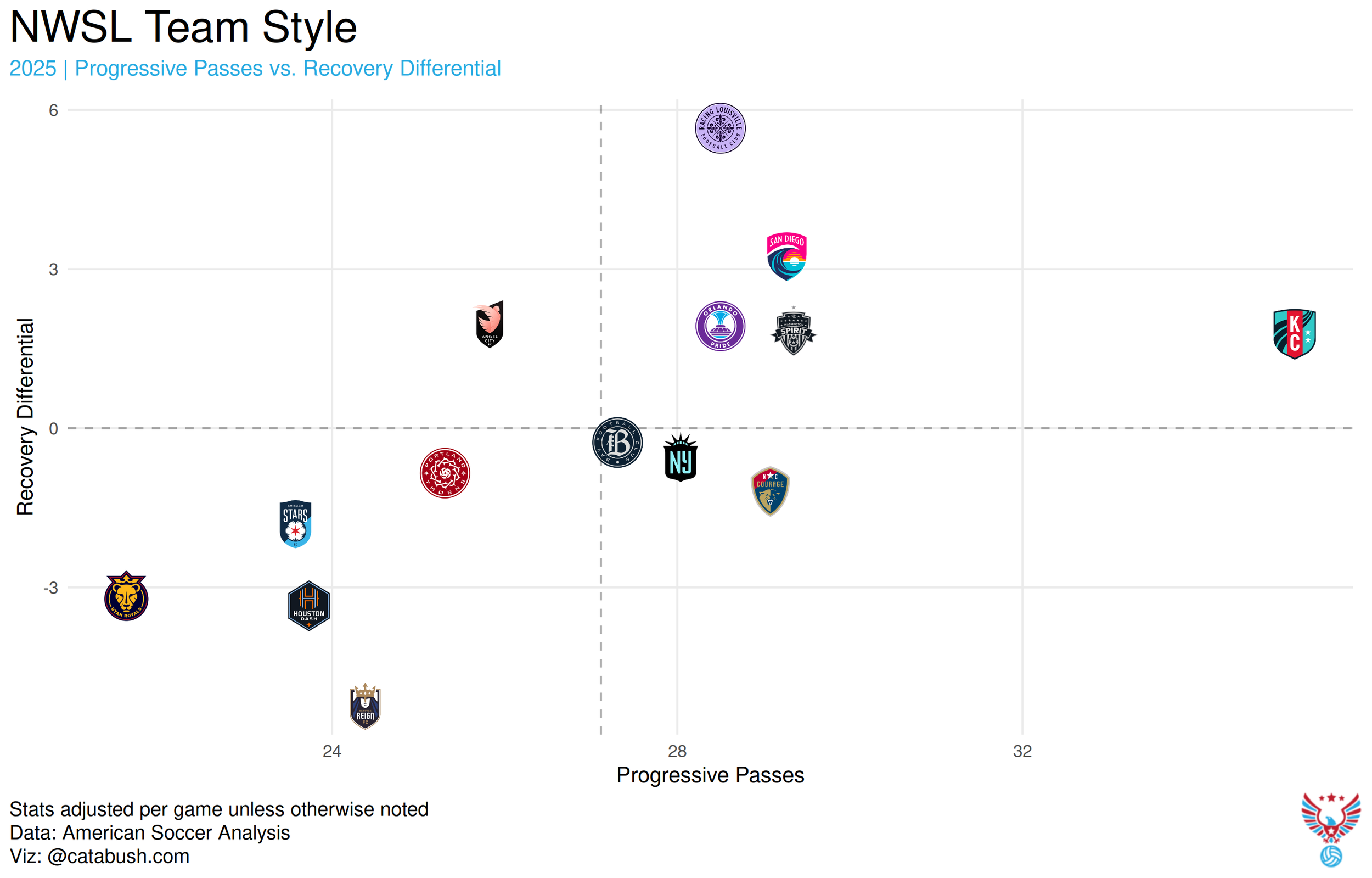
San Diego got most of their juice last season by just doing things the right way. Players in the right spots to receive forward passes, players in good spots to receive from those players, good spacing, teams stretched horizontally and vertically. In a league as transitional and sometimes unstructured in possession as NWSL, knowing where your reads are ahead of you can turn average progressors into good ones, and bad ones into passable ones. This showed up for the Wave at a high level, with the third most progressive passes per game.
The same can be true on the defensive side of midfield. Fazer absorbing most of McCaskill’s minutes should skew towards more ball winning for a team who ran the second highest recovery differential in the league. Getting free possessions is always valuable.
The Flash
The attack is where things mostly fell apart for the Wave in 2025, at least as a high level contender. Things ticked up towards the back half of the season, and they certainly ran hot on their xG, but improving the attack is critical for the Wave in 2026. Luckily, their front office agreed. Summer signing Dudinha is the team’s only g+ positive attacker last season that remains with the team, and went bananas with her finishing. She should pick up a lot of the departing Delphine Cascarino’s minutes. Attacker Trinity Byars missed the entire season bar a 20 minute cameo in the playoffs with a season ending injury, and should be a huge boon to the Wave attack.
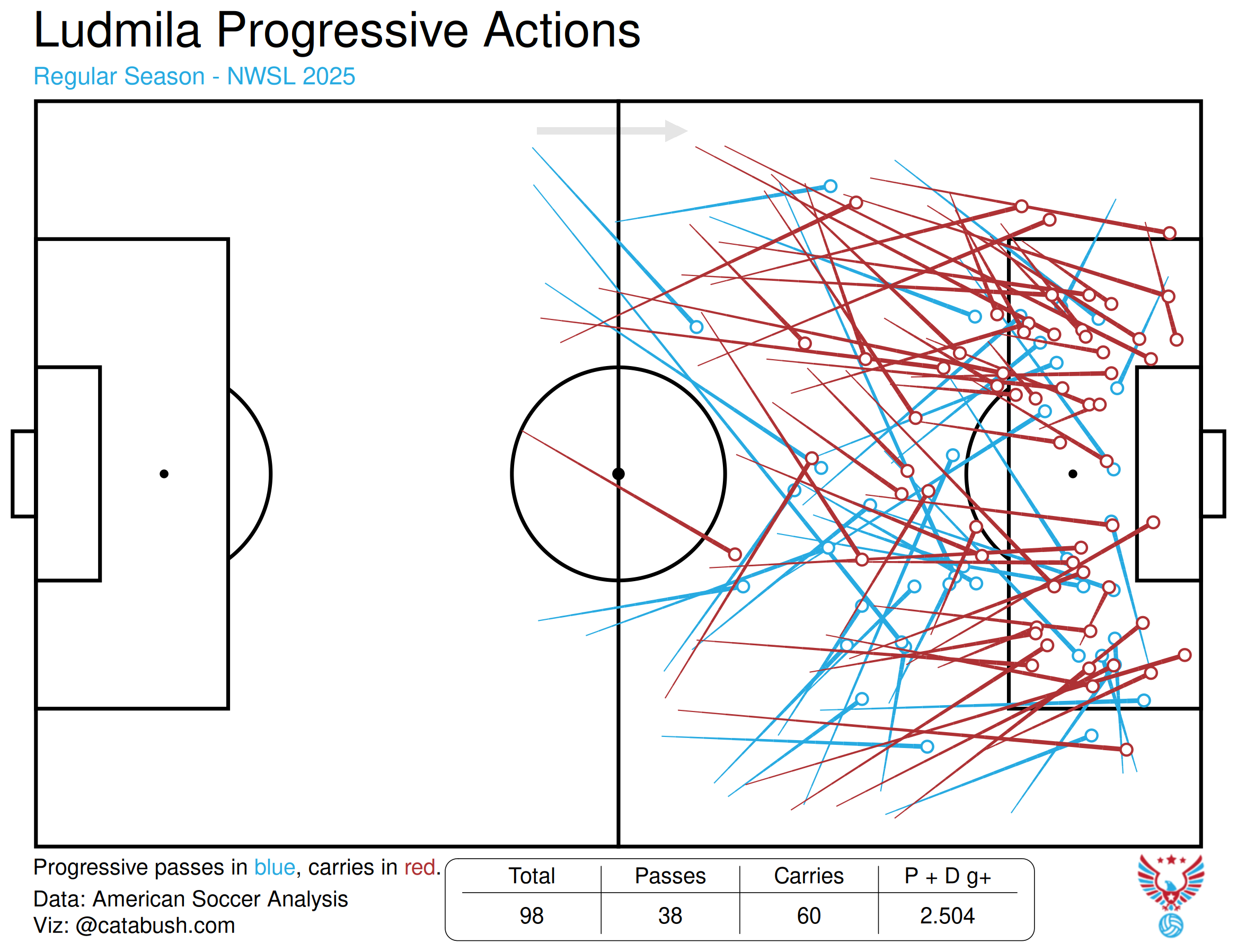
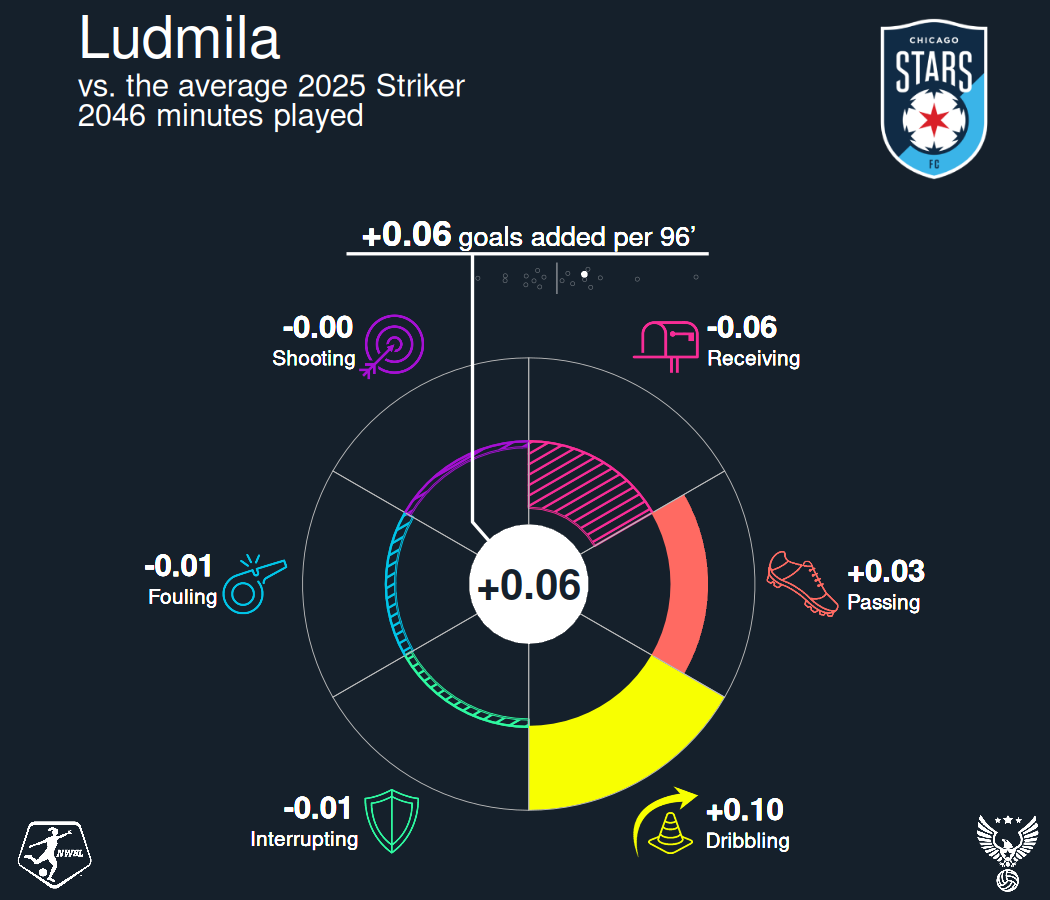
The real fun ones to talk about are new additions Ludmila and Gabi Portilho. Ludmila is the theoretical ideal you want at the end of a sustainable ball progressional machine. She rinses people in 1v1’s, creates shots for herself and others, and amongst all players with greater than 1000 minutes, the only players with more dribbling g+ per 96 than Ludmila are Trinity Rodman and Temwa Chawinga. Look at how many of those progressive carries (in red) are into the box! Her receiving and passing g+ suffered from playing with the much maligned Chicago Stars, but I think this is a home run. She is 31, so you’re not getting three or four years of this, gotta make it count now.
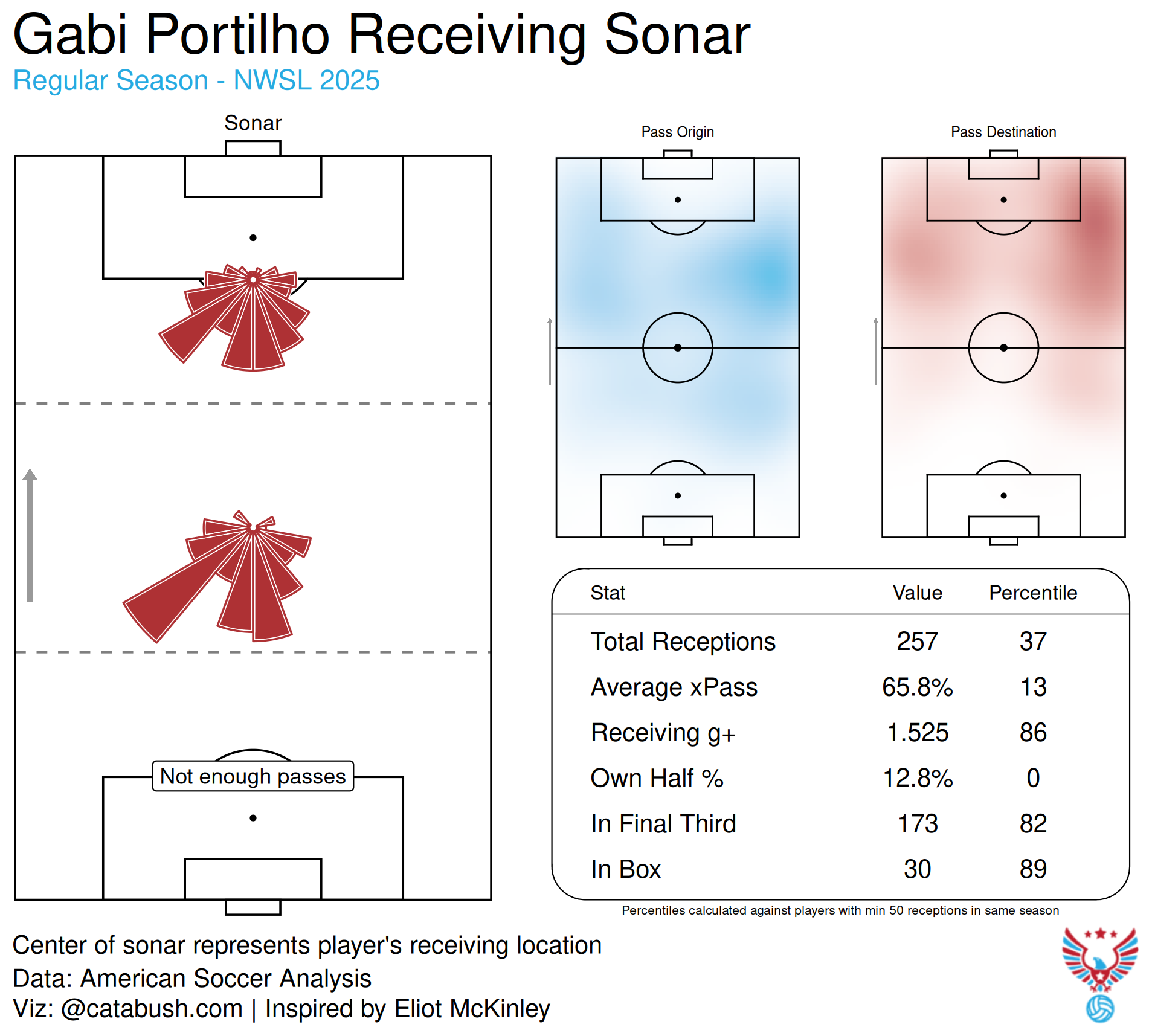
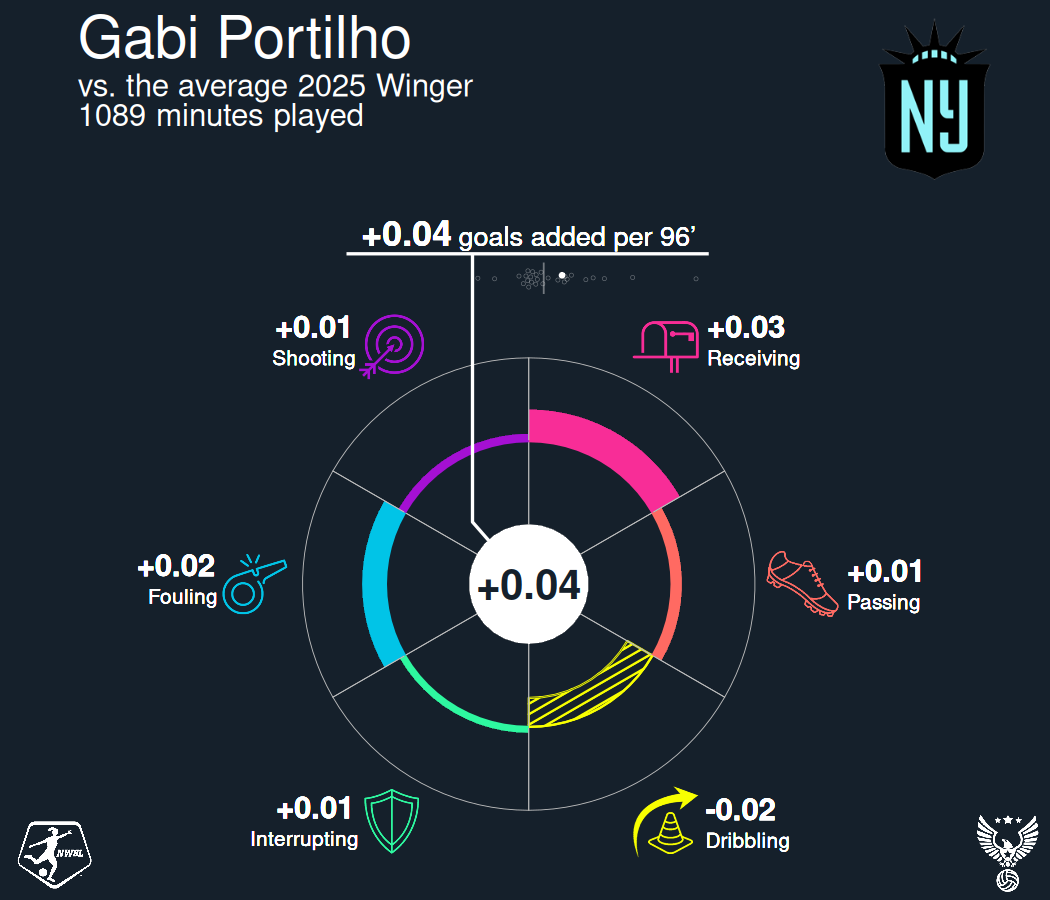
Portilho is a different profile, but still useful. She’s 86th percentile for g+ receiving, but she does not drop deep at all. She runs behind, she runs into the box, and she receives passes. That is tremendously valuable. There’s only one ball, somebody’s gotta move off of it.
So…. 2026?
It’s not a very satisfying answer, and given the push-your-chips-in nature of signing Ludmila, 31, and Portilho, 30, a probably suboptimal one, but I think this is probably not the Wave’s year to be a serious title threat. The defensive question marks with injuries and in goal, plus the lack of a true S tier midfielder just leaves me queasy enough to doubt them. I think ASA’s model pegging them at eighth is pretty good here. Solid playoff team, but not much more than that.