
2026 NWSL Previews: Seattle Reign, Orlando Pride
/Our 2026 NWSL Season Previews have started and today we hit Seattle and Orlando. If you want to support this coverage of the league, you can head to our Patreon. For $5 a month you can get access to a lot of the data visualization tools we use to make these previews.
If you’re more of an audio person, our friends at Expected Own Goals spoke to Kari Anderson from Yahoo about the Reign, and Abigail Segel from The XI and Defector about Orlando, available wherever you get your pods. If you want to support them, you can head to their Patreon.
I don't know what I did wrong, It's not your fault, I just think I was in love
Do we lament the dip the Orlando Pride made in 2025, after a record-setting double campaign the year before? One of the NWSL’s perennial cellar dwellers began to turn their fortunes around in 2023 under the Seb Hines and Haley Carter regime, then nabbed a Shield and an NWSL Championship, only to conclude 2025 appearing strangely mortal. A fourth-place finish and a semifinal berth is nothing to sneeze at, but after their previous heroics, one couldn’t be blamed for viewing last season as a momentum-killer.
And then there was the litany of changes that came on and off the field this past winter. Carter hopped over to the Washington Spirit front office, while linchpins Carson Pickett, Emily Sams, Ally Brazier (née Watt), and Morgan Gautrat bid their farewells. Kylie Nadaner (née Strom) will likely remain absent for most if not all of the season due to parental leave. Many key positions will host new faces once the season kicks off.
Head coach Seb Hines has a new puzzle to solve, especially since new GM Caitlin Carducci only arrived from the Kansas City Current in mid-January, and potential salary cap restrictions have seen owner Mark Wilf keep the spending limited. The question is, can Hines and the players spin some magic to keep their improbable run of success going?
Banda & Ovalle: two great tastes that (should) taste great together
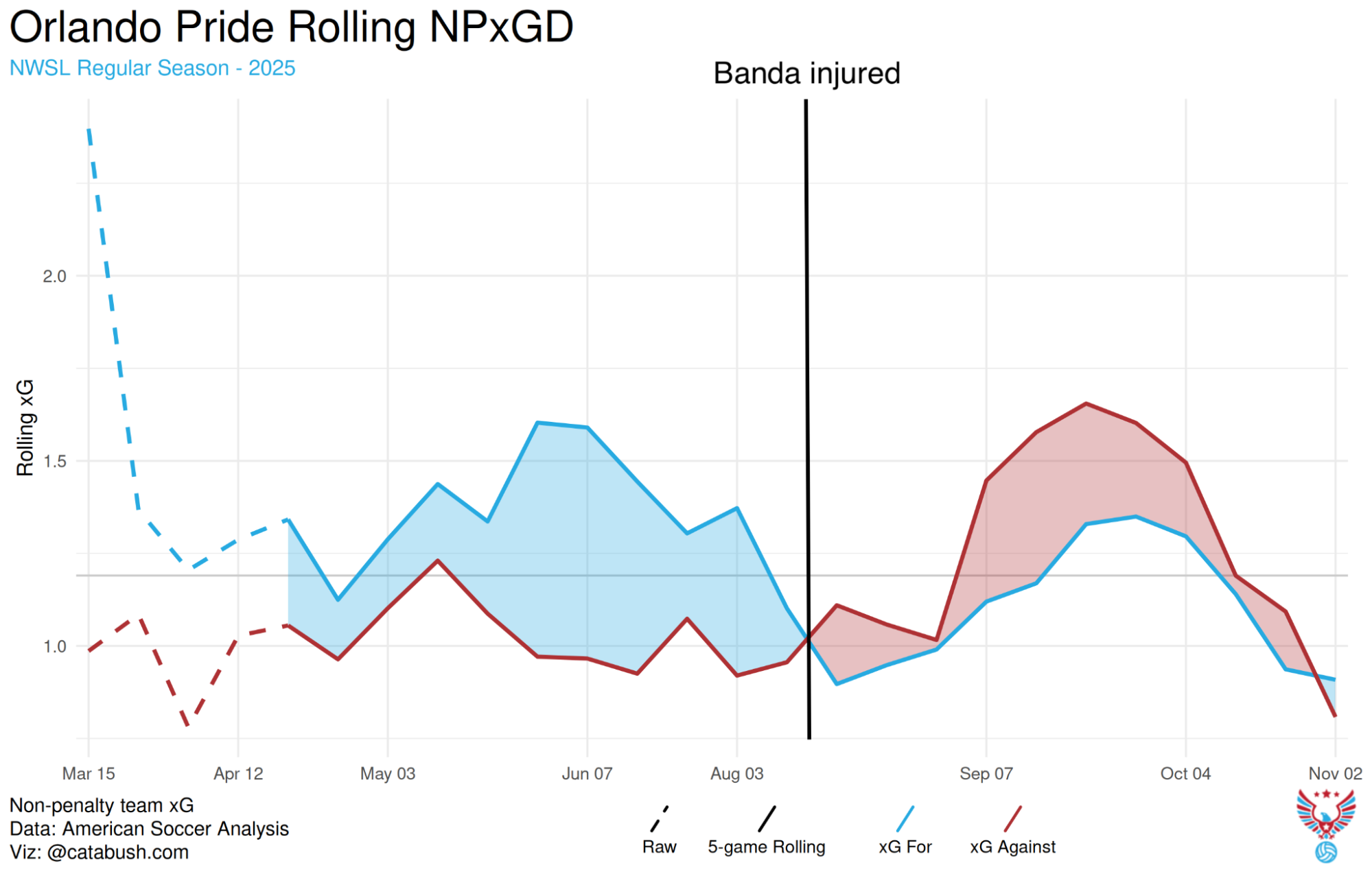
There’s no question that Orlando’s attack was weakened in the absence of Banda over the final 10 games of the regular season, but their offensive fortunes were already turning for the worse a full two months before Banda busted her hip.
That summer downturn didn’t fall on Banda’s shoulders; she continued to produce the same amount of xG in June and August as she had all spring. The difference came to the only other above-average chance taker, Brazier, drying up in the second half of the campaign. Orlando got nothing in chance quality from Julie Doyle or Summer Yates. Adriana left before the season started, and Lizbeth “Jacquie” Ovalle, in her two months with the club, created great chances rather than took them. The same went for Marta. Whereas Orlando had four everyday attackers producing above-average xG rates in their Championship season, only two could claim a similar honor last year.
Nobody would mistake Orlando’s 2024 attack as designed by committee, but while Banda generated a third of the Pride’s non-penalty xG that year, she had generated 42% in 2025 by the time she got injured.
So, will Banda’s burden look more like 2025, or 2024? Ovalle may hold the answer to that. She is a tricky winger who produces some of the biggest highlights in soccer.
But perhaps more importantly, she is a gifted service provider who also has a nose for goal when she has support—sort of like the defender-sucking, space-making type of support that Banda could provide. Defenses learned to manage Orlando’s attack last year when all they had to pay attention to was Banda. Now with Ovalle buzzing around, backlines will be forced to make the best of two bad decisions, and it could cost them.
Hailie Mace, the new face of the backline
Losing Sams, Pickett and Nadaner certainly hurts Orlando’s defensive plans. It doesn’t help that Rafaelle and some combination of Zara Chavoshi and Hannah Anderson will be coming in to replace the central defense pairing.

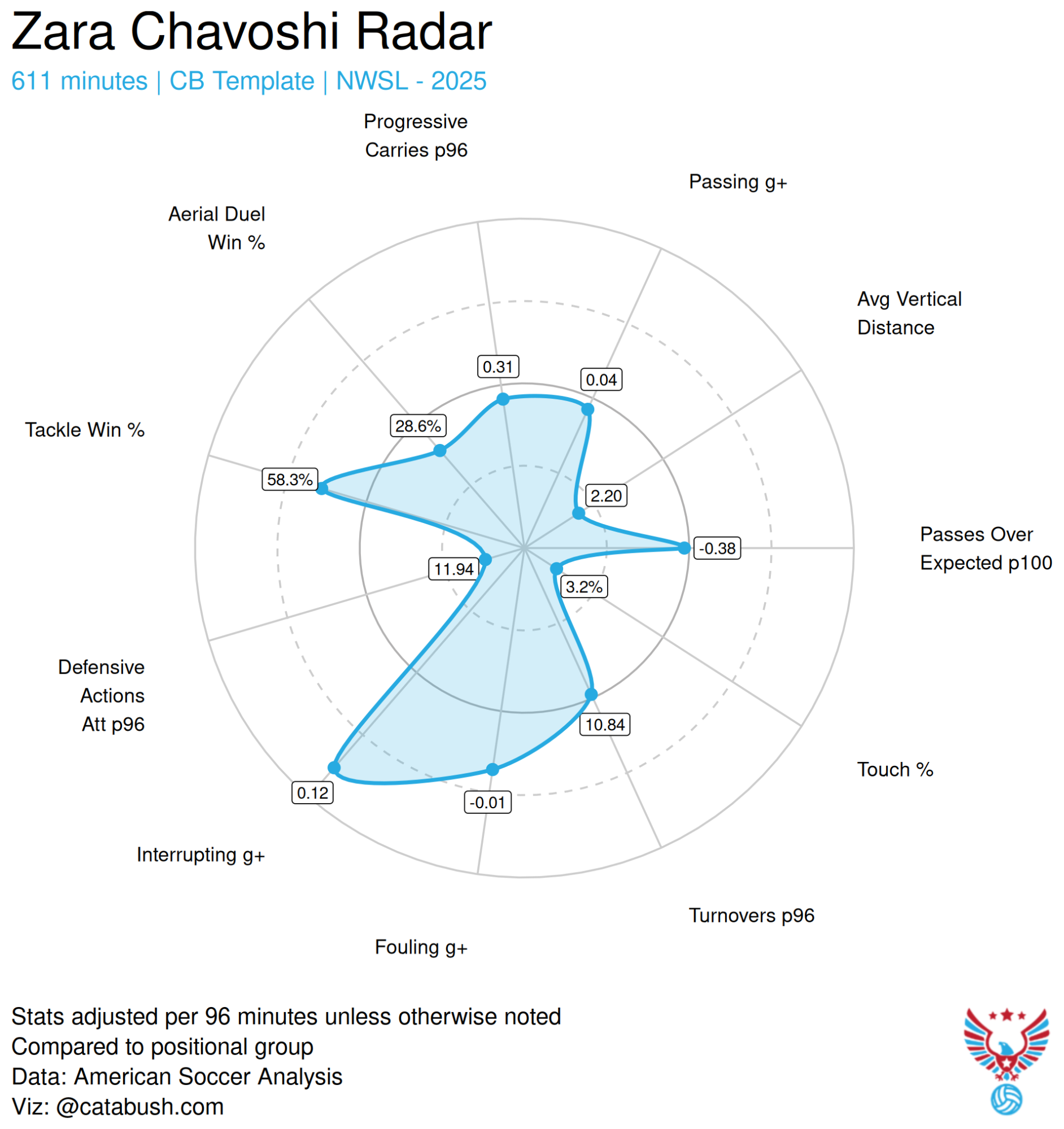


Rafaelle enters her age-35 season having yet to crack 1,000 regular-season minutes in an NWSL campaign. Chavoshi is still young and barely tested. Anderson was arguably the worst center back in the NWSL last year. Was that because of bad Chicago Stars teammates plus a coaching staff in disarray? Possibly. None of these options leave one with a great deal of hope, either. Orlando’s late-season woes weren’t only in the attack: they leaked high-value chances on the other end. They need to fix that issue immediately.
Enter Mace. While she could unquestionably do a job in central defense, she has remained one of the best unheralded veterans in the league thanks to her work out wide.
Mace was reborn as a wide defender in her two years under Vlatko Andonovski in Kansas City, and a defensive tactical maestro like Hines could have a field day with her abilities. Not convinced by Chavoshi or Anderson? Slide Mace in beside Rafaelle. Rafaelle hurt? Mace can spell her. Convinced that Abello would be better suited to move inside (as Hines did with Nadaner in 2023), or pushed back into the midfield? A space gets freed up to put Mace at left back, where she spent the early part of her career. Would you rather she become the third prong in your rest defense, or would you prefer she push up high and stretch the field? Mace can do either. An area sorely lacking in depth this year suddenly becomes much more stable, and versatile, with Mace in the mix.
Succession (from Marta), Season 3
Only one other NWSL attacker has ever made it to 40 years old, and that was a Christine Sinclair who was producing at elite levels in a defined tactical context. Marta joins the 40 club this season, and while we have been proclaiming her imminent demise, she continues to defy the wisdom of mere mortals.


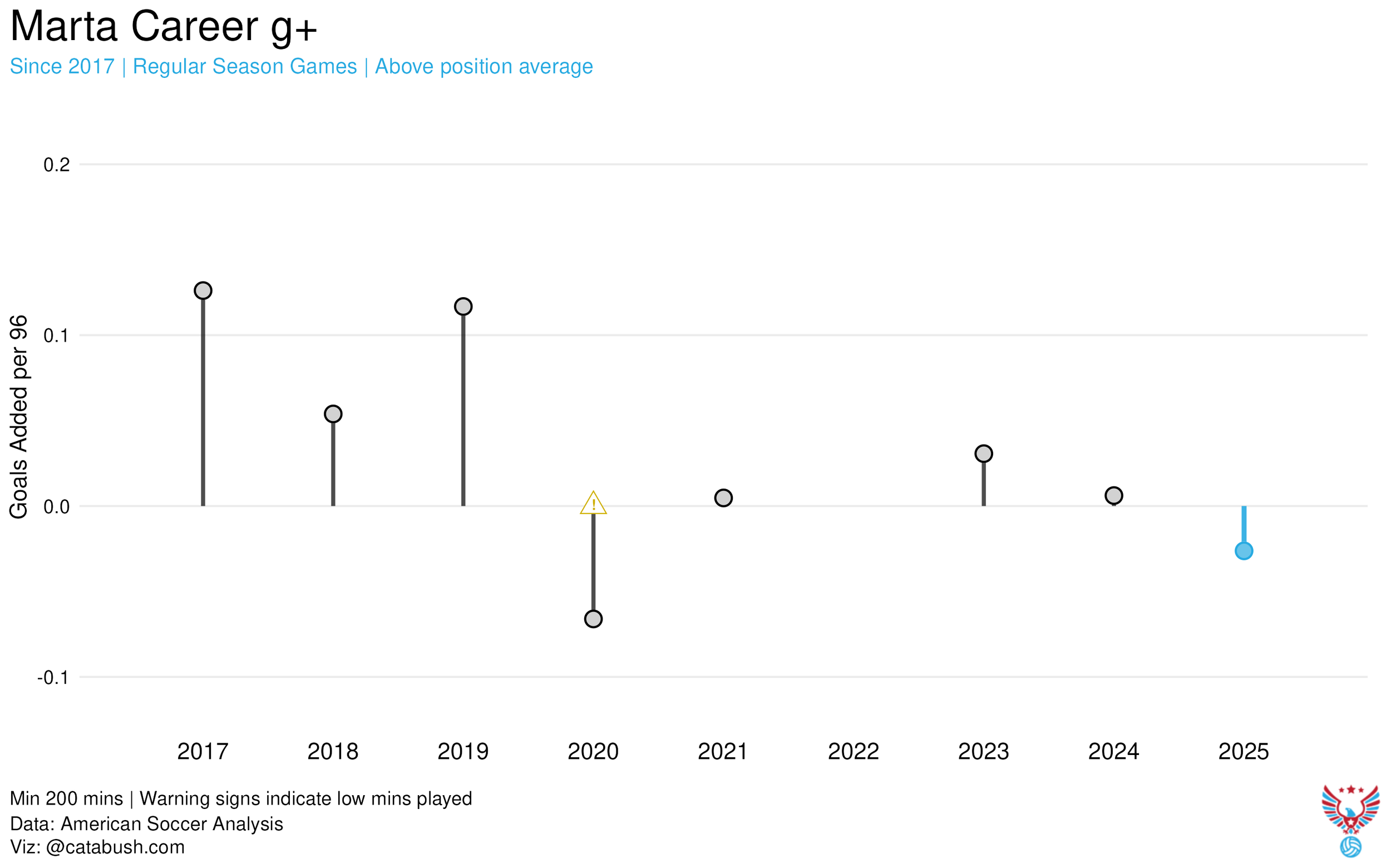
There is no arguing Marta’s magnificent passing profile. What she lacks in overall passing value (despite strong progression data), she makes up for in g+ boost (how much better her teammates do with her passes than they do with others), unlocking great final ball service. Only Olivia Moultrie and Debinha have been her equal among everyday attackers in g+ boost over the last two years. For Marta to have been that good a tight-spaces facilitator while also playing nearly 4,000 regular-season minutes at the ages of 38 and 39 is nothing short of remarkable.
The problem with Marta isn’t that she can no longer be valuable. The problem is that instead of designing an attacking plan to maximize Marta’s passing, she has instead been tasked with being the spare player to add in overloads, with license to roam the pitch as she sees fit.
That role is probably best suited to someone who provides a lot of value as an off ball receiver, not the string pulling maestro she is. Instead, only Riley Tiernan has been a worse receiver relative to her position among everyday attackers over the last two years.
Marta is taking the largest share of touches in the Orlando attack. While her passing has been terrific, the Pride have actively lost opportunities to use more of those passes due to Marta’s tactical “fluidity”, to put it nicely.
What is to be done about it? Grace Chanda, Marta’s ostensible replacement, never fully recovered from her injury struggles, and left the club this winter having barely taken the field. Summer Yates could be a temporary stopgap, but her injury history, preference for wide positions, and a dip in production suggests that she isn’t a long-term solution. Ally Lemos took on a starter’s role last year, but didn’t set the world on fire.
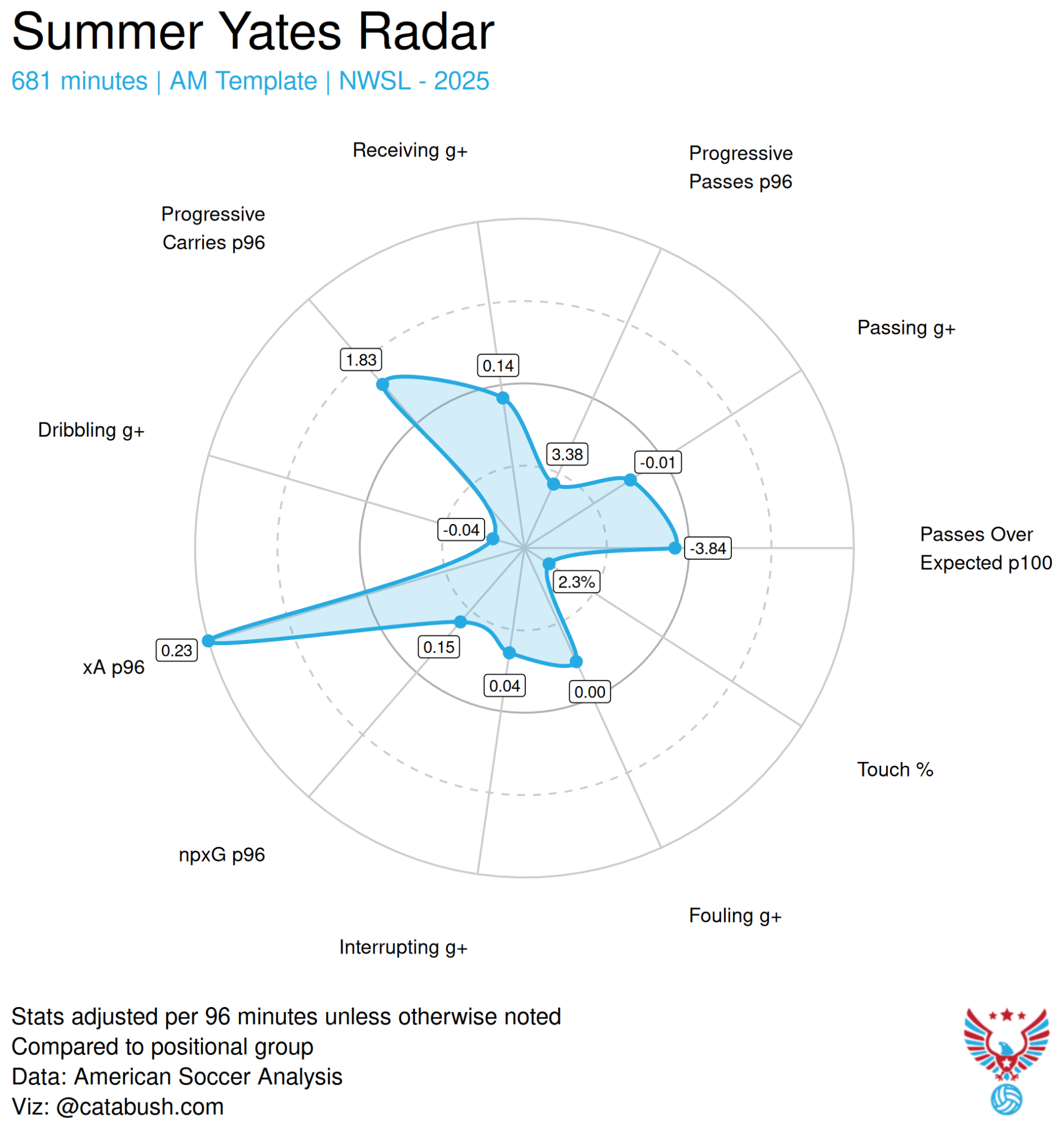


Solai Washington, one of only two college rookie signings made by Orlando this winter, could be yet a third option. The 20-year-old Jamaican international from Georgia wasn’t a consistent starter in her sophomore season with Florida State, but she won a national championship with the team, and according to the College Player Dashboard, she rated as a strong prospect.
Washington may be a long-term play, rather than an immediate fix. Even so, her pedigree is a mixed bag, making her a high-variance prospect who only started three games against ranked sides last fall.
If Banda is to get service from central areas, one of these four players has to demonstrate tactical and technical consistency all year. Ironically, the 40-year-old Marta might still be the Pride’s best option.
Verdict: In Banda We Trust
The ASA projection model currently pegs the Pride for 47 points and 4th place in the very first 30-game season in American women’s pro soccer history. They’re tightly grouped with Portland, Gotham, Louisville and Washington, which means the model thinks a home game in the semifinal (should they make it that far) is in the mix. That’s what happens when you have Barbra Banda up top and players like Ovalle and Marta feeding her the ball, not to mention Abello and Mace anchoring a defense in front of shotstopping wiz Anna Moorhouse. The progressive capabilities of Angelina and defensive strengths of Haley McCutcheon and a newly-healthy Luana keeps the graft of Seb Hines’s midfields preserved while key weapons patrol the other lines.
The model’s range of outcomes also thinks that a middle-of-the-pack playoff spot is also possible. Anything can happen once you get to the three-game chaos of the postseason, but depth issues and questions around how to attack the middle of the park loom overhead. Thankfully, they’ll have a brand-new Harry Potter land to explore at Universal in case things go belly up by November.
My posse's on Broadway
Hi Chad, please write a 2026 NWSL season preview focused on Seattle Reign. The preview should focus on the team for a statistical and analytical angle, mentioning the players who have left the team, as well as new players to the team. Feel free to try and predict any changes to coach Laura Harvey's tactics based on the changes in personnel, but really focus on the stats.
Okay, I can do that.
Thinking…
Youth, Underlying Numbers, and the Search for Goals
The 2025 season marked a quiet transition year for Seattle Reign FC. After missing the playoffs in 2024, the club returned to postseason contention with a fifth-place finish and a balanced statistical profile. Seattle scored 32 goals and conceded 29, finishing with a modest +3 goal differential that reflected a team competitive in most matches but rarely dominant.
The numbers beneath the surface painted an even clearer picture. Seattle was one of the more defensively stable teams in the league, anchored by standout goalkeeper Claudia Dickey and a disciplined defensive structure. Offensively, however, the Reign lacked a high-volume scorer capable of converting their midfield-driven chance creation into elite goal totals.
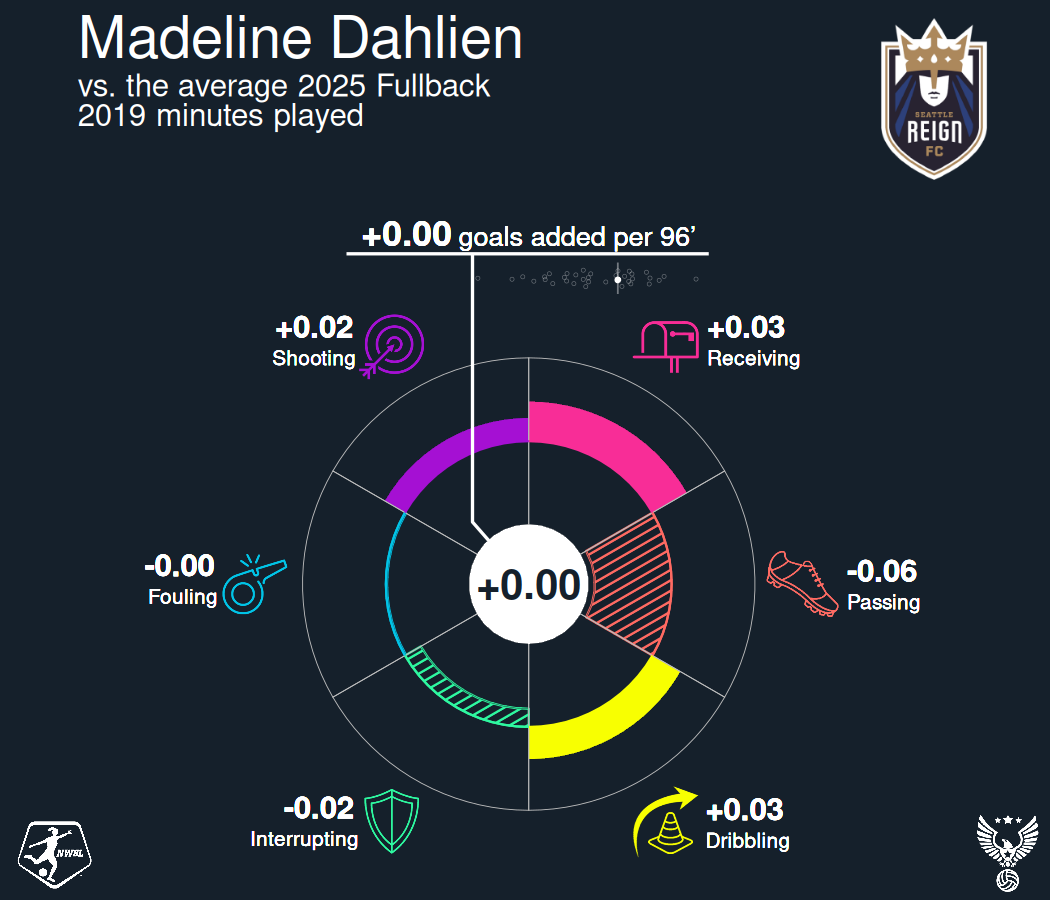
Now entering 2026, head coach Laura Harvey faces a new phase in the club’s evolution. Club icon Lauren Barnes has retired, removing a foundational piece of the back line. At the same time, a wave of young players—including Emeri Adames, Jordyn Bugg, Maddie Dahlien, and Ainsley McCammon—are beginning to define the roster’s identity. Seattle also made one of the most aggressive attacking investments in recent NWSL history by signing striker Mia Fishel, a move intended to solve the club’s finishing problem.

Hold on Chad, what about xG? This team ran a -9 xGD and exceeded their xPts by 10 whole points. How do you square that circle?
That’s a really good question—and analytically, it gets to the heart of whether Seattle Reign’s 2025 season represented real improvement or just favorable variance.
If we take the numbers you mentioned at face value — around a −9 expected goal differential and roughly +10 points above expected points (xPts) — the underlying data suggests something important:
Seattle were probably not as good as their standings position indicated.
But that doesn’t mean they were “bad” either. It means they were likely a high-variance, defensively resilient team that consistently overperformed key moments.
Let’s break down what those numbers actually imply.
Across most leagues, teams with that level of overperformance tend to regress the following season.
It usually happens because of factors like:
winning a lot of one-goal games
scoring on low-probability chances
elite goalkeeping performances
The Reign won eight games by a margin of one goal in 2025, more than any other team in the league. There is a reason that goal difference is usually a strong predictor of team strength over the course of a season, and winning 1-0 games is a hard skill to repeat.
Perhaps a larger factor is…
Claudia Dickey May Have Carried the Defensive Results
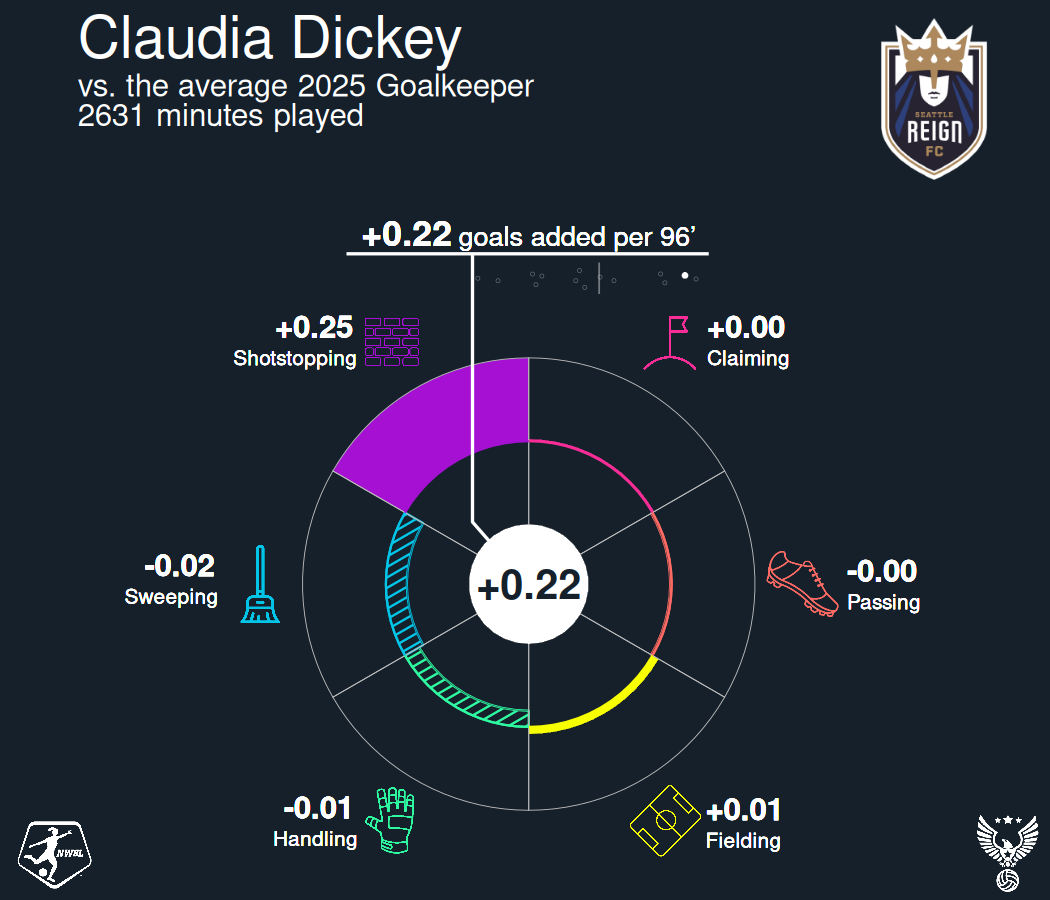
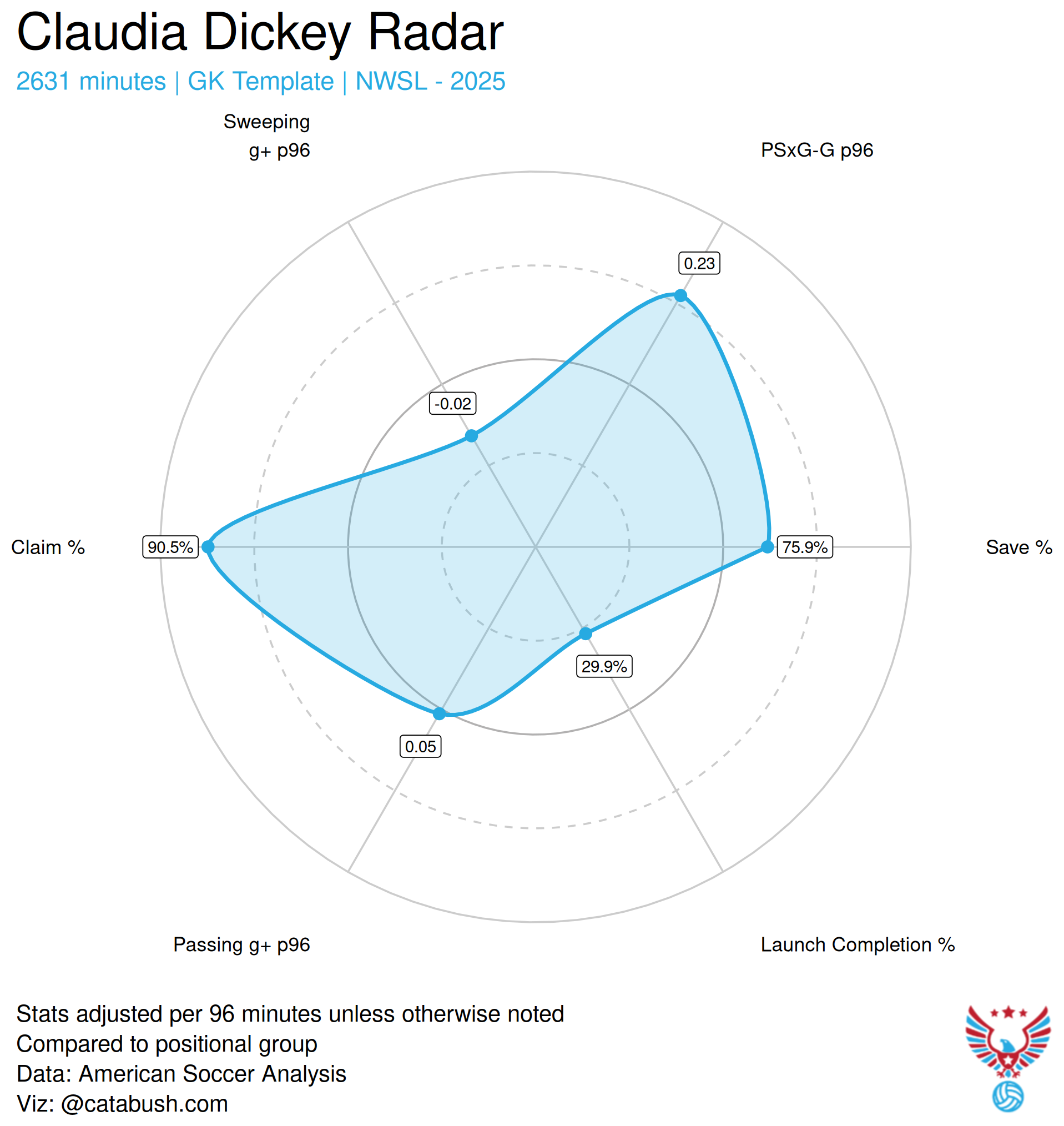
One explanation for Seattle outperforming their xG numbers is goalkeeping.
If a goalkeeper consistently saves shots that models expect to become goals, it can allow a team to:
concede fewer goals than their xGA suggests
win more close games
That appears to have been the case with Claudia Dickey, who led the league in saves and finished top of ASA’s goals added goalkeeping tables, saving six goals more than expected. Unfortunately, this doesn’t guarantee a great goalkeeping performance next year. Great goalkeeping is real skill—but historically, goalkeeper overperformance tends to fluctuate year to year. Take Dickey as an example, she was excellent in both 2023 and 2025, while being dead on league average in 2024.
In front of Dickey, the defensive line blended youth and experience. Defender Jordyn Bugg developed into a breakout player, earning league recognition for her performances in 2025.
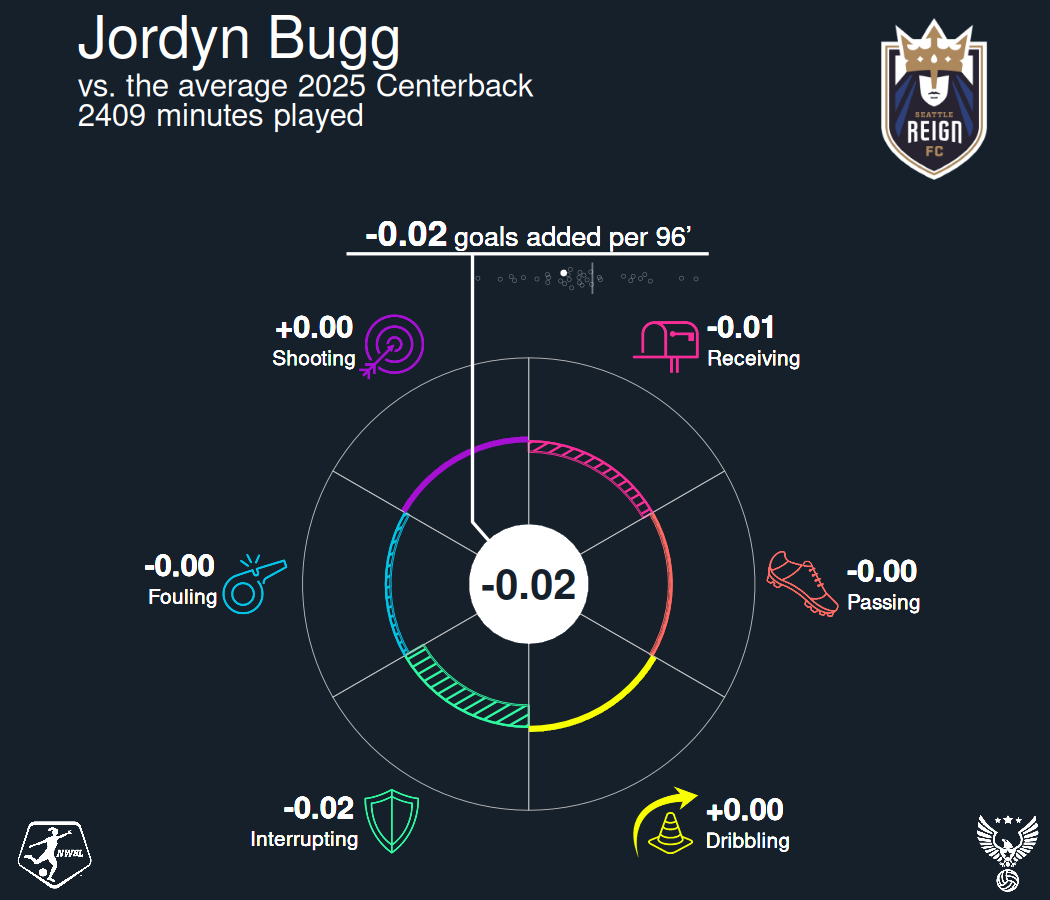
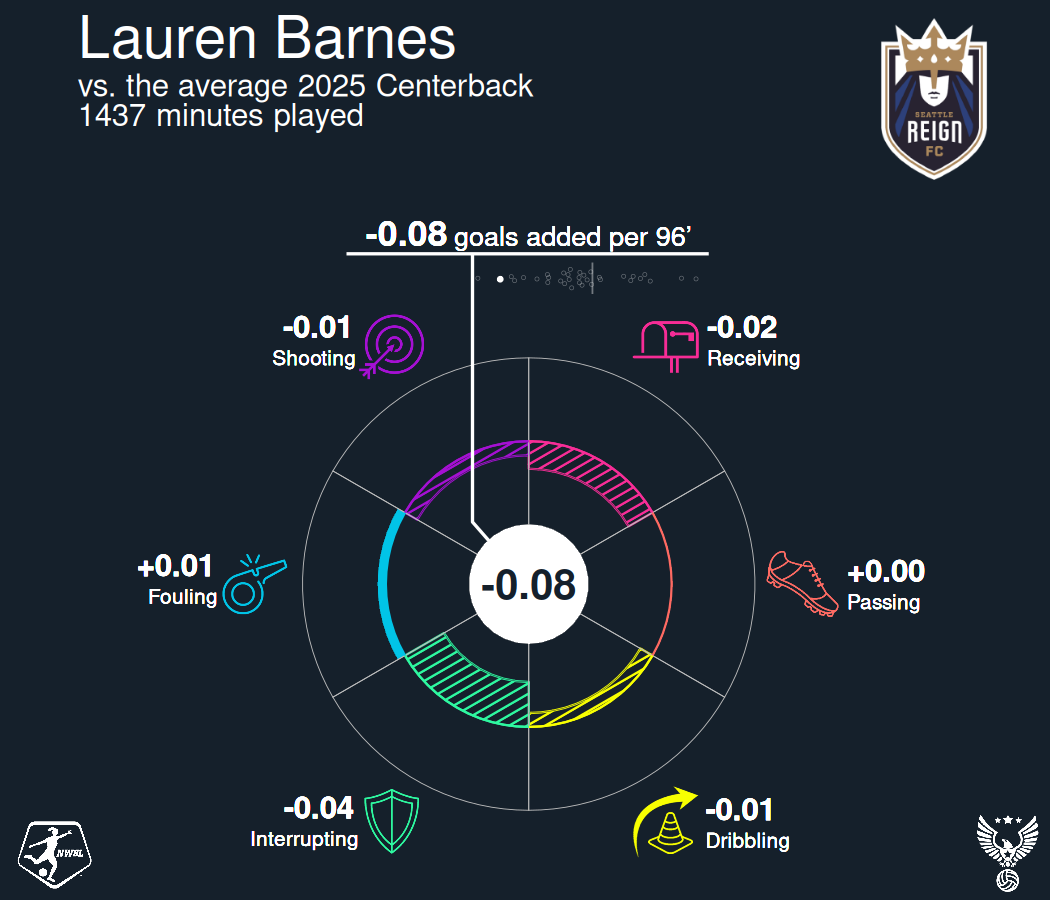
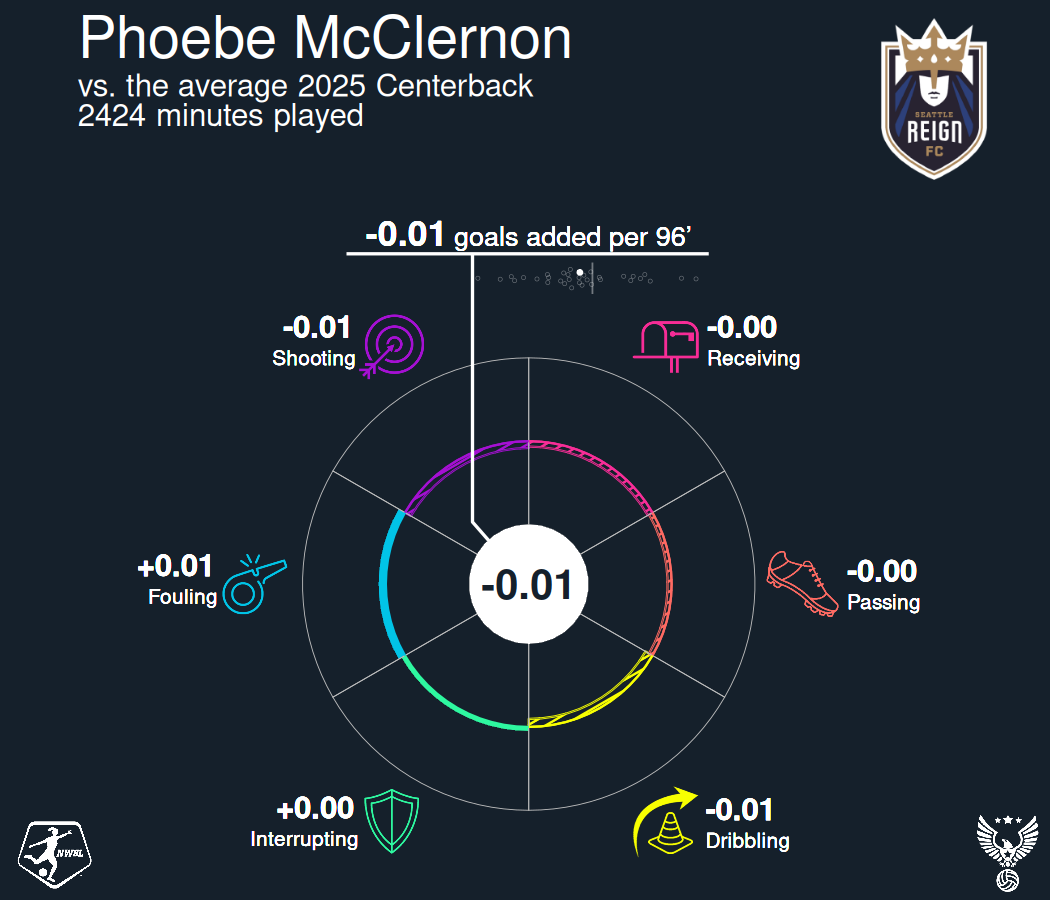
However, the offseason brought notable departures that could reshape the defensive identity. Longtime club icon Lauren Barnes retired after the 2025 campaign. For over a decade, she served as the defensive organizer and emotional leader of the backline. Without her, Seattle may rely more heavily on younger defenders to manage line positioning and communication.
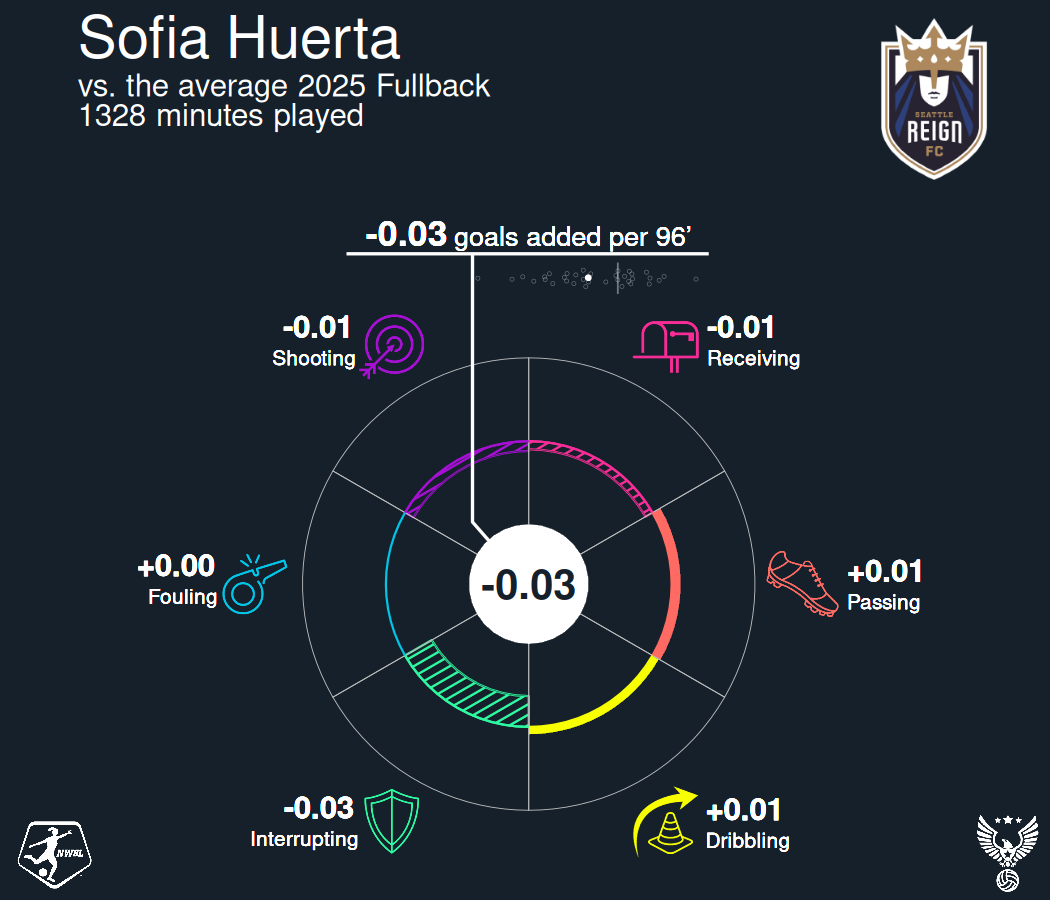
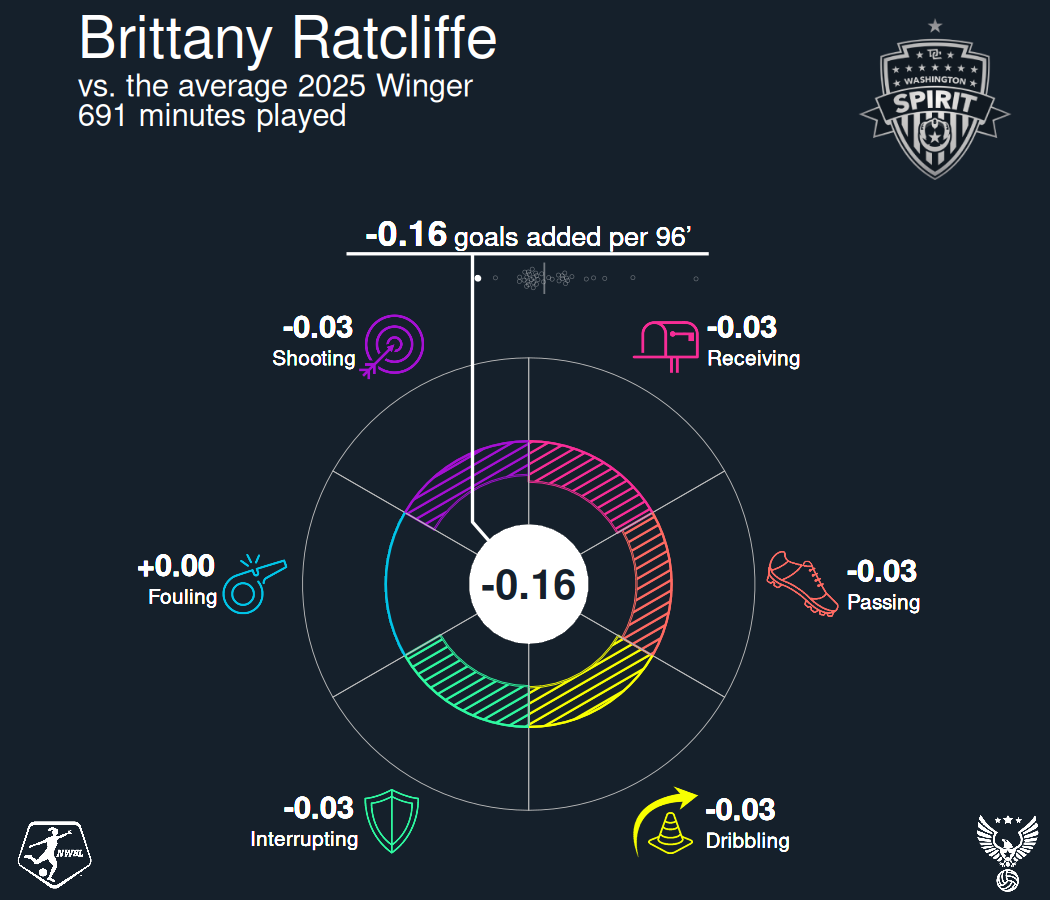
Head coach Laura Harvey has historically preferred a 4-2-3-1 or 4-3-3, emphasizing midfield control and structured pressing. But recent experimentation—including occasional back-five setups (recommended by yours truly)—suggests the Reign may adopt more flexible defensive shapes in 2026. A back-three structure could allow wingbacks to push higher in possession while maintaining defensive cover against counterattacks. Such a system could also allow the Reign to get more out of excellent passer but somewhat declining Sofia Huerta, and a hard working but less productive winger in new signing Brittany Ratcliffe.
From a statistical perspective, the key question is whether Seattle can maintain its low goals-against rate while integrating younger defenders into larger roles.
Okay, so how does this team score goals next season? You said they weren’t exactly prolific in 2025.
Distributed Scoring vs. Star Power
Perhaps the defining statistical characteristic of the Reign in 2025 was extreme scoring distribution.
Instead of relying on one elite forward, Seattle’s goals came from across the lineup:
Emeri Adames — 6 goals
Jess Fishlock — 6 goals
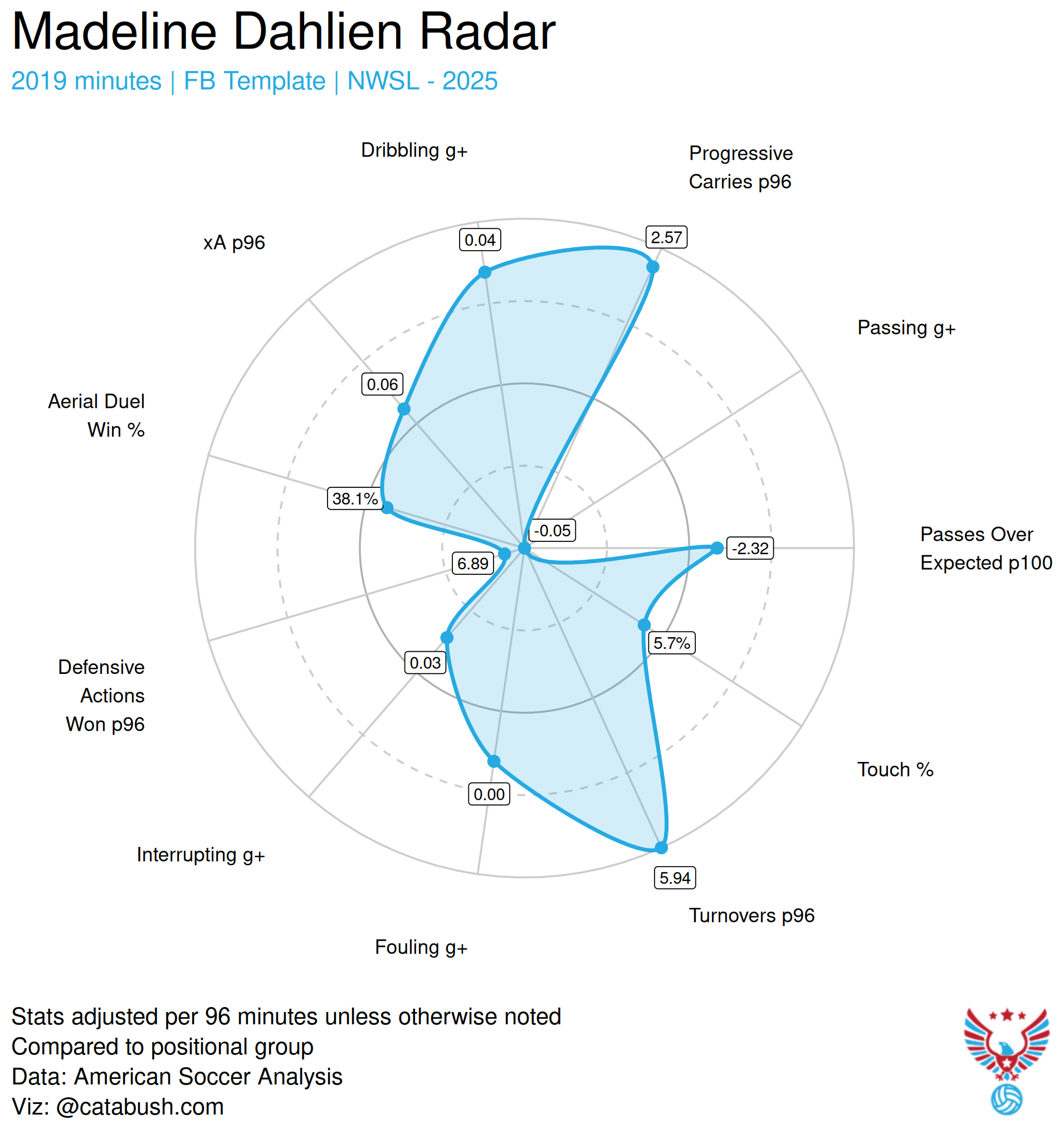
Maddie Dahlien — 4 goals (all game-winners)
On the surface, this balance might appear beneficial. Multiple scoring threats make the attack less predictable and harder to defend.
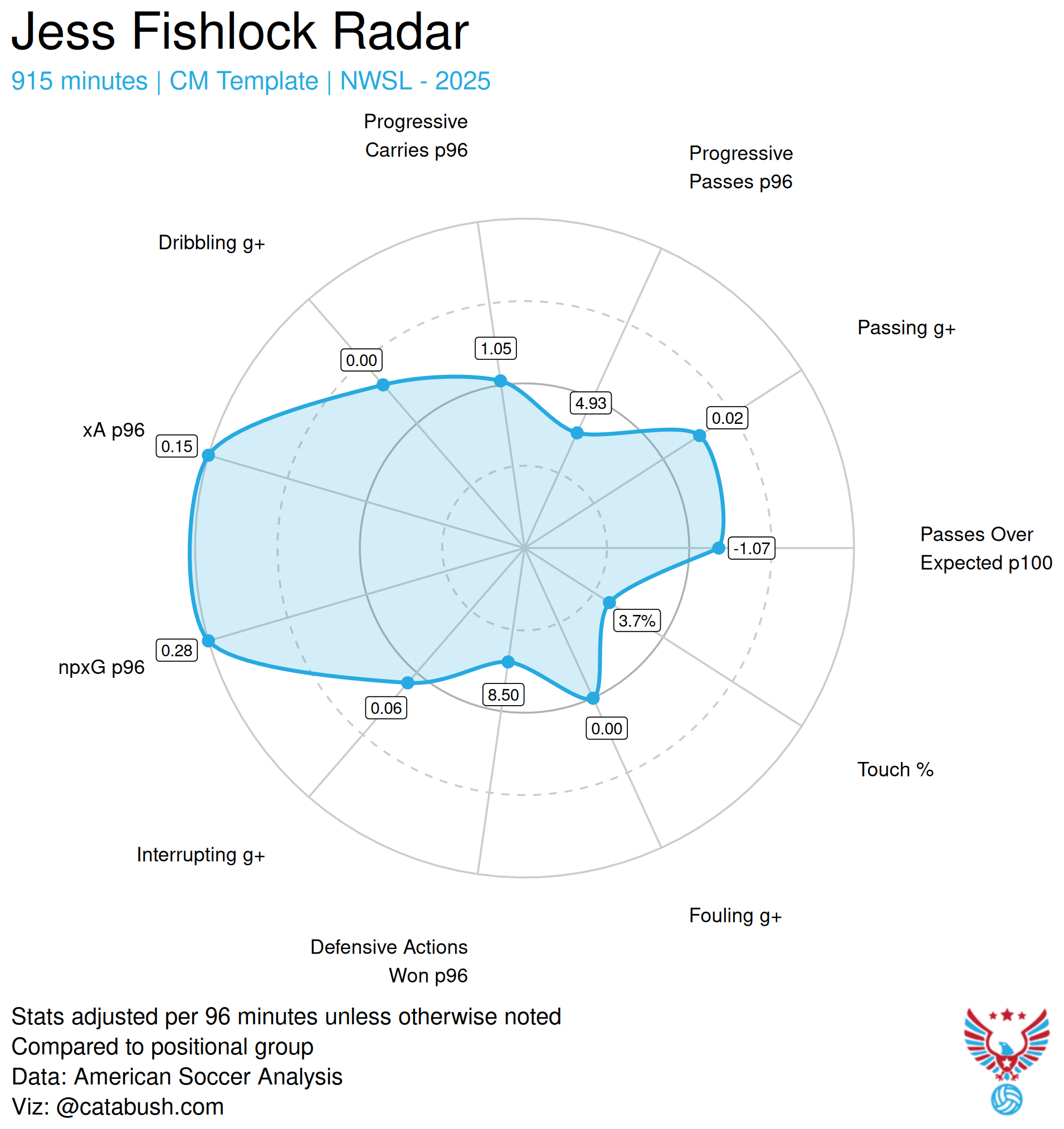

But in practice, distributed scoring can limit a team’s offensive ceiling. NWSL contenders often feature a reliable high-volume striker capable of converting chances in tight matches. Think Barbra Banda, Temwa Chawinga, Esther Gonzalez. Seattle’s attack sometimes struggled in games where the midfield controlled possession but lacked a consistent finishing outlet.
That is why the development of the younger attacking core is crucial in 2026. Adames—still a teenager last season—already demonstrated significant potential, tying for the team lead in goals. Dahlien’s early career production was equally intriguing, particularly given that her first four goals all proved decisive. She would also benefit from bombing forward as a wingback.
Most excitingly is the addition of striker Mia Fishel towards the end of last season. She didn’t score in her four games in Seattle, putting up a paltry 0.8 xG+xA total in 400 minutes. But Fishel has a long track record of scoring goals for Tigres, Chelsea, and UCLA - at least when she can stay fit and on the field.
If even one of these attackers breaks out statistically, the Reign’s offense could shift from a balanced but limited attack to a top-tier scoring unit.
Chad, based on everything we’ve discussed, how do you think the Reign do this season and where do they finish?
Projecting Seattle’s 2026 season depends on how you weigh the two competing realities we discussed:
The 2025 results (playoff team, solid defense).
The underlying analytics (negative expected goal differential and big overperformance in points).
When those two things diverge that much, the next season usually lands somewhere in the middle. Teams rarely repeat extreme overperformance, but they also don’t always collapse to their underlying numbers if there are structural strengths.
So the most likely outcome for Seattle in 2026 is moderate regression combined with some offensive improvement.
ASA’s model has them pegged for ninth, and 39 points, almost exactly where they were last year, and I agree. They probably won’t look like a title contender statistically yet—but they also shouldn’t fall far down the table.