
2026 MLS Previews: Columbus, Nashville, Seattle
/Our 2026 MLS Season Previews have started and today we hit Columbus, Nashville, and the Seattle. If you want to support this coverage of the league, you can head to our Patreon. For $5 a month you can get access to a lot of the data visualization tools we use to make these previews.
Relationism, Regressionism?
2025 was a disappointment for Columbus. The Crew were unable to recreate Cucho in the aggregate with new signings Daniel Gazdag, through effectiveness, and Wessam Abou Ali, through a late arrival and injury. For the second season in a row, Columbus were eliminated in the first round of playoffs this time to FC Cincinnati. Shortly after, head coach Wilfried Nancy left for and was promptly dumped by Celtic after a run of terrible results.
Offseason Changes
Departures: Wilfried Nancy, Darlington Nagbe, Jacen Russel-Rowe
Arrivals: Henrik Rydström, Sekou Bangoura, Nariman Akhundzada, Jamal Thiaré, Chase Adams, Owen Presthus, Quinton Elliot, Zach Zengue, Luke Pruter
New head coach Henrik Rydström will have most of the 2025 roster available to him. Of players that played over 1,000 minutes in 2025, only Darlington Nagbe (retirement) and Jacen Russel-Rowe ($2.5m transfer to Toulouse) departed.
Guinean central midfielder Sekou Bangoura was signed from Kiryat Shmona - but I have no idea what sort of player he is. The 23 year old has been on a series of loans and has only played significantly in the Turkish second division and the Israeli first division. While he has a Wikipedia page, it took me a while to find it, and I had to create a Wikipedia disambiguation (please clap) from the 1,586th ranked men’s tennis player in the world and Boise State Special Assistant to the Head Coach, Sekou Bangoura.
The Crew also splashed some cash (reported €1-2.5m) for U-22 initiative signing Nariman Akhundzada, the first Azerbaijani player in MLS. The attacker put up decent numbers for a young player in the Azerbaijan 1st division and recently was part of the Qarabag team that made it to the Champions League knockout stage before being routed at Anfield by Liverpool. Again, it is hard to know much about him and if anyone has any advanced data from the Premyer Liqa, please send it my way.
The Crew also signed a handful of academy and draft picks, highlighted by Chase Adams, aka Baby Haaland. Adams is one of the most highly rated young American strikers who started for the US at the U-17 World Cup last year, scored 10 goals against the US Virgin Islands in qualifying, and was a solid player in MLS Next Pro.
Key Question: What is Rydström going to do?
Succeeding Wilfried Nancy in Columbus is a tough task. The Frenchman came to Columbus from Montreal and proceeded to win an MLS Cup and Leagues Cup, and was a team-wide E. coli infection from the CONCACAF Champions Cup while playing some of the most aesthetically pleasing soccer in MLS history. Henrik Rydström joined the Crew after a long playing career in his native Sweden (802 appearances for Kalmar) and stops at Kalmar, Sirius, and Malmo as manager. At Malmo, he won back to back league championships but was let go midway through the 2025/26 season after a run of bad form.
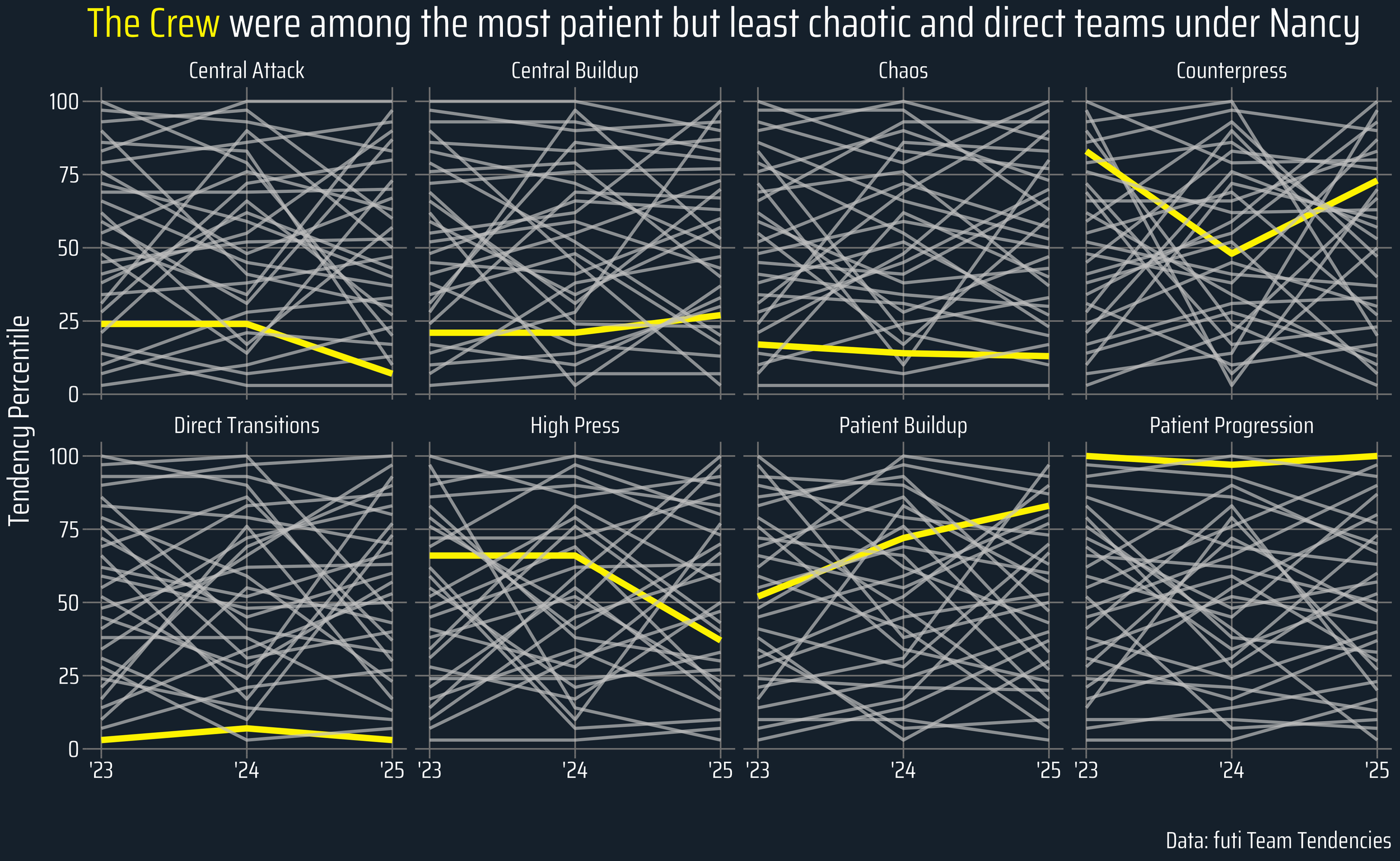
Rydstrom is an acolyte of Relationism, a quasi-mystic form of semi-positionless soccer with a bevy of Spanish jargon, and is credited with bringing it to Scandinavia. Rydström has stressed that he will bring an evolution, not a revolution in tactics to the Crew. In principle, Rydström’s philosophy should fit with the way that Nancy’s Crew teams played with fluid movement between players. Nancy’s teams were among the most patient in possession during his 3 years with Columbus, but almost never played directly and the high press fell off in 2025 according to futi’s team tendency model.. Rydström has promised to encourage players to take more individual risks on the ball, opportunistically play more direct, more pressing, and attempt to provide a more solid defensive structure than what was played under Nancy.
As usual, the Crew have been extremely secretive in pre-season so we are left with many questions. Will they play with 3 CBs? Will Stephen Moreira revert back to his native right back position? Will Sean Zawadzki move back to midfield? How will the three attacking DPs interact? Will this philosophical soccer melt in the summer heat? We won’t have answers until the team steps on the field, but at a minimum the Crew should remain one of the most entertaining teams to watch in MLS.
One to Watch: Taha Habroune
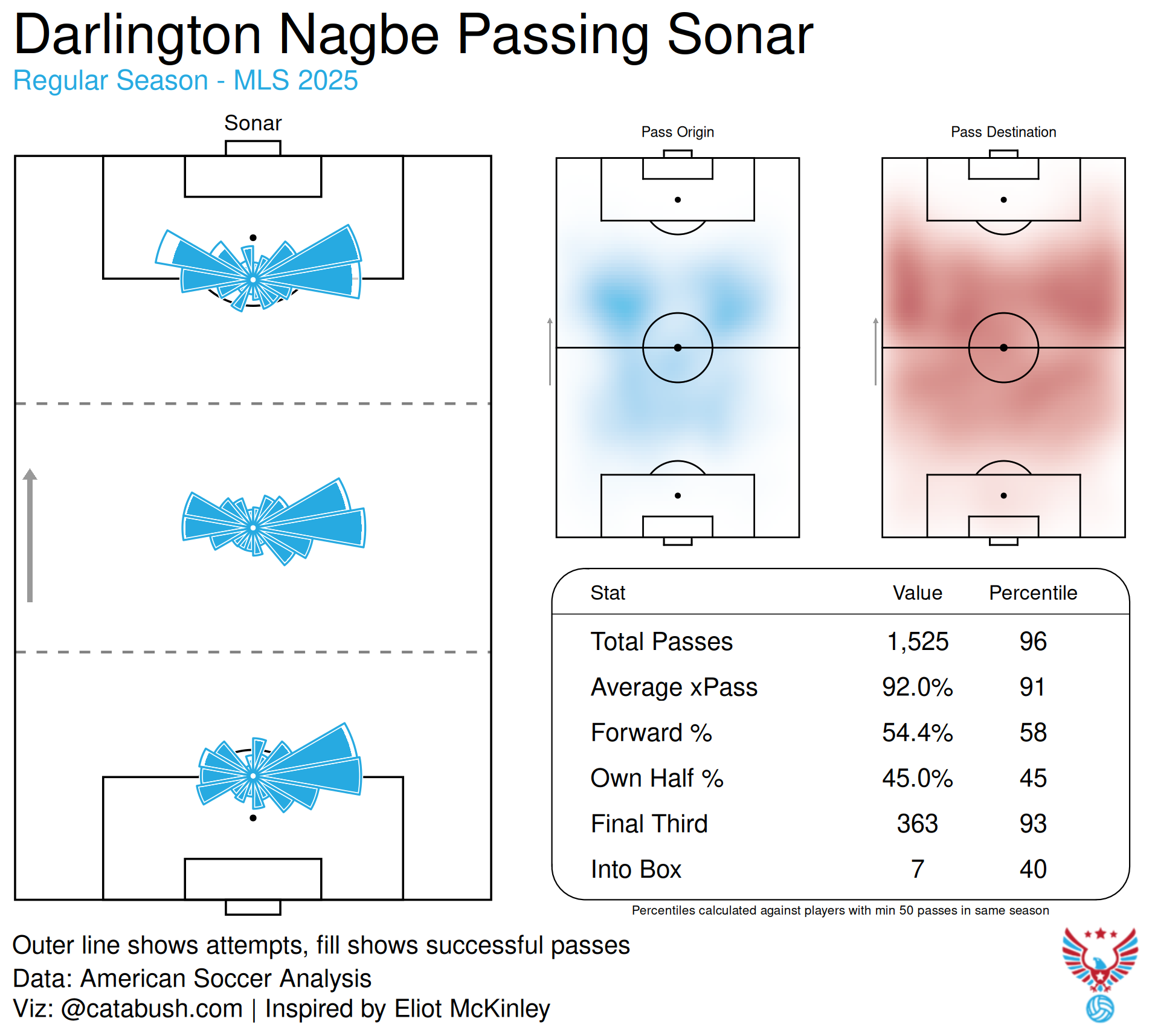
With the departures of Aidan Morris and Darlington Nagbe, the starting central midfielders from the 2023 MLS Cup are gone. Dylan Chambost mostly paired with Nagbe last year and provided some needed progressive actions - something that Nagbe was congenitally unable to do. However, Chambost does not have the ability to put out fires that Morris had and I highlighted in my preview last year, who still hasn’t been sufficiently replaced.
Enter 20 year old Taha Habroune. The homegrown midfielder is the next jewel from the Crew Academy. He signed for Crew 2 as a 17 year old in 2023 and was one of the best central midfielders in MLS Next Pro for the Capybaras and signed with the first team prior to the 2024 season. He began getting actual minutes for the Crew in 2025. After playing in every game for the USA at the U-20 World Cup, Habroune started 4 of the final 8 regular season games and the final two playoff games.
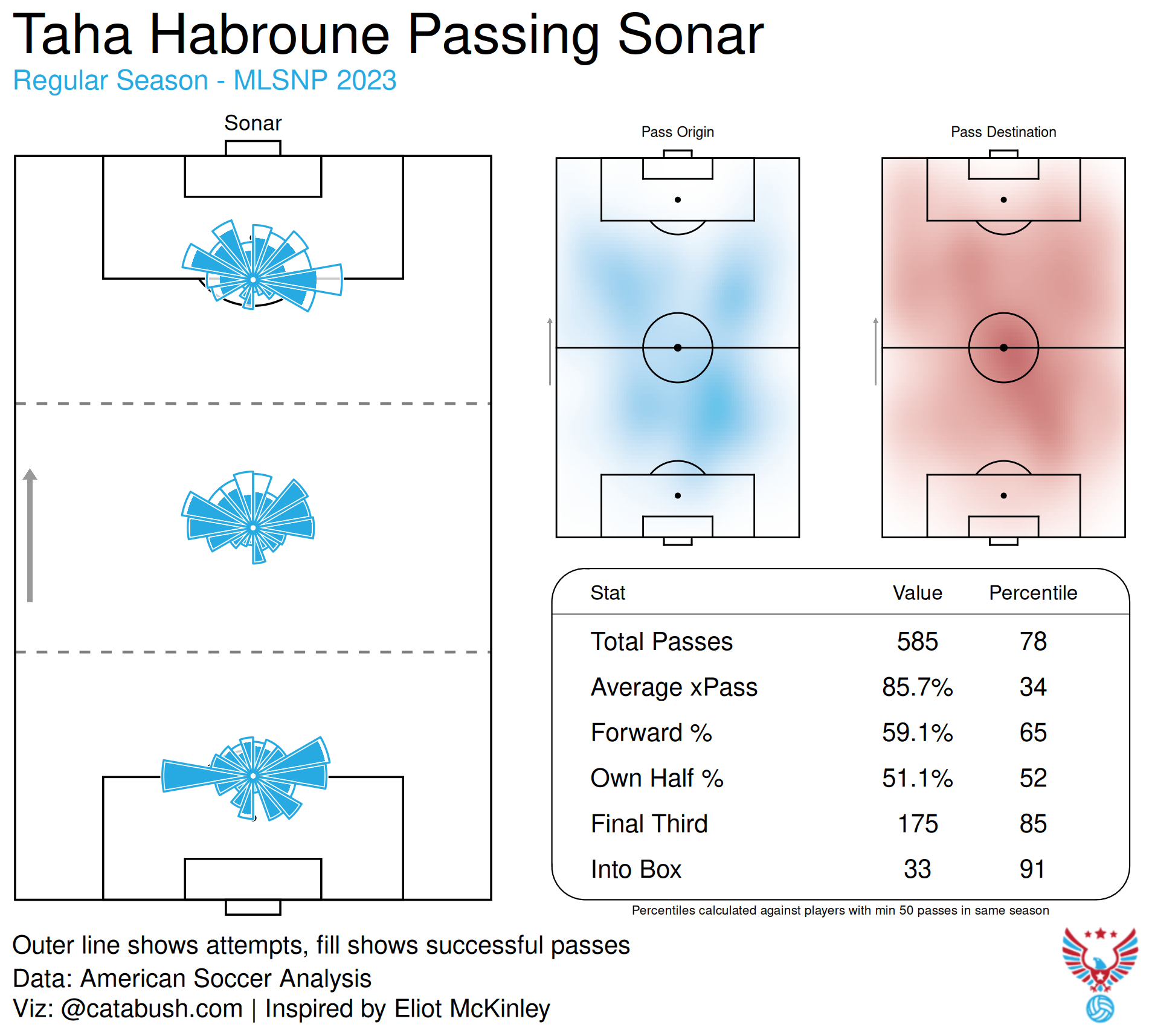
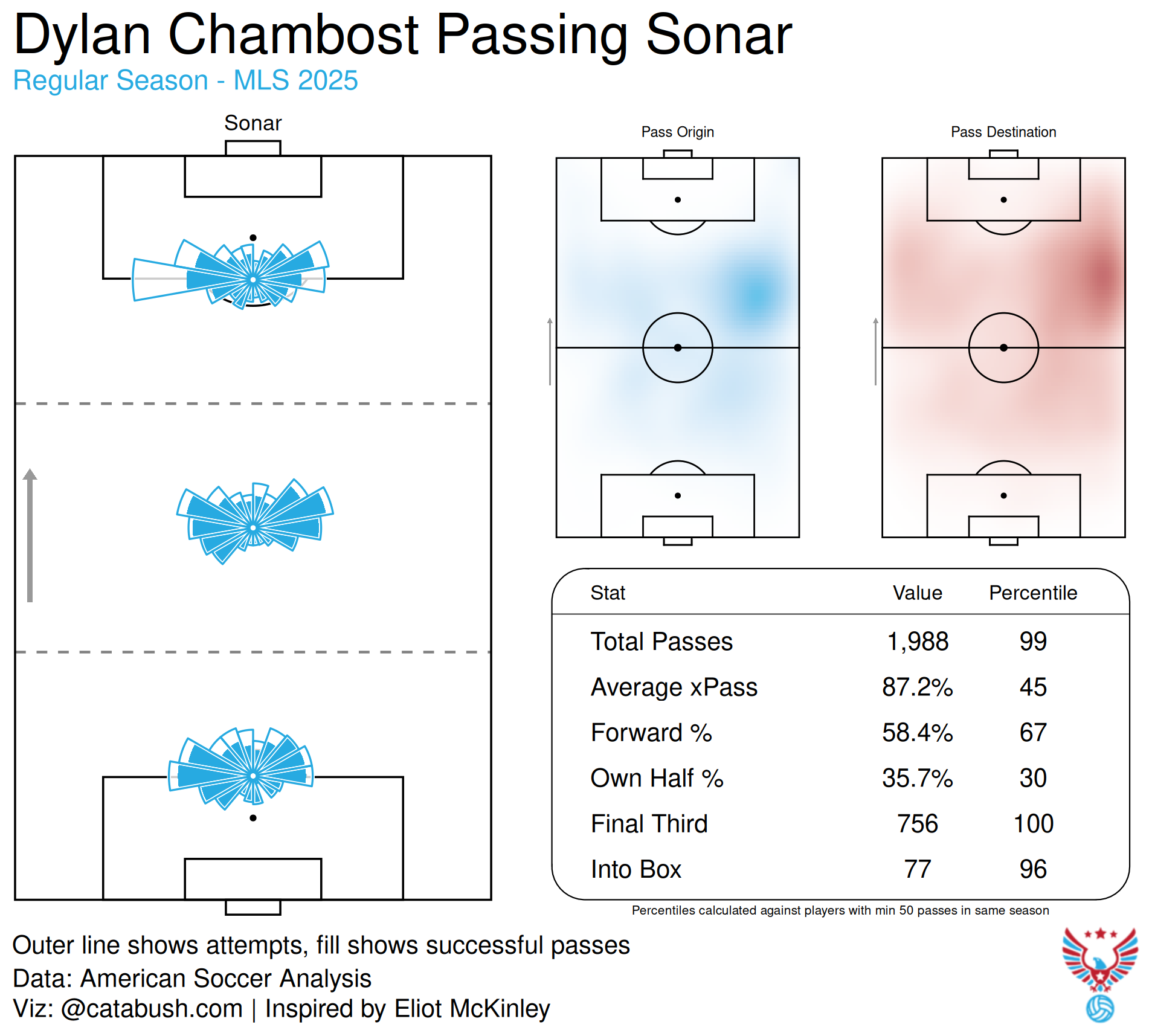
While he has played more of an attacking role thus far in his MLS career, he may have a more impactful role as a central midfielder, as highlighted by Matt Doyle in one of his final articles for majorleaguesoccersoccer.com (everyone go subscribe to his newsletter). Comparing Habroune’s pass sonar dashboard via the ASA Viz Hub during the 2023 MLS Next Pro season to those of Chambost and Nagbe shows a Habroune played a bit differently than the two primary 2025 Crew starters.
Nagbe and Habroune show a butterfly shaped pass origin distribution, while Chambost has a hotspot in the attacking right quadrant, although this may be due to free kicks duty in this area. Nagbe almost never passed forward, evident in his sonars, high average xPass, and low number of passes into the box. Chambost and, especially, Habroune show more forward passes in the sonars, which lower xPass, and the appearance of passes into the box. We don’t know exactly what Henrik Rydström is expecting from his central midfielders, but Taha Habroune has an interesting profile for such a young player and will have a chance to seize a starting spot assuming he can quickly recover from an offseason surgery.
2026 Prognosis
By expected points, the Crew were the 10th best team last season, this is a sharp fall from being second and third best in the previous two seasons. I suspect the Crew are in for a bit more regression in 2026. It would honestly be hard not to after the loss of Wilfried Nancy. There are still question marks about personnel at center midfield and especially center back, where there has been a glaring need for more depth for two years now. Regardless, the Crew should still be a solid team. I wouldn’t expect them to be in contention for the Shield, but they should make the playoffs and from there, who knows.
Season Prediction from my 10 year old son, Rhys: I think that the Columbus Crew is going to make it to the playoffs. But is going to get knocked out in the second round. I think that the two key players for the Crew this year are Diego Rossi and Wessam Abou Ali.
Let My People Goal
How does a team make the leap from good to great? This is the task BJ Callaghan’s Nashville is faced with in 2026. It’s maybe the hardest jump to make in MLS. A solid 442 midblock and one good attacker can get you from awful to the playoffs. Some midfield talent, a few centerbacks, and an idea of how you want to attack can get you into hosting a series. But going from that to a legitimate Shield and Cup contender takes a lot, lot more.
With the addition of star free agent attacker Cristian Espinoza, a trade for domestic fullback Reed Baker-Whiting, and some depth around the edges, Nashville will be hoping they’ve got there.
Roster Moves
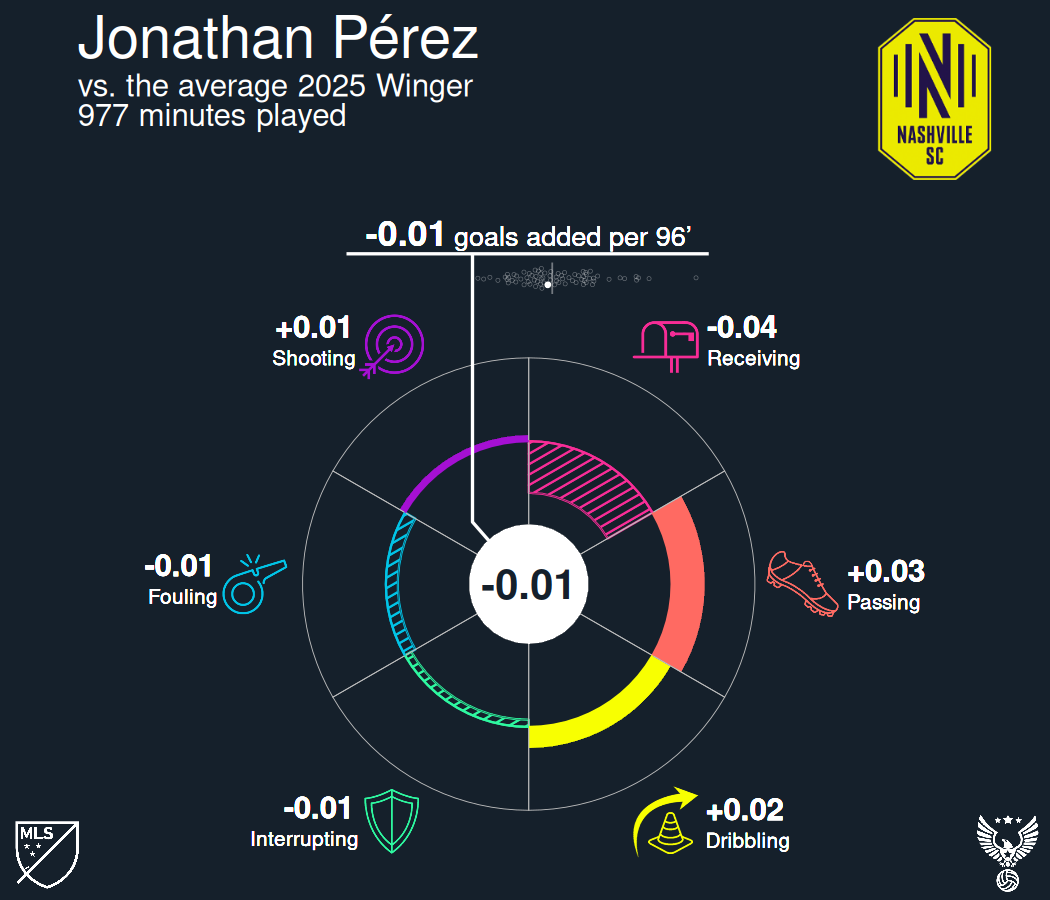
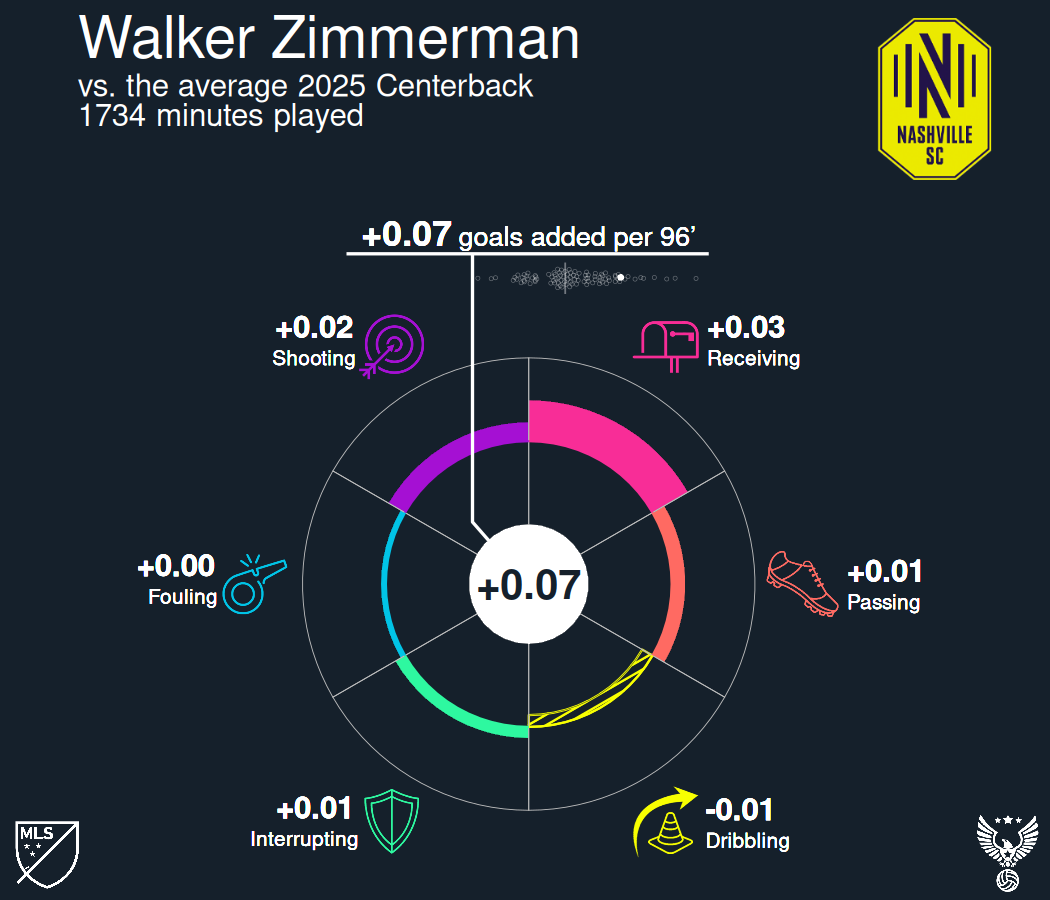
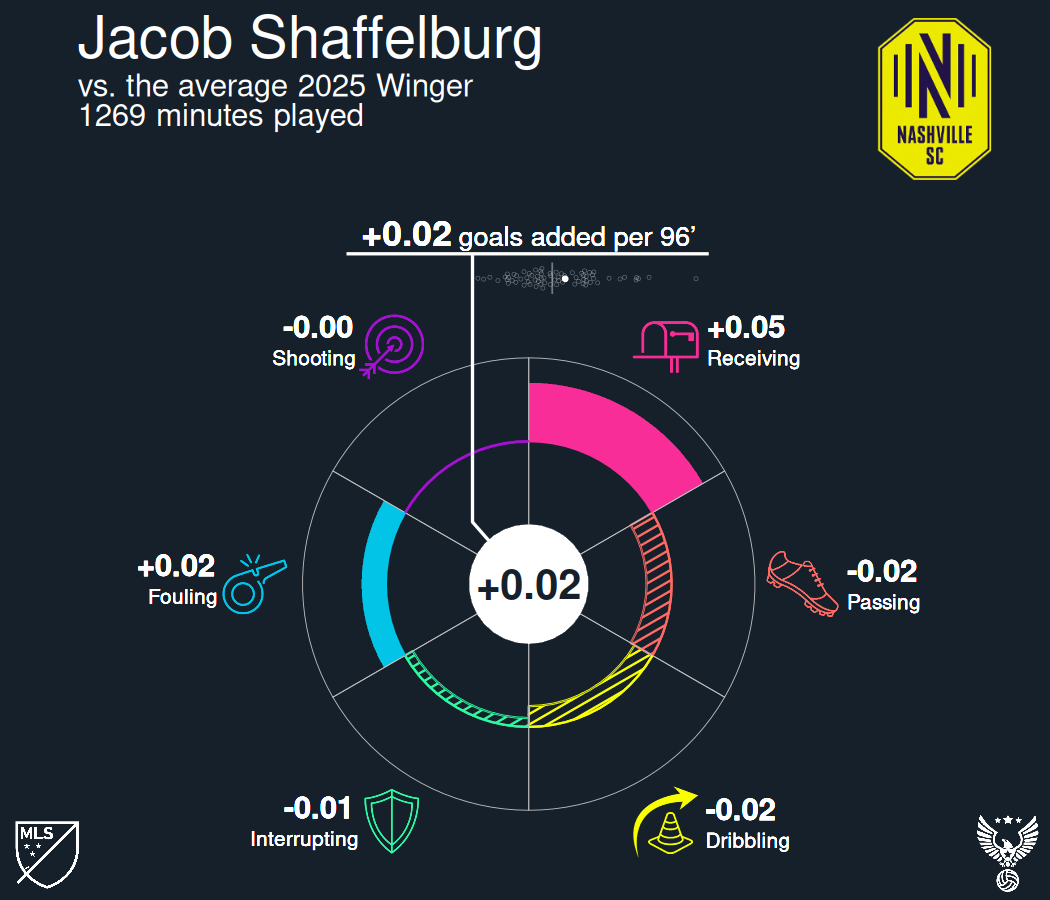
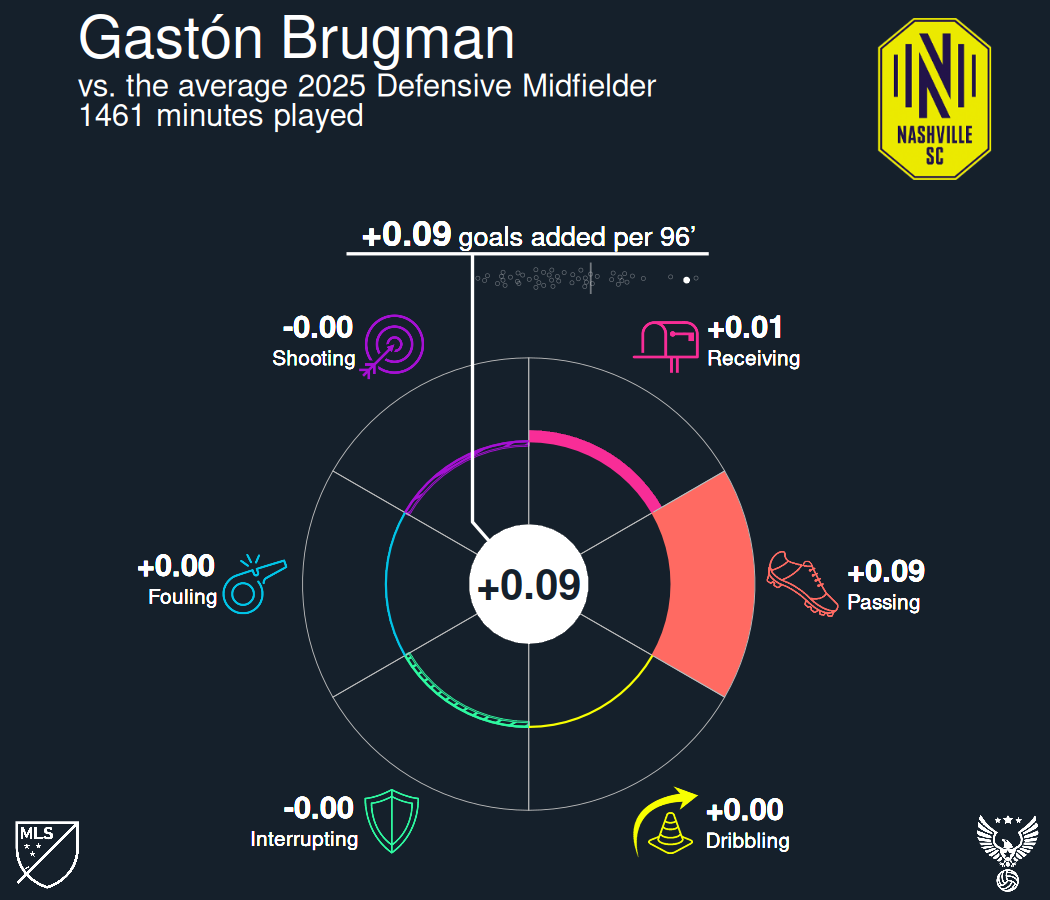
Going out is Jonathan Perez, who Nashville quickly flipped to Mexico after trading for him mid summer from the Galaxy. Selling fairly mid Mexican Americans to Liga MX remains the most unpatchable GAM glitch. Sparky winger Jacob Shaffelburg moves to LAFC, while Nashville clears the cap hits on Gaston Brugman and Walker Zimmerman. Shaff, Brugman, and Zimmerman were all productive but had concerns in varying directions. Shaffelburg couldn’t stay fit, Brugman was probably over the hill physically (and trending negatively), and Zimmerman is a very expensive centerback heading into his 30’s with a muddled availability history. It’s tough to move from good players, but these are certainly defensible decisions.
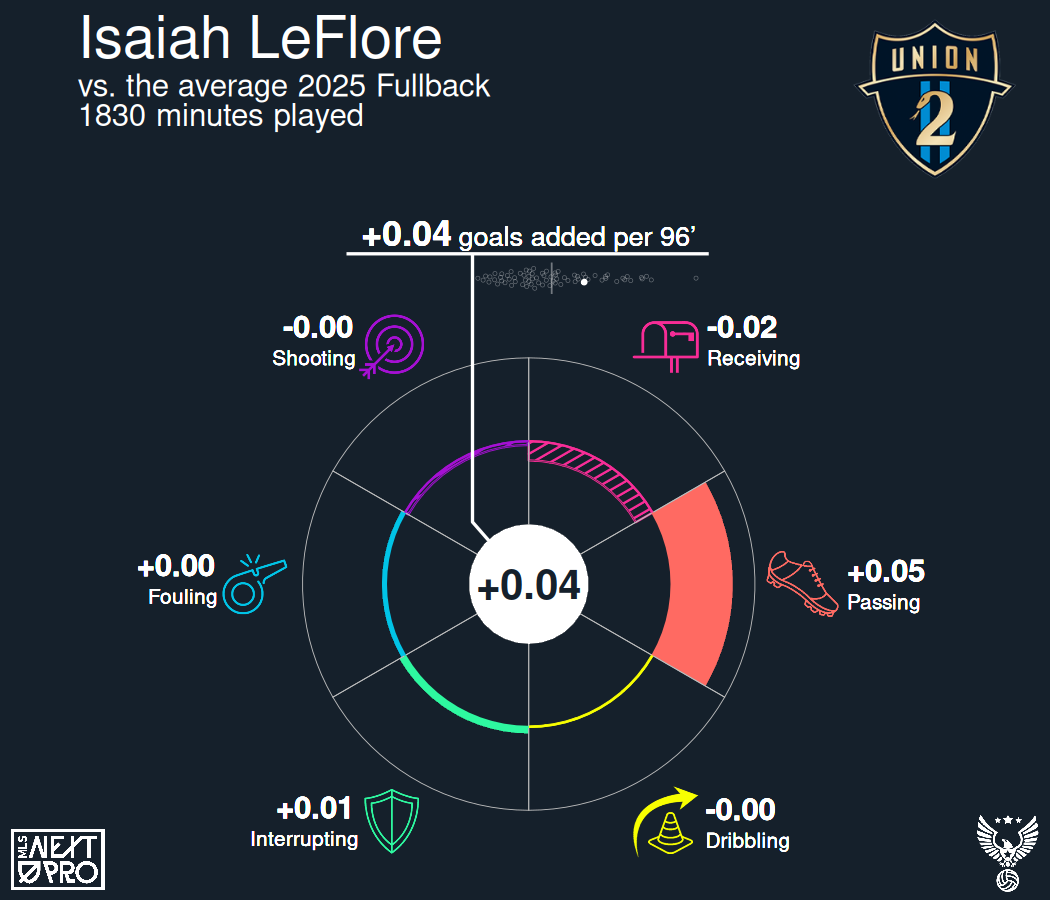
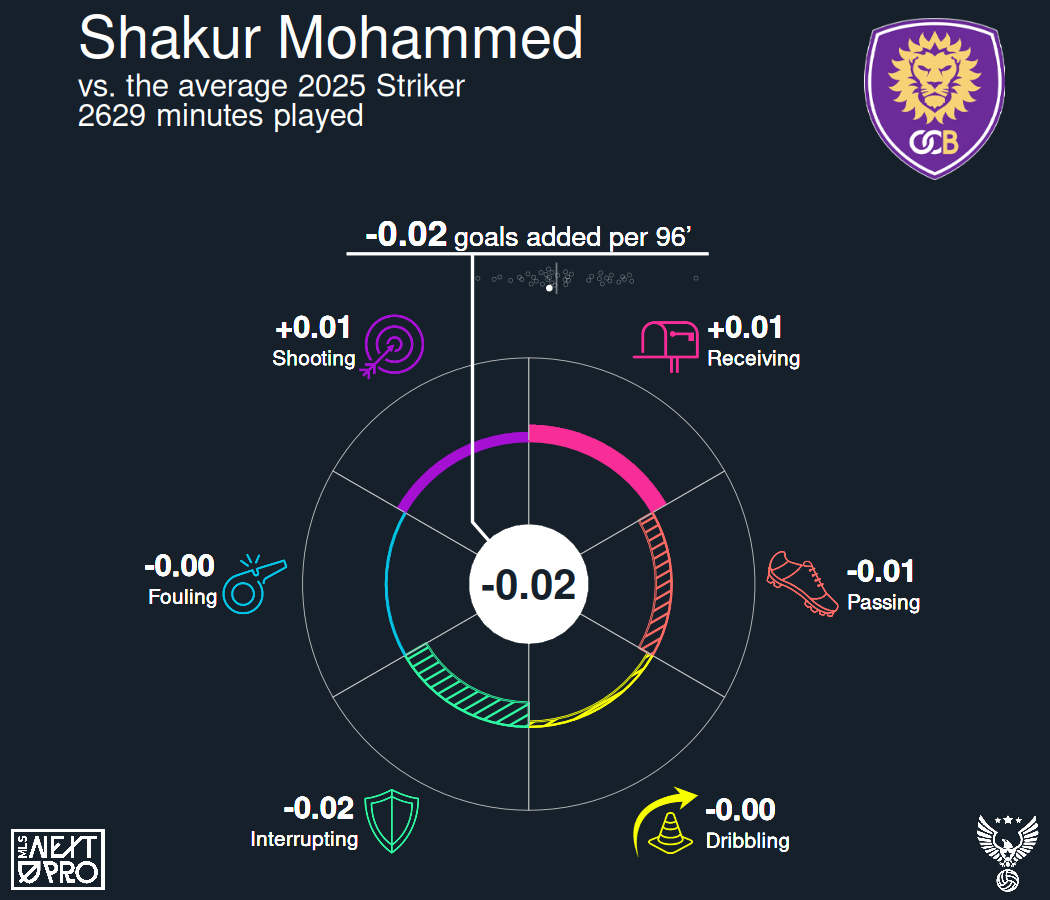
Coming in are the aforementioned Espinoza and Baker-Whiting, as well as winger depth in Costa Rican international Warren Madrigal and former second overall SuperDraft pick Shak Mohammed, centerbacks Maxwell Woledzi (to replace Zimmerman), Thomas Williams (depth), and Isaiah LeFlore (depth).
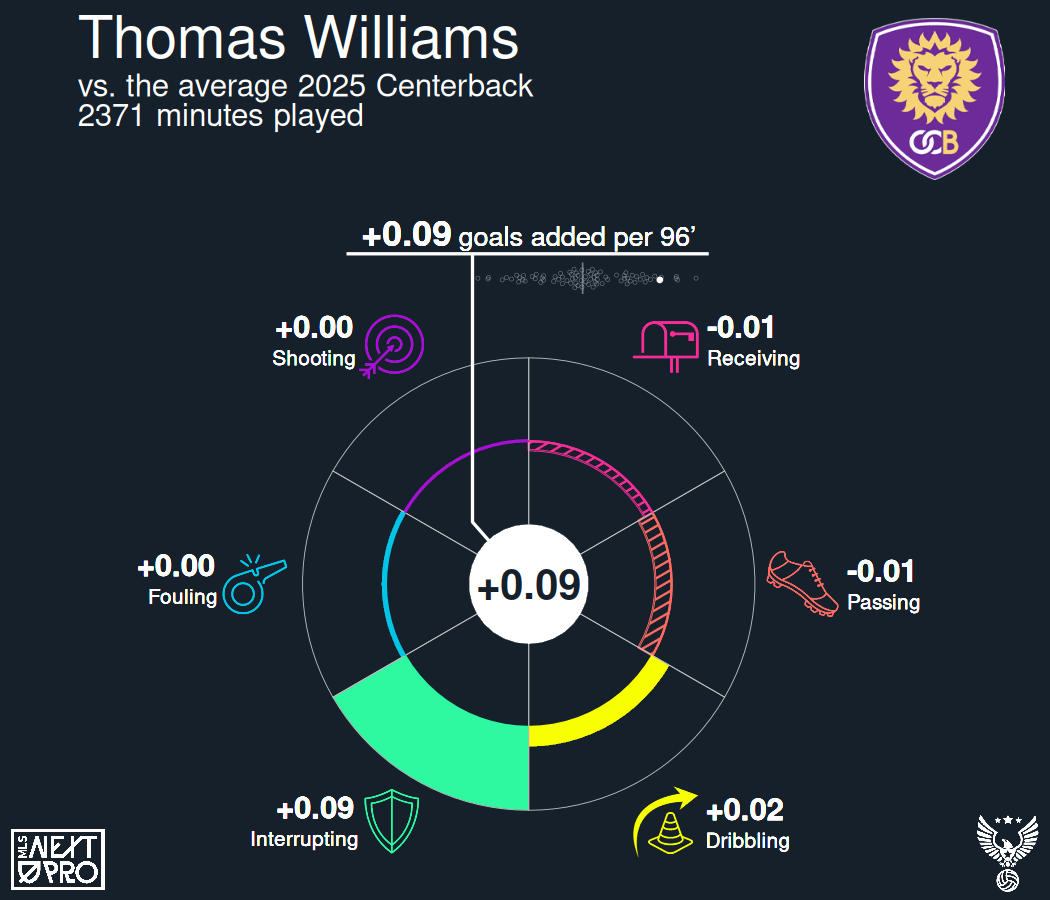
Before we get to the big gun: Shak Mohammed has been somewhat unproductive by g+ in MLS Next Pro, and I’d be fairly surprised if he was a meaningful impact to the first team. Thomas Williams has exceptional interrupting g+ in his MLS Next Pro minutes, but doesn’t appear to do much else. Neither player has meaningfully sniffed Orlando’s first team, but Alex Freeman did so and immediately became one of the best players in the league, so maybe the bar is exceedingly high.
Madrigal has an okay goal record for Costa Rica, but missed much of his 2025 league season with a broken leg. Before that, he smoked Segunda Federacion Grupo III, the fourth tier of Spanish football, with Valencia B. Your guess is as good as mine. Woledzi played a lot in Scandinavia, but left the Right to Dream system fairly early. Again, who knows. The guys over at SixOneFive Soccer are impressed so far. Also keep an eye on former CF Montreal academy product turned SuperDraft pick Charles Émile-Brunet to earn some minutes.
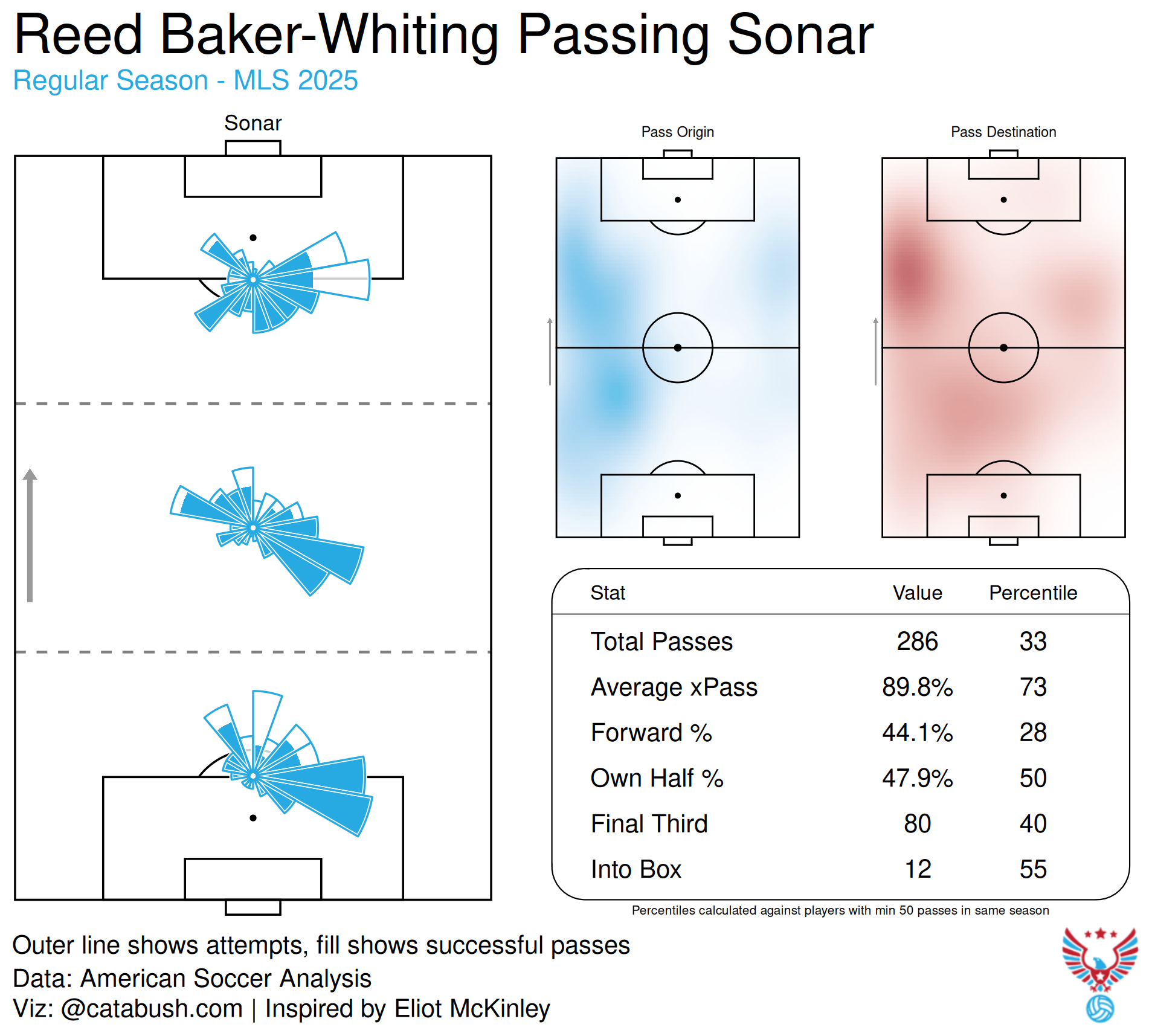
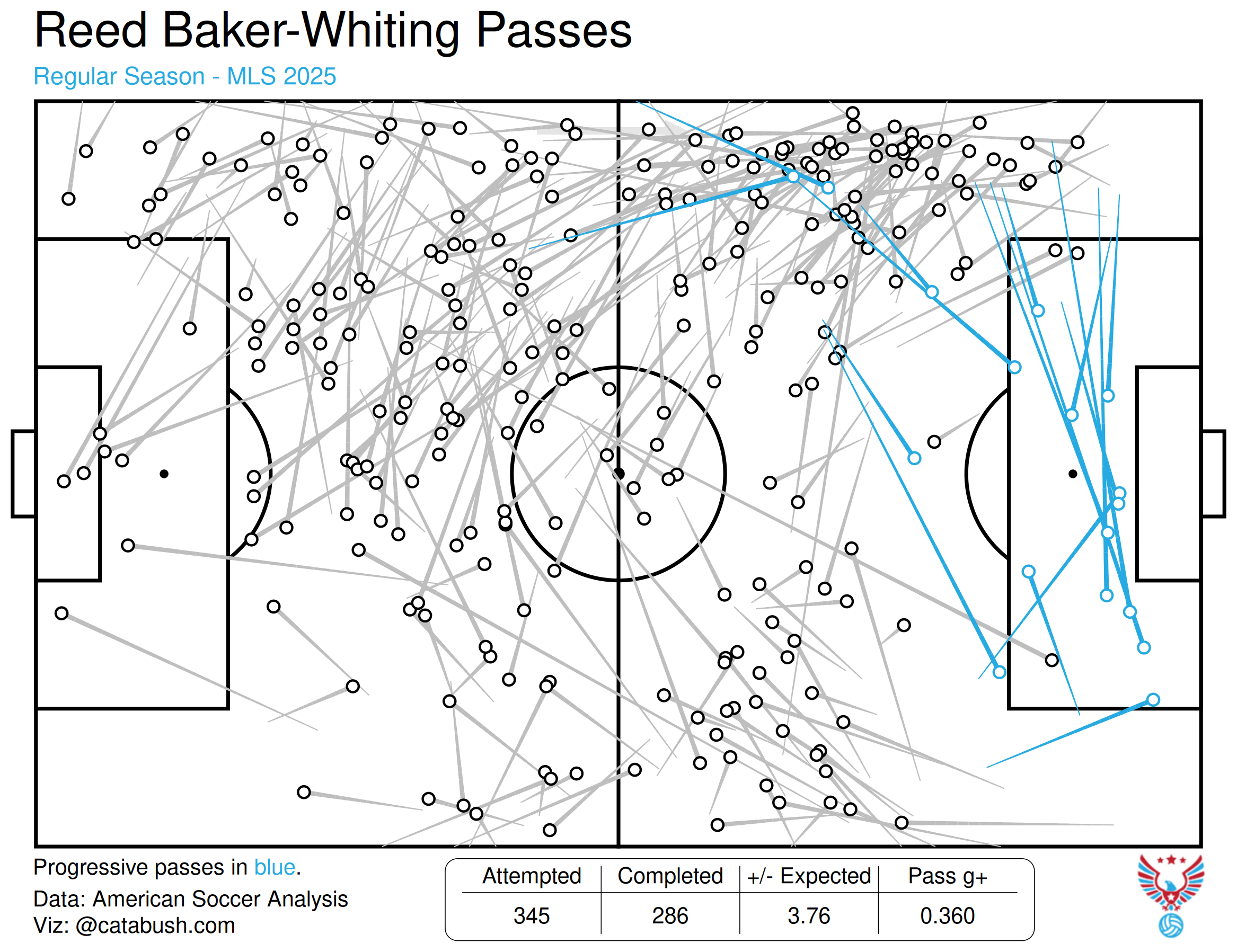
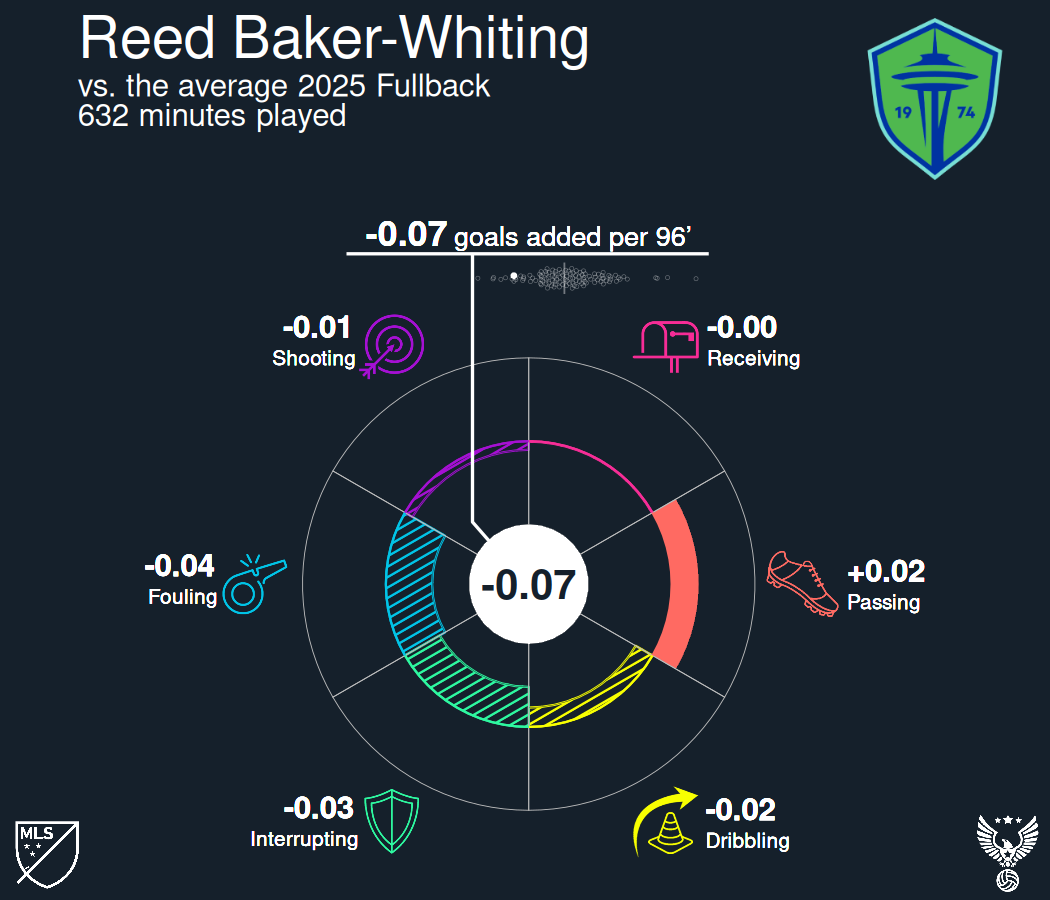
Baker-Whiting is the less sexy of these two, but addresses a left back position that has gradually withered in Daniel Lovitz’ hands. Lovitz is a fine player who has had an excellent MLS career, but is trending in the wrong direction. At $150k annual salary until 2028 and an $800k trade hit, Nashville have a buy low domestic young talent that Seattle fans seem big mad about losing. The data hasn’t quite caught up to the perception of RBW, by net goals added he’s been a negative in each of his three MLS seasons, and has struggled to win the role over the enigma that is Nouhou. But even if it never does, Lovitz makes $525k a year and turns 35 this year. Replacing him at 20 years old and 75% of 30% of the annual cap hit is a nice place to be.
The Big Gun
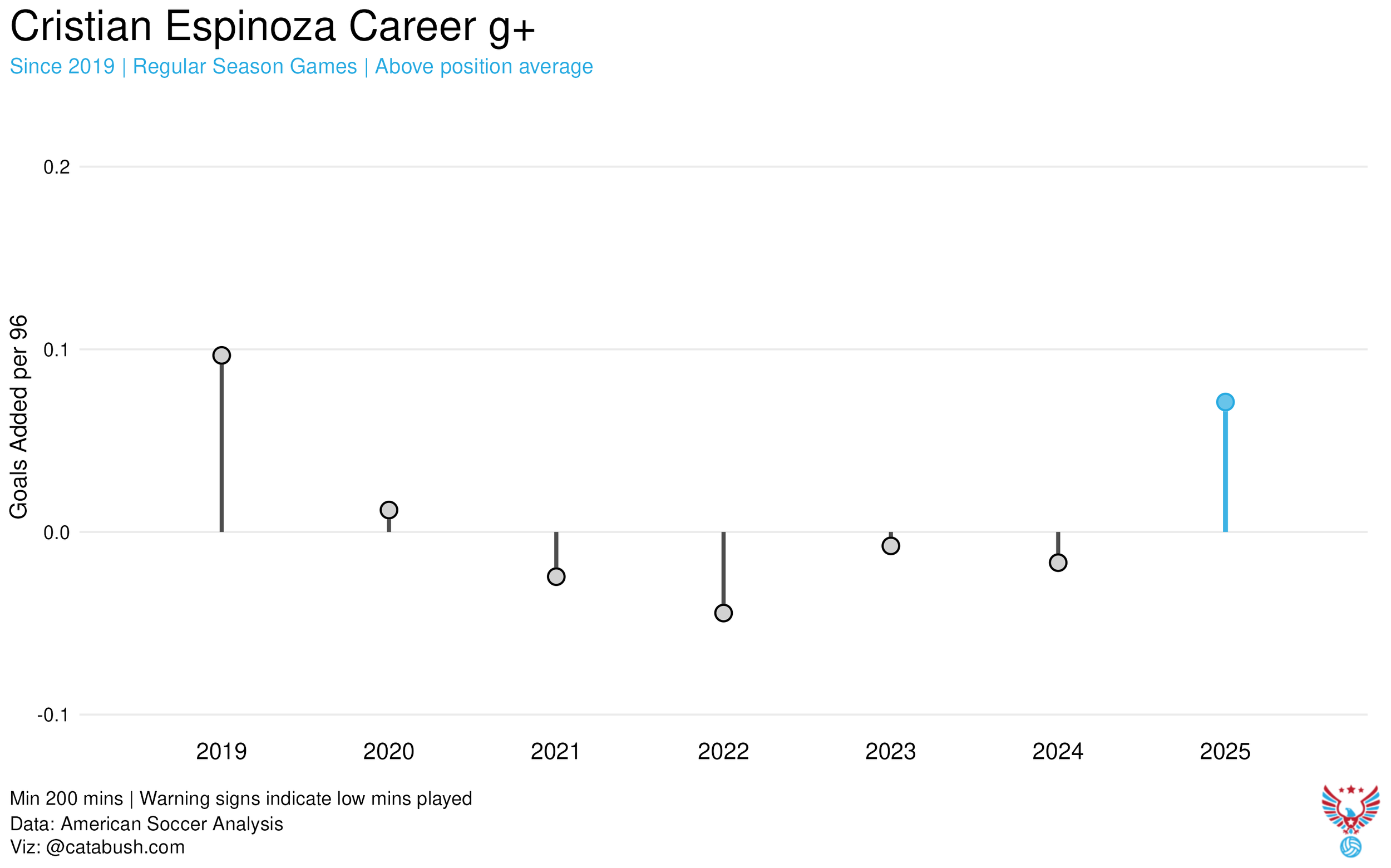
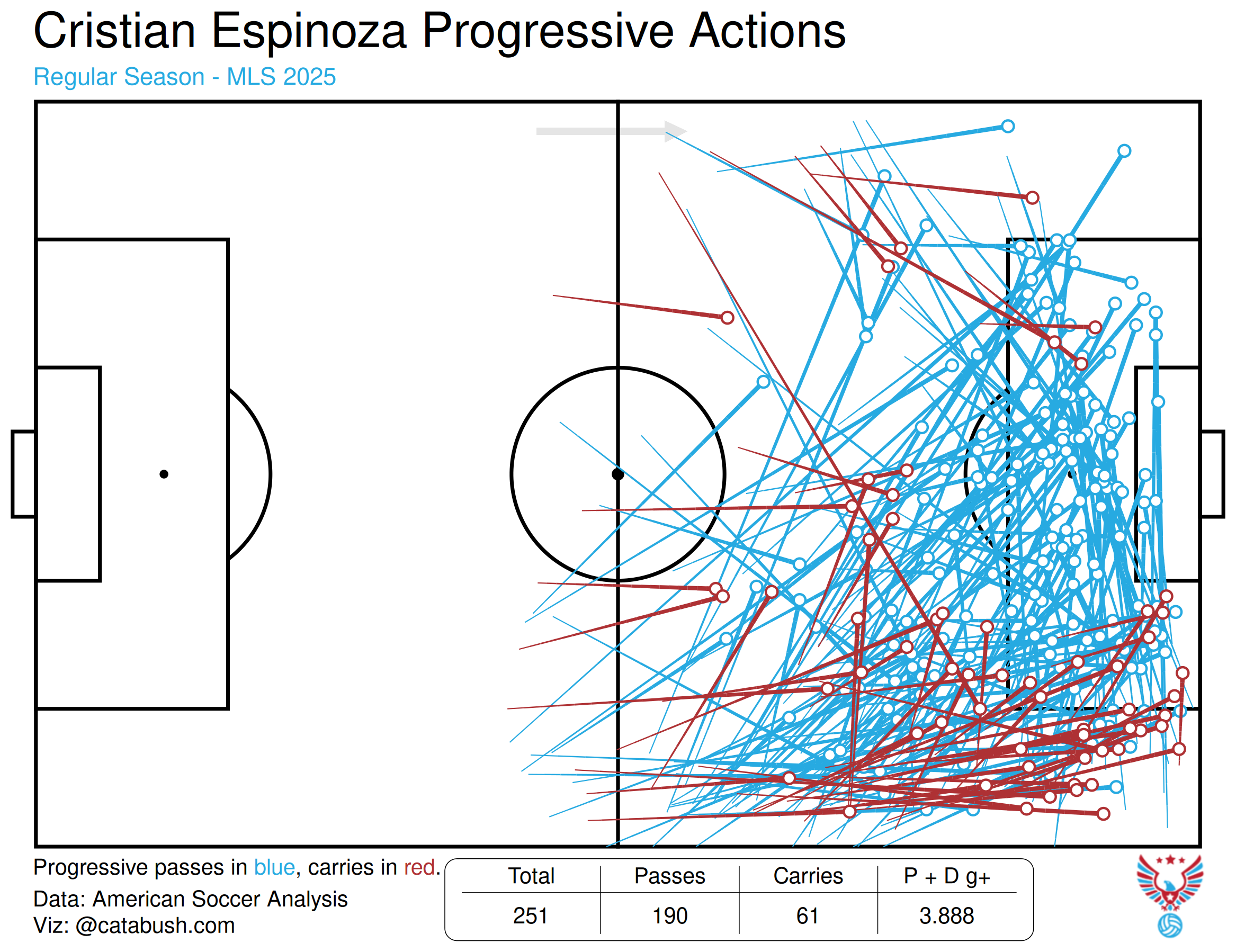
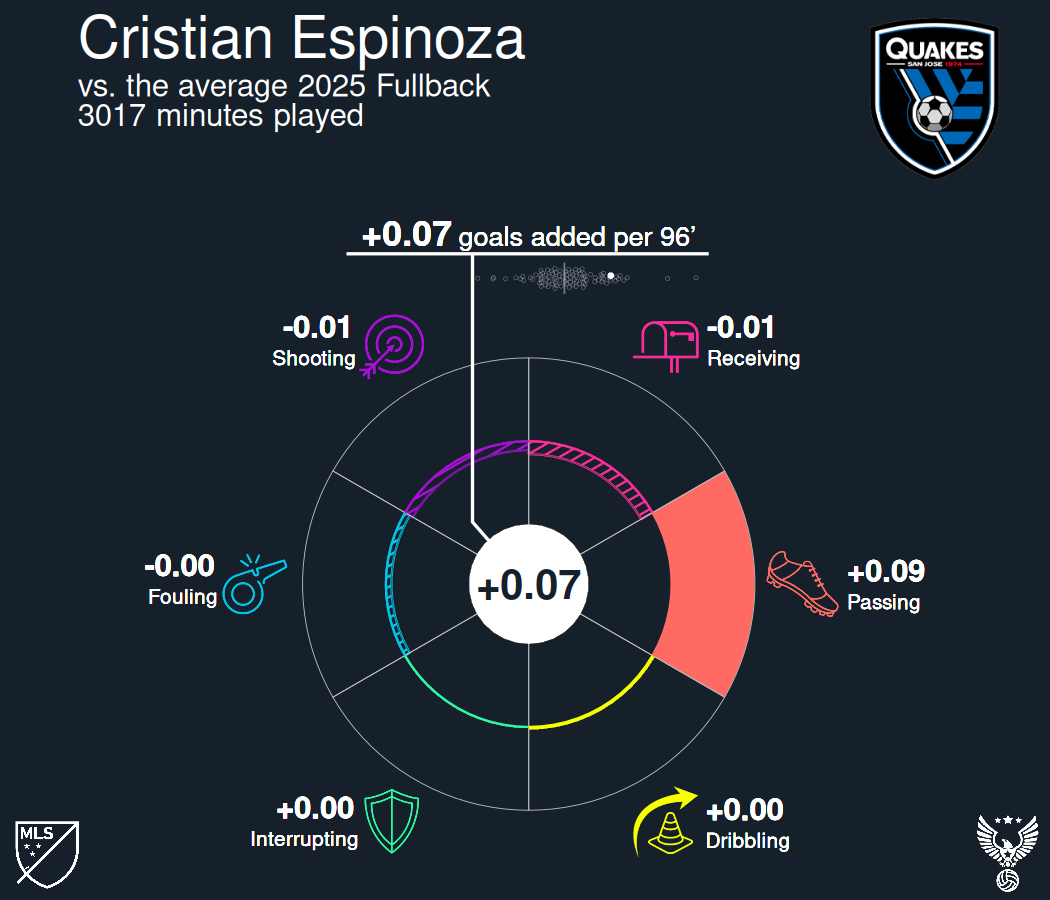
Now, to Espinoza. He’s him. As far back as ASA data goes, there are three players with more xA than him: Diego Valeri, Lucho Acosta, and Carles Gil. By xG+xA, he’s 18th. All of the guys on this list are stars among stars. At the same time, g+ has historically hated him. He engaged in the wingback g+ stats glitch under Bruce Arena last year, but has otherwise been negative every year since 2021. When you zoom out and look at net goals added, which incorporates g+ boost (how well do his teammates do with his passes compared to expectation), Espinoza creeps up to a consistent positive. Espinoza has consistently been one of the league’s big g+ boost guys, with two seasons in the top 10. His teammates consistently create more danger from his passes than you’d expect. G+ isn’t perfect, so this can capture something the model is missing.
Now let’s take a second to consider those teammates: Benji Kikanovic, Matthew Hoppe, a late career Josef Martinez, Ayo Akinola, Andres Rios. Not exactly a who’s who of attacking talent in MLS. You now pair him with Sam Surridge and Hany Mukhtar. Kendrick was wrong, there is a big 3.
Nashville played what was nominally 442/4222 last year, I wouldn’t be shocked if we saw more 433’s with Hany off the left, but I’d be curious about some lineups where Espinoza nominally becomes a super wingback, holding width on the left, with Andy Najar on the right.
Designated Team
Those guys are going to spank some teams, but if I were to be a hater, my questions fall mostly at the other end. By expected goals difference, Nashville were the third ranked team in MLS last season. Top of the Eastern conference, but somewhat behind LAFC and Vancouver. This comes off a third best xG for (two behind league leading Miami), and a fourth best xG against (six behind league stingiest LAFC). We can dig further into the goals added.
Sixth by g+ difference, next to Champions Miami. Where do they get let down? Passing against. Nashville are a top three to ten team by every conceivable metric, except for g+ passing conceded, where they sit between Spoon contenders Toronto FC and DC United. This passing value conceded isn’t coupled with an increase in receiving value allowed, where Nashville sit top five. This is a lot of fussing over model ranks, but if a team is giving up a lot of passing value but a lot less receiving value, it points you at a control problem. Nashville faded down the stretch, if not so much xG wise, results wise. Your favourite Armchair Analyst, my uncle Matt Doyle (go support TacticsFreeZone), connected those two datapoints. Nashville were a really good team, but maybe just lacked that game control mode as they fatigued down the stretch.
Add in that once you get to a certain level of attacking output, you see diminishing returns (winning 3-0 isn’t worth more than 2-0), if this Nashville team can keep up a similar level of attacking output and bring their defensive level up five or six goals, they become a much more serious Shield threat. Joe Willis had a nice year last year, but Cup superstar Brian Schwake is being tipped to replace him as the starter this season. It remains an open question whether Nashville’s overhaul of their CB corps is an improvement or a hinderance.
Can they do it?
Nashville were good enough last season that a more fortunate playoff draw sees them square up to Miami in a single elimination Conference Final as anyone’s game. The addition of Espinoza is a pretty significant chance creation boon, while the squad got significantly younger along the backline. That’s probably the right call in the medium and long term, but if this season ends up in a similarly disappointing end, that’s the place I suspect we’ll be looking.
Starring: Seattle Sounders as The Rebel Alliance
Forgive me, for a second, as I talk football. For Seattlites, 2025 was a pretty damn good year: the Seahawks dropped a seven game regular-season win streak from mid-November until January, humiliated the 49ers in the divisional round, overcame the LA Rams-shaped boogeyman that had followed the team — and Sam Darnold — for years, and capped it all off with a decisive Super Bowl win against none other than the New England Patriots (a team backed by every bad person you can think of, and no, I’m not biased, thanks for asking). They did it off the back of a dominant defense, one so good that it overcame the Legion of Boom comparisons and managed to create an identity of its own: The Dark Side. To say this team was good is an understatement; not only were the 2025 Seahawks better than the 2013 Super Bowl XLVIII-winning version, they were the 4th best NFL team of all time. According to Defense-adjusted Value Over Average (DVOA) — football’s version of goals added — the Seahawks were a whopping 46.4% better than the average NFL team (including playoffs). Much of that came from The Dark Side, a group of players that, in a single season, have enshrined themselves among the historical upper echelon of NFL defenses.
Now, back to soccer, since this is American Soccer Analysis, after all. Defensive excellence is nothing new for Seattle sports fans. For years, the Seattle Sounders played a brand of soccer that was decidedly focused on preventing goals, first and foremost. In 2025, that changed. As the Seahawks became more defensive under the fresh-faced former-DC-turned-HC Mike Macdonald, the Sounders became more offensive under the tenured Brian Schmetzer. Rather than stick to what had been (somewhat) working, Schmetzer pivoted, leaning heavily into a more free-flowing, higher-risk style of soccer that ultimately led to the Sounders’ first trophy in years. If the Seahawks were The Dark Side in 2025, the Sounders were The Rebel Alliance.
Team tendency data from the incredible people at Futi.
Let’s be clear: the Sounders weren’t the most direct team in MLS in 2025 by any definition. That being said, the change from even two seasons ago is clear. By leaning into a more progressive style of play, Seattle was able to unlock production from target men like Danny Musovski and Osaze De Rosario. Combine that with stellar seasons from your double pivot, consistent excellence from Albert Rusnak, and a “f*ck you” campaign from Paul Rothrock, and you get a recipe for success. I wrote at length about Schmetzer’s tactical evolution for Sounder at Heart’s new print issue, IV, so be sure to order a copy (they’re only $15!) if you want to read more about why this change was so effective.
Despite falling short in the playoffs, Schmetzer’s new direction paid off, with the Sounders securing an electric victory in the Leagues Cup Final against Messi & co. at Lumen Field. For Seattle, it’s their first silverware since the famed CONCACAF Champions League victory in 2022, and feels at least like some sort of payoff after years of waiting. Moving into 2026, it’s clear that MLS Cup is the priority. While Schmetzer and GM Craig Waibel may say that the team will compete for “all competitions”, for fans, it’s Cup or bust. (For the record, the last time the Seahawks won a Super Bowl, the Sounders lifted the Supporter’s Shield in the following season. Just saying.)
Come as you are
Under Craig Waibel, the Sounders have put together one of the most efficient rosters in MLS. While fans may be bitter that few big-money signings have arrived apart from Pedro De la Vega, the moneyball-esque approach taken by the front office has been working. And if there’s one thing we know about ASA, it’s that we love playing moneyball.
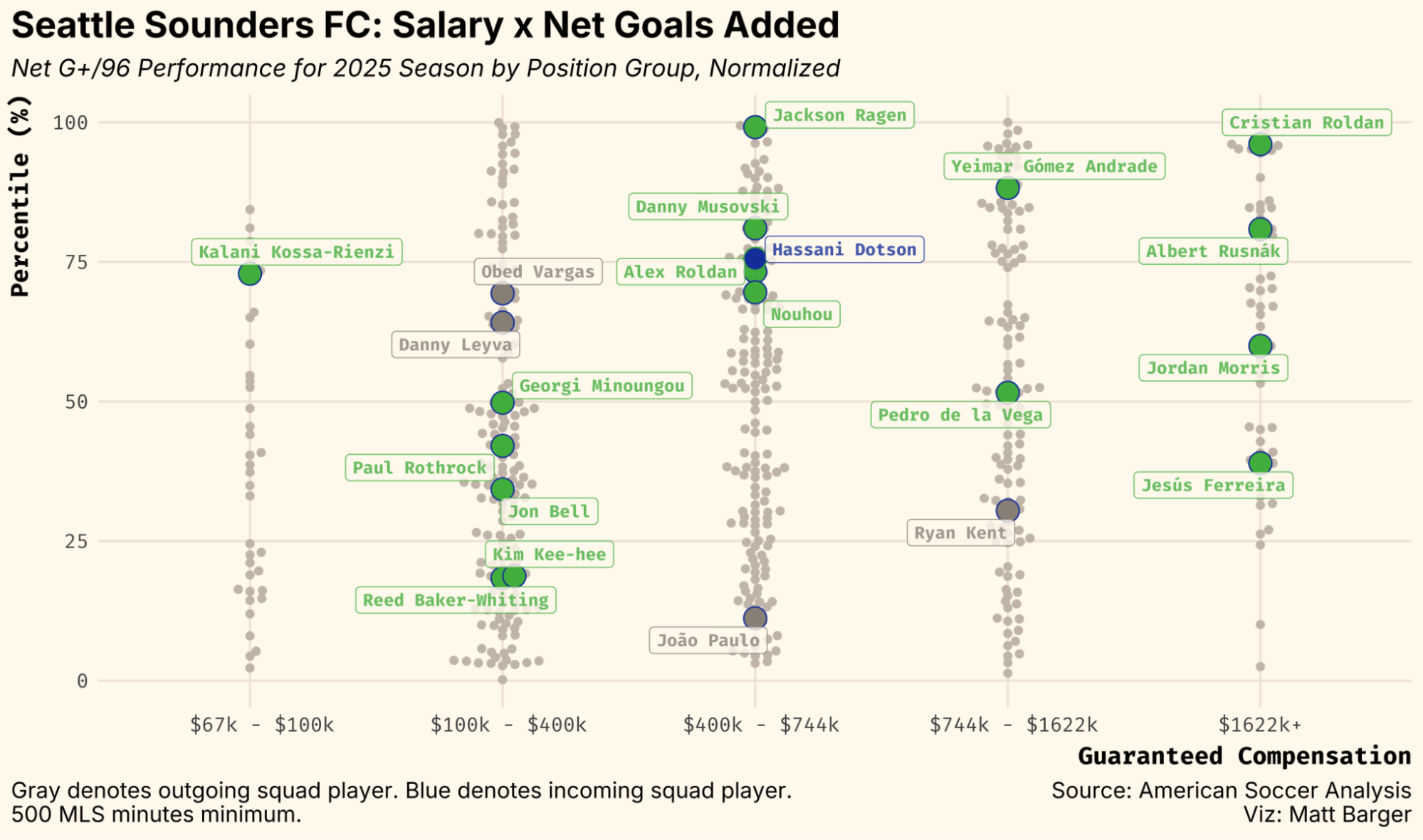
This is what elite dealing looks like. Waibel’s antics have been, at moments, audacious — last offseason, he traded for Paul Arriola and Jesus Ferreira using just GAM. Waibel, however, has also been pragmatic. With Obed Vargas in the last year of his contract and with the kid’s eyes set on Europe, Waibel had a choice to make. Keep Vargas for a year, let him ball out, knowing you’ll lose him on a free at the end of the season, or try to make a deal now. The reporting consistently suggested that Waibel wouldn’t sell unless the right deal came around, and suddenly, just before the European January transfer deadline, it did. While the numbers may not look extravagant, it was an incredible deal for everyone involved. Atletico Madrid, Vargas’ boyhood club, signed the youngster for more than $3 million and a 20% sell-on clause. For Waibel, this allows the Sounders to max out GAM conversion from transfer revenue for the entire season (the ceiling is $3 million exactly), potentially receive a substantial windfall in a few years, and allow Obed Vargas the opportunity he’s dreamed of.
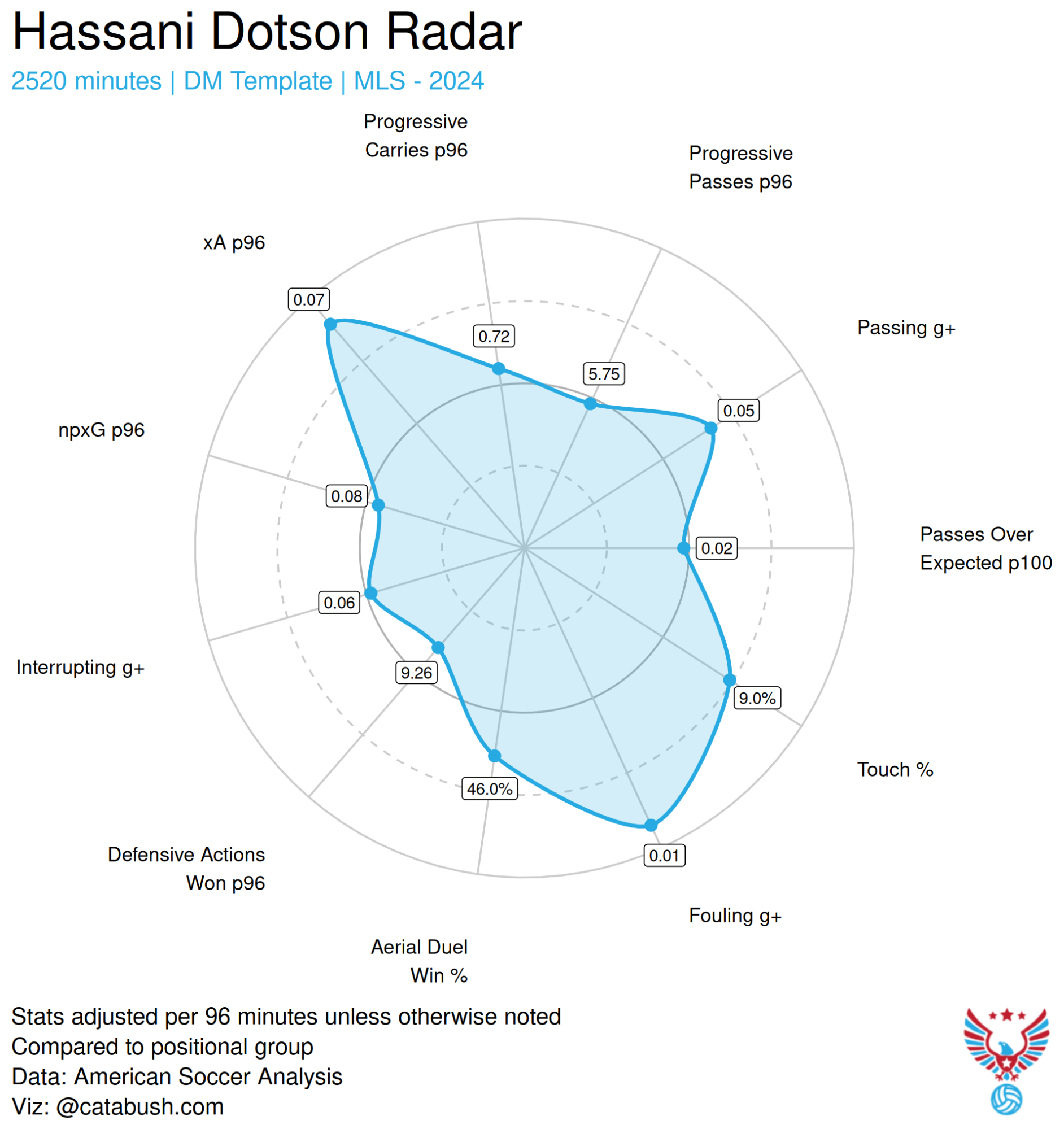
While losing one of your best midfielders late in the window is rarely conducive to, say, winning, Waibel had a plan. Hassani Dotson, a Federal Way native, was signed from free agency and will slot in right next to Cristian Roldan. With bright teenager Snyder Brunell already logging first team minutes (where do they keep finding these guys??), I have a feeling that the Sounders’ midfield will be just fine.
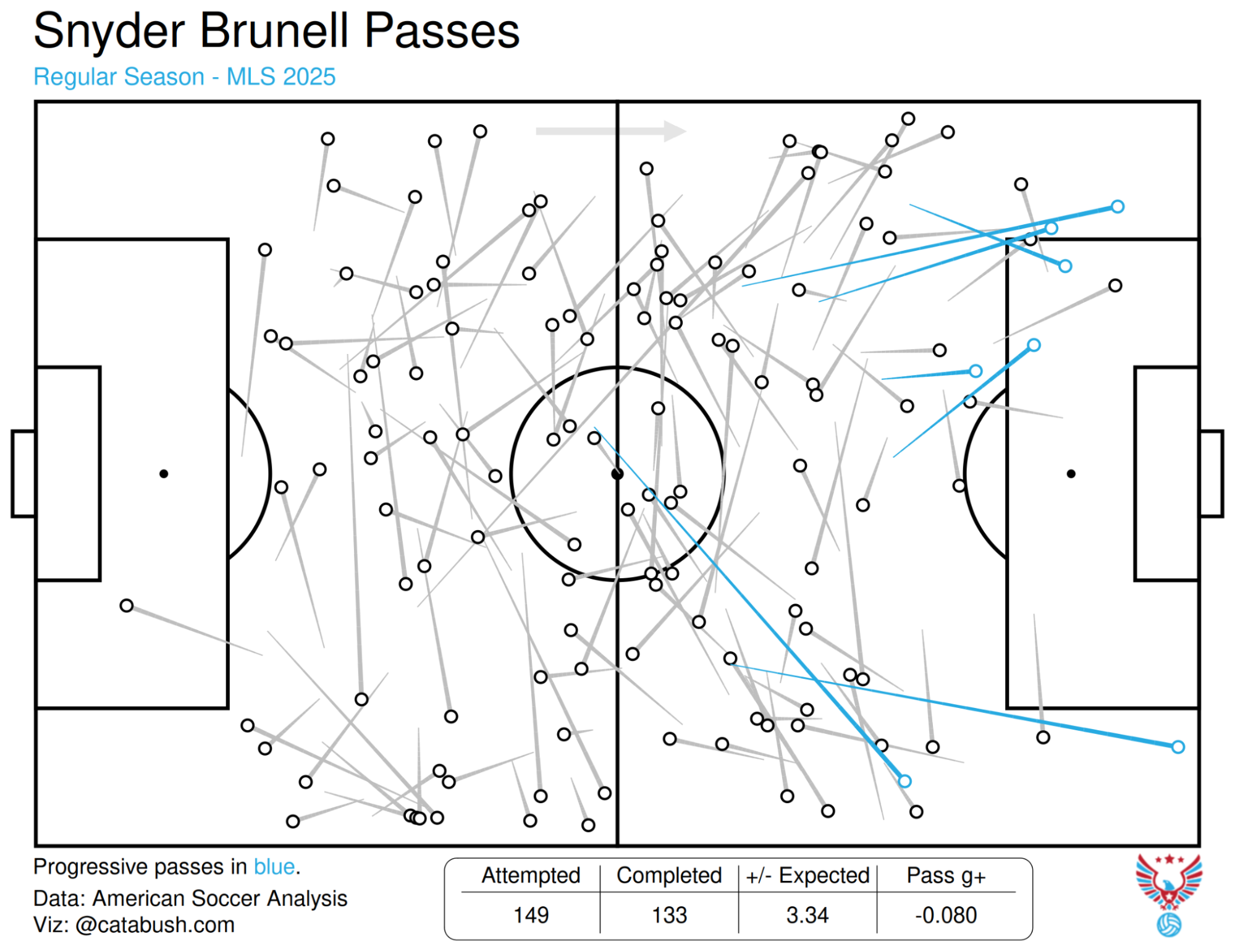
What this roster-building reflects is a commitment to prioritizing local talent, looking for undervalued players within the league, and rewarding those already performing well within the club. While it isn’t the flashiest strategy, it creates a culture that’s positive and sustainable. Waibel’s message to new players, through his actions, is: “Come as you are.” At the Sounders, there is an opportunity for everyone. And if you make the most of it, you will be rewarded.
Rothrockmania Returns
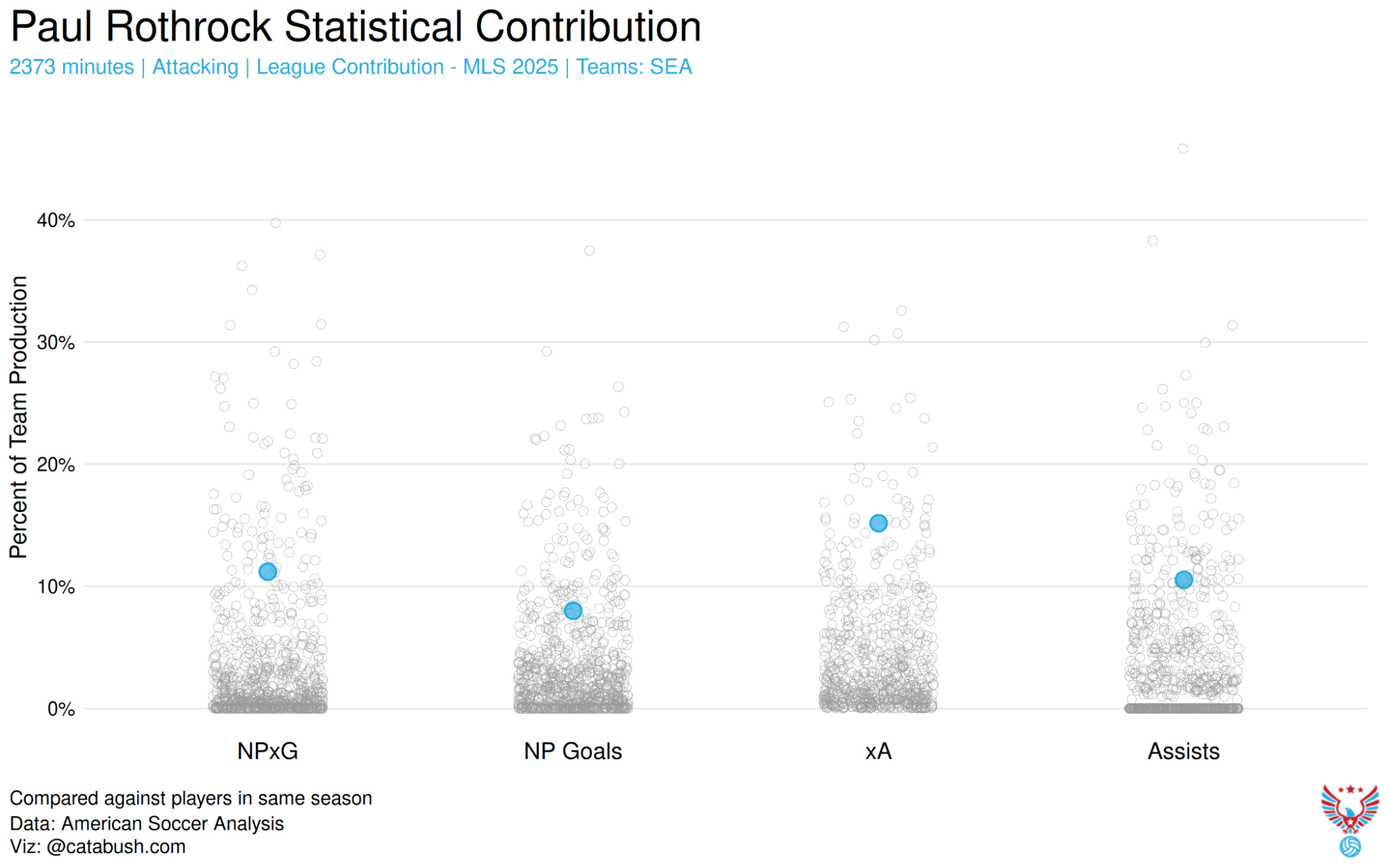
Perhaps the poster boy of this club ethos is Paul Rothrock. While I’ll spare you the Schmetzer quote that went viral ahead of the Leagues Cup final, the Sounders have shown this offseason that the sentiment is true: Rothrock, and players like him, are a core part of the club. After testing free agency, Rothrock ultimately re-signed with the Sounders on a much improved contract, reflecting the impact he’s had on this squad.
If there was a Luke Skywalker in this Rebel Alliance, it would be Paul Rothrock. The 27-year-old was playing in MLS Next Pro for Toronto FC’s second team just three years ago. After moving to the Sounders and rising the ranks, he’s now a locked-in starter and playing the best soccer of his career. The man probably isn’t the Sounders’ top player, but his vibes, style, incredible hair, voracious attitude on the pitch, and willingness to do dirty work has endeared himself to Sounders’ fans and rival supporters alike.
Return of the Jedi
While the League Cup was a moment of catharsis — exemplified by Rothrock’s scream of triumph upon scoring the winner — the MLS playoffs were a rude return to earth for Seattle. It was a difficult loss to stomach, especially given the manner in which it occurred. The good news for the Sounders, however, is that 2026 is a chance for redemption. Andrew Thomas will likely start in goal, De la Vega will look to build on last season and log consistent minutes, Paul Arriola returns from an ACL tear as, in effect, a brand new signing, and Rothrock gets to prove why he deserved that new contract. If we see the post-Club World Cup Sounders from last summer, there’s no telling what this team can accomplish. If, however, the pieces don’t align properly, then it will be wasted potential.
Last year, Seattle vanquished the Death Star that was their silverware drought. Yet, it’s now been seven years since the Sounders hoisted the MLS Cup trophy. A second Death Star looms; will the Sounders be able to defeat it?